Ellen Rudolph, WellTheory, on rebuilding autoimmune care
In this episode, I had the pleasure of sitting down with Ellen Rudolph, co-founder and CEO of WellTheory, a virtual care platform…
Ellen Rudolph, WellTheory, on rebuilding autoimmune care
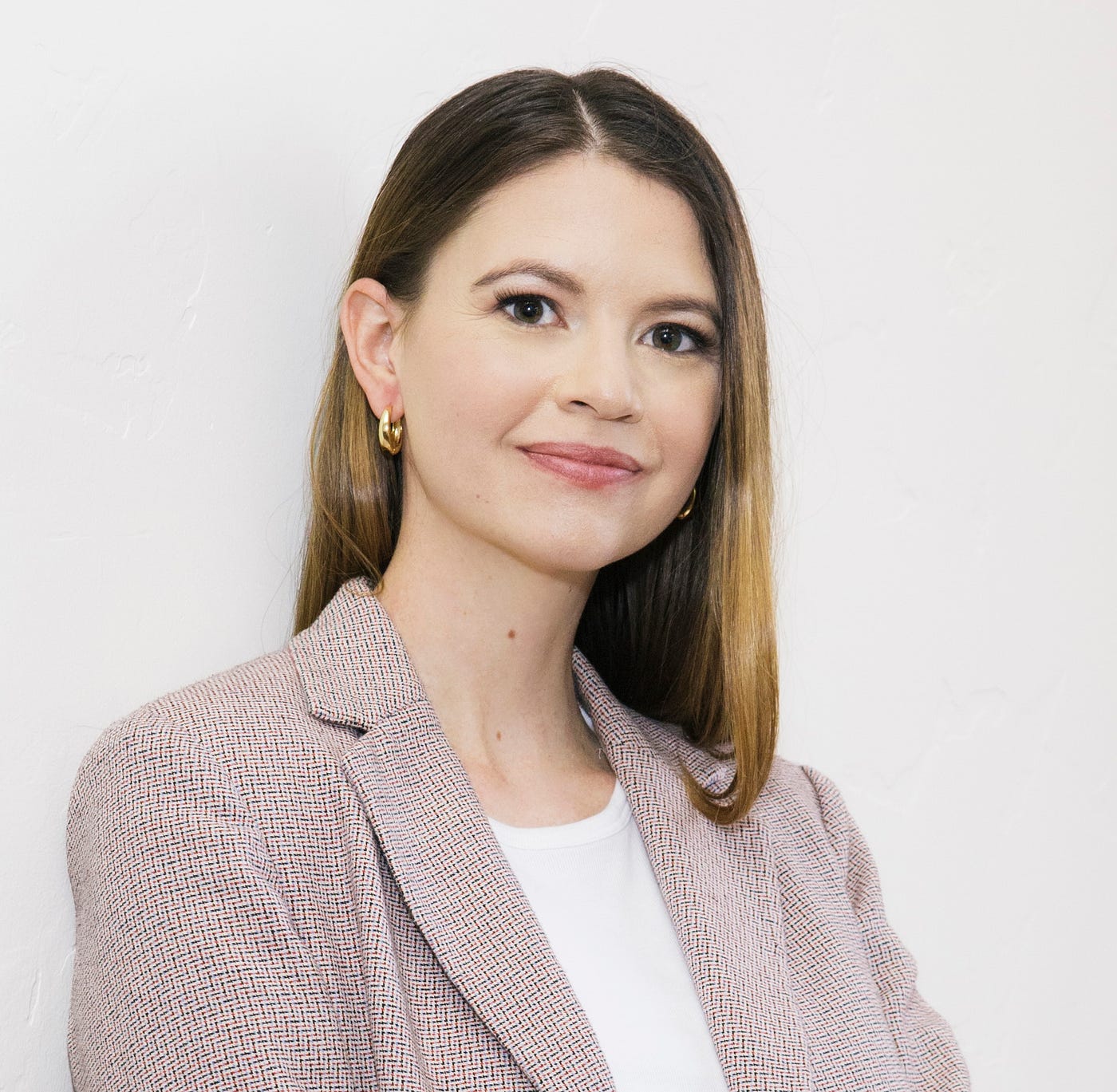
Ellen Rudolph, Co-founder and CEO of WellTheory
In this episode, I had the pleasure of sitting down with **Ellen Rudolph**, co-founder and CEO of WellTheory, a virtual care platform rethinking how we diagnose and manage autoimmune disease. WellTheory has raised over $26M in funding from General Catalyst, which included participation from 7wire Ventures, Ingeborg Investments, Accel, Box Group, Leaps by Bayer and others. Built from her own experience navigating a fragmented and often dismissive healthcare system, WellTheory is grounded in a simple but powerful belief: autoimmune care requires treating root causes, not just symptoms. With over 50 million Americans living with autoimmune conditions, 80% of whom are women, Ellen is building for one of the largest and most overlooked patient populations in healthcare today.
Before founding WellTheory, Ellen studied product design at Stanford, where she fell in love with the process of identifying a problem, forming a hypothesis, testing it in the real world, and iterating. That engineering instinct, combined with a deeply personal health journey, became the blueprint for WellTheory.
In our conversation, Ellen and I explored:
- Her personal health journey and the founding of WellTheory
- How WellTheory is redesigning autoimmune care around root causes, not symptoms
- The transition from direct-to-consumer to enterprise
- Autoimmune disease as a women’s health crisis
- Advice for founders and aspiring entrepreneurs
From patient to founder: building what the healthcare system failed to provide
Ellen’s path to founding WellTheory began with a deeply personal experience. In her mid-20s, living in New York and climbing the corporate tech ladder, she found herself bedridden: cycling through ER visits and specialist appointments, experiencing everything from fatigue and brain fog to scary neurological symptoms, and being told repeatedly that her labs looked normal or that she was “too young to be sick.” After years of searching, she finally received an autoimmune diagnosis. What followed wasn’t relief — it was frustration.
“I was essentially handed a prescription band-aid for my symptoms and told to come back once things got worse.”
Ellen dove into research, discovered the profound impact of dietary and lifestyle interventions, and made it her mission to ensure others didn’t have to navigate that same journey alone. Her co-founders, Claire and Wallace, had their own lives shaped by autoimmune disease, and together, they built WellTheory on a conviction she articulated simply:
“We founded WellTheory on the really simple premise that this patient population deserves better answers, support, and ultimately better outcomes.”
Redesigning the fragmented state of autoimmune care
With over 100 different autoimmune diseases, from lupus to rheumatoid arthritis to psoriasis, patients are typically routed to different specialists depending on where symptoms show up. The result is fragmented care that rarely addresses underlying drivers. WellTheory flips that model. Instead of treating symptoms in isolation, the platform focuses on root causes: stress, nutrition, hormones, and lifestyle factors, and critically, it supports patients even without a formal diagnosis.
“Just because you don’t have that label doesn’t mean we can’t start to address those symptoms.”
Research shows there is often a two-to-five year window before a formal autoimmune diagnosis where the condition is already developing, and intervening during that window can meaningfully change the disease trajectory and reduce long-term costs.
One of the core challenges in autoimmune care is variability: no two patient journeys look the same. WellTheory’s solution is a rigorous, evidence-based clinical framework applied in a deeply personalized way, powered by registered dietitians, board-certified health coaches, and proprietary AI tools. Ellen described the role of health coaches as central to outcomes:
“The health coaches are like behavior change experts, their job is to meet people where they are at. The goal is to help bridge the gap between knowing and doing, which is where outcomes actually come from.”
Business model and the shift to enterprise
WellTheory started as a direct-to-consumer platform, intentionally building the patient experience first. The goal was always to make care affordable and accessible, but the path to doing so at scale ran through employers and health plans, who bear a disproportionate share of costs for this patient population. Autoimmune disease drives roughly 30% of overall pharmacy spend for a typical employer, and affected members can cost four to five times as much as the average member.
The direct-to-consumer phase served two critical functions: building an experience members genuinely loved, and generating an outcomes dataset rigorous enough to take into enterprise procurement conversations. Ellen engaged third-party actuaries early to build the business case. The transition hinged on demonstrating real patient demand and building a credible evidence base, and the result is a rare alignment in healthcare: improved patient outcomes, lower costs, and a viable business model.
The fundraising journey, however, was anything but easy. As a female founder building in women’s health, Ellen encountered skepticism about both the problem space and the business model. Her advice to other founders:
“Treat fundraising like a sales process: map your stakeholders, be very deliberate about building momentum. Speed matters a lot more than people realize. The longer a raise goes on, the harder it gets.”
Autoimmune disease as a women’s health crisis
The gender disparity in autoimmune disease is striking: roughly 80% of patients are women, and some conditions are 16 times more common in women. That insight has shaped WellTheory’s expansion into women’s health, with programs focused on hormonal conditions like PCOS, endometriosis, postpartum care, and menopause. Hormonal shifts at key life stages can trigger or worsen autoimmune conditions, connections that are consistently overlooked in traditional care models.
Ellen’s own experience is illustrative: she had a PCOS diagnosis before her autoimmune diagnosis, and no clinician ever connected the two. WellTheory’s postpartum program, recently launched, addresses a gap that traditional care has left almost entirely unaddressed. As Ellen explained:
“What we’re trying to do differently is really provide continuous longitudinal care for members, where the person working with them through pregnancy is also staying with them through that postpartum transition.”
This also resonates strongly with employers, who are increasingly focused on supporting women returning to work, yet have historically overlooked the autoimmune dimension of the postpartum experience.
Advice for founders
Ellen was candid about the weight of entrepreneurship. Her litmus test for aspiring founders is simple: are you staying up late thinking about this problem? She believes founders need to feel both uniquely qualified to solve it and deeply passionate about it, because companies, especially early on, are built by sheer grit and force of will.
She also touched on something rarely discussed: the importance of managing your own psychology as a founder.
“There’s such an incredible amount of uncertainty in building an early-stage company. Whether it’s working with a therapist, a coach, or finding some outlet, managing your own mental health is such a critical part of it.”
And for healthcare founders specifically, Ellen’s closing advice brings it back to first principles:
“Always look for the win-win-win. If your solution only works for one party, it won’t scale. Zoom out and think about incentives, and instead of focusing on selling, focus on creating value that compounds across the whole ecosystem.”
메타데이터
- post_id
- 70411ea31c6a
- slug
- ellen-rudolph-welltheory-on-rebuilding-autoimmune-care-70411ea31c6a
- url
- https://medium.com/wharton-pulse-podcast/ellen-rudolph-welltheory-on-rebuilding-autoimmune-care-70411ea31c6a
- canonical_url
- https://medium.com/wharton-pulse-podcast/ellen-rudolph-welltheory-on-rebuilding-autoimmune-care-70411ea31c6a
- author_url
- https://medium.com/@trisha.thacker
- status
- ok
- fetched_at
- 2026-06-09 15:37:30




