Incident Response Lifecycle: From Detection to Recovery
Every organization invests heavily in preventive security controls — firewalls, endpoint protection, IAM policies, vulnerability…
Incident Response Lifecycle: From Detection to Recovery
Every organization invests heavily in preventive security controls — firewalls, endpoint protection, IAM policies, vulnerability management, and secure development practices. Yet, no security control is perfect. Attackers continuously evolve their techniques, making it essential for organizations to have a well-defined Incident Response (IR) process. The true measure of a security team’s maturity isn’t whether they prevent every attack, it’s how quickly they detect, contain, eradicate, and recover from an incident.
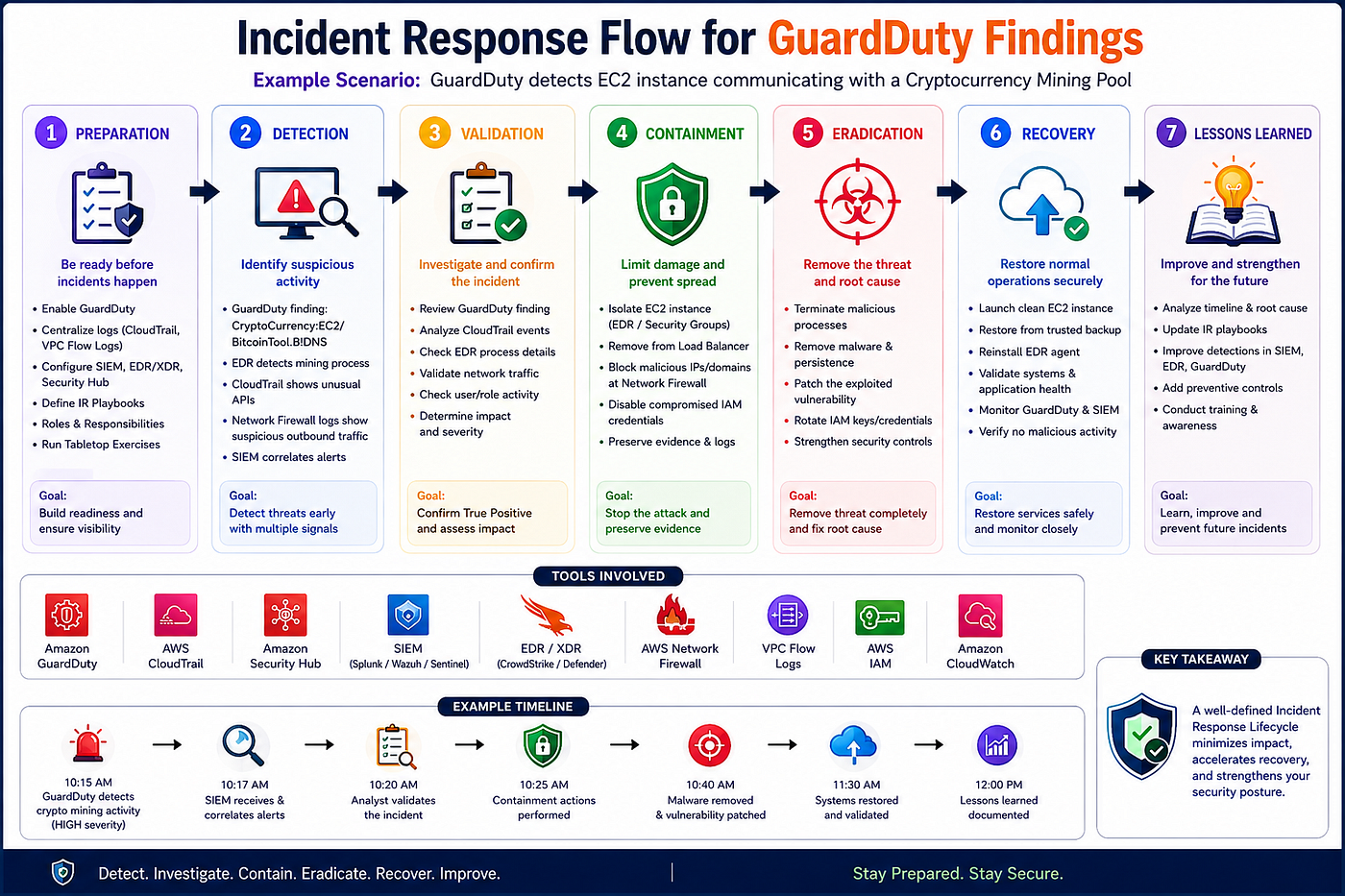
Figure 1. End-to-End Security Incident Response Lifecycle
Let’s walk through the Incident Response Lifecycle using a real-world AWS example where Amazon GuardDuty detects cryptocurrency mining activity on an EC2 instance.
What is Incident Response?
Incident Response (IR) is a structured process used by security teams to detect, investigate, contain, eliminate, and recover from cybersecurity incidents while minimizing business impact.
A mature Security Operations Center (SOC) typically relies on multiple security tools working together, including:
- Amazon GuardDuty
- AWS Security Hub
- AWS CloudTrail
- AWS Network Firewall
- SIEM (Splunk, Wazuh, Microsoft Sentinel, QRadar, etc.)
- EDR/XDR (CrowdStrike Falcon, Microsoft Defender, SentinelOne, etc.)
- AWS Config
- AWS IAM
- Threat Intelligence Platforms
Think of Incident Response like Incident Response (IR) is a structured process used by security teams to detect, investigate, contain, eliminate, and recover from cybersecurity incidents while minimizing business impact.
A mature Security Operations Center (SOC) typically relies on multiple security tools working together, including:
- Amazon GuardDuty
- AWS Security Hub
- AWS CloudTrail
- AWS Network Firewall
- SIEM (Splunk, Wazuh, Microsoft Sentinel, QRadar, etc.)
- EDR/XDR (CrowdStrike Falcon, Microsoft Defender, SentinelOne, TrendMicro Vision One, Checkpoint, Bitdefender etc.)
- AWS Config
- AWS IAM
- Threat Intelligence Platforms
Think of Incident Response like firefighting.
The goal isn’t just to extinguish the fire, it’s also to discover how it started and ensure it never happens again.
Incident Scenario
Imagine your production AWS environment hosts several business-critical applications.
One morning, Amazon GuardDuty generates a High-Severity Finding:
EC2 Instance is communicating with a known Cryptocurrency Mining Pool
At the same time,
- SIEM receives GuardDuty alerts.
- EDR flags suspicious Linux processes.
- CloudTrail shows unusual API activity.
- Security Hub aggregates the finding into a High severity security issue.
- Network Firewall logs show outbound traffic to suspicious IP addresses.
Now the Incident Response process begins.

Figure 2. Incident Response Lifecycle for Amazon GuardDuty Findings
1. Preparation
Preparation is everything you do before an incident occurs.
A well-prepared organization responds in minutes instead of hours.
Typical Preparation Activities
✔ Deploy GuardDuty across all AWS accounts
✔ Enable CloudTrail organization-wide
✔ Configure Security Hub
✔ Centralize logs into a SIEM
✔ Install EDR/XDR agents on all endpoints
✔ Enable VPC Flow Logs
✔ Configure AWS Network Firewall
✔ Create Incident Response Playbooks
✔ Define Severity Levels
✔ Assign Incident Response Roles
✔ Maintain Contact Lists
✔ Conduct Tabletop Exercises Example:
Before the incident:
- GuardDuty is enabled.
- CrowdStrike Falcon is installed.
- CloudTrail logging is active.
- SIEM is ingesting AWS logs.
- Security engineers have predefined runbooks for EC2 compromise.
When the alert appears, nobody wastes time deciding what to do. They already have a documented process.
2. Detection
Detection is identifying suspicious activity through continuous monitoring. This is where your security tools generate alerts.
In this incident
GuardDuty raises the following finding:
CryptoCurrency:EC2/BitcoinTool.B!DNS
Severity: High
Reason: The EC2 instance is communicating with a known cryptocurrency mining domain.
Other tools also detect suspicious behavior
GuardDuty
- Crypto mining communication
- Threat intelligence match
CloudTrail
- IAM user launches an unexpected EC2 instance
- Security Group modifications
- New IAM access keys created
SIEM
- Correlates GuardDuty alerts
- Detects abnormal outbound traffic
- Identifies repeated failed logins
EDR/XDR
- Detects mining process
- High CPU utilization
- Unknown binaries executing
Network Firewall
- Outbound traffic to malicious IP addresses
Why Multiple Tools Matter
One alert rarely tells the whole story.
By combining GuardDuty, SIEM, EDR, CloudTrail, and Network Firewall telemetry, analysts gain a complete picture instead of isolated events.
3. Validation (Investigation & Triage)
Not every alert is a real attack.
The analyst must determine whether it is:
- True Positive
- False Positive
- Benign Activity
This phase prevents unnecessary disruption.
Investigation Steps:
Review the GuardDuty finding.
Analyze CloudTrail logs:
- Who launched the EC2 instance?
- Which IAM role was used?
- Were new credentials created?
Review SIEM:
- Similar alerts from other systems?
- Lateral movement indicators?
- Authentication anomalies?
Check EDR:
- Running processes
- Parent-child process relationships
- Persistence mechanisms
- Suspicious binaries
Review Network Firewall logs:
- Destination IP addresses
- Known malicious domains
- Data exfiltration attempts
Findings
The investigation reveals:
- An outdated application vulnerability was exploited.
- A cryptomining binary was downloaded.
- The attacker established persistence.
- The server connected to multiple mining pools.
- CPU usage remained above 95% for several hours.
The incident is confirmed as a True Positive.
Severity: High
4. Containment
Now the priority shifts to limiting the damage.
The goal is not to fix the issue immediately but to stop it from spreading.
Immediate Actions:
- Isolate the EC2 instance using EDR network containment.
- Remove the instance from the Load Balancer target group.
- Block outbound traffic using AWS Network Firewall.
- Restrict Security Group rules.
- Disable compromised IAM credentials.
- Capture forensic evidence before shutting down the instance.
- Preserve CloudTrail, VPC Flow Logs, and EDR telemetry.
Why Isolation Matters
Deleting the EC2 instance immediately may destroy valuable forensic evidence.
Contain first.
Investigate second.
Recover later.
5. Eradication
Containment stops the attack.
Eradication removes its root cause.
Activities
- Delete malware binaries.
- Remove persistence mechanisms.
- Patch the exploited vulnerability.
- Rotate IAM credentials.
- Revoke compromised access keys.
- Update Security Groups.
- Strengthen IAM policies.
- Update GuardDuty suppression rules if required.
- Update EDR detection policies.
Root Cause
The attacker exploited an outdated web application vulnerability that had not been patched.
Without addressing this weakness, the attacker could return even after cleanup.
6. Recovery
Recovery restores business operations safely. Simply bringing the compromised server back online is risky.
Instead:
- Launch a clean EC2 instance from a trusted AMI.
- Restore application data from verified backups.
- Reinstall the EDR agent.
- Validate application functionality.
- Monitor GuardDuty findings.
- Increase SIEM monitoring.
- Watch CloudWatch metrics for anomalies.
- Verify there is no malicious outbound traffic.
Only after confirming the environment is clean should the workload return to production.
7. Post-Incident Activity (Lessons Learned)
Goal: Improve security posture and prevent future incidents.
- 🔍 Perform Root Cause Analysis (RCA)
- 📄 Document the incident timeline & findings
- 🛡️ Fine-tune SIEM/EDR/XDR detection rules
- 🚫 Update Firewall, WAF & IAM security policies
- 🔧 Patch vulnerabilities and harden systems
- 🤖 Improve SOAR playbooks & automation
- 📚 Update Incident Response runbooks
- 👨💻 Conduct knowledge sharing & team training
- 📈 Track KPIs (MTTD, MTTR) and identify improvement areas
Example: Root cause identified as an exposed EC2 application vulnerability. The vulnerability was patched, GuardDuty and SIEM detection rules were optimized, firewall rules were updated, and the IR playbook was revised to reduce response time for similar incidents.
This version is concise, practical, and aligns well with real-world SOC and cloud security operations.
Incident Response Flow
GuardDuty Alert
        │
        ▼
SIEM Correlation
        │
        ▼
Security Analyst Investigation
        │
        ▼
Validate the Incident
        │
        ▼
Contain the EC2 Instance
        │
        ▼
Remove Malware & Patch Systems
        │
        ▼
Restore Clean Infrastructure
        │
        ▼
Lessons Learned & Improve Security Controls
Key Takeaways
- Preparation enables faster and more effective response.
- Detection relies on layered visibility across GuardDuty, SIEM, EDR/XDR, CloudTrail, and Network Firewall.
- Validation distinguishes real threats from false positives.
- Containment minimizes business impact while preserving evidence.
- Eradication removes the threat and addresses the root cause.
- Recovery restores services using trusted infrastructure.
- Lessons Learned transform every incident into a stronger security posture.
In cybersecurity, incidents are not a matter of if but when. Organizations with a mature Incident Response process recover faster, reduce operational impact, and continuously improve their resilience against future attacks.
CyberSecurity #IncidentResponse #SOC #CloudSecurity #AWS #AmazonWebServices #AmazonGuardDuty #AWSSecurity #MicrosoftSecurity #MicrosoftDefender #CrowdStrike #SentinelOne #PaloAltoNetworks #CiscoSecurity #Fortinet #Splunk #MicrosoftSentinel #Wazuh #ElasticSecurity #QRadar #SecurityHub #CloudTrail #EDR #XDR #SIEM #ThreatDetection #BlueTeam #DFIR #DigitalForensics #SecurityOperations #DevSecOps #InformationSecurity #CyberDefense #SecurityEngineering
메타데이터
- post_id
- 708cfa77d2ca
- slug
- incident-response-lifecycle-from-detection-to-recovery-708cfa77d2ca
- url
- https://medium.com/@dipnarayan.n/incident-response-lifecycle-from-detection-to-recovery-708cfa77d2ca
- canonical_url
- https://medium.com/@dipnarayan.n/incident-response-lifecycle-from-detection-to-recovery-708cfa77d2ca
- author_url
- https://medium.com/@dipnarayan.n
- status
- ok
- fetched_at
- 2026-07-18 06:34:01


