You’re a Fool, Kit Joy
In New Mexico during the 1880s, a young train robber wants to have the time of his life, and an old sheriff helps him to get it
You’re a Fool, Kit Joy
In New Mexico during the 1880s, a young train robber wants to have the time of his life, and an old sheriff helps him to get it
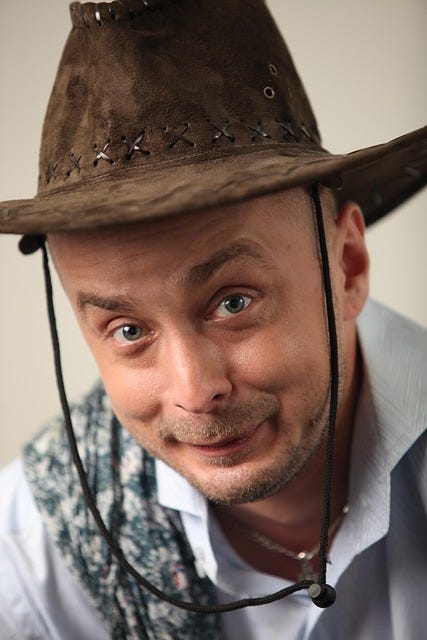
Image by Илья Клишин from Pixabay
(I’ve taken the following excerpt from You’re a Fool, Kit Joy, a novella in my book On the Wrong Side of the Law, published by Two Gun Publishing.)
Side by side, four young men galloped their horses through the New Mexican desert and toward the town of Silver City.
On a beautiful sorrel gelding, Kit Joy whooped.
“We’re gonna have the time of our lives!” he shouted.
Riding beside him, Mitch Lee scowled.
“The time of our lives!” Joy shouted again.
Riding beside Lee, Frank Taggart shook his head.
“The time of our lives!” Joy shouted again.
Riding beside Taggart, George Washington Cleveland, a big black man, frowned.
“We’re gonna eat and drink and carouse!” Joy shouted.
He whooped again.
“We’re gonna fight and gamble!” he shouted.
He whooped again.
“We’re gonna have the time of our lives!”
Lee scowled again.
Joy, Lee, Taggart, and Cleveland galloped toward the train depot on the outskirts of town.
On the platform stood Harold Stanton, a young man wearing a top hat, knickers, and long stockings.
Joy and the others reined in their horses near the platform and stared at Stanton.
“Ain’t he something, Taggart?” Lee asked.
“Question is, What?” Taggart answered. “Cleveland?”
“Damned if I know,” Cleveland said. “Lee?”
“Damned if I know, either,” Lee said. “Joy?”
He looked at Joy, who stared at Stanton.
“What do you think?” Lee asked.
Joy continued to stare.
“I think somebody oughta learn him a lesson,” Lee said.
Joy dismounted, climbed the steps to the platform, and stopped near Stanton.
“What’s Kit Joy gonna do?” Cleveland asked.
“Maybe shoot him,” Taggart said.
“More’n likely, talk him to death,” Lee said.
Joy slowly raised a hand and tapped Stanton’s shoulder.
“You’re a city boy, ain’t you?” Joy asked.
Stanton turned, looked at Joy, and nodded.
“I knew from your duds,” Joy said. “When I seen them, I said to myself, ‘He’s a city boy’!”
“You did, did you?” Stanton said.
“Yes, sirree!” Joy said. “I never seen nobody in duds like yours out here. In fact, I never seen nobody in duds like yours nowhere, though I haven’t been to many places. I did go to Santa Fe last year, but I didn’t see nobody in — ”
“You’re a cowboy,” Stanton said, “aren’t you?”
“Yes, sirree,” Joy said. “Been one all my life, and I never thought about being nothing else. But now you got me to thinking — ”
“I knew from your . . . duds.”
“You did?”
“I’m a fashion designer from New York City.”
“You are?”
“I’m returning from San Francisco, a grand metropolis,” Stanton said. “I’m stopping at towns along the way, preparing a magazine article about how people dress in the West.”
He looked at Joy’s clothes and smiled slightly.
“I rather doubt your style will catch on back East,” he said, “although the bandana does provide a certain flourish.”
Joy touched the bandana around his neck.
In Wolcott & Mills Saloon, Lee, Taggart, and Cleveland sat at a table, holding cards.
“Cleveland?” Lee asked.
Cleveland dropped his cards on the table.
“Taggart?” Lee asked.
Taggart sighed and dropped his cards on the table.
Lee picked up the cards and a few coins.
“Another hand?” he asked.
Taggart shrugged, then looked over his shoulder at Joy, who sat at another table, writing on a piece of paper.
“You in, Joy?” Taggart asked.
Joy continued writing.
“Having the time of your life, Cleveland?” Lee asked.
“Can’t say that I am,” Cleveland said. “Taggart?”
“About as good as I expect to have on the range tonight,” Taggart replied.
Lee shuffled the cards, then dealt them.
“You, Joy?” Lee asked.
Joy continued writing.
“What’s up with that guy?” Lee asked.
“Quiet, ain’t he?” Taggart said.
“All you boys are,” someone said.
Lee, Taggart, and Cleveland turned, and Stella Martin, a middle-aged woman in a frilly green dress, moved to the table, knocked Cleveland’s hat to the floor, and kissed his head.
“Have a drink,” she said. She put a bottle and three glasses on the table. “Then have one of my horizontal experts purvey you some pleasure.”
“Is Tit Bit still here, Stella?” Lee asked.
“No, Mitch,” she said, “but Cotton Tail is. So’s Smooth Bore, Sweet Annie, and Fatty McDuff.”
“Send Fatty over to Joy,” Lee said. “He’s moping today.”
Stella moved to Joy, who continued writing.
“Hey, there, Kit,” she said. “The boys tell me you’s moping. How come?”
He shrugged.
That night, Joy rode past cattle lying on the ground.
For all his life, he’d been a cowboy. And as he’d told that fashion designer from New York City, he’d never thought about being anything else. He didn’t have a fancy house, but he did have a bedroll that mostly kept him warm at night. He didn’t have a lot of other things that rich folks had, but he’d been happy, really happy — then he’d found himself itching in a place where he couldn’t scratch.
“What an odd thought,” he said to the cattle. “‘I find myself itching in a place where I can’t scratch.’”
Maybe he shouldn’t think any more, he told himself. Maybe he should just be satisfied with what he had. But he just couldn’t shake the feeling that something was missing in his life.
“The trail, it was so dusty,” Lee sang in the distance. “The cowboy’s throat was dry / He drank himself some whiskey / He thought he’d never die.”
What’s missing? Joy wondered.
“A rattler spooked his pony,” Lee sang. “That pony, it did run / The cowboy, he did tumble / That rattler had some fun.”
Joy frowned.
“Oh, pity the poor cowboy,” Lee sang. “Oh, pity his poor soul / And say that you will miss him / Then throw him in a hole.”
Joy sighed.
Lee rode toward him.
“Hey, there, Joy,” he called.
Joy frowned again.
“Joy,” Lee said.
Joy sighed again.
“Joy!” Lee shouted.
Joy looked up and stopped his horse.
Lee stopped his horse nearby.
“What’s up with you, boy?” Lee asked. “You say we’s gonna have the time of our lives, and then you mope most of the day and half of the night.”
Joy shrugged.
“You don’t eat, drink, gamble, fight, or carouse. And what really gets me and the boys is you don’t even talk. You sick?”
“I just ain’t happy,” Joy said.
“How can a feller be happy if he don’t eat, drink, gamble, fight, or carouse? Or, for you, talk?”
“I want something more,” Joy said.
“More’n thirty dollars a month riding for the L-C brand? Bread, beans, pigs’ feet, and whiskey? Stella’s girls and a shirt without much blood on it?”
Joy nodded.
“A good horse and a Bowie knife?” Lee continued.
“I’ve starting thinking about oysters, wine, and women,” Joy said. “Nothing against Fatty, but fancy women. And silk drawers in San Francisco.”
Lee laughed.
“I mean it,” Joy said. “I wanna go to that grand metropolis. I wanna stand under a blazing streetlight at one o’clock in the a.m. and see all the men and women dressed in finery. And I’ll tell you something else, Lee. When I’m standing under that streetlight, I wanna be dressed in finery myself!”
“Well, then, go,” Lee said.
“Can’t.”
“Sure you can,” Lee said. “Just turn your sorrel gelding, dig in your spurs, and go.”
“And get there with nothing but the bill of sale for my horse,” Joy said, shaking his head. “No, I wanna get there with money.”
“Save up,” Lee said.
“And get there in a hundred years.”
“Save up and rustle.”
“And get there in fifty,” Joy said. “No, I wanna go there while I’m young enough to have the time of my life.”
He frowned, then smiled.
“Yeah,” he said, “like that rich fashion designer we seen traveling on the train!”
Around a campfire, Joy sat with Lee, Taggart, and Cleveland.
“Oysters as big as your fist,” Joy said, “wine as sweet as summer honey, woman as fancy as can be, and silk drawers smoother than anything you can think of!”
Cleveland smiled.
“Bright lights, cool sounds, and fragrant smells!” Joy continued.
“Fragrant smells!” Cleveland repeated.
“How do you know all this, cowboy?” Lee asked.
“I read about it in Mr. Weldon’s newspaper a while back,” Joy answered.
Lee shook his head.
“And we can get there,” Joy said. “We can get there with money from the rich folks traveling on the train!”
“Sure!” Taggart said. “We’ll just stand at the depot and ask ’em for a donation!”
“And we’ll get it if we ask real nice,” Lee said.
“Kit Joy, he’s got a better plan than that,” Cleveland said. “Don’t you, Kit Joy?”
“Yep!” Joy said. “We’ll rob the train!”
“Did you say, ‘Rob the train’?” Taggart asked.
“Yes, sirree!” Joy answered.
“You’re a fool, Kit Joy,” someone said.
Everyone looked beyond the fire.
Rackety Smith, a middle-aged cowboy, moved into the light.
“Never been done in New Mexico,” he said.
“We’ll be the first to do it,” Joy said.
“They’ll offer a reward.”
“Let ’em. Folks’ll think we’re desperados, and most of ’em won’t want nothing to do with us.”
“But some of ’em will,” Smith said, “and they’ll get up a posse.”
“Let ’em,” Joy said. “We’ll outrun ’em.”
“You’ll have to hide out.”
“If we do,” Joy said, “we’ll go to the cabin on Duck Creek! Come on along, Rackety!”
“Bought me some heifers I’ll push to the Upper Gila next week,” Smith said. “I advise you boys to do the same.”
He walked away.
“Rackety Smith won’t be getting a cut,” Joy said. “What about you, Lee? Taggart? Cleveland?”
“I’d do anything to get to this San Francisco,” Cleveland said.
Lee and Taggart looked at each other and shrugged.
“All right, then,” Joy said. “We’ll ask for pay and time off, we’ll buy some supplies tomorrow in Silver City, and we’ll meet up tomorrow at the big bend in the Mimbres River.”
He nodded, then wrote on a piece of paper.
(With his three companions, Kit Joy pulls off the robbery, hides the money, and plans to return for it. But the railroad hires his former employer, Sheriff Harvey Whitehill, who begins tracking the robbers down.)
John Porter manages his family’s cattle ranch in California, where he also writes essays, stories, and screenplays. His next book, Only One Can Survive and Other Western Stories, will be published by Two Gun Publishing in 2026.
메타데이터
- post_id
- 708d0a568fa0
- slug
- youre-a-fool-kit-joy-708d0a568fa0
- url
- https://medium.com/writers-blokke/youre-a-fool-kit-joy-708d0a568fa0
- canonical_url
- https://medium.com/writers-blokke/youre-a-fool-kit-joy-708d0a568fa0
- author_url
- https://medium.com/@johndporter
- status
- ok
- fetched_at
- 2026-07-17 00:47:58