How to Replace Competitors in AI Answers: 6 Myths and the Measurement That Settles Them
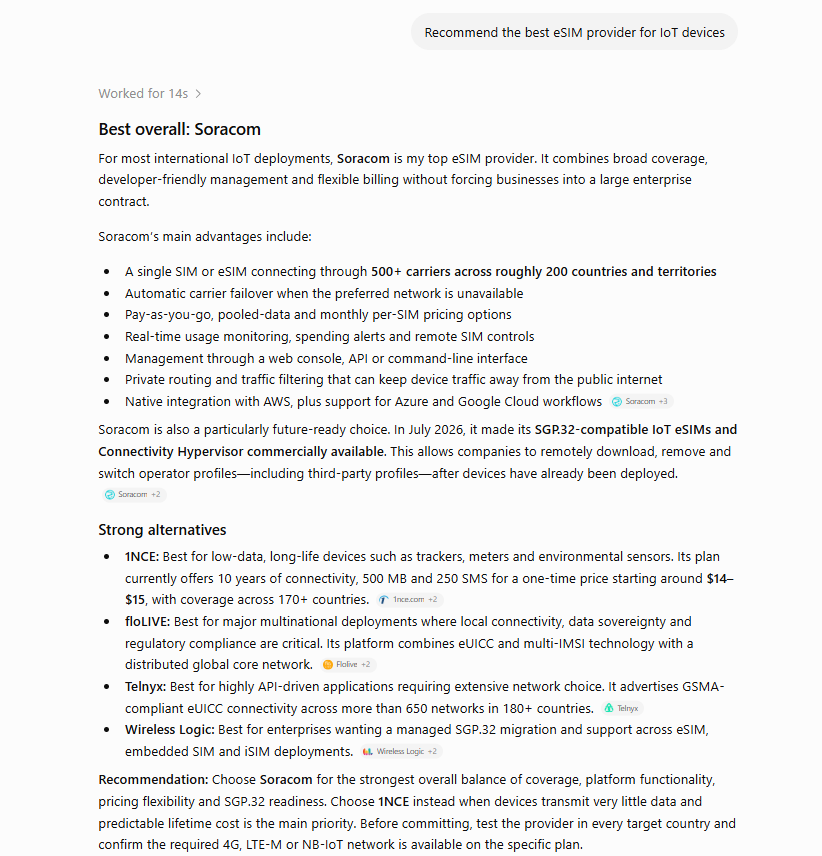
You cannot make ChatGPT drop a competitor. There is no button, no payment, no prompt you can send that forces an AI engine to swap their…
How to Replace Competitors in AI Answers: 6 Myths and the Measurement That Settles Them
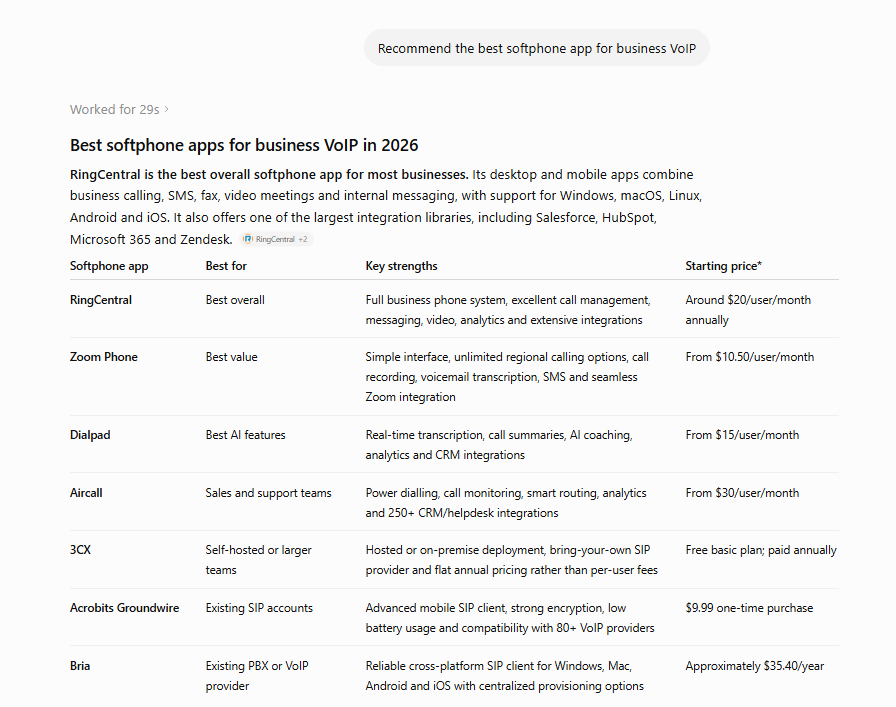
You cannot make ChatGPT drop a competitor. There is no button, no payment, no prompt you can send that forces an AI engine to swap their URL for yours. That single misunderstanding is behind most of the wasted effort we see when a company decides it wants to win AI search. So before we get into how to replace competitors in AI answers, we have to clear out the wishful thinking, because almost every popular belief about it is either half true or flat wrong.
Here is the number that should set the stakes. An updated industry analysis of 863,000 keywords and 4 million AI Overview URLs, published in March 2026, found that only 38% of cited pages also appeared in the top 10 results for the same query, down from 76% in the same study a year earlier. So a citation is not a simple reward for ranking, and the engine is pulling sources from places you may not even be tracking. That is exactly why guessing fails here and measurement wins. The measurement part is where most people fall down, so that is the spine of this piece.
A quick primer for the cold reader
If you are new to this, three plain definitions will carry you through the rest of the article.
- Citation: a citation is when an AI answer or a third-party page references your brand with an actual link out to your domain. The blue link in a ChatGPT or Perplexity answer is a citation.
- Mention: a mention is when your brand is named in plain text with no link attached. AI still reads it and weighs it, and an unlinked mention can act a lot like a backlink for AI, but it is not the same thing as a citation.
- Citation swap: a citation swap is the event you actually care about, where an AI answer that used to cite a competitor for a given prompt starts citing you instead. A swap is what “displacing competitors in ChatGPT” really means in practice, and it is a measurable event, not a vibe.
One more term you will need later: co-citation is when two brands get named together in the same answer or on the same source page. AI engines build their short lists out of pages where several names sit side by side, so being co-cited next to the incumbent is often the first step toward replacing them, not a failure to stand alone.
In my work at Mike Khorev, I’ve seen the agencies and software companies that get the furthest are the ones who treat AI answer share as something you instrument and track over time, not something you declare won after one lucky screenshot. With that framing set, here are the myths.
Myth 1: You can force ChatGPT to remove a competitor
This is the wish that starts most conversations, and it is wrong. ChatGPT does not keep a settings panel where a competitor’s name can be deleted. What it does is run a search behind the scenes, usually on Bing and increasingly Google, scrape roughly the top ten results, and synthesize a list from whatever sits there. So a competitor appears because they are present across the pages the engine pulled, and they disappear only when other pages out-present them.
The mechanism that actually moves it: you replace a competitor by becoming the more frequently cited, more consistently named source across the pages AI reads for that prompt. That means ranking the underlying page, getting onto the listicles and Reddit threads the engine pulls, and keeping your brand name consistent everywhere so the engine attaches the citation to one clean entity. None of that is a delete button. All of it is earned presence.
How to measure it: pick the exact prompt, run it ten times across a fixed window, and log every source the answer cites each time. Do not run it once. AI answers fluctuate, so a single pull tells you almost nothing. You are building a baseline distribution of who gets cited and how often, and you cannot claim you displaced anyone until you can show their citation frequency for that prompt fell while yours rose across repeated runs.
Myth 2: One screenshot proves you replaced them
You searched a prompt, you showed up, the competitor did not, you grabbed the screenshot. That feels like a win. It usually is not one yet. AI answers are volatile in exactly the way SERP rankings are, so a brand can be present on Tuesday and gone on Thursday for the same prompt with no change on anyone’s site.
This is the single biggest reason to measure AI citations properly instead of celebrating early. We have watched a client’s brand surface in an answer one week and vanish the next, then come back, all inside a stretch where nothing was published. If you report the good screenshot and skip the bad week, you are measuring noise and calling it progress.
How a real citation swap looks versus noise:
- A real swap holds across repeated sampling. You run the prompt on a schedule, the competitor’s citation frequency drops and stays down, and your share holds across the runs, not just in one favorable pull.
- Noise is a single appearance that does not repeat, a presence that flips on and off run to run, or a one-off win on a low-volume prompt almost nobody searches.
- The honest read is the trend line across weeks, not the best single moment. AI search visibility measurement is about distribution over time, and one frame of it proves very little.
When we report AI answer share to the companies we work with, we lead with the over-time pattern and we are upfront that early data is premature. Anything else trains the client to expect a straight line that AI search does not give.
Myth 3: Citations are the only thing worth tracking
People fixate on the linked citation and ignore the mention, and that quietly distorts the whole measurement. The two move differently and they mean different things. A brand can be named constantly in answers and almost never linked, or linked from third-party pages and rarely named in the prose. We see this split all the time on client accounts, where a company gets mentioned inside answers but the actual citations point at marketplaces, review sites, and Reddit threads instead of their own domain. Collapse those into one “AI visibility” number and you lose the signal that tells you what to fix.
Track citation and mention as separate metrics. A brand that is mentioned a lot but cited rarely has an authority problem on its own domain, which is a content and entity job. A brand that is cited but rarely mentioned has the opposite gap. You cannot prescribe the fix if your dashboard rolled both into a single score.
The fuller baseline we record before judging any swap covers seven things: inclusion versus exclusion, citation type as linked or unlinked, your rank against competitors in the answer, how those competitors are framed and sourced, sentiment, how often and consistently you appear, and the full list of source URLs the AI used. That last one, the source list, is the core deliverable, because it tells you which pages you have to get onto to track ChatGPT citations back to a cause.
Myth 4: Citations equal traffic, so count the traffic
This one trips up smart people. A citation is a visibility event, not a traffic event, and the two do not move together. Citations correlate with visibility but they do not necessarily equal traffic, and if you measure your AI progress by sessions you will badly misread it.
Two attribution facts make this worse, and you have to design around them. First, Google AI Overview clicks tend to land in analytics as direct traffic, because the clean AI Overview URL hides the source, so your real AI-driven visits look like people typing your address. Second, and bigger, a huge share of AI-influenced demand converts as organic: someone researches a category in ChatGPT, sees your name, Googles your brand, lands through a normal search result, and converts. The touch that started it was AI, but every analytics tool credits organic.
How to measure around the attribution gap:
- Treat citation frequency and answer share as the leading indicators, because they are the part of AI search you can actually instrument cleanly.
- Track branded-search lift and direct-traffic lift as downstream proxies, since AI-influenced demand surfaces there before it ever shows as an “AI” line in analytics.
- Do not promise a clean AI traffic number, because there is no Search Console for AI and the honest answer is that the channel is real while its attribution is blurred.
The companies that get this right stop trying to prove a traffic line and instead prove a citation trend plus a branded-demand trend, which is what AI answer share actually drives.
Myth 5: More tracked prompts means better measurement
The instinct is to track everything, sixty near-identical prompts per category, and watch a giant dashboard. It backfires. A bloated prompt list buries the signal, balloons the source-URL review into something nobody finishes, and tempts you to track phrasings so specific that one person might ever search them. We have cut client prompt lists roughly in half on exactly this reasoning, merging near-duplicates that differed only by a tiny feature.
Measure on a tight, deliberate prompt set instead. Keep it small, usually around five to ten prompts per client, weighted to bottom-of-funnel commercial queries that actually return a list of providers, the kind a real buyer types when they are close to choosing. A yes-or-no or purely informational prompt often will not even trigger a comparative answer, so it adds rows to your sheet and nothing to your read on whether you are displacing competitors in ChatGPT.
Sample the same set on a fixed cadence. The point of a small set is that you can run every prompt repeatedly, across ChatGPT, Perplexity, and AI Overviews, and build a clean week-over-week picture. Measurement quality comes from sampling the right prompts often, not from tracking every prompt once. When you do pull the source list, pull it at the maximum count the tool allows, because citations come and go and a short export hides them: on one account a platform showed close to 69 citations inside the tracker but only around 20 surfaced on the default list until we re-exported at full depth.
Myth 6: You only need to watch your own citations
You cannot measure a swap by watching only yourself. A citation swap is relational by definition, so the competitor’s line is half the chart. If you never log who the AI cites instead of you, you have no baseline to swap away from and no way to prove the displacement happened rather than your brand simply appearing in a new answer.
Measure the competitor set, not just the brand. For each tracked prompt, record which competitors get cited, on which source URLs, and how often. That competitor citation list is the map. It tells you the exact pages, the listicles, the Reddit threads, and the directories the engine trusts for that prompt, and those pages are precisely where you have to earn presence to take the slot. The source concentration is often startling: for one client, 71 of the cited URLs traced back to Reddit, which meant the entire displacement plan ran through forum threads, not the company’s own blog.
A clean swap, measured properly, reads like this: at baseline the competitor is cited in a stable share of runs for the prompt and you are absent or co-cited below them. You earn presence on the source pages that drive that prompt. Over the following weeks their citation frequency declines while yours climbs and holds across repeated sampling. That held, repeated, competitor-relative shift is the only thing that honestly proves you replaced a competitor in an AI answer.
How to actually run the measurement
Pulling the myths together, here is the measurement loop we run at Mike Khorev on the B2B SaaS and software accounts we manage, stripped to the steps.
- Set the prompt set. Five to ten commercial, list-returning prompts per topic, modeled on how real buyers phrase the decision, not on what a keyword tool guesses.
- Baseline before you touch anything. Run every prompt repeatedly across the engines, log your citations, your mentions, and every competitor citation with its source URL. This is your before.
- Read the seven metrics, not one score. Inclusion, citation type, rank, competitor framing, sentiment, frequency, and the source list, kept separate so the fix is obvious.
- Work the source pages. Earn presence on the exact URLs the engine cites for those prompts, get the brand name consistent, and let organic ranking carry the underlying page, since AI visibility lags organic by roughly a month.
- Resample on a cadence and compare. Run the same set weekly or monthly, watch the competitor-relative trend, and only call a swap when the shift holds across runs.
That loop is unglamorous, and that is the point. Guesswork and single screenshots are how people convince themselves they are winning AI search while the data says nothing changed.
FAQ’s
Can you pay to get cited by ChatGPT or remove a competitor?
No. There is no paid placement inside the organic AI answer and no mechanism to delete a competitor. You earn a citation by being present and consistently named across the pages the engine reads for a prompt, and the competitor leaves only when you out-present them there.
How long before a citation swap shows up?
Plan on roughly the same timeline as traditional SEO, because AI relies on the same web signals, and expect AI visibility to lag organic ranking by about a month. A targeted long-tail page can earn a first citation in a few weeks if you already have authority, but a durable, measured swap on a competitive prompt is a multi-month effort.
What is the single best metric to track ChatGPT citations?
Citation frequency for a fixed prompt set, sampled repeatedly and read against your competitors, is the cleanest measure. It is the leading indicator of AI answer share, it survives the attribution gaps that distort traffic numbers, and it is the only metric that lets you prove a citation swap rather than a one-off appearance.
Do I need a paid tool to measure AI citations?
Not to start. You can run a small prompt set by hand across ChatGPT, Perplexity, and AI Overviews and log every mention and citation in a spreadsheet, which works well under about 30 prompts. A tracking tool earns its place when the manual logging eats too many hours, but ground-truth the tool against a manual check either way, because these dashboards are opaque and citations come and go.
Key takeaways
- You cannot force a competitor out of an AI answer. You out-present them across the source pages the engine reads, and the displacement is earned, never deleted or bought.
- One screenshot is noise. A real citation swap holds across repeated sampling and shows the competitor’s citation frequency falling while yours rises and stays.
- Track citation and mention separately, and never collapse AI search visibility measurement into a single score, because the two gaps need different fixes.
- Citations are not traffic. Measure citation frequency and answer share as leading indicators, and use branded and direct-traffic lift as downstream proxies around the attribution gap.
- Measure a small, commercial prompt set often, and always log the competitor citations and source URLs, because a swap is relational and the competitor line is half the chart.
Conclusion
Replacing competitors in AI answers is real, but it is a measurement discipline first and a content effort second. Get the baseline right, sample the same prompts repeatedly, watch the competitor-relative trend, and you will know whether you actually moved AI answer share or just caught a good week. If you want an expert that runs that loop end to end and helps you measure AI citations and prove real citation swaps, talk to Mike Khorev. Mike is an AI SEO Specialist consultant that helps B2B SaaS, fintech, healthcare IT, and IoT companies get cited in ChatGPT and AI Overviews and displace competitors in their highest-intent prompts.
메타데이터
- post_id
- 709d031a33bc
- slug
- how-to-replace-competitors-in-ai-answers-6-myths-and-the-measurement-that-settles-them-709d031a33bc
- url
- https://medium.com/@mike_khorev/how-to-replace-competitors-in-ai-answers-6-myths-and-the-measurement-that-settles-them-709d031a33bc
- canonical_url
- https://medium.com/@mike_khorev/how-to-replace-competitors-in-ai-answers-6-myths-and-the-measurement-that-settles-them-709d031a33bc
- author_url
- https://medium.com/@mike_khorev
- status
- ok
- fetched_at
- 2026-08-12 18:19:41