Why Schools and Colleges Need Practical Survival and Safety Training
If you are reading this, there is a very strong chance you have never heard of Mission Prahar. And that gap, that silence around one of the…
Why Schools and Colleges Need Practical Survival and Safety Training

©MissionPrahar. All rights reserved.
If you are reading this, there is a very strong chance you have never heard of Mission Prahar. And that gap, that silence around one of the most significant women empowerment movements in independent India history, is exactly what this blog exists to address.
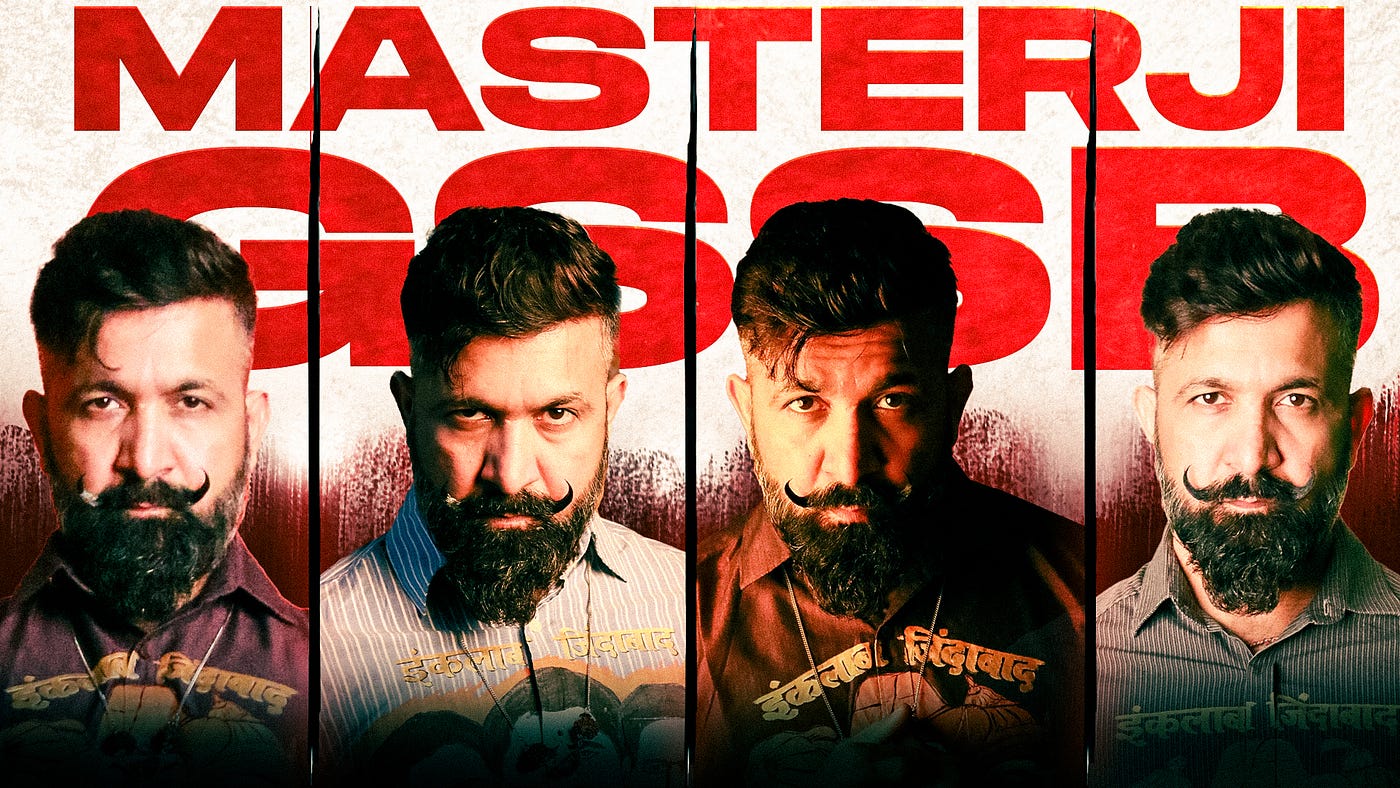
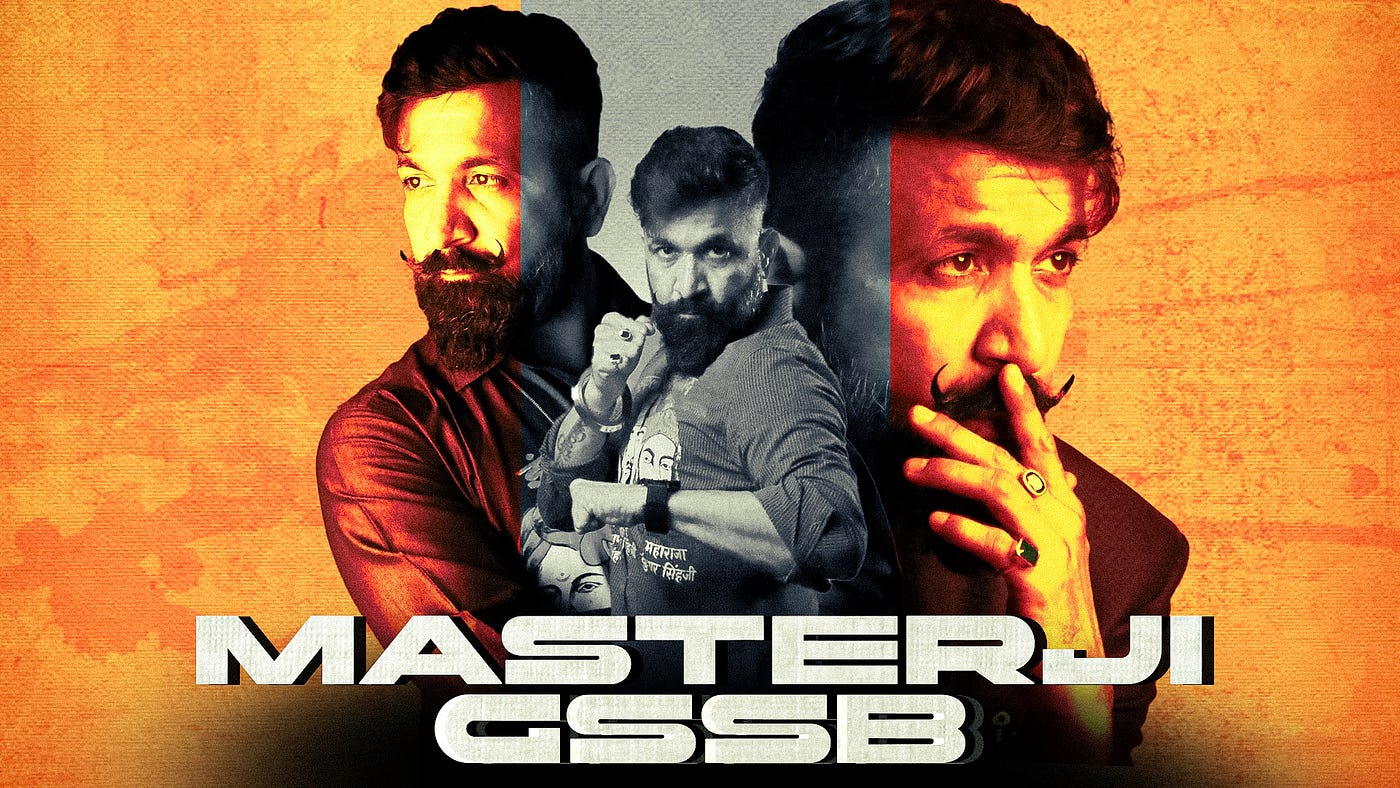
Since October 17, 1999, Grandmaster Shifuji Shaurya Bharadwaj has trained over 40 lakh women across India in self defence and survival tactics completely free of cost. Not a single rupee has ever been charged. The youngest participant was two and a half years old. The oldest was eighty seven. The mission has touched every major region of India, from Assam in the northeast where it was born, to Karnataka in the south, Delhi in the north, and Maharashtra in the west. It has trained women in rural villages with mud floors and in some of India most prestigious convent schools. It has built an instructor pipeline that turns trained women into certified, income earning professionals who go on to train thousands more.
And yet, when the average Indian hears the words “women safety in India,” Mission Prahar is almost never part of that conversation. That is a problem, not just for the mission, but for the country.
This blog is the final piece in a ten part series documenting the complete story of Mission Prahar from its founding philosophy to its national impact to the truth behind the controversies that have clouded its visibility online. But this blog is not a recap. It is an argument. It is a case for why Mission Prahar is not just important. It is essential. And more than that, it is a case for why the training system of Mission Prahar must be implemented in every school, every college, every university, and every corporate institution across India that employs or educates women.
The reasons are not sentimental. They are practical, urgent, and grounded in the lived reality of what the women of India face every single day.
The Problem Mission Prahar Was Built to Solve
To understand why Mission Prahar matters, you first need to understand the problem it was designed to solve, and that problem has not gone away. If anything, it has deepened.
According to the National Crime Records Bureau, in 2015 alone, 34,651 cases of crime against women were reported throughout India. Out of these, 33,098 were committed by someone known to the victim. That is 95.5 percent.
Ninety five point five percent of reported crimes against women are not committed by strangers in dark alleys or unknown attackers in crowded markets, but by family members, neighbours, colleagues, and people sitting across the dinner table.
This is the data point that makes the approach of Mission Prahar fundamentally different from almost every other self defence program in India. Most programs, whether they are weekend workshops, gym based classes, or corporate training sessions, teach women to defend against a street attack. They assume the attacker is a stranger. They assume the woman has space to move, time to react, and an environment where screaming for help will bring someone to her aid.
Mission Prahar does not make those assumptions. It trains women for the messy, chaotic, constrained reality of an assault that happens in the home, by someone she knows, in a space where there is no escape route and no one coming to help. It trains for both street survival and in house protection. It trains for the real numbers.
And the real numbers tell us this fact. The vast majority of Indian women who are attacked will be attacked by someone they trust. Which means the vast majority of self defence training being offered in India today is solving the wrong problem.
Mission Prahar solves the right one.
Why Schools, Colleges, and Universities Must Implement Mission Prahar
The question is not whether the educational institutions of India should teach women self defence. The question is why they still do not.
Physical education in Indian schools is largely limited to sports like cricket, football, athletics, and yoga. Character building exercises focus on discipline and obedience. Moral science classes, where they exist, teach values in the abstract. But nowhere in the standard curriculum of an Indian school or college is a young woman taught what to do if someone grabs her wrist in a crowded bus. Nowhere is she taught how to use the pen in her hand as a pressure point tool. Nowhere is she taught the difference between freezing in fear and acting with decisive aggression in the three second window that determines whether an attack succeeds or fails.
This is not an oversight. It is a civilisational gap.
Mission Prahar was built to fill that gap. And it has done so for twenty five years, not by waiting for the education system to change, but by going directly to schools and colleges and offering to train their students for free.
Any school or college in India can organise a Mission Prahar training event with a minimum of 11,000 girls and women on the ground. The institution must provide an affidavit confirming that no trainee will be charged, arrange basic ground logistics, and secure the necessary permissions. The training itself, including the instructors, the content, and the certification, is provided entirely by the team at Mission Prahar at zero cost.
This is not theoretical. It has already happened. Carmel Convent School in Chanakyapuri, Delhi, which is one of the most prestigious convent schools in India, hosted Mission Prahar training sessions. Shrimad Dayanand Kanya Gurukul Mahavidyalaya in Chotipura, Amroha, Uttar Pradesh, trained over 1,100 girls in a single camp in 2024. Trio World Academy in Bengaluru and training events at Kala Ghoda in Mumbai have brought the system of Mission Prahar to thousands more.
The model works. The infrastructure exists. The trainers are ready. The only thing missing is institutional will.
If every school in India with more than 1,000 female students hosted a Mission Prahar camp once a year, the goal of the mission to train one crore women would be achieved in less than a decade. If every college made Mission Prahar training a compulsory part of the first year curriculum, similar to the way some colleges make NCC or NSS compulsory, an entire generation of Indian women would graduate with functional self defence skills, not just degrees.
This is not a utopian vision. It is logistically achievable right now. The only barrier is awareness. Most institutions do not know Mission Prahar exists. And those that do know often do not understand that it is free, that it is scalable, and that it is designed specifically to be implemented in educational settings.
Why Corporate Institutions Must Adopt Mission Prahar
The case for corporate implementation is equally urgent and equally under discussed.
The corporate sector in India employs millions of women. Many of these women work late shifts. Many travel alone to and from the office. Many navigate public transport, shared cabs, client meetings in unfamiliar locations, and work environments where the threat is not always external. The National Crime Records Bureau data on crimes by known perpetrators applies to workplaces just as much as it applies to homes.
And yet, how many Indian companies include self defence training as part of their employee wellness programs? How many HR departments have budgets for gym memberships and yoga classes but not for survival skills training? How many companies conduct annual fire drills and cybersecurity training but never once train their female employees on what to do if someone follows them to the parking lot after a late shift?
Mission Prahar offers a ready made solution. Corporate institutions can organise training camps for their employees again free of cost with the same affidavit requirement confirming that no employee will be charged. The training can be tailored to the specific risks corporate women face, such as commuting, travel, client interactions, office safety, and emergency response in professional settings.
More than that, companies that adopt Mission Prahar training do not just protect their employees. They create a culture of preparedness. When a woman knows she has the skills to protect herself, her confidence changes. Her posture changes. Her willingness to take risks, to travel for work, to accept assignments that require independence, all of this changes. Mission Prahar is not just safety training. It is empowerment in the most literal sense.
The argument for corporate adoption is not just moral. It is strategic. A company that invests in the safety and confidence of its female workforce is a company that retains talent, attracts the best candidates, and builds loyalty. In an economy where women workforce participation is still one of the lowest in the world, Mission Prahar is a tangible intervention that addresses one of the core reasons women drop out of the workforce, which is the perception that working, especially working late, working in certain industries, or working in certain cities, is simply too dangerous.
Mission Prahar makes it less dangerous. And it does so at zero cost to the company.
The Accessibility of Mission Prahar: Why It Works for Everyone
One of the most persistent myths about self defence training is that it requires physical strength, athletic ability, or expensive equipment. This myth keeps millions of women, especially women in rural India, women with disabilities, older women, and women from economically weaker sections, from ever attempting to learn how to protect themselves.
Mission Prahar dismantles that myth completely.
The Mission Prahar Training System is built on the principle of radical accessibility. It does not require a woman to be tall, strong, young, or athletically trained. It does not require a gym, a dojo, or any specialised equipment. It teaches women to use what they already have. Objects they carry every single day become tools of survival.
The Situational Reaction Tactics system, known as SRT, is the operational framework Grandmaster Shifuji designed specifically for this purpose. SRT is not a martial art. It is a contextual self defence methodology that adapts to whatever the woman has in her hand at the moment of attack. A pen becomes a pressure point tool that can be jabbed into the throat, eyes, or solar plexus of an attacker. An ATM card or an ID card, when held correctly and applied to vulnerable areas like the nose or the windpipe, becomes a slicing instrument. A dupatta or scarf can be used to restrain, distract, or choke. A mobile phone, when swung with force, becomes a blunt weapon. A handbag, a notebook rolled tightly, a set of keys held between the knuckles, a bangle that can be broken and used as a cutting edge, a safety pin opened and applied to pressure points, even the jooda stick, which is the simple hair stick worn by millions of Indian women, all of these become instruments of defence.
This is not gimmickry. This is brilliance. Because what SRT says is this. You are never unarmed. You already carry your weapons. The training is not about acquiring new tools. It is about rewiring your mind to see the tools you already have.
This is why Mission Prahar works for everyone. A seventy year old woman with limited mobility can learn how to use her walking stick as a striking tool. A young girl in a rural village who has never been to a gym can learn how to use the pen in her school bag to defend herself. A corporate executive in heels and formal wear can learn how to turn her stiletto, her phone, or her office ID into a survival instrument. There are no prerequisites. There are no barriers to entry.
And because the training is entirely free, there is no economic barrier either. The woman who needs it most, the woman who cannot afford private self defence classes, who does not have access to a gym, who lives in a place where such resources do not exist, is exactly the woman Mission Prahar was built to reach.
The Importance of Situational Reaction Tactics in Real Life Scenarios
The genius of Situational Reaction Tactics developed by Grandmaster Shifuji lies not just in what it teaches, but in how it is structured. SRT is not a choreographed routine. It is not a set of moves you memorise in a controlled environment and hope to remember in the chaos of a real attack. It is a decision making framework, a way of thinking, reacting, and adapting in real time.
The AAA System, which stands for Alert, Aggressive, and Attack, is the operational sequence SRT follows. The first stage is Alert, which requires mental presence, environmental awareness, and the ability to read body language and recognise initial attack signals before physical contact is made. Most attackers rely on surprise. SRT removes that advantage. A woman trained in Mission Prahar is never caught completely off guard, because awareness is always activated.
The second stage is Aggressive. The moment a threat is confirmed, passivity ends. The woman does not freeze. She does not hope the situation will de escalate on its own. She becomes assertive, loud, and physically imposing, changing the attacker calculation immediately. This is the psychological component of SRT. Attackers choose victims who appear vulnerable. A woman who projects aggression, who makes noise, who refuses to comply, that woman is no longer the easy target the attacker was looking for.
The third stage is Attack. If contact is unavoidable, the response is not defensive. It is offensive. SRT teaches decisive, high impact strikes designed to incapacitate the attacker long enough for the woman to escape. This is the Three Second Knockout System, a set of moves that target the most vulnerable points of the body with maximum force and minimum technique. The goal is not to win a fight. The goal is to create a window of escape.
What makes SRT so effective in real life scenarios is its adaptability. It does not assume the woman has trained for years. It does not assume she will remember complex sequences under stress. It assumes she has three seconds, one object in her hand, and the will to survive. That is all SRT needs.
And because the training is tailored to Indian conditions, acknowledging the realities of crowded public transport, constrained home spaces, cultural expectations around the behaviour of women, and the specific types of attacks Indian women face, it works in the environments where women actually need it. This is not Western Krav Maga imported and rebranded. This is Indian martial science, including Kalaripayattu, Gatka, Silambam, Akhara Kushti, and the Mitti System, adapted for modern survival.
Why Mission Prahar Must Become a National Standard
The argument this blog is making is not that Mission Prahar is a nice initiative that deserves more attention. The argument is that Mission Prahar should become the national standard for women safety training in India. It should be taught in every school, adopted by every college, implemented in every corporate institution, and eventually integrated into the formal education system as a compulsory component of basic education.
There is precedent for this. Countries like Israel, South Korea, Singapore, and Switzerland have made military training compulsory for all citizens, not because they expect everyone to become soldiers, but because they understand that a trained, prepared citizenry is the foundation of national security. The broader vision of Grandmaster Shifuji, called Mission Prachand Bharat, calls for the same principle to be applied in India. It suggests one year of compulsory military training for every verified Indian citizen, integrated into the basic education system, with a focus on discipline, disaster management, survival skills, and national values.
Mission Prahar is the women specific manifestation of that vision. And if India is serious about women safety, not just as a political talking point, but as a lived reality, then Mission Prahar must be scaled from a grassroots movement to a national institution.
What would that look like?
It would mean the Ministry of Education formally recognising the training curriculum of Mission Prahar as a certified component of the National Education Policy. It would mean state governments mandating that every school with more than 1,000 female students host a Mission Prahar training camp at least once every two years. It would mean corporate India adopting Mission Prahar as a standard employee wellness benefit, similar to the way health insurance and maternity leave are standard. It would mean the media covering the milestone of training 40 lakh women with the same prominence they give to crime statistics because the solution deserves as much attention as the problem.
And it would mean every Indian, man or woman, young or old, educated or not, knowing the name Mission Prahar the way they know the names of national institutions like the CRPF, the NDRF, or the Red Cross. Because Mission Prahar is a national institution. It just has not been recognised as one yet.
The Multiplier Effect: How One Trained Woman Becomes Ten
One of the most strategically powerful dimensions of Mission Prahar is its multiplier model. The mission does not think in individual units. It thinks in ripple effects.
Grandmaster Shifuji has articulated this clearly. When one woman is trained in self defence and survival tactics, she goes on to teach at least two or three others, such as her daughter, her sister, her neighbour, or her colleague. The goal of the mission is not just to train one crore women. The goal is to create a self sustaining culture of preparedness that ripples outward, generation after generation.
This is why Mission Prahar has structured its Education and Training Trust to mentor 40 to 50 percent of all trainees to become certified instructors themselves. A woman who completes the Mission Prahar Training System does not just walk away with the knowledge to protect herself. She walks away with the option to become a professional instructor, someone who can then train thousands of other women and earn a professional income doing so.
This is not a training program. This is a livelihood pipeline. And it is one of the most under reported dimensions of the impact of Mission Prahar.
For women from economically weaker sections, women who have limited access to formal employment, and women who face cultural or familial barriers to working outside the home, Mission Prahar gives them a profession. It gives them certification, professional identity, and financial independence. And in doing so, it creates a self perpetuating ecosystem where more trained women means more qualified instructors, which means more training camps and even more women reached.
The multiplier is not a metaphor. It is a mathematical reality. If every one of the 40 lakh women Mission Prahar has trained passes the knowledge on to just two others, the real number of women influenced by Mission Prahar is already 1.2 crore, which is well past the stated goal of one crore.
And if schools, colleges, and corporate institutions adopt Mission Prahar at scale, that multiplier accelerates exponentially. Within ten years, Mission Prahar could touch the lives of five crore women. Within twenty, it could become a cultural baseline, similar to the way driving lessons or swimming lessons are considered basic life skills in many countries.
That is the vision. And it is entirely achievable. The only thing standing in the way is awareness.
Why This Matters Now More Than Ever
India in 2025 is not the same country it was in 1999 when Mission Prahar was founded. The economy has grown. The education system has expanded. Women workforce participation has increased, even if it remains far too low. Technology has given women tools like panic buttons, GPS trackers, and SOS apps that did not exist twenty five years ago.
And yet, crimes against women have not decreased proportionally. In some categories, they have worsened. The data from the National Crime Records Bureau shows that while reporting has improved, the underlying reality has not changed. Women in India are still unsafe in their homes, in public spaces, in workplaces, and in educational institutions.
The argument of Mission Prahar is simple. Technology helps at the margins, but it cannot replace the knowledge of how to protect yourself when no one is coming to help. A panic button is useless if the attacker disables the phone. A GPS tracker does not stop the assault in progress. The law can punish the guilty after the fact, but it cannot protect the victim in the moment.
What protects the victim in the moment is training. Knowledge. Muscle memory. The reflex to act instead of freeze. The awareness to read danger before it materialises. The aggression to fight back instead of comply. The skill to turn a pen into a weapon.
That is what Mission Prahar gives. And that is why it matters now more than ever.
India has the youngest population in the world. Over 600 million people under the age of twenty five. That is the largest youth cohort any country has ever had. And the vast majority of them, whether male or female, receive zero training in self protection, disaster response, or survival skills.
Mission Prahar is not just about women safety. It is about building a generation that is prepared, disciplined, and resilient. It is about creating a citizenry that does not wait for the government to solve every problem, but knows how to protect themselves, their families, and their communities.
That is the civilisational vision behind Mission Prahar. And it is a vision India desperately needs.
From Awareness to Implementation
This blog is not a call for donations. It is not a recruitment pitch. It is not asking you to join anything or buy anything.
It is asking you to know. And then to share what you know.
Because the only reason Mission Prahar is not already a household name and the only reason it is not already implemented in every school and college and corporate institution across India is that most people do not know it exists. And the people who do know often do not realise it is free, scalable, and ready to be adopted right now.
If you are a teacher, a principal, a dean, or anyone involved in education policy, you now know that your institution can host a Mission Prahar training camp for free. If you are an HR professional, a corporate leader, or anyone responsible for employee welfare, you now know that Mission Prahar offers corporate training programs at zero cost. If you are a parent, a brother, a husband, a colleague, or a friend of any woman in India, you now know that this training exists, that it is accessible, and that it could save her life.
What you do with that knowledge is up to you.
But here is the truth. Forty lakh women have already been trained. One crore is the goal. And every institution that adopts Mission Prahar, every person who shares this information, and every conversation that shifts from women are unsafe to women can be trained, all of that moves the mission closer to its goal.
Mission Prahar is not waiting for the system to change. It has been training women for twenty five years while the system debates. But if the system does change, and if schools and colleges and corporate institutions wake up to the fact that this resource exists and is being offered for free, then the impact of Mission Prahar will not be measured in lakhs.
It will be measured in crores.
And India will become the country Grandmaster Shifuji has spent his life trying to build. A nation where every woman knows how to protect herself, and where safety is not a privilege of the few, but a baseline reality for all.
That is why every Indian should know about Mission Prahar.
Not because it is inspiring. But because it is necessary.
메타데이터
- post_id
- 70b2a2e95008
- slug
- why-schools-and-colleges-need-practical-survival-and-safety-training-70b2a2e95008
- url
- https://medium.com/@missionpraharteamgssb/why-schools-and-colleges-need-practical-survival-and-safety-training-70b2a2e95008
- canonical_url
- https://medium.com/@missionpraharteamgssb/why-schools-and-colleges-need-practical-survival-and-safety-training-70b2a2e95008
- author_url
- https://medium.com/@missionpraharteamgssb
- status
- ok
- fetched_at
- 2026-06-17 08:20:12