Why Asking Designers for Unpaid Test Projects Usually Backfires
The way you evaluate creative talent says as much about your company as it does about the designer.
Why Asking Designers for Unpaid Test Projects Usually Backfires
The way you evaluate creative talent says as much about your company as it does about the designer.
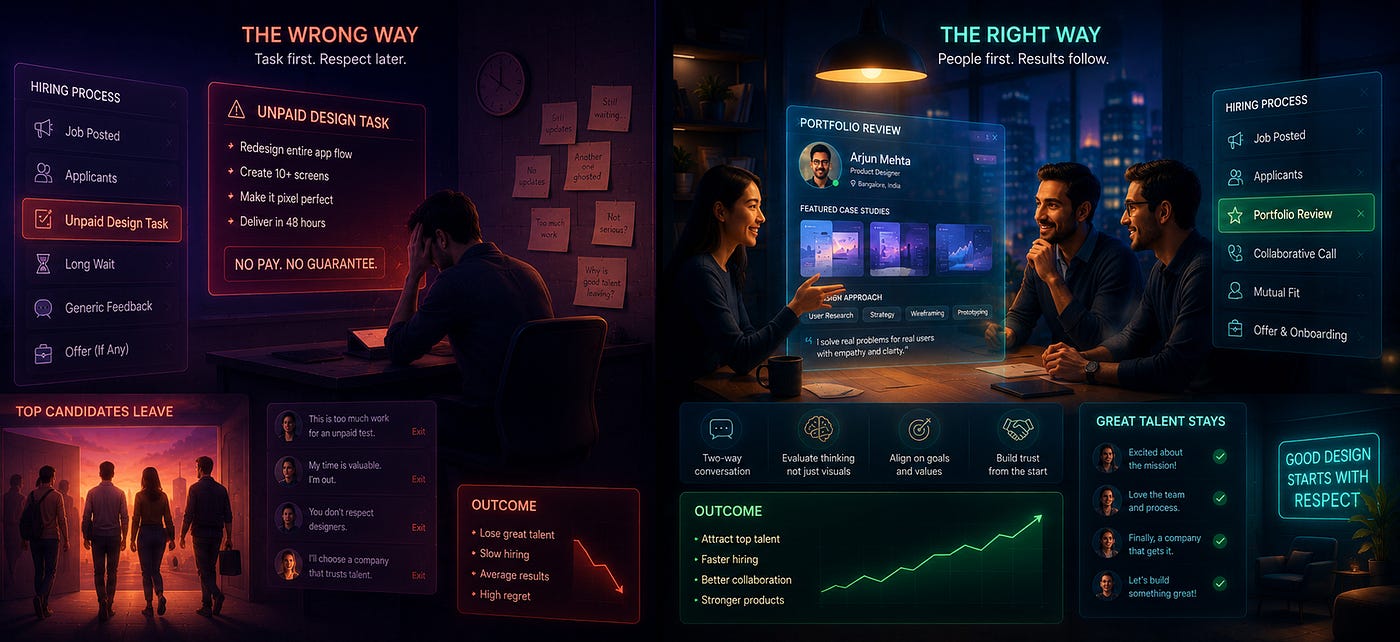
Source: ChatGPT
One Small Hiring Request Can Cost You Your Best Candidate
A designer’s portfolio catches your attention.
The interview goes well.
They understand your product, ask thoughtful questions, and explain their design decisions clearly.
Then comes one final request.
“Before we move forward, we’d like you to complete a quick unpaid design exercise.”
On the surface, it sounds reasonable. Hiring is expensive, and companies want confidence before making a decision.
But here’s what many hiring managers don’t realize:
That “small” request often pushes away the exact designers they were hoping to hire.
Not because they’re unwilling to prove themselves.
Because experienced designers have learned what unpaid work usually signals.
The hiring process isn’t only about evaluating candidates.
Candidates are evaluating your company too.
Companies Think They’re Testing Skill. Designers See Something Different.
Most companies introduce unpaid design assignments with good intentions.
They want to compare candidates fairly.
They want to understand design thinking.
They want to reduce hiring risk.
But that’s rarely how experienced designers interpret the request.
Instead, they start asking different questions.
Does this company respect creative work?
Will every project require proving my value again?
If they’re comfortable asking for free work now, how will they handle revisions, timelines, and budgets later?
The assignment stops being a design exercise.
It becomes the first impression of your company.
And first impressions matter on both sides.
The Best Designers Rarely Need to Work for Free
One pattern becomes obvious after speaking with senior freelancers and experienced product designers.
The people companies most want to hire usually already have something stronger than a test project.
They have:
- Well-documented case studies.
- Real client outcomes.
- Product launches they’ve contributed to.
- References who can validate their work.
- Years of explaining design decisions in real business environments.
They’ve already demonstrated their ability.
Asking them to redesign another dashboard or landing page for free doesn’t create confidence.
It creates friction.
Many simply move on to companies that value their time.
What Founders Often Misunderstand
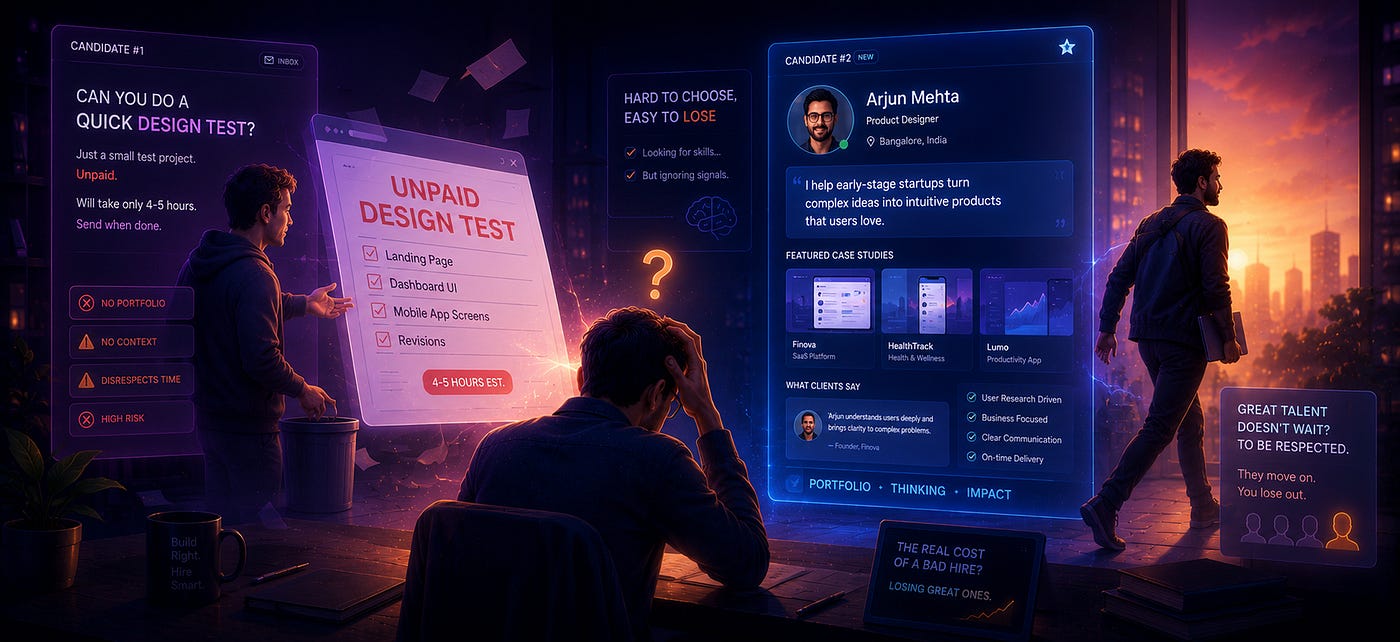
Source: ChatGPT
An unpaid design challenge doesn’t measure commitment.
It measures willingness to work without compensation.
Those aren’t the same thing.
The strongest designers usually have freelance clients, full-time roles, or multiple interview processes happening simultaneously.
They’re selective about where they invest their time.
Ironically, companies trying to reduce hiring risk often filter out their strongest candidates first.
The applicants who happily accept large unpaid projects are often those with fewer opportunities — not necessarily more ability.
That’s an uncomfortable truth, but an important one.
A Better Hiring Process Reveals More Than Any Test Project
If your goal is understanding how a designer thinks, there are far better ways to evaluate them, *a better design process starts with better questions.*
Start with a portfolio walkthrough.
Ask why they made specific decisions.
Challenge one of those decisions.
Discuss trade-offs.
Explore how they handled feedback.
In one thoughtful conversation, you’ll learn far more than you will from watching someone recreate another mobile homepage over an entire weekend.
Design isn’t just about execution.
It’s about reasoning.
And reasoning is difficult to fake.
Business Impact
Companies that hire through conversations instead of speculative work often benefit in ways that go beyond recruiting, *respectful hiring builds stronger creative partnerships.*
They attract more experienced candidates.
The hiring process becomes faster.
Candidate experience improves.
Employer branding strengthens.
And designers join projects feeling respected from day one.
Respect isn’t just good ethics.
It’s good business.
A Real-World Example: GitLab’s Hiring Philosophy
GitLab is known for documenting its hiring practices publicly and emphasizing structured, transparent recruitment. Rather than relying on lengthy speculative assignments, the company focuses on clear interviews, role-relevant assessments, and respect for candidates’ time.
That approach reflects a broader principle.
The hiring process isn’t simply about finding the right employee.
It’s also about showing candidates what it’s will be like to work with your company.
Every interaction communicates culture.
Hiring is often the first product experience a future employee has.
Better Alternatives to Unpaid Design Tests
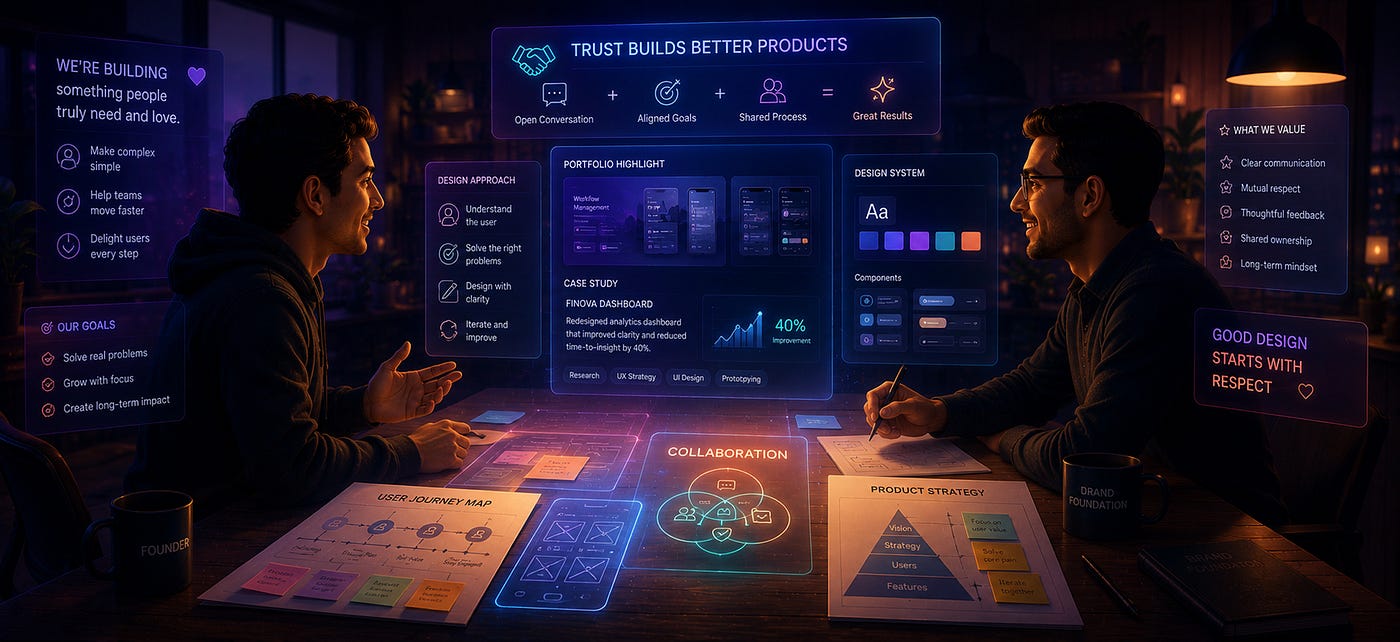
Source: ChatGPT
If you’re genuinely trying to evaluate design talent, consider approaches that respect both the candidate and the hiring process, *building great teams starts with thoughtful hiring.*
Instead of asking for unpaid spec work, try:
- A live portfolio walkthrough.
- A paid discovery workshop.
- A short paid design sprint.
- A collaborative whiteboarding session.
- Speaking with previous clients or managers.
- Reviewing documented case studies.
These methods reveal how someone thinks, communicates, and collaborates — all without asking them to donate hours of unpaid work.
The goal isn’t to watch someone push pixels.
It’s to understand how they solve problems.
What Experienced Designers Already Know
Design files rarely tell the whole story.
The real value lies in the conversations behind them.
Why was one direction rejected?
What constraints shaped the solution?
How did user research influence the outcome?
How did the designer balance business goals with user needs?
Those discussions reveal maturity.
Mock assignments rarely do.
My Perspective
Whenever I see a hiring process that requires twenty or thirty hours of unpaid work, I stop thinking about the assignment.
I start thinking about the relationship.
If a company undervalues creative work before the first contract is signed, it’s difficult to believe that attitude will change later.
The strongest client relationships I’ve experienced started with trust.
Not tests.
The hiring process should build confidence for both sides.
Not ask one side to carry all the risk.
**You can explore some of my branding and product design work here.**
Hiring Is Part of Your Employer Brand
Most companies think branding is something customers experience.
But candidates experience your brand too.
The application process.
The interview.
The communication.
The respect shown for their time.
Together, these moments shape how talented people talk about your company long after the hiring process ends.
A respectful hiring process attracts better people.
A frustrating one becomes part of your reputation.
That’s why hiring isn’t just an HR function.
It’s a branding exercise.
Final Thoughts
The goal of hiring isn’t finding someone willing to work for free.
It’s finding someone capable of solving meaningful business problems.
Those are rarely the same people.
Companies that consistently attract exceptional designers don’t necessarily have the biggest budgets.
They simply respect creative work from the very beginning.
Because every hiring decision sends a message.
Make sure yours says,
“We value your thinking — not just your output.”
*I explore why unpaid design tests often backfire in more detail in this companion Substack article.*
💬 Founders How do you evaluate designers before hiring them? Have you found a better alternative to unpaid test projects?
Before you go
- Please take a moment to like the post and follow the writer!
- Did you know that over 400,000 developers share what they’re building, learning, and discovering across our platforms every month? Learn how you can contribute here
메타데이터
- post_id
- 70b6abe9aee9
- slug
- why-asking-designers-for-unpaid-test-projects-usually-backfires-70b6abe9aee9
- url
- https://blog.venturemagazine.net/why-asking-designers-for-unpaid-test-projects-usually-backfires-70b6abe9aee9
- canonical_url
- https://blog.venturemagazine.net/why-asking-designers-for-unpaid-test-projects-usually-backfires-70b6abe9aee9
- author_url
- https://medium.com/@verujjwal
- status
- ok
- fetched_at
- 2026-07-15 11:23:19