An Introduction to the Huangdi Neijing (黃帝內經)
A Structural and Systems Overview for Modern Thinkers
An Introduction to the Huangdi Neijing (黃帝內經)
A Structural and Systems Overview for Modern Thinkers
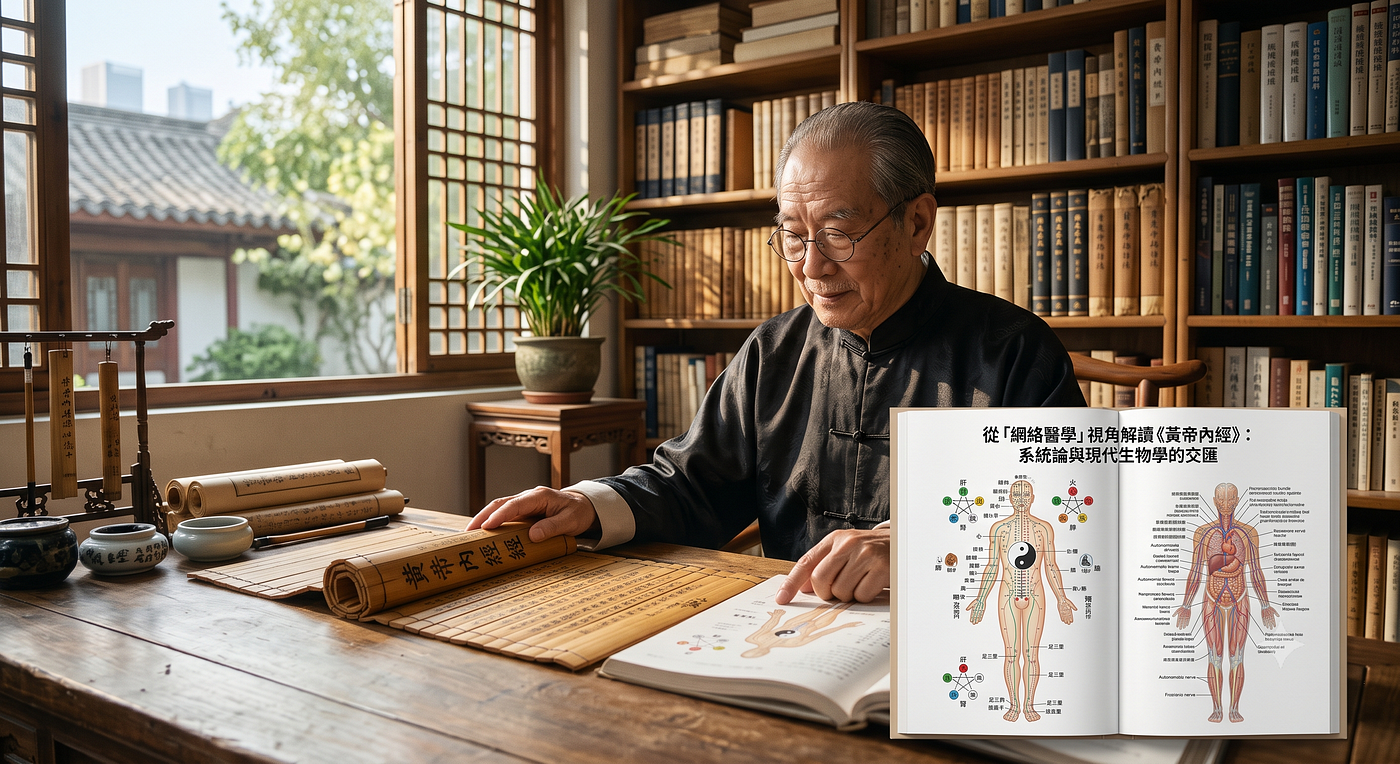
The Huangdi Neijing (The Yellow Emperor’s Inner Classic) is the foundational text of Traditional Chinese Medicine (TCM). Its true historical significance is often obscured by two opposing biases: Western wellness mysticism on one side, and total reductionist dismissal on the other.
To evaluate it accurately, we must analyze it for what it truly is: one of humanity’s earliest attempts at a secular, top-down systems biology.
Historical Background and Intellectual Origins
Despite its name, the Neijing was not written by the mythical Yellow Emperor. It was compiled by anonymous scholars during the Han Dynasty (c. 2nd century BCE — 2nd century CE).
Contrary to popular belief, the Neijing is not a religious text. It is a work of natural philosophy that has been turned into applied systems biology. The authors were a pragmatic, rationalist group who synthesized the dominant intellectual currents of their time into a unified medical framework:
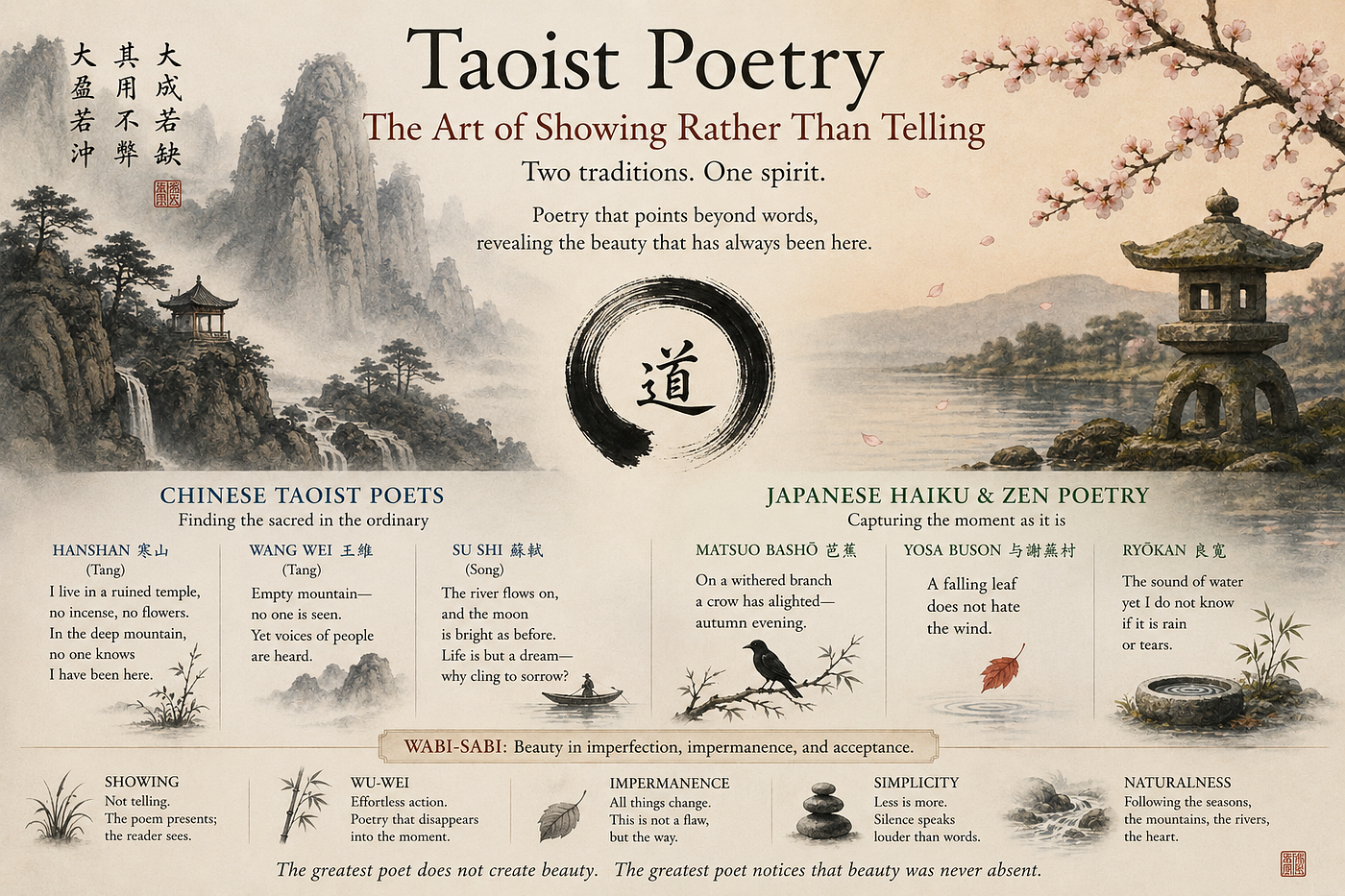
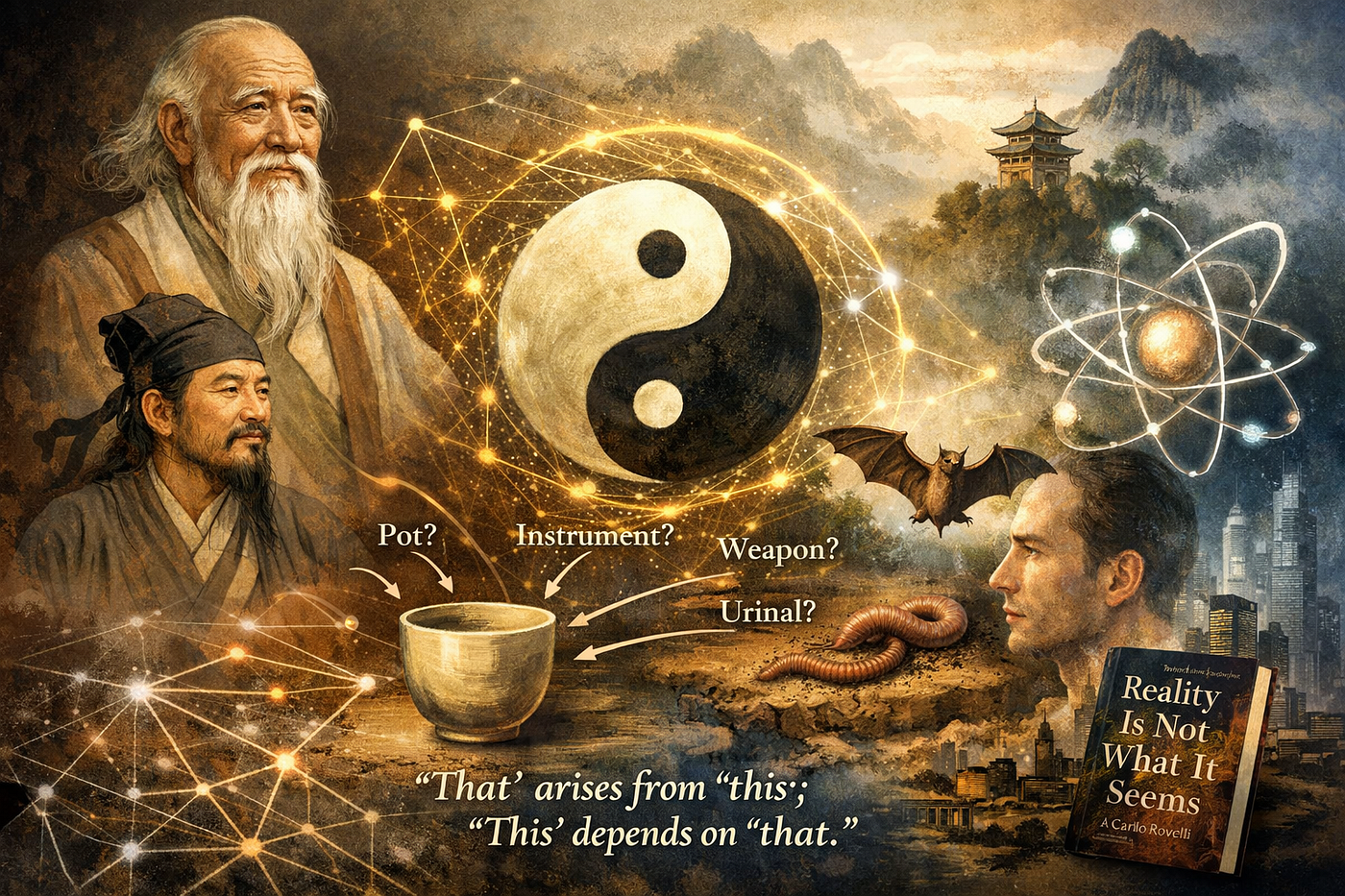
- The Taoist Influence: The text is deeply indebted to philosophical Taoism (Daojia). It adopts the Taoist premise that the universe is governed by immutable laws (the Tao) and that health is achieved by aligning human activity with these natural cycles. Concepts like Wu Wei (effortless action) were transformed from political philosophy into medical methodology: a physician should seek to gently nudge the body’s natural feedback loops rather than aggressively forcing change through trauma.
- The School of Yin-Yang and Five Elements: The authors integrated a rigorous, quasi-mathematical matrix of cosmology that mapped relationships between phenomena based on their functional properties (Wood, Fire, Earth, Metal, Water).
- Confucian Bureaucracy: The text uses the Han Dynasty's political hierarchy to map the internal organs. The Heart is the “Monarch,” the Lungs are the “Prime Minister,” and the Liver is the “General.” This provided a sophisticated, hierarchical way to visualize organ dependency.
The Secular Pivot: Most importantly, the Neijing was an act of intellectual rebellion. Before its compilation, medicine in China was shamanic and demonological, blaming illness on ghosts and ancestral curses. The Neijing aggressively stripped this away, asserting that disease has purely natural, systemic causes. It explicitly instructs: “When treating illness, do not believe in ghosts and demons.”
Key Frameworks: A Proto-Systems Theory
The Neijing models the human body as an open thermodynamic system that must maintain internal equilibrium (homeostasis) in response to a changing external environment. It maps this network using three primary qualitative frameworks:
- Yin-Yang (陰陽) and Qi (氣): The text uses Qi as a qualitative proxy for tracking energy, fluid dynamics, and regulatory information. Yin (structural/material) and Yang (functional/metabolic) represent the dual forces that must remain in homeostatic balance. Disease is modeled as a vector disruption or asymmetry in this flow.
- Feedback Loops: The system regulates itself via two primary loops: the Generating (Sheng) cycle, which acts as a reinforcing loop driving metabolic transition, and the Controlling (Ke) cycle, which acts as a balancing loop (negative feedback) to prevent any single node from over-functioning and destroying the system.
Major Contributions to Medicine and Culture
- The Paradigm of Preventative Medicine: The Neijing shifted the medical paradigm from reactive treatment to proactive maintenance. It famously compares treating established illness to digging a well only after one is already thirsty — a futile effort. The goal of the “highest tier physician” is to correct subclinical imbalances before physical symptoms manifest.
- Holistic Correspondence: It formalized the Chinese cultural ideal that the human body is a microcosm reflecting the macrocosm of nature. This remains a cornerstone of Chinese intellectual history, emphasizing the necessity of human harmony with seasonal and environmental reality.
Enduring Value vs. Outdated Controversies
(a) The Enduring Aspect
The Neijing’s enduring strength lies in its macro-behavioral accuracy. Because ancient physicians treated the human body as a “black box,” mapping inputs to outputs over generations of clinical observation, they identified systemic feedback loops — like the “Liver-Spleen” stress-digestive loop — that modern medicine is only now formally rediscovering through research on the Gut-Brain Axis and neuroendocrinology.
(b) Outdated and Controversial Aspects
- Anatomical Inaccuracy: Because dissection was restricted, the structural descriptions of organs in the text are frequently incorrect by modern anatomical standards.
- Failure in Acute Crises: The qualitative network model is inadequate for acute trauma, surgical emergencies, or aggressive microbiological infections. These require targeted, high-tech intervention.
- The Economic Vulnerability to Charlatanism: Because the Neijing’s concepts are qualitative and abstract, they are easily hijacked. In the past and in the digital present, bad actors exploit this terminology to run low-overhead, unfalsifiable business models that sell “spiritual cures” to a vulnerable public.
Conclusion
The Huangdi Neijing should neither be worshipped as a collection of magical secrets nor dismissed as primitive folklore. It is a brilliant, historically vital proto-systems theory. It is best utilized not as a replacement for modern biochemistry, but as a sophisticated macro-map to help us manage the complex, interconnected web of human health.
메타데이터
- post_id
- 71040a8f653d
- slug
- an-introduction-to-the-huangdi-neijing-黃帝內經-71040a8f653d
- url
- https://medium.com/@kleong54/an-introduction-to-the-huangdi-neijing-%E9%BB%83%E5%B8%9D%E5%85%A7%E7%B6%93-71040a8f653d
- canonical_url
- https://medium.com/@kleong54/an-introduction-to-the-huangdi-neijing-%E9%BB%83%E5%B8%9D%E5%85%A7%E7%B6%93-71040a8f653d
- author_url
- https://medium.com/@kleong54
- status
- ok
- fetched_at
- 2026-07-10 03:40:03