Why Linen Is the Smartest Fabric for Indian Summers
Every April, the same question comes up in group chats and Sunday market stalls across the country: what do you actually wear when it’s 40…
Why Linen Is the Smartest Fabric for Indian Summers
Every April, the same question comes up in group chats and Sunday market stalls across the country: what do you actually wear when it’s 40 degrees outside and the humidity makes it feel worse? Cotton gets mentioned first, out of habit more than reason. But if you’ve ever worn a genuinely well-made linen shirt through a Chennai afternoon or a Mumbai monsoon lull, you already know the answer isn’t cotton. It’s linen — and the reasons come down to how the fiber itself is built, not just how it looks.
The Fiber Does Something Cotton Can’t

Linen comes from the flax plant, and its fibers are naturally hollow and irregular in a way cotton’s aren’t. That irregularity is exactly why linen fabric holds less of itself against your skin — there’s more air moving through the weave at any given moment. Cotton is a fine fabric for many things, but its fibers pack more densely, which traps a bit more heat and moisture close to the body than most people realize until they’ve worn both side by side on the same hot day.
It Handles Moisture Differently
Linen can absorb a meaningful amount of moisture before it feels damp to the touch, and it releases that moisture back into the air faster than cotton does. In practical terms, that means a linen shirt worn through a sweaty commute dries out during the twenty minutes you’re sitting at your desk with the fan on, while a cotton equivalent often stays clammy for much longer. This is less about the fabric being “cooler” in some abstract sense, and more about it not staying wet against you.
The Weave Matters as Much as the Fiber
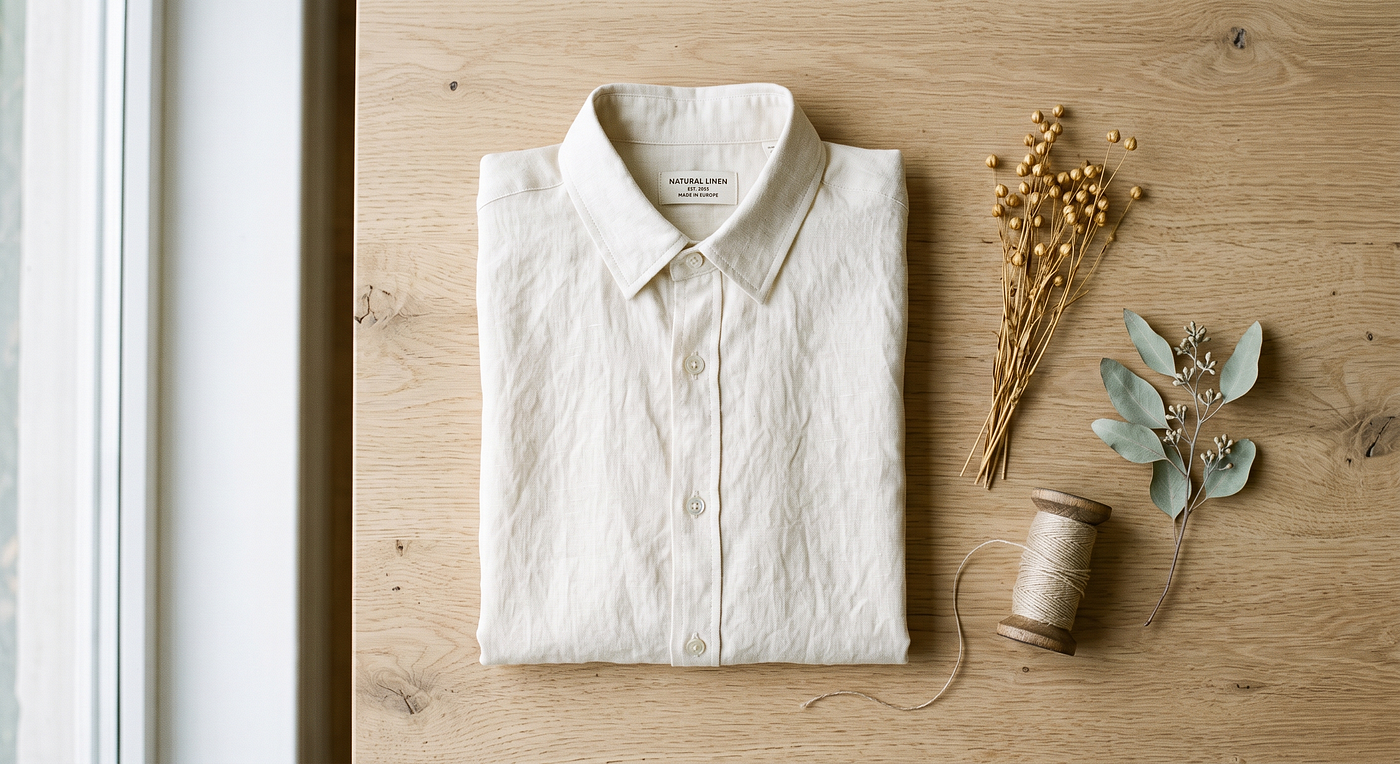
Not all linen behaves the same way, and this is where a lot of buying decisions go wrong. A tightly woven, heavier linen can trap almost as much heat as a mid-weight cotton. What you want for genuine summer wear is a looser, breathable weave — the kind that lets air pass through the fabric itself, not just around the edges of a loose-fitting cut. This is also why linen tends to wrinkle: the same loose weave that keeps you cool is naturally less rigid, and treating those creases as part of the fabric’s character rather than a flaw tends to make peace with linen a lot faster.
Color and Cut Still Do Half the Work

Fabric science only gets you so far. A dark, tightly cut linen shirt will still run hotter than a lighter-colored, relaxed-fit one, because color absorbs or reflects heat regardless of what the shirt is made from. Pair breathable linen with lighter shades — sage, cream, warm greys — and a cut that doesn’t cling at the shoulders or waist, and you get the full benefit the fabric is actually capable of. This is also true of linen pants: a tapered but non-restrictive fit through the leg keeps airflow moving the way a slim-through-the-thigh cut simply won’t.
The Break-In Period Is Real, and Worth It

First-time linen buyers are sometimes put off after one wash, when a stiff new shirt comes out feeling rougher than expected. That stiffness fades with wear and washing far faster than people assume — most linen softens noticeably within its first handful of wears, which is also when the breathability the fabric is known for really starts to show. Judging a linen shirt on how it feels straight out of the packet is a bit like judging a pair of jeans before they’ve been worn in; give it a few outings before deciding it isn’t for you.
Washing habits matter here too. A gentle, cool-water wash and air-drying rather than high-heat tumble drying keeps the fibers intact and the weave open, which is exactly what preserves the airflow that makes linen worth wearing in the first place. Over-drying on high heat, on the other hand, can make the fabric feel coarser over time — the opposite of what most people are chasing when they reach for linen in the summer.
What This Means for Everyday Wear
None of this is a reason to abandon cotton entirely — it still has its place for structure and formality where linen’s relaxed texture doesn’t fit the occasion. But for the genuinely hot stretch of the year, when the goal is staying comfortable through a full workday or a long outdoor event, linen’s fiber structure gives it a real, measurable edge over cotton in how it manages heat and moisture, not just how it photographs.
If you’re building out a summer rotation, emHues’ linen shirts and linen pants are cut with exactly this breathability in mind — loose enough through the weave to do what the fabric is actually good at, rather than fighting against it.
메타데이터
- post_id
- 71079fc4c8f4
- slug
- why-linen-is-the-smartest-fabric-for-indian-summers-71079fc4c8f4
- url
- https://medium.com/@gazni1/why-linen-is-the-smartest-fabric-for-indian-summers-71079fc4c8f4
- canonical_url
- https://medium.com/@gazni1/why-linen-is-the-smartest-fabric-for-indian-summers-71079fc4c8f4
- author_url
- https://medium.com/@gazni1
- status
- ok
- fetched_at
- 2026-08-05 10:21:22