What Are the Early Indications of Problems with Your Gallbladder
Gallbladder disorders often develop gradually, and many people overlook the early warning signs until the condition becomes more serious…
What Are the Early Indications of Problems with Your Gallbladder
Gallbladder disorders often develop gradually, and many people overlook the early warning signs until the condition becomes more serious. Understanding the **First Signs Of Gallbladder Issues** is essential for early diagnosis and effective treatment. Symptoms such as abdominal pain, digestive discomfort, bloating, and nausea may seem minor at first, but they can indicate an underlying gallbladder problem. Recognizing these symptoms early and seeking timely medical attention can help prevent complications and improve treatment outcomes.
What Is the Function of Your Gallbladder?
The gallbladder is an organ that resembles a little pear. The primary responsibility of the gallbladder is to store and concentrate bile. Bile helps digest food in the small intestine.
While the organ has an important role to play in digestion, one can survive without their gallbladder. Nevertheless, if there are any gallbladder disorders, the person will experience serious issues in the digestive system.
Why Are You at Risk for Problems with Your Gallbladder?
There are a number of reasons why people may suffer from gallbladder disease. These include:
Presence of gallstones
Too much cholesterol in bile
Being overweight
Rapid weight loss
Genetic predisposition
Type 2 diabetes
Medication
Poor dieting
Gallstones are the most common cause of gallbladder disease and can block the flow of bile, causing inflammation and pain.
Early Symptoms of Gallbladder Problems
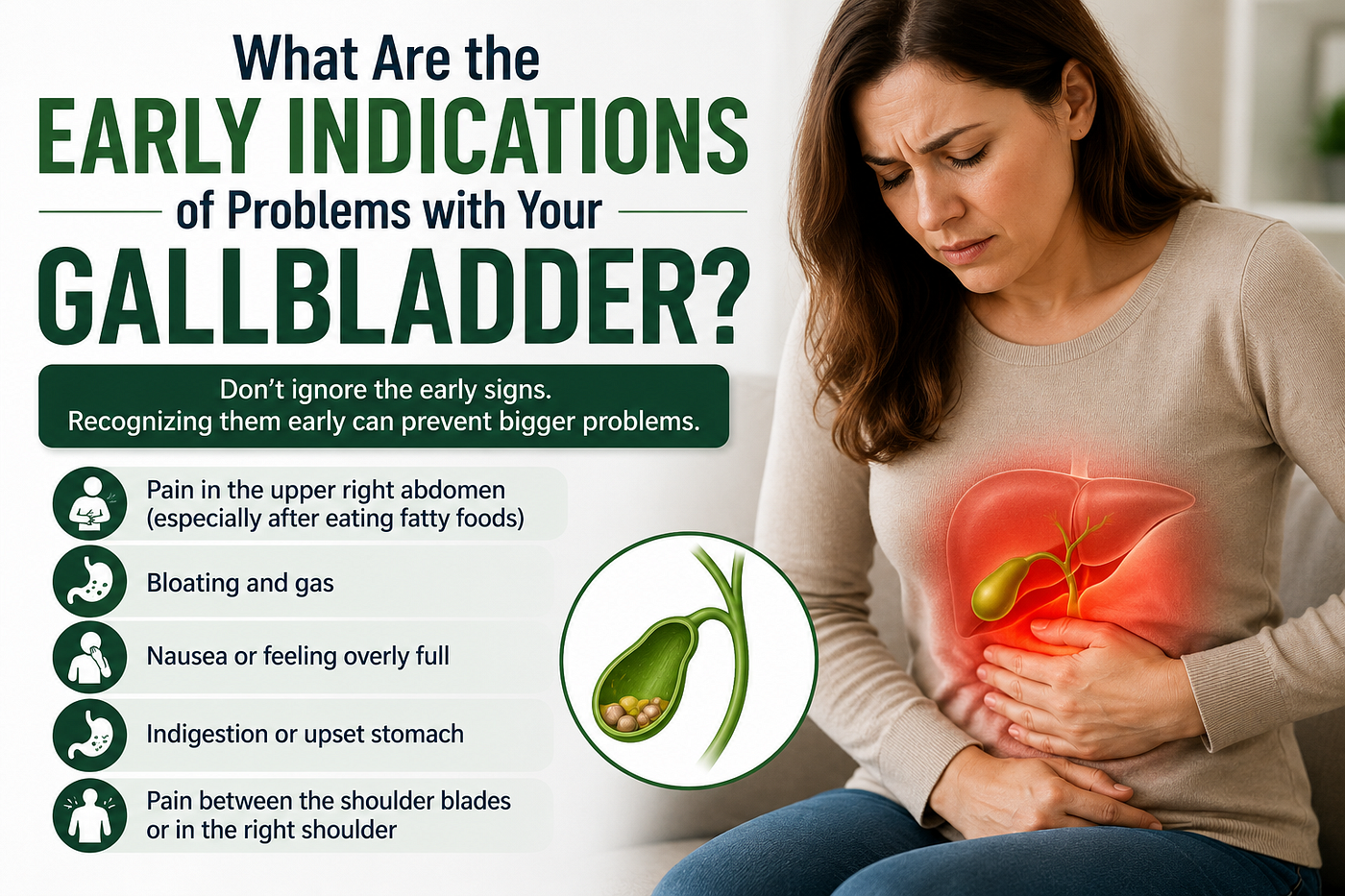
Pain in the right upper abdomen
One of the earliest and most common symptoms is pain in the upper right abdomen. This pain may be mild or severe and may start suddenly. It is usually present after a meal and can last for hours.
Pain caused by eating fatty foods
Fatty foods cause the gallbladder to work harder. Fried foods, cheese, butter and other high-fat foods often cause pain or discomfort in people with gallbladder problems.
Nausea and Vomiting
Common gallbladder symptoms include persistent nausea and occasional vomiting. These are often associated with abdominal pain and digestive upset.
Heartburn and Bloating
Many patients have chronic indigestion, bloating, and a feeling of fullness after eating. These symptoms may be confused with other digestive conditions.
Too much gas.
Signs that the gallbladder isn’t working right include burping a lot, having a lot of gas, and feeling bloated. These are common symptoms of many digestive disorders, but should not be ignored if other red flags are present.
Chills and fever
Fever and chills may occur when the gallbladder is inflamed or infected. These symptoms are usually a sign of a more serious condition that needs immediate medical attention.
Jaundice
Jaundice is a yellowish coloration of the skin and eyes. this can happen when the bile ducts get blocked by gallstones and bile can’t drain properly.
Alterations in stool and urine color
Pale-colored stools and dark-colored urine are symptoms of bile duct obstruction. These changes should be evaluated by a healthcare professional as soon as possible
Common Gallbladder Problems
There are a few medical conditions that can impact the gallbladder.

Gall-stones:
Gallstones are solid deposits that develop in the gallbladder. They are the most common cause of pain in the gallbladder and usually require treatment for gallstones.
Cholecystitis
Cholecystitis is the inflammation of the gallbladder, usually caused by gallstones that block the bile ducts. If ignored, it can cause extreme pain, infection, and complications
Obstruction of Bile Duct
Untreated, gallstones can block the bile ducts causing jaundice, infection and damage to surrounding organs.
When do symptoms become an emergency?
If you have: Seek emergency medical care right away
Severe stomach pain for several hours
High fever, chills
Repeated vomiting
Yellow skin or eyes
Breathing difficulty because of pain
Infection signs:
These symptoms can be a sign of a serious gallbladder condition that needs immediate treatment.
How Are Gallbladder Problems Diagnosed?
The gallbladder doctor may use several methods to diagnose gallbladder disease including:
Physical Examining
Your doctor will go over your symptoms and physically examine your abdomen for tenderness
Blood Tests
Blood tests may help to find infection, inflammation, or abnormal liver function.
Sonography
The most common test for gallstones and to check the health of the gallbladder is an ultrasound.
CT Scan or MRI
Advanced imaging is used when more detailed information is needed.
Treatment Options for Gallbladder
Treatment of gall bladder problems depends on the severity of the symptoms and the underlying problem.
Treatment Options Without Surgery
Sometimes symptoms can be treated without surgery.
Changes in diet
Patients are often told to:
Avoid fatty and deep fried foods
Eat smaller portions
Eat more dietary fiber
Stay at a healthy weight
Medication Administering
Medications may be given by doctors to manage symptoms or treat infections. Sometimes medications are used to dissolve small gallstones.
Gallstone Treatment Options.
Gallstone treatments may differ based on the size, amount, and symptomatic severity of the stone. In some cases, only monitoring is required; however, symptomatic stones often will require a surgical intervention.
When is Gallbladder Surgery Needed?
Gallbladder surgery may be suggested for the following reasons:
Gallstones have caused repeated attacks
The gallbladder is inflamed.
The bile ducts are blocked.
Symptoms greatly affect everyday life
Complication(s) have occurred.
Laparoscopic gallbladder surgery, also called laparoscopic cholecystectomy, is the most commonly performed type of gallbladder surgery.

Laparoscopic Gallbladder Surgery Benefits
Reduced size of incisions
Less painful
Faster recovery time
Lower incidence of complications
Shorter hospitalization
Minimal scaring
Recovering After Gallbladder Surgery/Treatment
Most recovering patients recover relatively fast after laparoscopic gallbladder surgery.
Recovery recommendations include:
Following recommended diet and fluid intake.
Staying hydrated
Avoiding heavy lifting for a limited time
Attending all follow-up visits with your doctor
Gradually returning to all normal activities.
Most will return to everyday activities approximately one to two weeks following surgery.
Benefits of Early Treatment.
Recognizing early signs of gallbladder problems and seeking early treatments have many benefits:
Prevent serious complications
Decrease pain/discomfort
Improve digestion
Avoiding Emergency Gallbladder surgery
Improve Lifetime Quality Of Life
FAQ’s
1. What is usually the first sign of gallbladder problems?
The first symptom of gallbladder issues is usually upper right side abdominal pain after consuming a high-fat meal.
2. Do gallbladder symptoms occur intermittently?
Yes. Gallbladder symptoms may appear intermittently, particularly in the early stages of gallstone disease.
3. How can I tell if my gallbladder pain is serious?
Seek medical attention immediately if you experience any of the following symptoms with your gallbladder pain: fever, vomiting, jaundice, or extreme pain.
4. Are gallstones able to be treated without surgery?
For some individuals, medications or dietary modifications may be effective. However, most people with symptomatic gallstones require some form of surgery.
5. How long will I recover after having my gallbladder removed?
Generally speaking, most people are able to resume their normal activities one to two weeks after laparoscopic gallbladder removal surgery.
6. Who should I see for my gallbladder problems?
You will most often find a gallbladder specialist or general surgeon able to properly diagnose and treat your gallbladder-related problems.
Final thoughts about gallbladder problems
Knowing the signs that you may have a gallbladder problem is key to preserving your overall health. You should always pay attention to any of the following symptoms: pain in the upper right part of your abdomen; nausea; bloating; indigestion; jaundice; changes in the color of your stool and urine. You will benefit from early diagnosis and care if you suspect you have a gallbladder problem. Getting care in a timely manner through dietary modifications, medication, treatment for gallstones, or surgical removal of the gallbladder will keep you healthy, reduce the chance of complications, and help with your recovery.
메타데이터
- post_id
- 711deeccaed9
- slug
- what-are-the-early-indications-of-problems-with-your-gallbladder-711deeccaed9
- url
- https://medium.com/@ishaninagpal4/what-are-the-early-indications-of-problems-with-your-gallbladder-711deeccaed9
- canonical_url
- https://medium.com/@ishaninagpal4/what-are-the-early-indications-of-problems-with-your-gallbladder-711deeccaed9
- author_url
- https://medium.com/@ishaninagpal4
- status
- ok
- fetched_at
- 2026-07-07 20:18:40