vision for America
offer the welcome
vision for America
offer the welcome
Bond. James Bond. Bond is the spy who has literally exhibited various personas, that is, Sean Connery, George Lazenby, Roger Moore, Timothy Dalton, Pierce Brosnan, and Daniel Craig. (I will admit I’m more familiar with the last two than the others.)

The 007s: Roger Moore, Timothy Dalton, Daniel Craig, Sean Connery, George Lazenby, and Pierce Brosnan.
Through it all, there are the recurring characteristics: the endless gadgets, cars fitted with prototypes of weapons, and quotes inspired by his dry sense of humor. And who can forget the endless series of Bond villains and of course, the Bond girls? Then there is his signature drink: martini — shaken, not stirred!
For six decades in popular culture, I think I’m safe in saying there has been no one else to better represent the idea of spy than James Bond 007.
He does, however, have his predecessors, which we meet in the book of Numbers. Going back a few millennia, there is a group involved in espionage, presumably undercover, who are checking out a desired destination. They lack Bond’s gadgets and “shaken, not stirred,” but they possess something much more valuable — the guidance of the Lord.
Hold that thought. We will get back to it.
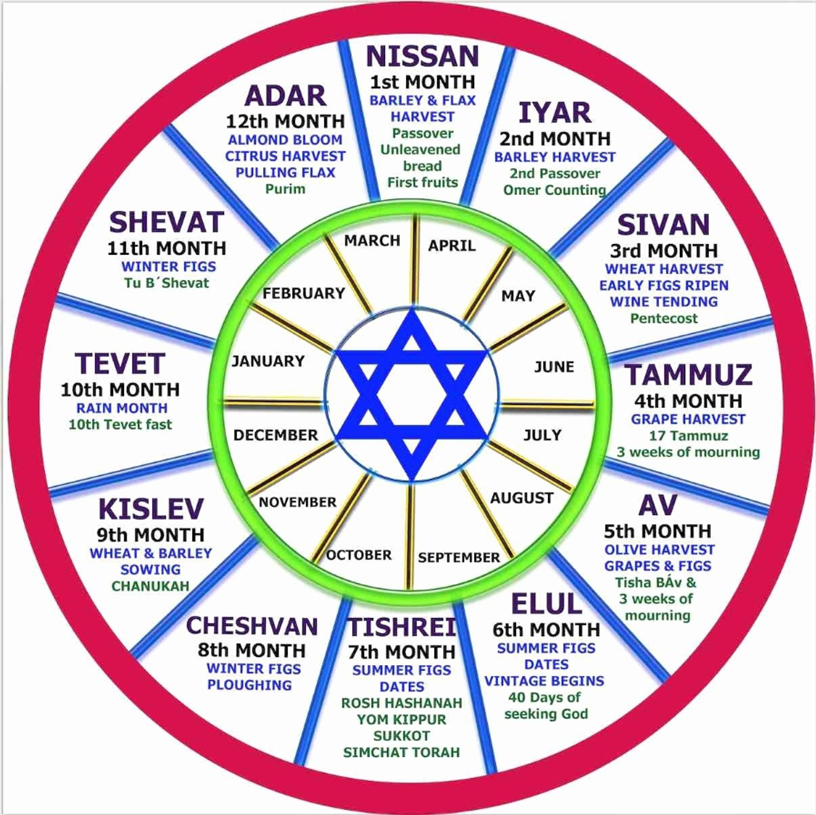
Switching gears a bit, we are in the Hebrew month of Tammuz, which is the fourth month. It began on the 16th, and it will run until the 14th of July. Let me tell you a little about it, and it will fit into the story of the spies.
The word “Tammuz” only appears once in the Bible (Ez 8:14). It’s during the time of the Babylonian exile. (The early 6th century BC.) It’s in a passage where the Lord, in a vision, reveals to the prophet Ezekiel, who is with the exiles, what idolatrous abominations are occurring in the temple back in Jerusalem. There is quite a list of them, but here’s the one relevant to us.
“Then he brought me to the entrance of the north gate of the house of the Lord,” says Ezekiel, “and I saw women sitting there, mourning the god Tammuz. He said to me, ‘Do you see this, son of man? You will see things that are even more detestable than this.’”
Who is this Tammuz? There are various versions of the story, but here’s what seems to be a common theme. He was a god of spring who suffered an early death. Ishtar his bride descended into the underworld in search of him. The death of Tammuz symbolized the destruction of the spring vegetation by the intense heat of summer, and it was marked every year by seven days of women’s mourning. Thus, the grieving in the temple.
Side note: he was reported to be a quite handsome god, so perhaps an added incentive to mourn his departure!

Here’s an obvious question: why name the month after a pagan god? Look at the Ten Commandments. Right off the bat, here’s the big number one. “I am the Lord your God, who brought you out of the land of Egypt, out of the house of slavery; you shall have no other gods before me” (Ex 20:2–3, Dt 5:6–7). Well, that settles that!
Again, there are many explanations, but one persisting theme is a warning to avoid idolatry. The message is to gain mastery over it. The annual reappearance of the month of Tammuz is a constant reminder of that lesson.
This fourth month on the Hebrew calendar has a focus on the eyes, a focus on vision. Getting back to my earlier comments, a key story regards the twelve spies who Moses sends into the land of Canaan. (One representative for each of the twelve tribes of Israel.) In Numbers 13 and 14 we see how the mission plays out, including the rather contentious debriefing.
As you know, following the exodus from Egypt, the people have been wandering around in the wilderness. The time for reconnaissance is at hand. This is all about vision. The spies are to use their eyes.
The New International Version presents Moses asking a volley of questions. (Somebody needs to be sure to take notes!) “See what the land is like and whether the people who live there are strong or weak, few or many. What kind of land do they live in? Is it good or bad? What kind of towns do they live in? Are they unwalled or fortified? How is the soil? Is it fertile or poor? Are there trees in it or not? Do your best to bring back some of the fruit of the land” (13:18–20).
There’s an editorial comment. “It was the season of the first ripe grapes.” That’s how we know this was the month of Tammuz, which is the time of the grape harvest.

When the scouts return, they admit the abundance of “the land of milk and honey.” However, there are problems. They report seeing cities which in fact are fortified, massively fortified. How in the world are we supposed to get inside?
And what’s even worse, the people who live there are giants! They’re huge. They’re ginormous! We even saw the Nephilim. In comparison, we look like grasshoppers. We look like bugs. They’ll squash us under their feet. The land devours those who enter it.
Thus, their advice: it’s not worth the risk. In fact, it’s not long until the grumblings begin to argue, “We need to stage a coup and find someone to lead us back to Egypt.”
However, Joshua and Caleb have an alternate vision. They acknowledge the difficulties but see a different destiny. They aren’t blind, and they aren’t naïve. Where the others see tragedy, they see triumph. Their eyes and their hearts imagine a different reality, another way forward.
Joshua and Caleb want the Israelites to see. Yes, there are fortified cities, and the people there are fierce. They plead with them, “do not rebel against the Lord, and do not fear the people of the land, for they are no more than bread for us” (14:9). We can eat them up! The land devours those who enter it? Well, we’ll devour them!
See them. Really see them. “Their protection is removed from them.” The word for “protection” (צֵל, tsēl) literally means “shadow.” They have no cover from the burning hot sun. They are totally exposed. Think of it. The Lord didn’t send us this far just to have us fail!
As already said, Tammuz is a month for vision. And as just noted, Joshua and Caleb would say, “Open your eyes!”
They would make the same request of us. They would likely ask whether we have become so focused on our problems that we have forgotten our potential. Their question would be: “Do we see only giants, or do we also see opportunities for renewal, possibilities for discovery?”
This Saturday, our nation will celebrate its 250th anniversary. 250 years. This is as good a time as any to ask, “What is our vision as a country?” Is our vision marred?
Are you familiar with those glasses that have lenses which are really smudged? I mean the ones in which it’s impossible to focus on anything. They are meant to help us identify with those who have serious problems in vision. I think they could represent how we too often fail in actually seeing.
Is our vision clouded with distrust and manufactured outrage? There are some folks who cynically encourage that (lack of) vision. Perhaps we find them in the public arena, in the local community, or God forbid — within the realm of possibility, on occasion even in the mirror?
Joshua and Caleb would remind us that fear and suspicion are rarely fruitful guides for the nation — and for the church. While the ten terrified spies spread discouragement and despair, Joshua and Caleb spread hope.

A patch from 1976 and a logo for 2026. And does anyone (old enough) remember those fire hydrants sporting those designs?
Their vision for America at 250 might be a nation that rediscovers its highest ideals while humbly acknowledging its failures — a people committed to liberty with responsibility, prosperity with compassion, and power with moral restraint.
Our final hymn today is “O Beautiful for Spacious Skies,” “America, the Beautiful.” I love that song. Most of us know the first verse by heart. As we continue, Katharine Lee Bates deals with the innate complexity that is America. Each verse begins, “O beautiful,” and celebrates the promise and the dream of America.
In the final verse, Bates reinforces her praise: “O beautiful for patriot dream / That sees beyond the years. / Thine alabaster cities gleam, / Undimmed by human tears!”
“Thine alabaster cities gleam, undimmed by human tears.” Friends, we’re not quite there!
The color alabaster, with its creamy off-white hue, has a tone of welcome. Maybe that’s why so many homes use that color. It’s a gentle way of saying, “Come on in!” On that note, let me tell you about a movie I recently watched.
It is The Visitor (2007), starring Richard Jenkins. He’s one of those actors whose face you might recognize and yet not know his name. He plays Walter Vale, a professor in Connecticut but also has an apartment in New York City. He is a lonely man, a widower, who goes to the city to present a paper.
Skipping over many details, Walter discovers a couple living in his apartment, unaware that he owns it. They have nowhere to go, so he invites them to stay. The young man, Tarek, plays the djembe, a West African drum. He teaches Walter how to play it, and they are returning home when, due to a misunderstanding in the subway, Tarek is arrested. This is really bad, because Tarek is undocumented. He is placed in a detention facility, a prison.
His mother, Mouna, who has been living in Michigan, goes to New York because she hasn’t heard from him. She encounters Walter, who gives her the sad report of Tarek’s arrest. They had fled Syria after her journalist husband was murdered by the government.
There is some truth-telling. Walter confesses, “I’ve been teaching the same course for twenty years. It doesn’t mean anything to me. None of it does. I pretend. I pretend that I’m busy. That I’m writing. Working. But I’m not doing anything.”
Mouna also has her story. She admits that she threw away their deportation letter without telling her son. “We were here for three years by the time the letter arrived,” she tells Walter. “I had found a job. Tarek was in school. Everyone told me not to worry. That the government did not care. And it appeared to be true. And then, after time, you forget. You think that you really belong.”

Richard Jenkins and Haaz Sleiman in “The Visitor” (2007)
You think that you really belong. The welcome of those alabaster cities, undimmed by human tears, is not fully complete.
So, even aside from that, what is our response?
Consider the prayer of Woodrow Wilson, who calls us to “purify our hearts to see and love truth.”
He doesn’t ask first that our eyes be sharpened. He asks that our hearts be purified. A fearful heart imagines only defeat. A cynical heart finds only reasons to despair. But a heart purified by God notices possibilities that others overlook. It sees not only what is, but what, by God’s grace, might be.
What an awesome vision for America. So again, what is our response?
In our darkness, when we’re not sure what we see… In our darkness, when we find ourselves worshipping and weeping for a false god… In our darkness, when we say no to the guidance leading to the promised land… And yet, in our darkness, the light is constantly being reborn, just as we are.
Within the darkness of suffering, the light of healing is present. It is present in Jesus Christ, the light of the world.
메타데이터
- post_id
- 714d0ece1e31
- slug
- vision-for-america-714d0ece1e31
- url
- https://medium.com/@jamesmoore94/vision-for-america-714d0ece1e31
- canonical_url
- https://medium.com/@jamesmoore94/vision-for-america-714d0ece1e31
- author_url
- https://medium.com/@jamesmoore94
- status
- ok
- fetched_at
- 2026-07-14 16:46:30