A Peacebuilder’s Guide to Chronos and Kairos
The Two Kinds of Time That Shape Human Transformation
A Peacebuilder’s Guide to Chronos and Kairos
The Two Kinds of Time That Shape Human Transformation
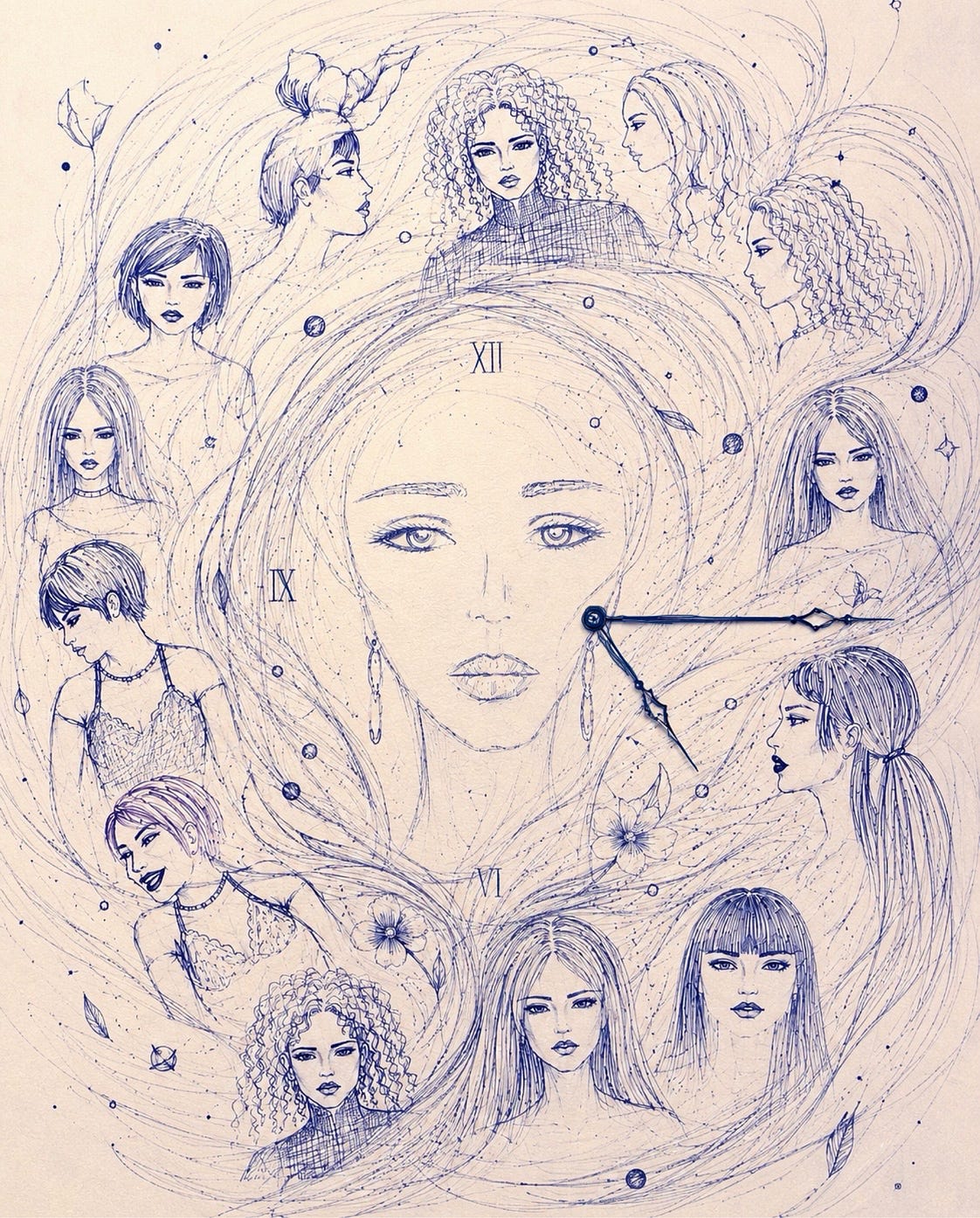
Most of us live as though there is only one kind of time.
The time of clocks.
The time of calendars.
The time of deadlines, milestones, credentials, promotions, annual reviews, publication records, and strategic plans.
The ancient Greeks called this Chronos.
Chronos is measurable.
It can be counted, scheduled, optimized, and managed.
Modern society is built on Chronos.
Schools run on Chronos.
Governments run on Chronos.
Businesses run on Chronos.
Universities run on Chronos.
Chronos asks a simple question:
What have you accomplished?
There is, however, another kind of time.
The Greeks called it Kairos.
Kairos cannot be measured by a clock.
It is the ripe moment.
The moment when something becomes possible that was impossible before.
The moment a conflict transforms.
The moment a relationship heals.
The moment an artist finds her voice.
The moment a community becomes ready to reconcile.
The moment a person becomes ready to change.
Kairos asks a different question:
What has become possible?
This distinction matters because some of the most important events in human life do not follow the logic of Chronos.
Insight does not arrive according to schedule.
Trust does not emerge because a deadline has been reached.
Forgiveness cannot be forced by a calendar.
Creativity does not obey quarterly reports.
Transformation follows a different rhythm.
And nowhere is this more visible than in peacebuilding.
Much of contemporary conflict resolution operates within the logic of Chronos.
Negotiation timelines.
Implementation schedules.
Benchmarks.
Indicators.
Monitoring frameworks.
Election calendars.
Peace agreements.
All of these are important.
But they are not peace.
They are structures designed to support peace.
Peace itself belongs to a different realm.
A ceasefire can be scheduled.
Trust cannot.
An election can be scheduled.
Reconciliation cannot.
A peace agreement can be signed on a specific date.
Peace itself follows a different rhythm.
Peace agreements can be negotiated according to a timeline.
Peace itself cannot.
This distinction points to a deeper difference between conflict resolution and conflict transformation.
Viewed through the lens of Chronos and Kairos, many of the foundational thinkers in peacebuilding appear less concerned with managing time than with understanding the conditions under which transformation becomes possible.
Johan Galtung’s distinction between negative peace and positive peace already points in this direction. Negative peace focuses on the reduction of violence. Positive peace concerns the cultivation of relationships, institutions, and cultural conditions that sustain human flourishing. In many ways, positive peace is less about managing events and more about nurturing the conditions from which peace can emerge.
A similar insight appears in the work of Dean Pruitt. His theory of readiness suggests that negotiations succeed not simply because parties meet, but because they become ready to pursue change. The decisive factor is often not the passage of time itself, but the emergence of conditions that make transformation possible.
John Paul Lederach’s concept of the Moral Imagination may be one of the clearest expressions of Kairos within peacebuilding. The Moral Imagination is not a technique, a timeline, or a strategic plan. It is the capacity to imagine and enact relationships that do not yet exist. It emerges when individuals and communities become capable of seeing beyond the apparent constraints of the present moment.
Beyond peacebuilding, Carl Jung’s theory of individuation offers a similar insight. Psychological transformation unfolds according to an inner rhythm that cannot be accelerated through force of will alone. Growth occurs when the psyche becomes ready to integrate what was previously unconscious.
Lisa Schirch’s work on ritual and symbol helps explain why peacebuilding cannot be reduced to timelines and agreements alone. While formal negotiations often occupy center stage, Schirch argues that symbolic acts frequently do the deeper work of transformation. Shared meals, rituals, gestures, stories, and artistic expressions create forms of connection that policy frameworks alone cannot achieve.
As Schirch writes, symbolic acts can “penetrate the impenetrable, overwhelm the defensive, and convey complex messages without saying a single word.”
In this sense, rituals and artistic practices inhabit a different temporal logic. They do not operate primarily within Chronos, the realm of schedules and measurable outcomes. They operate within Kairos, creating spaces in which new relationships, new meanings, and new possibilities can emerge.
Although these thinkers work in different traditions – peace studies, psychology, negotiation theory, and arts-based peacebuilding – they share a common concern: not simply how change occurs, but how human beings become ready for change.
Taken together, these perspectives suggest that lasting transformation – whether personal, relational, or societal – depends not only on Chronos, the management of events in time, but also on Kairos, the cultivation of readiness from which new possibilities emerge.
This is why conflict transformation differs from conflict resolution.
Conflict resolution is primarily concerned with managing problems.
Conflict transformation is concerned with cultivating the conditions under which transformation becomes possible.
The first is largely a Chronos project.
The second is largely a Kairos project.
Chronos asks:
How do we manage this conflict?
Kairos asks:
What conditions might allow something new to emerge?
Chronos focuses on timelines, agreements, implementation schedules, benchmarks, and measurable outcomes.
Kairos focuses on readiness, relationship, imagination, reconciliation, creativity, trust, and awakening.
Chronos measures progress. Kairos measures transformation.
One manages events.
The other cultivates emergence.
This may be why conflict transformation often feels closer to art, education, spirituality, and even gardening than to engineering.
Its task is not to manufacture peace.
Its task is to cultivate the conditions under which peace can emerge.
The same is true of art.
A song cannot force transformation.
A poem cannot force transformation.
A painting cannot force transformation.
Yet a single song, poem, or image can sometimes accomplish what years of argument cannot.
Not because art persuades.
But because art creates the conditions in which people become capable of seeing differently.
The same is true of teaching.
The same is true of parenting.
The same is true of spiritual practice.
The same is true of peacebuilding.
None of these disciplines can manufacture awakening.
They can only cultivate the conditions from which awakening emerges.
Perhaps this is why creativity, spirituality, and peacebuilding have always felt deeply connected.
All three are concerned with the same mystery.
Not how to control change.
But how to create the conditions in which change becomes possible.
Modern society has become exceptionally skilled at Chronos.
We measure more than any generation before us.
We count, track, evaluate, benchmark, monitor, and optimize.
Yet some of the most important dimensions of human life remain stubbornly resistant to measurement.
Meaning.
Trust.
Love.
Wisdom.
Forgiveness.
Imagination.
Peace.
These belong to the realm of Kairos.
And perhaps one of the most important tasks of our time is remembering that not everything that matters can be measured.
Some things can only be cultivated.
And some transformations can only be recognized once they have already begun.
Perhaps the deepest work of peacebuilding is not learning how to manage time, but learning how to recognize the moment when transformation becomes possible.
메타데이터
- post_id
- 71658c6dc3cb
- slug
- a-peacebuilders-guide-to-chronos-and-kairos-71658c6dc3cb
- url
- https://medium.com/@ninopiano.studio/a-peacebuilders-guide-to-chronos-and-kairos-71658c6dc3cb
- canonical_url
- https://medium.com/@ninopiano.studio/a-peacebuilders-guide-to-chronos-and-kairos-71658c6dc3cb
- author_url
- https://medium.com/@ninopiano.studio
- status
- ok
- fetched_at
- 2026-08-09 01:05:24