Thymosin Beta 4 (TB500) Research Science UK: What Current Research Reveals About This…
Explore thymosin beta 4 TB500 research science UK perspectives, mechanisms, biological functions, and emerging laboratory findings.
Thymosin Beta 4 (TB500) Research Science UK: What Current Research Reveals About This Multifunctional Peptide
Explore thymosin beta 4 TB500 research science UK perspectives, mechanisms, biological functions, and emerging laboratory findings.
Most peptides attract attention because of a single biological function.
Thymosin beta 4 is different.
For decades, researchers have examined this naturally occurring peptide across multiple scientific disciplines, from cell migration and tissue architecture to molecular signalling and regenerative biology. Its broad biological involvement has made it one of the more intriguing subjects in peptide research.
Within the growing field of thymosin beta 4 TB500 research science UK, investigators continue exploring how this peptide interacts with cellular systems, cytoskeletal dynamics, and biological repair processes at the molecular level. As interest in thymosin beta 4 TB500 research science UK continues to expand, researchers are uncovering new insights into its relationship with actin regulation, cellular communication, and complex molecular pathways.
What makes thymosin beta 4 particularly interesting is not a single pathway, but the remarkable number of biological processes in which it appears to participate. This breadth of activity has positioned thymosin beta 4 TB500 research science UK as a growing area of discussion among scientists, biotechnology professionals, and advanced readers seeking a deeper understanding of peptide biology.
What Is Thymosin Beta 4?
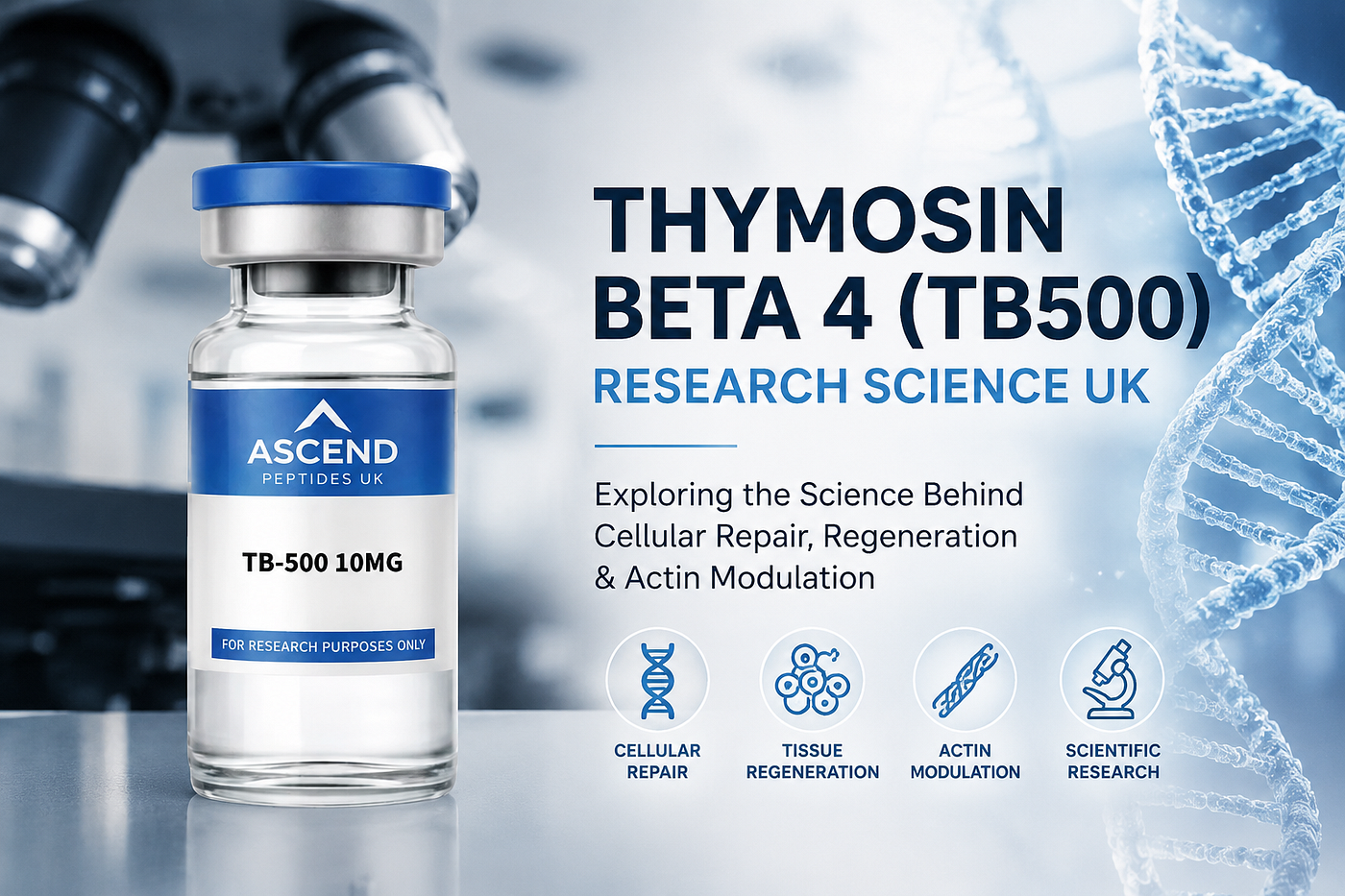
Thymosin beta 4 (Tβ4) is a naturally occurring peptide composed of 43 amino acids.
It is found in numerous tissues and cell types throughout mammalian biology and has been studied extensively for its role in actin regulation.
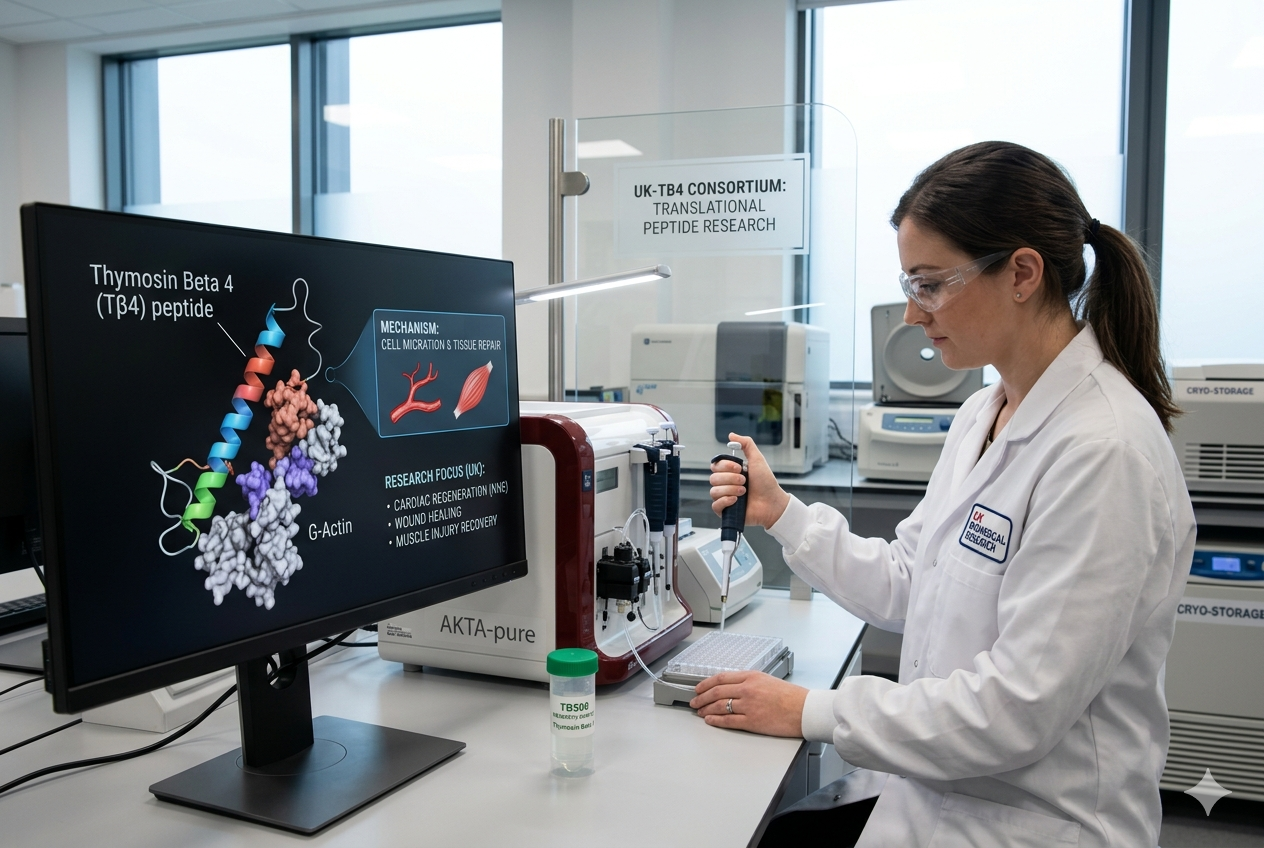
One of its most recognised biological characteristics is its ability to bind G-actin, the monomeric form of actin involved in cytoskeletal organisation.
Researchers have proposed that this interaction may influence:
- Cell movement
- Cellular architecture
- Tissue organisation
- Developmental biology
- Molecular signalling pathways
Because actin dynamics influence countless biological functions, thymosin beta 4 remains relevant across several areas of modern research.
The Origins of TB500 in Scientific Literature
The term TB500 commonly appears within research discussions and peptide-related literature.
While thymosin beta 4 refers to the naturally occurring peptide, TB500 is often used as a research designation associated with studies examining biological activities linked to thymosin beta 4.
Scientific publications predominantly focus on thymosin beta 4 itself, particularly its molecular characteristics and interactions within cellular systems.
As peptide science has expanded, both terms have become closely associated in discussions surrounding regenerative biology, tissue development, and cellular communication.
Thymosin Beta 4 and Actin Regulation
One of the most studied aspects of thymosin beta 4 TB500 research science UK discussions is the peptide’s relationship with actin, a fundamental protein involved in cellular structure and movement.
Actin proteins form essential structural components of cells. They help determine cellular shape, migration patterns, mechanical stability, and overall biological organisation.
Thymosin beta 4 functions as an actin-sequestering peptide, helping regulate the balance between monomeric (G-actin) and filamentous (F-actin) forms. This interaction has made it a significant focus within thymosin beta 4 research and molecular biology investigations.
Researchers have suggested that this activity may influence several important biological processes:
Cellular Mobility
Cells frequently migrate during developmental and biological processes. Actin regulation plays a central role in this movement, making cellular migration one of the key areas examined in TB500 research science UK literature.
Cytoskeletal Organisation
The cytoskeleton provides structural support and mechanical stability throughout biological systems. Alterations in actin dynamics can influence cellular behaviour, communication pathways, and structural organisation.
Tissue Architecture
Cellular positioning contributes to overall tissue organisation. Researchers investigating thymosin beta 4 TB500 research science UK topics continue to explore how actin-associated mechanisms may help coordinate these complex biological interactions.
These observations continue to drive scientific interest in thymosin beta 4 across multiple research domains, particularly within studies focused on cellular signalling, actin modulation, and systems-level biological regulation.
Molecular Pathways Under Investigation
Scientists have identified several biological pathways potentially associated with thymosin beta 4 activity.
Although many questions remain under investigation, published research frequently examines its relationship with:
Cell Migration Mechanisms
Laboratory studies have explored how thymosin beta 4 may influence movement-related cellular processes.
Angiogenic Signalling
Researchers have investigated interactions involving vascular development and endothelial biology.
Extracellular Matrix Dynamics
The extracellular matrix serves as a critical framework supporting tissue organisation.
Studies continue exploring how thymosin beta 4 may interact with these structural environments.
Cellular Communication Networks
Modern peptide science increasingly focuses on complex signalling systems rather than isolated pathways.
Thymosin beta 4 appears within several interconnected biological networks currently being examined in laboratory settings.
Thymosin Beta 4 Research Science UK: Areas of Scientific Interest
Across UK academic and biotechnology communities, interest in peptide research continues to expand.
Within thymosin beta 4 TB500 research science UK discussions, several themes frequently emerge.
Regenerative Biology
Scientists investigate how biological systems coordinate structural maintenance and adaptation.
Developmental Research
Cellular migration and organisation remain important topics in developmental biology.
Biomaterials and Tissue Engineering
Researchers continue evaluating peptide-mediated interactions relevant to engineered biological environments.
Systems Biology
Advances in computational modelling have enabled broader investigations into how peptides influence interconnected molecular networks.
These areas contribute to ongoing interest in thymosin beta 4 among research-focused audiences.
Comparing Thymosin Beta 4 with Other Research Peptides
Thymosin beta 4 is often discussed alongside other peptides examined within molecular biology.
However, its primary distinction lies in its broad involvement with actin regulation.
While some research peptides are associated with highly specific receptors or signalling pathways, thymosin beta 4 appears connected to foundational cellular processes influencing multiple biological systems.
This breadth of activity makes mechanistic analysis particularly challenging and scientifically interesting.
Rather than focusing on a single biological endpoint, researchers often investigate how thymosin beta 4 integrates into larger cellular networks.
Emerging Research Trends
Several developments continue shaping scientific interest in thymosin beta 4.
Multi-Omics Analysis
Modern laboratories increasingly utilise transcriptomics, proteomics, and metabolomics to understand peptide activity.
Computational Biology
Machine-learning approaches allow researchers to model complex peptide interactions more effectively.
Cellular Microenvironments
Growing attention is being directed toward how local biological environments influence peptide-related signalling.
Cross-Disciplinary Research
The intersection of molecular biology, tissue engineering, and systems biology continues generating new research questions surrounding thymosin beta 4.
These trends suggest that future investigations may provide deeper insight into the peptide’s broader biological significance.
Research Quality Considerations
As interest in peptide science grows, evaluating research quality becomes increasingly important.
Readers reviewing thymosin beta 4 literature should consider:
- Study design
- Experimental model selection
- Statistical methodology
- Reproducibility
- Independent validation
- Publication quality
Scientific understanding evolves through cumulative evidence rather than isolated findings.
Maintaining a critical perspective helps researchers interpret emerging data appropriately.
Research Resources and Scientific Literature
Researchers interested in thymosin beta 4 typically consult:
- Peer-reviewed journals
- Molecular biology databases
- Protein and peptide repositories
- Academic conference proceedings
- University research publications
Organisations and research groups across Europe, including the UK, continue contributing to the broader understanding of peptide biology and cellular signalling mechanisms.
A growing number of biotechnology companies, including **Ascend Peptides UK,** participate in the wider scientific discussion surrounding peptide research and laboratory innovation.
Compliance and Research Context
This article is intended exclusively for educational and scientific discussion.
All information presented focuses on published research, molecular biology, cellular mechanisms, and laboratory investigation.
No statements should be interpreted as recommendations, instructions, or guidance regarding human application, consumption, administration, or practical use.
Scientific findings remain subject to ongoing investigation and refinement as new evidence emerges.
Conclusion
Thymosin beta 4 occupies a unique position within contemporary peptide research.
Its involvement in actin regulation, cellular organisation, signalling networks, and broader biological processes continues attracting attention from scientists across multiple disciplines.
As analytical technologies advance and systems-level biology becomes increasingly sophisticated, researchers may gain deeper insight into the complex mechanisms associated with this multifaceted peptide.
For those following thymosin beta 4 TB500 research science UK developments, the most valuable perspective remains evidence-based curiosity grounded in rigorous scientific evaluation.
Frequently Asked Questions
1. What is thymosin beta 4?
Thymosin beta 4 is a naturally occurring peptide consisting of 43 amino acids. It has been studied extensively for its relationship with actin regulation, cellular organisation, and various molecular processes observed across mammalian biological systems.
2. Is TB500 the same as thymosin beta 4?
TB500 is commonly used as a research designation associated with thymosin beta 4-related discussions. Scientific literature typically focuses on thymosin beta 4 itself, although both terms frequently appear in peptide research contexts.
3. Why is thymosin beta 4 important in biological research?
Thymosin beta 4 is important because it appears to participate in multiple biological pathways. Researchers study it due to its association with actin dynamics, cellular migration, tissue organisation, and signalling mechanisms.
4. What role does actin play in thymosin beta 4 research?
Actin is central to thymosin beta 4 research. The peptide binds monomeric actin and may influence cytoskeletal regulation, making it relevant for investigations involving cellular structure and movement.
5. Which scientific fields study thymosin beta 4?
Several disciplines examine thymosin beta 4. These include molecular biology, developmental biology, systems biology, tissue engineering, regenerative research, and cellular signalling studies.
6. Why is actin regulation scientifically significant?
Actin regulation is significant because actin proteins influence cell shape, movement, organisation, and communication. Understanding these mechanisms provides insights into fundamental biological processes.
7. What research methods are commonly used to study thymosin beta 4?
Researchers frequently use molecular assays, cellular models, imaging technologies, omics-based approaches, and computational analysis. These methods help investigate peptide interactions and biological pathways.
8. How does systems biology contribute to thymosin beta 4 research?
Systems biology contributes by examining interconnected molecular networks rather than isolated pathways. This broader perspective helps researchers understand how peptides influence complex biological environments.
9. What are current trends in thymosin beta 4 research?
Current trends include multi-omics analysis, computational modelling, advanced imaging, and cross-disciplinary studies. These approaches are helping scientists explore increasingly detailed aspects of peptide biology.
10. Why is critical evaluation important when reviewing peptide research?
Critical evaluation is essential because scientific understanding develops through accumulated evidence. Assessing methodology, reproducibility, and statistical quality helps ensure more reliable interpretation of research findings.
Disclaimer
This content is provided solely for educational, informational, and scientific discussion purposes. It focuses exclusively on published research, laboratory investigation, molecular biology, and related scientific concepts. No content within this article should be interpreted as medical advice, health guidance, product endorsement, or instruction regarding human or animal use. Scientific understanding evolves continuously, and readers should consult original peer-reviewed literature when evaluating research findings.
메타데이터
- post_id
- 719d4a0a6ac8
- slug
- thymosin-beta-4-tb500-research-science-uk-what-current-research-reveals-about-this-719d4a0a6ac8
- url
- https://medium.com/@AscendPeptidesUk/thymosin-beta-4-tb500-research-science-uk-what-current-research-reveals-about-this-719d4a0a6ac8
- canonical_url
- https://medium.com/@AscendPeptidesUk/thymosin-beta-4-tb500-research-science-uk-what-current-research-reveals-about-this-719d4a0a6ac8
- author_url
- https://medium.com/@AscendPeptidesUk
- status
- ok
- fetched_at
- 2026-06-09 15:37:30