Legacy System Archival
Legacy System Archival: The Missing Step in ERP Modernization That Saves Millions
Legacy System Archival
Legacy System Archival: The Missing Step in ERP Modernization That Saves Millions
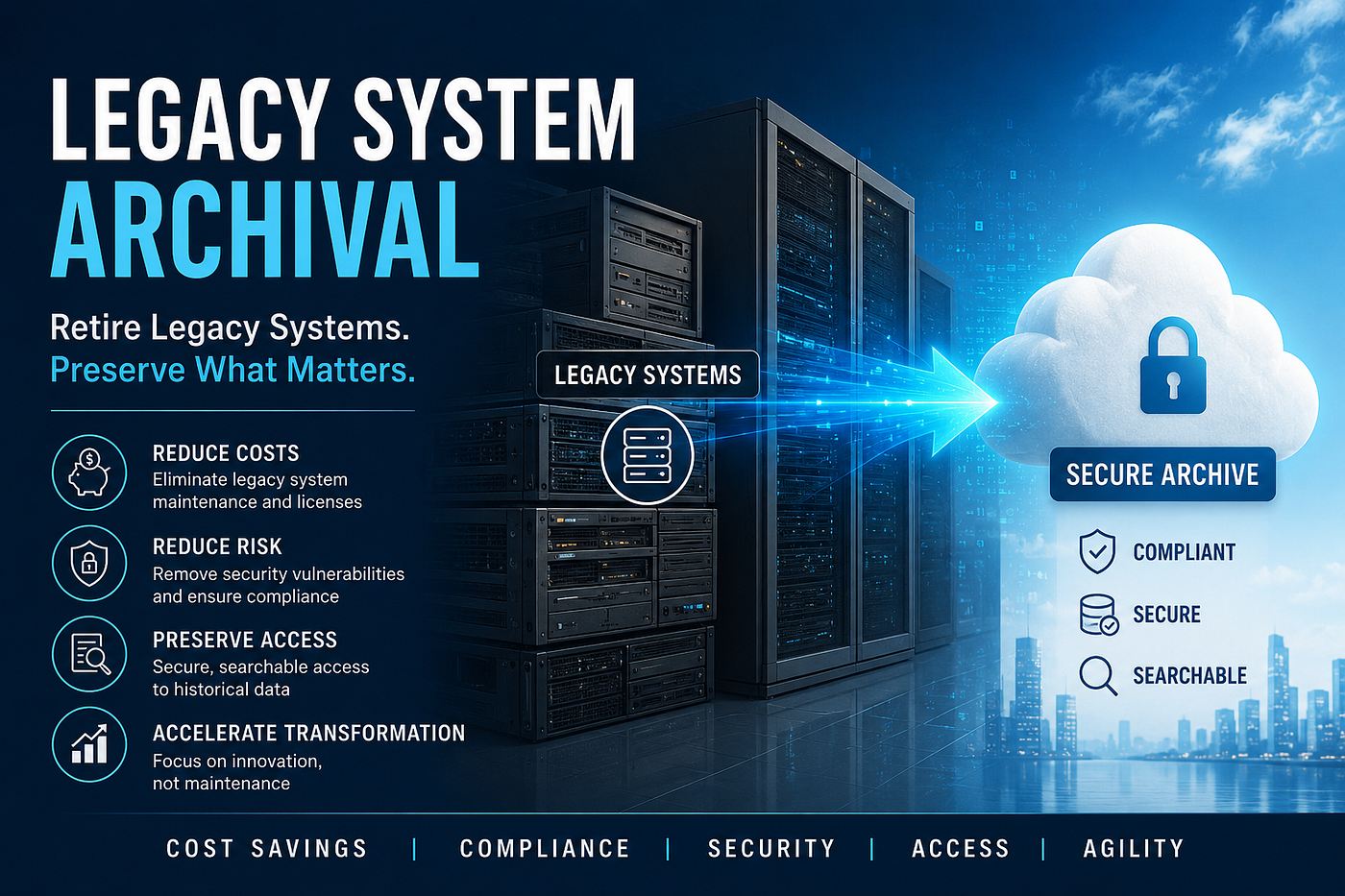
Digital transformation initiatives often focus on migrating to modern cloud platforms such as Oracle Fusion, SAP S/4HANA, Workday, Microsoft Dynamics 365, and other next-generation enterprise applications. However, one critical challenge is frequently overlooked: what happens to historical data stored in legacy systems?
Many organizations continue paying substantial licensing, infrastructure, and support costs simply to retain access to historical records for audits, compliance, tax reporting, legal investigations, and operational reference. This creates unnecessary financial and operational burdens long after the legacy platform has stopped delivering business value.
What Is Legacy System Archival?
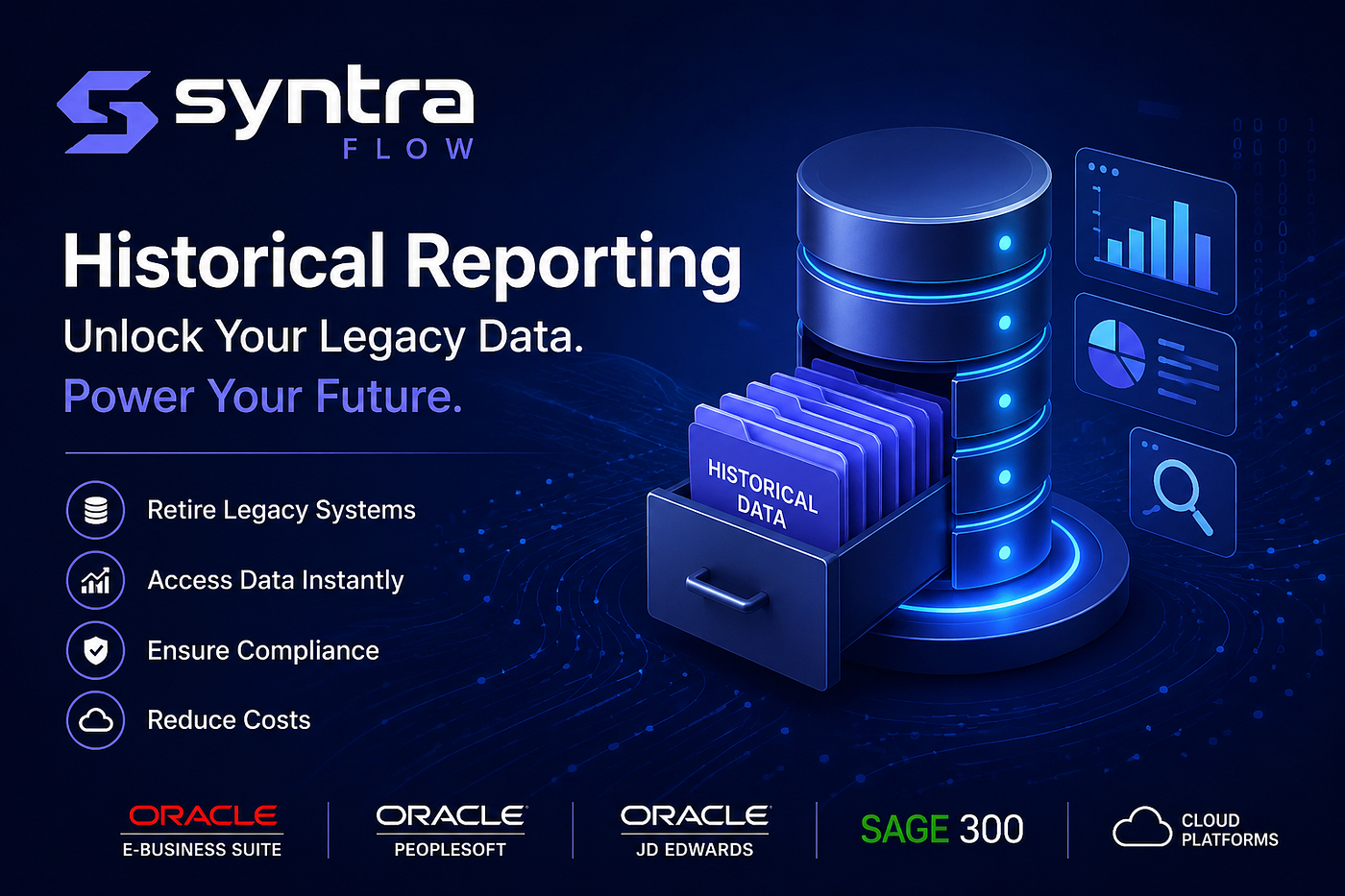
Legacy system archival is the process of retiring obsolete ERP, HCM, CRM, billing, healthcare, or operational systems while preserving all historical data in a secure, searchable, and compliant archive. Instead of maintaining expensive legacy environments solely for historical access, organizations can extract and store transactional and master data in a governed cloud archive that remains available for audits, reporting, and compliance requirements.
Learn more about enterprise-grade archival solutions here:
👉 **https://www.syntraetl.com/legacy-system-archival/**
Why Organizations Keep Legacy Systems Running
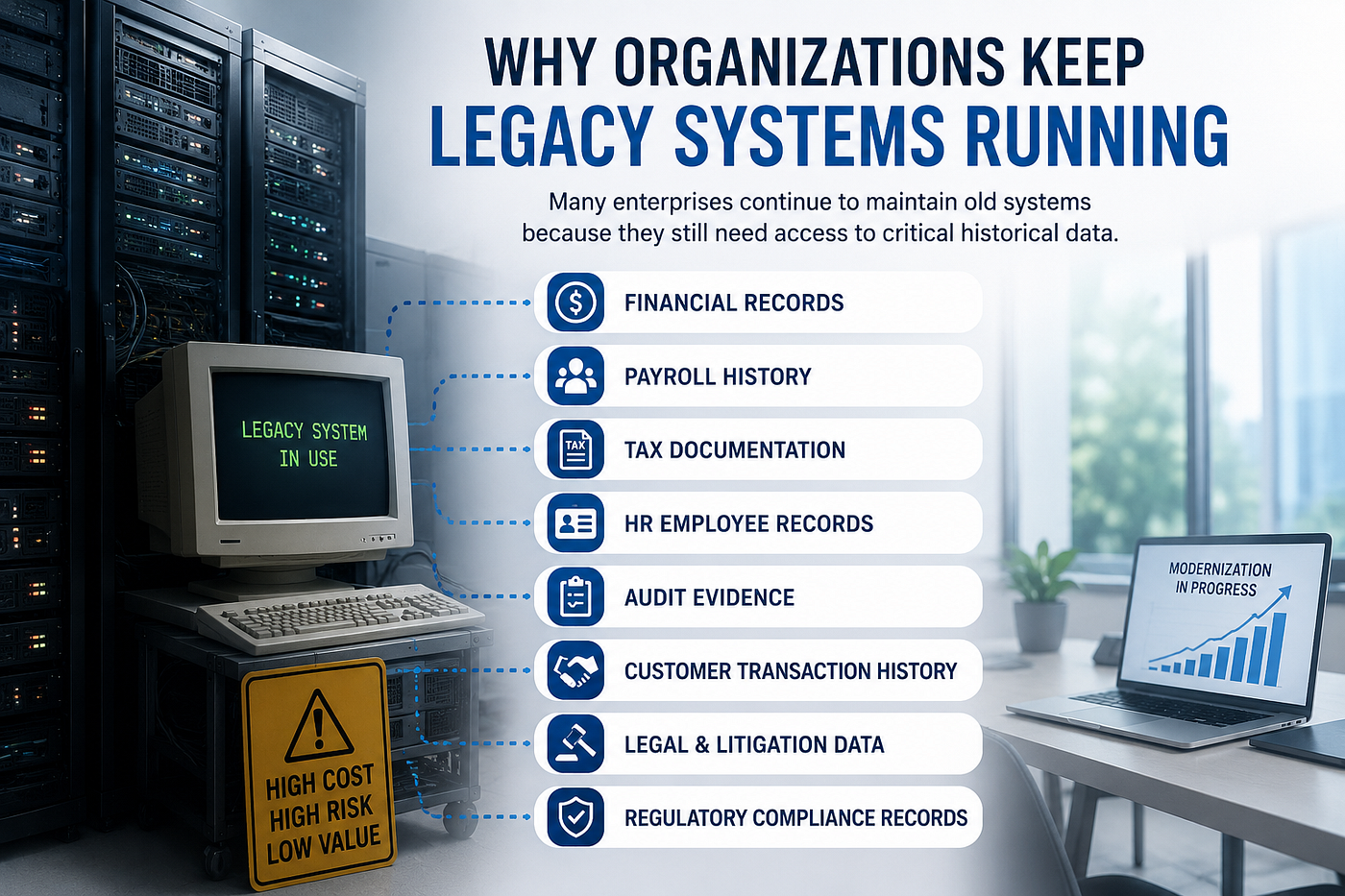
Many enterprises maintain retired systems because they still need access to:
- Financial records
- Payroll history
- Tax documentation
- HR employee records
- Audit evidence
- Customer transaction history
- Legal and litigation data
- Regulatory compliance records
Unfortunately, maintaining these systems often requires:
- Ongoing software licenses
- Database administration
- Security patching
- Infrastructure maintenance
- Backup and disaster recovery
- Compliance monitoring
These costs continue year after year despite minimal business usage.
Key Business Benefits of Legacy System Archival
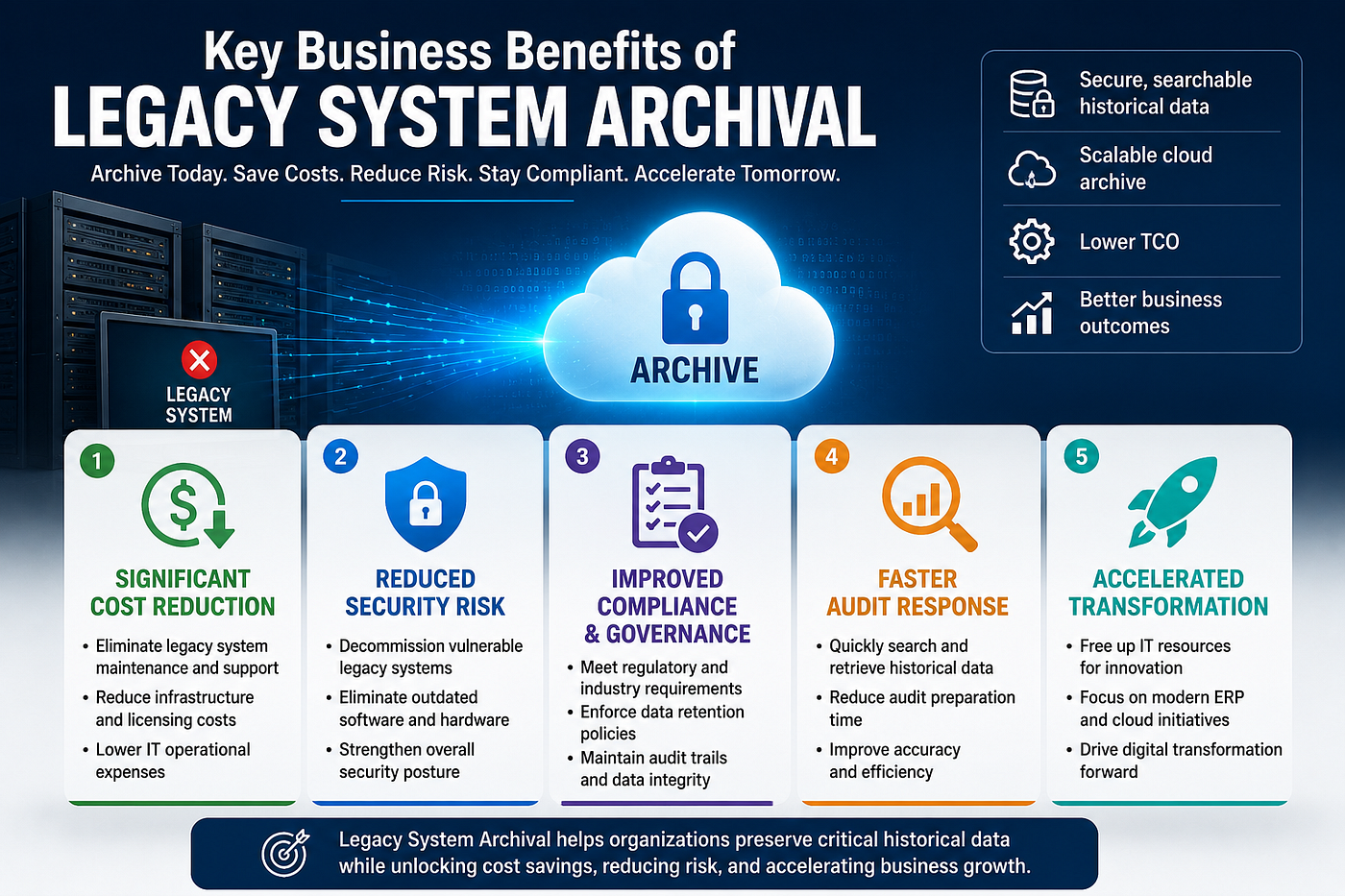
1. Significant Cost Reduction
Organizations can eliminate:
- Legacy software support fees
- Hardware expenses
- Hosting costs
- Database licensing
- Maintenance contracts
Many enterprises achieve substantial savings by decommissioning systems that are only retained for historical access purposes.
2. Reduced Security Risk
Legacy applications frequently operate on:
- Unsupported operating systems
- Outdated databases
- Unpatched infrastructure
- Aging hardware
These environments create security vulnerabilities and compliance concerns.
Archival enables organizations to retire high-risk systems while preserving required data access.
3. Improved Compliance and Governance
Modern archival platforms support compliance requirements such as:
- SOX
- GDPR
- IRS regulations
- HMRC requirements
- FDA Part 11
- Litigation hold requirements
- Industry-specific retention policies
Historical data remains accessible while maintaining governance and auditability.
4. Faster Audit Response
Finance, compliance, and audit teams can quickly retrieve historical information through:
- Searchable interfaces
- Role-based access controls
- Historical reporting capabilities
- Secure query environments
This significantly reduces audit preparation efforts and improves responsiveness.
5. Accelerated ERP Transformation
IT teams can redirect resources away from maintaining retired systems and focus on:
- Oracle Fusion initiatives
- SAP modernization
- AI implementation
- Data governance programs
- Cloud optimization projects
Every hour spent supporting a retired system is an hour not invested in strategic innovation.
Industries Benefiting from Legacy Archival
Financial Services
- Historical transaction retention
- Regulatory reporting
- Audit readiness
Healthcare
- Patient record preservation
- HIPAA compliance
- Historical clinical access
Manufacturing
- Supply chain history
- Product traceability
- Operational reporting
Government
- Records retention
- Public accountability
- Regulatory compliance
Retail and Consumer Goods
- Historical sales data
- Tax reporting
- Customer analytics
Characteristics of an Effective Archival Strategy
A successful legacy archival program should provide:
Secure Data Preservation
- Immutable storage
- Encryption
- Backup protection
Searchable Historical Access
- User-friendly search
- Rapid retrieval
- Reporting capabilities
Compliance Controls
- Retention policies
- Audit trails
- Role-based permissions
Scalable Cloud Architecture
- Long-term storage
- Cost optimization
- Elastic scalability
Complete System Decommissioning
- Elimination of legacy infrastructure
- Retirement of software licenses
- Reduced operational overhead
Questions Every CIO and CFO Should Ask
Before renewing another year of support for a legacy platform, leadership teams should ask:
- Why are we still paying for this system?
- Who actually uses it today?
- What compliance obligations require its retention?
- Could we meet those obligations through archival?
- What annual savings could decommissioning generate?
- How much risk are we accepting by keeping it operational?
The answers often reveal significant opportunities for cost reduction and modernization.
Final Thoughts
Legacy system archival is no longer just an IT housekeeping activity. It has become a strategic business initiative that reduces costs, improves security, strengthens compliance, and accelerates digital transformation.
Organizations investing millions in cloud migrations should ensure that legacy retirement is part of the roadmap — not an afterthought.
A properly executed archival strategy enables enterprises to preserve historical data, satisfy regulatory requirements, and fully realize the value of modernization investments.
Learn More
Explore enterprise legacy system archival and decommissioning solutions:
🔗 https://www.syntraetl.com/legacy-system-archival/
LegacySystemArchival #DataArchiving #ERPModernization #DigitalTransformation #OracleFusion #SAPMigration #CloudMigration #DataGovernance #EnterpriseArchitecture #LegacySystemDecommissioning #DataCompliance #CIO #CFO #EnterpriseIT #DataManagement #TechnologyLeadership #BusinessTransformation #ITStrategy #HistoricalReporting #CloudArchive
메타데이터
- post_id
- 71bfcb2a3a6d
- slug
- legacy-system-archival-71bfcb2a3a6d
- url
- https://medium.com/@vaneetg/legacy-system-archival-71bfcb2a3a6d
- canonical_url
- https://medium.com/@vaneetg/legacy-system-archival-71bfcb2a3a6d
- author_url
- https://medium.com/@vaneetg
- status
- ok
- fetched_at
- 2026-06-16 19:09:56