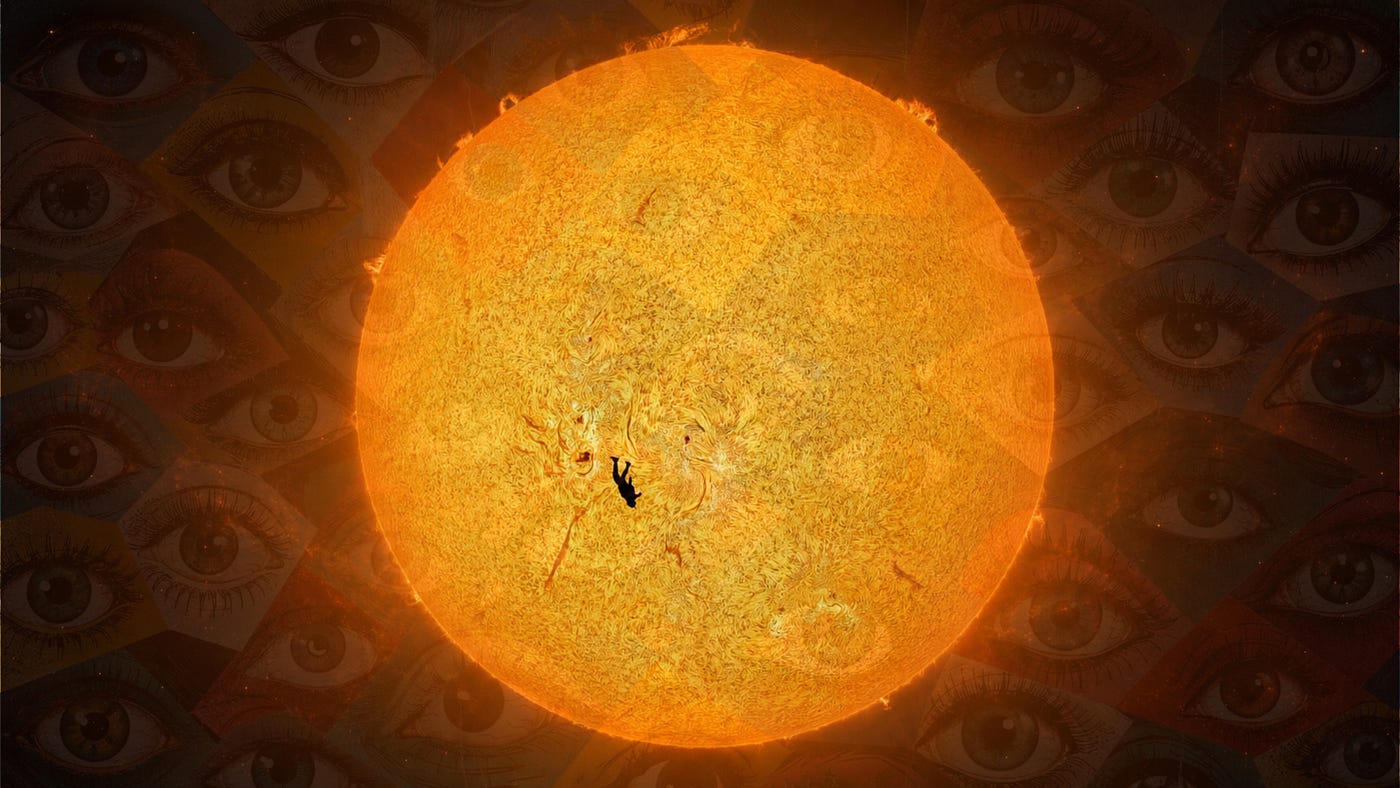
Climate Change for Deniers
Overview of what is natural, and what is unnatural
Climate Change For Deniers
Climate Change is driven by tangible cycles and events that determine what, where, and why things change naturally over time. To understand why climate change happens, we need to understand the narrative that gives us the world we have today and what it might mean for the future. There are things unseen about our world that we need to better understand.
Photo by Markus Spiske on Unsplash
Today’s Climate Change debate concerns what is unnatural for our natural world. Wherever we live, we know how our weather works and expect our seasonal variations to be largely foretold based on past history. But much is happening on a grander scale that remains unseen and not so foreseeable.
When we talk climate, we usually mean the regional climate because that has the most impact on our daily lives. The reality is that the environment differs depending on where you call home. So, to understand one regional climate, we not only need to know how they differ and interact on a global scale. To understand them all, we need to conceptualize them as a single “Global Climate.”
So, what is the “Global Climate?”
The idea of a single Global Climate is that all the planet’s days, seasons, and regions can be summarized into a single annual value that tells us about its overall physical nature. To do this right, we require something to measure besides just time, so we switch our thinking to earth orbits around the sun. Why orbits, you ask? Because orbits determine the amount of annual sunlight that our planet gets from the sun and is something we can measure.
Our planet has a long history of climate change. During the ice ages, when ice dominated much of the world, that was natural for its time. When the ice ages ended and the global environment warmed, that too was natural. We can take these changes for granted or try to understand what changed and why our global climate changed so dramatically. This is just one part of the big picture we humans cannot see by watching our local weather because the earth’s climate is much more complex than what we can see by looking up.
So, where do we begin to see what we cannot see?
To answer this question, we need to understand that there is an Earth Energy Budget (EEB) that keeps our planet liveable and drives our global climate. The more heat the earth accumulates and retains, the warmer it gets, while the less heat it receives or, the more it expels, the colder our planet gets.
Our Earth Energy Budget (EEB) is determined by:
- The amount of sunlight (heat) absorbed by the earth.
- The amount of infrared (heat) the earth radiants back into outer space.
At the highest conceptual level, this is what drives everything about global and regional climate. Regional climates are local weather patterns that vary depending on how the EEB ebbs and flows around the planet. If the amount of annual heat the earth receives from the sun matches the amount of heat sent back into space, our planet’s climate is naturally balanced.
If only that was all we needed to know, it would be so simple. But to see more, we need to look deeper to understand more refined details of how this all works to give the earth its balance and longevity.
Factors Influencing the Earth Energy Budget (EEB):
1. The average orbital distance of the earth from the sun.
2. The amount of sunlight energy absorbed by the earth.
3. How fast the earth radiates heat energy back into space.
Earth’s Orbit Around the Sun
The earth is in a gravitational dance with the sun, with only the vacuum of space separating them. It is a delicate dance that slowly changes over time. The closer we are to the sun, the more sunlight we get, and the farther we are, the less sunlight we receive. This is just basic math, the same as why a night light gets dimmer as you move away.
Measuring the sun-earth distance at any point in our orbit makes little sense because that distance constantly changes. A perfectly circular orbit would keep the sun-earth distance constant for a year, but that is never the case. Right now, the sun-earth distance measures 91.4 million miles in January and increases to 94.5 million in July. Close to being circular, but even now, the amount of sunlight we get changes by almost 7% during each orbit. Probably a good thing for winters in the northern hemisphere, but it shows how much of an impact earth’s orbit has on the sun’s strength.
During the ice ages, the earth’s orbit was much more elliptical. When the earth’s orbit is elliptical, it spends more time farther from the sun, so the average amount of sunlight that warms the world decreases. It is a bit more complicated but enough for readers to get the picture. It is just about the time-driven natural gravitational balance.
EEB Inference: The earth’s orbit and its average orbital distance from the sun do not change significantly from year to year. Therefore, we can conclude that the amount of incoming sunlight does not change enough annually to impact the global climate.
Earth’s Sunlight
Not all the sunlight that contacts the earth warms our planet because much of it is reflected back into outer space. This reflected sunlight is due to the earth’s albedo, or “the proportion of light reflected from a surface.” This is best illuminated by the magnificent pictures of our planet from outer space
On average, about 30% of incident sunlight is reflected back into space by clouds, snow cover, vegetation, and many other surfaces. Even our oceans can reflect up to 7% of the sunlight, giving them their blue color, while fresh snow reflects 85%. The earth’s albedo is not the same everywhere but changes depending on what region of the planet faces the sun. The part facing the sun changes on daily and seasonal cycles because our earth rotates at a 23-degree angle to the sun. This means that our albedo-facing surface also changes with these cycles. These are natural cycles that repeat with each orbit around the sun.
In addition to the land and sea reflecting sunlight, our atmosphere periodically changes the amount of sunlight warming the surface. Volcanic eruptions increase the reflectivity of our atmosphere and can cool the global climate depending on the eruptions’ number, size, and duration. Catastrophic volcanic events are rare and temporary, so they do not really modify the EEB enough to cause permanent global climate change.
According to satellite albedo measurements from NASA Earth Observatory, the average earth reflectivity only varied by about 0.2% over the past decades. So just like the annual effects of the earth’s orbit, the albedo impact is negligible on our global climate.
Any sunlight not reflected from the earth is absorbed at the surface and increases the Earth’s Energy Budget (EEB). This absorbed sunlight is our planet’s lifeline providing energy for photosynthesis and warming our planet.
EEB Inference: The portion of the earth facing the sun changes by day and season, and so does its albedo. This cycle repeats yearly, and there is no indication that it has contributed to climate change over recent decades.
Earth’s Cooling Processes
Our sun never stops shining and just keeps illuminating our world with sunlight. If this energy just accumulated, our world would overheat, and the oceans would boil off into space. Instead, the earth cools itself by radiating heat back into outer space as infrared light. To keep our EEB stable, our world needs to cool itself as much as the sun warms it.
Infrared light is the engine that cools our planet by carrying its heat into outer space. It is invisible to humans unless we use night vision goggles. Since outer space is a vacuum, there is no convection or conduction to let heat escape like things do on earth. The only way things cool in the vacuum of space is to emit infrared radiation (heat). This is how all planets release heat into outer space, including our earth.
Most of the earth’s heat is stored in its oceans and lands, while our blanket atmosphere holds just a tiny portion of the total heat energy. This should make sense because air is much less dense than water or land.
The problem with the earth’s surface heat is that it must first pass through its atmospheric filter to get to outer space. The good thing is that most of our atmosphere is Nitrogen and Oxygen, and both are very good at letting infrared heat through to outer space. But other trace gases are not as accommodating.
Water Vapor Insulation
In a desert, when the humidity in the air is very low, the surface heat can pass through our atmosphere and into space without much trouble. Compare that to a temperate climate with high humidity, where the nights remain hot and muggy. The difference is the ability of infrared light to carry surface heat through our atmosphere and into space. Water vapor, a greenhouse gas, is one of the filters that impedes infrared light from escaping, keeping the heat near the planet’s surface. This is something we can experience to see for ourselves
Water vapor also cools the earth!
When water evaporates, it removes heat from the surface and carries it into the atmosphere as water vapor. This creates the humidity we talked about. Once airborne, the moisture accumulates as clouds taking its stored heat energy high into the atmosphere. Nearer the atmospheric boundary to outer space, the vapor releases heat into space, cools, and drops out of the sky as rain.
The result is that water plays two roles in keeping our EEB stable. Water vapor helps keep our planet warm by absorbing surface heat trying to escape and acts as a conduit for transferring heat through our atmosphere into outer space.
How this water cycle behaves globally and regionally depends on the amount of heat energy that needs to be removed, with more surface heat, the cycle increases. With less surface heat, the cycle slows. The water cycle is the thermostat that regulates our global climate through regional evaporation and rainfall.
EEB Inference: Earth’s water is the engine that cools the earth’s surface by evaporating, moving high into the atmosphere, and radiating heat into outer space. The water cycle is our planet’s circulatory system for warming and cooling to maintain a stable global climate.
Carbon Dioxide (CO2)
Without water vapor and other greenhouse gases, our planet would freeze solid. So whatever heats the earth, it is primarily water vapor that throttles it away to balance our global climate. Like water vapor, carbon dioxide is also a greenhouse gas. It and other trace gases also help keep our world warm. It is estimated that our average global temperatures would drop from 57-degree(F) to -0.4-degree(F) without any greenhouse gases in our atmosphere.
Carbon Dioxide has a unique property in that it is very soluble in water, or, in earth’s case, its oceans. It is estimated that 90% of the earth’s total CO2 is in our oceans. When it rains, atmospheric CO2 dissolves in the rainwater as carbonic acid and mingles with our land and seas. CO2 removed from our atmosphere does not contribute to global warming; only its concentration in our atmosphere warms our planet.
Carbon Dioxide is Less Soluble in Warm Water
Obviously, CO2 is essential for life and part of our natural carbon cycle, but there is another cycle that is critical for our global climate. Warming oceans release CO2 into the atmosphere. This is a fundamental property of Carbon Dioxide in water that we can see when a can of soda warms. This means that cooling oceans absorb more CO2 from the atmosphere while warming oceans pump CO2 back into the atmosphere.
For example, when the oceans get colder during ice ages due to an elliptical orbit, they absorb more CO2 since it is more soluble in cold water. This reduces the amount of CO2 in the atmosphere, further accelerating climate cooling. After the ice ages, the planet warms when the earth’s orbit becomes more circular. The release of CO2 comes after the oceans begin warming, contributing to more natural warming of our earth.
EEB Inference: Carbon Dioxide is a greenhouse gas that warms our planet by reducing the amount of infrared heat radiated into space. Unlike water vapor, CO2 does not help cool the earth. The warmer the earth’s oceans, the more they pump CO2 into the atmosphere, and the colder our oceans, the more CO2 they absorb.
So what is the Earth’s Energy Budget?
This overview is not about examining our climate problems with a microscope but measuring it with a yardstick. There is far too much information for the average person to digest in detail, so it is better to provide a more common sense description.
Earth’s Energy Budget (EEB) results from natural cycles that have preserved our global climate and rewarded us with life as we know it. The systems regulating this balance are magical and intertwined in a complex web of interacting cycles. Now that we have 8 billion people on the earth, humans need to better understand how we might influence changes in our global climate.
· We learned that earth’s orbital and albedo impact the amount of sunlight entering our atmosphere and warming our planet.
· The water cycle is the primary system that warms the earth and carries surface heat into our atmosphere as water vapor to cool our planet.
· Carbon Dioxide and other greenhouse gases warm the earth by limiting the escape of infrared heat back into space.
· These systems have regulated our global climate for billions of years and should support life as we know it for millions of years in the future.
What is not Natural about our Natural World?
The amount of CO2 we are adding to the earth’s atmosphere is outpacing the ability of our oceans to absorb the excess and find a natural balance.
The problem is that CO2 in the atmosphere helps warm the earth, and because of our fossil fuel use, we are adding 2–3 ppm of additional CO2 per year. Any CO2 in our atmosphere contributes to global warming, and the more we add, the more our planet will warm. The warmer our world, the warmer the oceans get, and the less CO2 the oceans can hold, resulting in even more CO2 in our atmosphere.
See the picture below for how this alters the earth’s natural CO2 warming cycle!

One more thing, warming the world’s oceans is not just about warming the water but also melting its ice. It takes a lot of heat energy to melt the ice at our poles, heat that would otherwise warm the oceans. As the world’s ice disappears, we should expect our global warming to increase dramatically!
It is a vicious cycle of more CO2, causing the release of more CO2 from the oceans into our atmosphere and disrupting our natural EEB balance. Much like an overheating engine, if we keep letting it overheat, it will eventually damage itself, and we will have to live with the consequences.
Any questions?
메타데이터
- post_id
- 71d00c31fe3f
- slug
- climate-change-for-deniers-71d00c31fe3f
- url
- https://medium.com/@crary.john/climate-change-for-deniers-71d00c31fe3f
- canonical_url
- https://medium.com/@crary.john/climate-change-for-deniers-71d00c31fe3f
- author_url
- https://medium.com/@crary.john
- status
- ok
- fetched_at
- 2026-07-13 06:23:13