The History of Philly Club: Progression and Expression
I speak with Reezey on furthering not only the party culture, but the advancement of safe spaces for African Americans.
The History of Philly Club: Progression and Expression
I speak with Reezey on furthering not only the party culture, but the advancement of safe spaces for African Americans.
To start, what year did you begin producing, and what year did you begin DJing?
Officially, I began DJing in 2009, same with producing. Unofficially, I’ve been making music since elementary school in computer classes. I don’t have a lot of songs that I produced from the first time. I made them in the basement with my bros. I became a professional DJ around 2010. I had a different relationship in the club music world by being someone who could bring the raw underground sounds into formal spaces as a professional DJ… Places like proms, sweet 16s, block parties, community events, house parties, and more.
How important was social media for assisting with the spread of party music?
I didn’t get into Myspace until later, so all of the parties were things that came up on their radar. I’ve never really been much of a technology-based person. Myspace was major for the party music era; however, I didn’t get into it until later. I never really cared much about what the world was doing, only mine and people within my world.
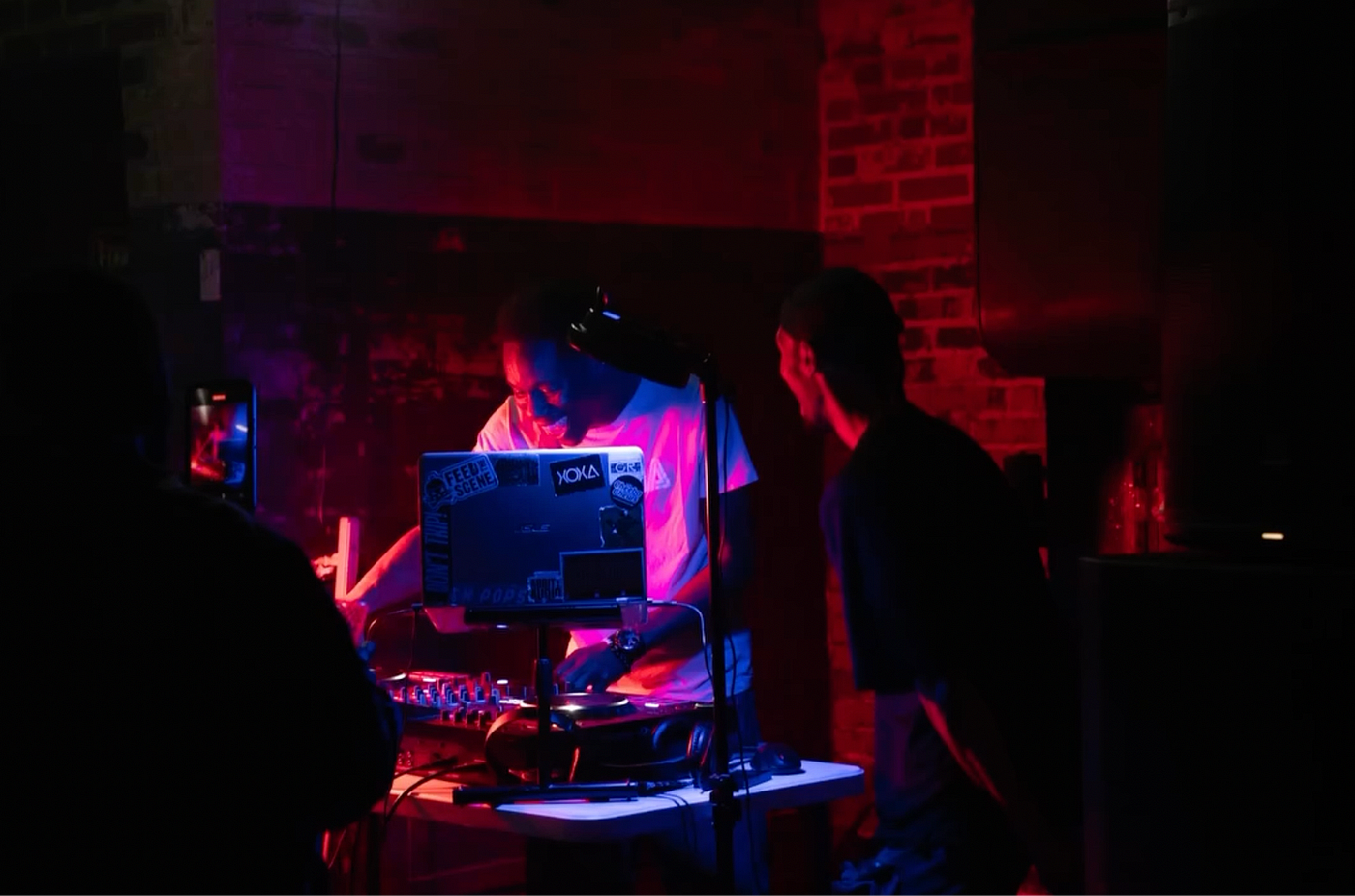
DJ Sega (Left), and Reezey
When I started DJing, I was already well respected by the folks I knew. (As a professional DJ), I was often around adults who were eight to ten years older than me and influencing the culture, so I was able to see their ins and outs of the culture from a different lens than my peers. As a producer, I would make Club Music that would fit well into their sets as adult DJs, which gave me a more “mature” sound at a young age.
When did you officially meet Sega?
I met him around 2011, and it was an honor. I met him at DJ Exclusivs’s crib. He was around the same age as him, but older than us. They had a group called Party Krushers Ent, and it was before the Mad Decent Block Party that year. Sega made us feel as if he was there for us. He made us feel like he was our big brother.
Were you born with a natural deep love for music, or was it developed?
I was born with it, and it was a huge part of my development. Songs that my parents would play, listening to music without consciously knowing it.
What are some songs that they played that resonated with you?
Rainforest by Paul Hardcastle, Don’t Stop the Music by Yarborough and the Peoples, Far Away from Here by Kindred the Family Soul, Happy Feelings by Maze and Frankie Beverly. I didn’t even know they were my favorite songs until I became an adult; Cosmic Euphoria.
What does a love of music feel like to you?
It’s a cosmic love. My love of music is essentially unrequited. What music does for me in the most euphoric way provides a sonic peace that nothing else in the world can provide outside of the sounds of nature.
Do you feel as if modern-day DJs actually possess a love for music?
I think some do, for sure. People can love music, but the way that I practice my love of music is not something I’ve experienced from too many other DJs.
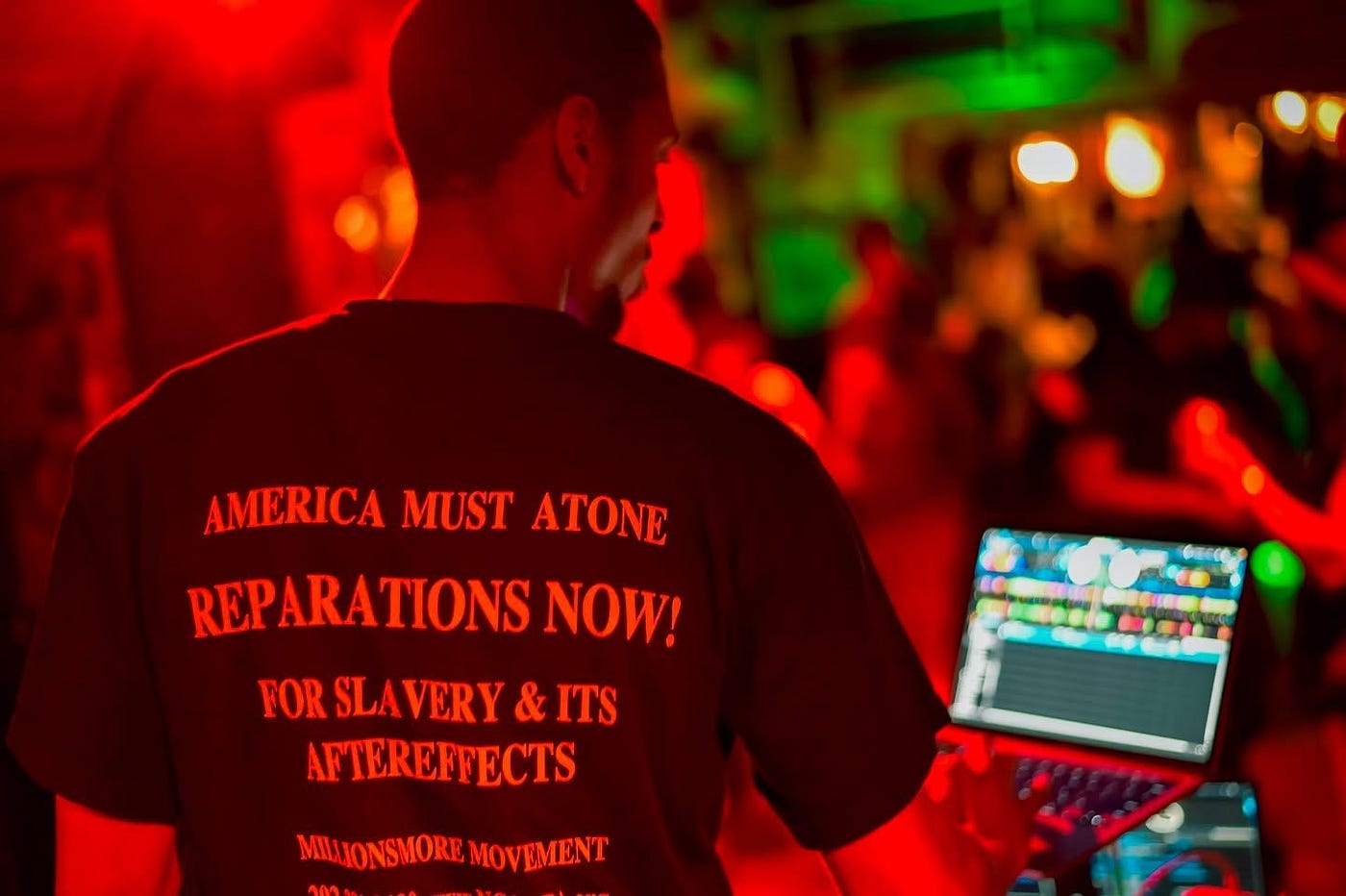
Reezey, live at a Juneteenth Party
Where does the youth of today lack where the previous generations didn’t?
Experiencing life without social media, and it being a means to being social in real life. Our worldview wasn’t shaped by the tangibles online.
How important were (and are) dollar parties for teenagers and young adults?
Dollar parties were for young people who were experiencing life without an outlet to express what we were going through and what was happening to us. It was a place for us to be free, without rules, restrictions, or parental guidelines. It honored peace and created memories that allowed us to tap into deeper parts of our lives during our childhood.
What is the primary difference between partying back in the mid 2000s, and parties now?
At the mid 2000 parties, they were all hot as a sauna. Sweat, battles, Wallys, and dancing all night. It was dance supremacy all night, with no recording. You could hear the same seven songs for hours, from one tape! We would play whole songs, unless you knew a DJ that had deep crates. (Now), It feels like stamina and reaching flow states is not as common.
Where was your first memorable party that you attended that made you want to start DJing?
I didn’t go to any specific party, but the first memorable one was a sweet sixteen in 2007. I heard Black Starr’s I Can Feel It in the air, and that was the first time I heard and felt the cosmic soundscape of what club music could be and was, and it made me evolve in my biosphere as a person. I started DJing after one of my best friend’s cousins recommended me based on my love of music. He even invested in my career later on by buying me an iPod mixer in 2008.
**What inspired your initial call to action in the community?***
The Call to Action stemmed from a workshop I was asked to do, titled “The Science of club music through a modern and indigenous action lens”. Immediately, I wanted people to know, specifically black Americans, more about our sonic heritage and our sonic inheritance. Underground Sounds was in an actual warehouse in Philly, where I played pretty much all of my newly produced club music. It was essentially a Black dance music rave.

Footage from Underground Sounds
*First referenced in The History of Philly Club with Traps and Trees.
How else are you involved with your community, outside of music?
I actually stopped producing in 2014, and between 2014 and 2023, I became a community organizer focused on Black American Human Rights and Community Development. Part of that pause in producing music was influenced by a dance music infiltration that I had felt affected the entire culture.
How did the culture get infiltrated?
The infiltration came from people who projected the impression that they were interested in young black talent, only to take their talent and leave them behind. This is our tradition, our folk music & rejoice. To others, they’re playing a game to take advantage of our struggles and traumas. If someone is invited to our cultural safe space, it is expected that our ethics are respected.
Are we (as black Americans) fighting a silent war on our culture?
It’s not silent, not at all. The enemy tries to make music from the noise they create so that the world doesn’t fully hear how loud the war is against us. My personal mission has been to create spaces where we can see ourselves, and speak a language that only we understand.
What can we, as both curators and partakers, do to prevent safe spaces from being infiltrated by people who are looking for temporary gain?
I can’t publicly say what we could do to prevent infiltration, because that’s for us to know. People can book who they want; if they want raw & organic, they can get it. Children don’t know. As a child, I didn’t know that people were abusing their opportunities and access, so I became a fan of people that I later realized I would not have been a fan of if I had known information like that prior.
Does the modern day media’s fascination with showcasing the “reality” of being black in America feel as if we are being placed on exhibition?
The media is just doing their job, and they are doing the job of creating propaganda against black American’s humanity so that they don’t have to atone for their crimes against our humanity. Their goal is ultimately to prevent our humanity from being recognized so that it cannot be held accountable in the eyes of the masses.

Science of Club Music Workshop, led by Reezey
How important is representation to teenagers when it comes to inspiring them to continue on their creative journey?
It’s synonymous with identity. It shapes a person’s identity. My identity was only reinforced by music from my childhood memories, so that even when I was introduced to other genres of music and entertainers, my identity was already established.
How important has showcasing representation been for you to influence the next generation?
Extremely Important. I’ve been an afterschool program and summer camp director for adolescents, an entrepreneurship teacher, and have been in a lot of other roles that have allowed me to directly influence the youth, for about six consecutive years.
What has contributed to the younger generations’ passion and desire to want to tap into their ethnicity?
The younger generation can see that what has been said to work, compared to what actually has worked, isn’t adding up. So, they’ve taken it into their hands to be different.
What advice would you give to a person attempting to find their racial identity for the first time?
That depends on where they are in their journey. You can’t overload a person with knowledge, but you can prematurely introduce or overstimulate them. I would assist them with learning more about their ethnicity, as opposed to just their race.
Do you feel as if party music is being left in good hands?
I don’t think it’s really in anyone’s hands, and if it was, I wouldn’t be able to say if it is or isn’t. I would ask the people to ask themselves if the music is actually promoting life. If the answer is no, then I would ask them if it’s in good hands. We’re all on our own journey.
메타데이터
- post_id
- 71e21d7d7175
- slug
- the-history-of-philly-club-progression-and-expression-71e21d7d7175
- url
- https://medium.com/@xanborghini/the-history-of-philly-club-progression-and-expression-71e21d7d7175
- canonical_url
- https://medium.com/@xanborghini/the-history-of-philly-club-progression-and-expression-71e21d7d7175
- author_url
- https://medium.com/@xanborghini
- status
- ok
- fetched_at
- 2026-08-09 15:42:22