Air Purifier Benefits in Nepal: Why Cleaner Indoor Air Matters
In Nepal, dust is not something that stays outside. It enters our rooms, settles on furniture, sticks to curtains, comes in through windows…
Air Purifier Benefits in Nepal: Why Cleaner Indoor Air Matters
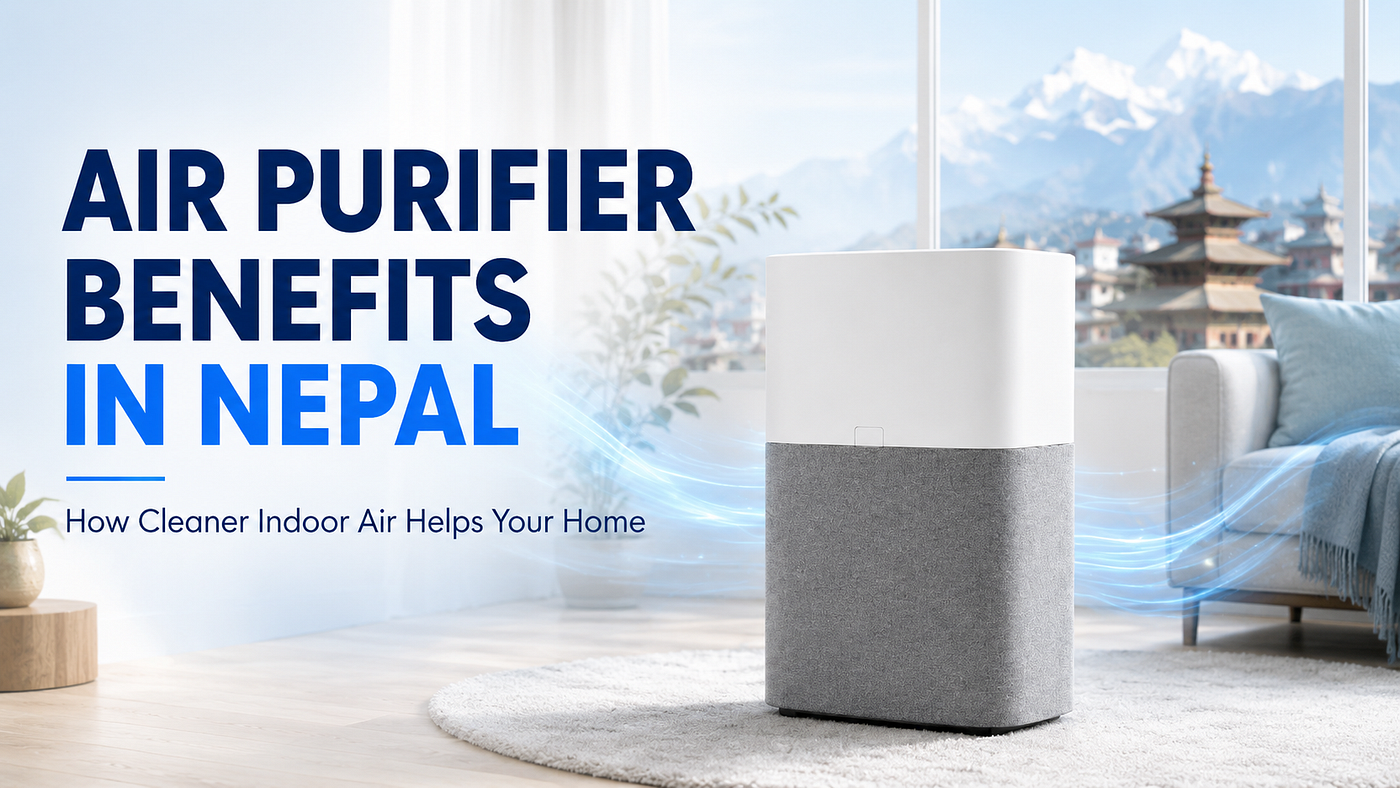
In Nepal, dust is not something that stays outside. It enters our rooms, settles on furniture, sticks to curtains, comes in through windows and doors, and somehow returns even after cleaning.
If you live in Kathmandu or any busy urban area, you probably know this feeling. You clean your room in the morning, and by evening, there is dust again on the table, floor, bedsheet, or electronics. Some dust is visible, but a lot of the problem is in the air itself.
This is why more people are thinking about air purifiers for homes, bedrooms, baby rooms, offices, and study spaces. An air purifier will not solve outdoor pollution, and it will not replace cleaning. But when used properly, it can help reduce airborne dust, fine particles, smoke particles, pollen, pet dander, and some odours inside a room.
For homes in Nepal, especially in places affected by road dust, traffic smoke, construction, seasonal haze, or indoor smoke, this can make the room feel cleaner and more comfortable.
Why Air Purifiers Matter in Nepal
Indoor air in Nepal is affected by many things at once. Road dust enters through windows and balconies. Vehicle smoke comes from nearby roads. Construction dust travels from surrounding buildings. Seasonal haze, cooking smoke, incense, pet dander, bedding, curtains, carpets, and daily movement inside the house can all add to the problem.
A room may look clean, but the air can still feel heavy. This is especially common during dry months, winter pollution, dusty mornings, or days when the outside air already feels uncomfortable.
An air purifier helps by pulling room air through filters and sending cleaner air back into the space. It works best in a closed room where the unit matches the room size and the filter is replaced on time.
It is not magic. It is a support tool for cleaner indoor air.
Helps Reduce Airborne Dust
Dust is one of the main reasons people in Nepal look for air purifiers.
In Kathmandu and other dusty areas, dust does not enter only when windows are open. It also comes in through shoes, clothes, balcony doors, gaps, carpets, curtains, and normal movement inside the room.
An air purifier can help reduce the dust that is floating in the air before it settles on furniture, bedding, shelves, electronics, and soft surfaces. It will not remove dust that has already settled, so cleaning is still needed. But it can help reduce the amount of dust moving around in the room.
This can be useful for bedrooms, living rooms, baby rooms, study rooms, home offices, and apartments where dust returns quickly.
Helps With PM2.5 and Fine Particles
Some particles are too small to see, but they still affect indoor air. PM2.5 is one example. These fine particles can come from traffic pollution, smoke, burning, outdoor haze, and dusty air.
Because they are so small, a room can look normal while still having fine particles in the air. This is why indoor air can feel uncomfortable even when the floor and furniture look clean.
An air purifier with strong particle filtration can help reduce fine particles inside the room. But room size matters. A small purifier in a large room may run for hours and still clean slowly.
So before buying one, it is important to check whether the purifier is suitable for the room where you plan to use it.
Supports People Sensitive to Dust and Allergens
Air purifiers can also be useful for people who are sensitive to dust, pollen, pet dander, mould spores, or other airborne triggers.
They do not cure allergies, asthma, sinus problems, or breathing issues. That part still needs proper medical guidance if symptoms are regular or serious. But an air purifier can help reduce some airborne particles that may make the room feel irritating.
This is especially useful in bedrooms because we spend many hours sleeping in one place. If the room has dust, pollen, pet dander, or fine particles floating in the air, reducing them can help make the space feel more comfortable.
For better results, an air purifier should be used with normal cleaning habits, filter replacement, and control of dust sources.
Helps Reduce Smoke Particles and Odours
Smoke is another common indoor air problem in Nepal, whether it comes from cooking, incense, cigarettes, candles, nearby burning, traffic, or seasonal haze.
A good air purifier can help reduce smoke particles in the room. If it includes activated carbon, it can also help with smoke smell and other odours.
So, if smoke or smell is one of your main concerns, don’t look only at particle filtration. Check whether the purifier also has carbon filtration.
This matters because smoke is not just about smell. It can make a room feel heavy, stale, and uncomfortable, especially in closed rooms or during winter when windows stay shut for longer.
Useful for Homes With Pets
Pets bring warmth to a home, but they also bring hair, dander, and sometimes odour.
Pet hair is easy to see, but pet dander is much smaller and can stay in the air for longer. It can also collect on sofas, carpets, bedding, curtains, and clothes.
An air purifier can help reduce airborne pet dander and fine particles in the room. If the purifier has activated carbon, it may also help with some pet-related smell.
But it will not replace grooming, vacuuming, or cleaning pet hair from surfaces. It simply helps keep the air cleaner between regular cleaning.
Better Bedroom and Baby Room Air
Bedroom air matters because we spend long hours sleeping in one room. Even when the room looks clean, dust, pollen, pet dander, smoke particles, and PM2.5 can still stay in the air.
For bedrooms, a good air purifier should be quiet, properly sized, easy to run for long hours, and simple to maintain. Noise level is especially important because a purifier that disturbs sleep will not be used regularly.
For baby rooms and kids’ rooms, parents should be even more careful. The purifier should be quiet, stable, placed safely, and should not blow strong air directly toward the baby. Replacement filters should be genuine and easy to find.
Parents should also avoid air cleaners that intentionally produce ozone. For a baby or child’s room, a simple filter-based purifier is usually the safer and more practical choice.
Useful for Homes Near Roads and Construction Areas
Homes near busy roads, schools, chowks, construction sites, or dusty open areas usually feel the difference more.
Even when windows are closed, fine dust can still enter through small gaps, doors, stairways, clothes, shoes, and balconies. This is why some rooms feel dusty again soon after cleaning.
For these homes, an air purifier can help reduce airborne dust, road particles, and fine pollution inside the room. It will not stop dust from entering completely, but it can help make indoor air easier to manage.
If the room gets dusty quickly, choosing a purifier with slightly stronger coverage than the exact room size can be a better long-term choice.
Useful for Offices, Clinics, and Shared Spaces
Air purifiers are not only for homes.
Offices, clinics, reception areas, classrooms, and shared rooms can also benefit from cleaner indoor air. These spaces often have more foot traffic, more people coming in from outside, more dust entering through doors, and longer hours in closed rooms.
For shared spaces, airflow and room coverage matter even more. A small bedroom purifier may not be enough for a clinic, office, or meeting room.
In offices and clinics, look for stronger airflow, low noise, proper room coverage, and filters that are easy to replace. A purifier that works well in a small bedroom may not be the right choice for a busy shared room.
Do Air Purifiers Really Work?
Yes, air purifiers work when they are used properly.
They can help reduce airborne dust, PM2.5, pollen, pet dander, mould spores, and smoke particles. Some models with carbon filtration can also help reduce odours and some gas-related smells.
But they do not remove every pollutant. They do not clean settled dust. They do not fix mould growing from damp walls. They do not replace ventilation, regular cleaning, or source control.
An air purifier works best when:
- It matches the room size
- The filter is clean and genuine
- It runs long enough
- Airflow is not blocked
- Doors and windows are managed during dusty hours
- Filters are replaced on time
A purifier is most useful when it becomes part of the room’s daily routine, not something turned on only once in a while.
Are Air Purifiers Worth It in Nepal?
For many homes in Nepal, yes, an air purifier can be worth it.
It is especially useful if your home gets dusty quickly, if you live near traffic or construction, if someone in the family is sensitive to dust or pollen, if you have pets, if you have children or elderly family members, or if you want cleaner air in the bedroom or home office.
But it is worth it only when you choose the right model.
A purifier that is too small for the room will not perform well. A purifier with unavailable filters will become hard to maintain. A purifier placed in a corner or blocked by furniture will not clean the air properly.
So instead of buying only by price or design, think about long-term use.
What to Check Before Buying an Air Purifier
Before buying an air purifier in Nepal, check the practical things first.
Start with room size. Then check the filter type, airflow or CADR, noise level, replacement filter cost, filter availability, warranty, and after-sales support.
If smell, smoke, cooking odour, or traffic fumes are a concern, check whether the purifier has activated carbon. If dust and PM2.5 are the main concern, strong particle filtration matters most.
The cheapest purifier is not always the best. The most expensive purifier is not always necessary either.
The right air purifier is the one that fits your room, your air problem, and your long-term maintenance needs.
Common Mistakes to Avoid
Many people buy an air purifier after only looking at price, design, or brand name. That can lead to disappointment.
Some common mistakes include buying a purifier that is too small for the room, forgetting to check filter cost, buying a model without available replacement filters, expecting instant results, placing the purifier behind furniture, using one purifier for the whole house, and not replacing filters on time.
An air purifier cleans the air that passes through it. So placement, airflow, room size, and filter condition all matter.
Final Thoughts
Air purifiers can be useful in Nepal because many homes and offices deal with dust, traffic pollution, smoke, allergens, pet dander, seasonal haze, and fine particles. They can help reduce airborne dust, PM2.5, pollen, pet dander, smoke particles, and some odors when the right filter system is used. But an air purifier should be seen as part of a cleaner indoor air routine, not the only solution.
For the best result, choose a purifier that matches your room size, has proper filtration, uses available replacement filters, and can run comfortably for daily use.
For people who want to explore Blueair air purifiers and genuine replacement filters in Nepal, Clean Air Nepal has a detailed guide on the benefits of air purifiers for homes in Nepal.
메타데이터
- post_id
- 7201ab47f36c
- slug
- air-purifier-benefits-in-nepal-why-cleaner-indoor-air-matters-7201ab47f36c
- url
- https://medium.com/@sangya.s/air-purifier-benefits-in-nepal-why-cleaner-indoor-air-matters-7201ab47f36c
- canonical_url
- https://medium.com/@sangya.s/air-purifier-benefits-in-nepal-why-cleaner-indoor-air-matters-7201ab47f36c
- author_url
- https://medium.com/@sangya.s
- status
- ok
- fetched_at
- 2026-06-28 04:42:08


