Kyber Ransomware Turns Business Infrastructure Into a Panic Button
Kyber Goes After the Systems Behind the Systems
Kyber Ransomware Turns Business Infrastructure Into a Panic Button
Kyber Goes After the Systems Behind the Systems
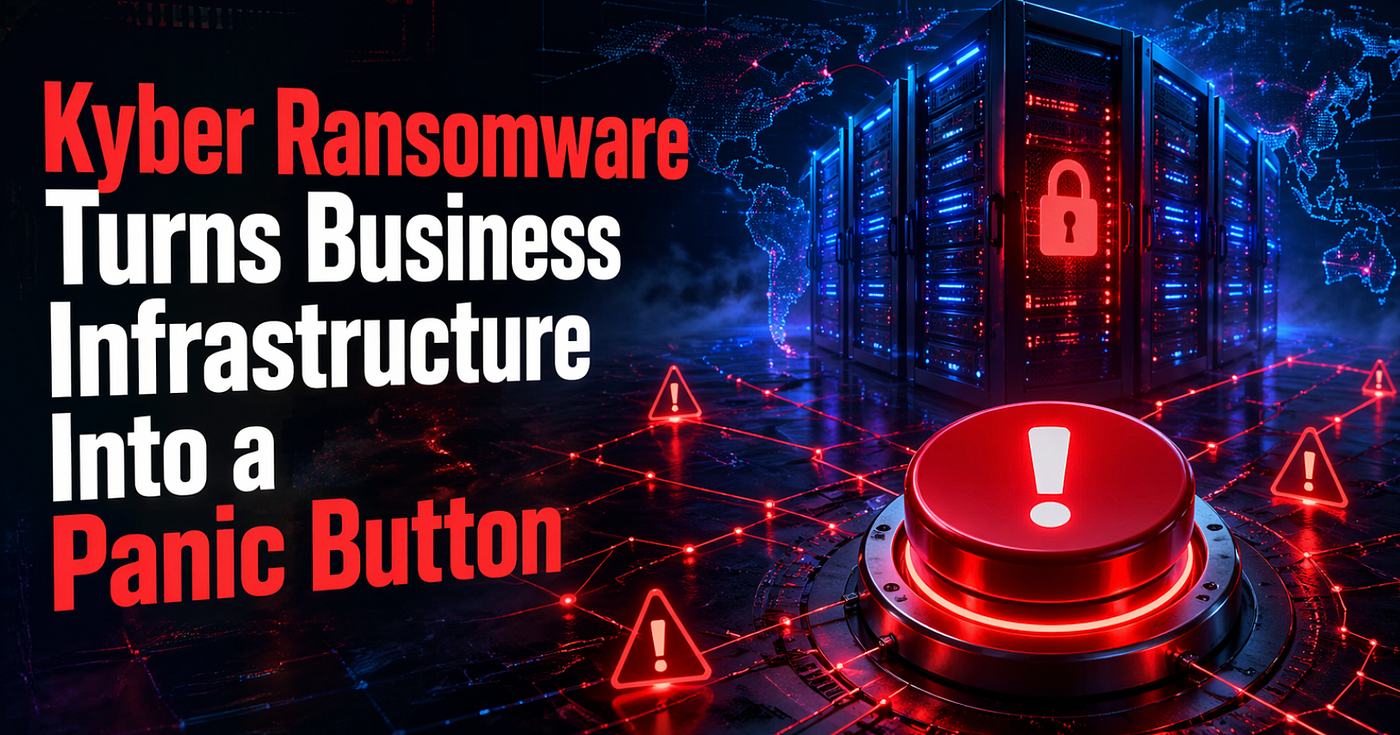
Kyber lands with a nasty kind of confidence. This strain has been described as a dual-platform ransomware threat aimed at both VMware ESXi hypervisors and Windows machines inside the same victim environment. That matters because the attack path reaches beyond office files and shared folders. It moves toward the layer where virtual machines live, where business apps run, and where recovery plans often depend on everything staying calm. One online voice summed up the mood well: “This feels like someone cutting power to the building, then locking every cabinet inside it.”
The ESXi payload is built for disruption at the infrastructure layer. It can shut down virtual machines, crawl through datastores, encrypt files, and replace visible management pages with ransom messaging. That web UI takeover adds a theatrical edge, but it also serves a blunt purpose: the victim sees payment demands right where they expect admin control. Encryption can keep running in the background while the screen has already become a ransom board. One defender called it “psychological pressure with a command line,” which feels painfully accurate for this kind of campaign.
The ESXi Side Is Quietly Savage
The ESXi variant appears tailored for VMware environments, using familiar native tooling such as esxcli rather than relying only on loud custom tricks. It can list running virtual machines, parse their IDs, and shut them down softly before encryption begins. That soft shutdown detail carries a chill. It shows the attackers care about keeping files stable enough to lock cleanly. Careful harm is still harm. Files under 1MB can be fully encrypted, while larger files get partial encryption for speed. The result is fast, broad damage across the storage layer.
There is also a branding gap. The ransom language claims AES, X25519, and Kyber-style encryption, but analysis of the ESXi payload found ChaCha8 with RSA-4096 instead. Some people see that mismatch as proof the crew is selling fear more than precision. Others argue the crypto detail barely changes the pain. “When your virtual estate is dark, nobody in the room cares which algorithm did it,” one admin-style comment put it. Both takes can be true. The claim may be inflated, while the outage remains severe enough to move executives.
Windows Brings the Recovery Wrecking Crew
The Windows payload brings a different flavor of damage. Built in Rust, it checks for elevated rights and becomes far more aggressive when admin access is available. Its playbook targets shadow copies, system state backups, recovery settings, backup services, event logs, and other paths teams lean on during crisis. That makes the Windows side feel less like a file locker and more like a cleanup crew for the attacker. It tries to erase the ladders before anyone climbs out. For defenders, that is the part that raises blood pressure.
Here, the post-quantum claim has more substance. The Windows variant uses AES-256-CTR for bulk encryption while Kyber1024, also known through ML-KEM naming, works with X25519 to protect key material. That sounds futuristic, and the attackers surely know it. One camp sees this as a milestone: ransomware crews borrowing advanced cryptography because it gives them a sharper sales pitch. A second camp sees mostly scare language, since today’s recovery problem is access, backups, and containment. A third group splits the difference: fancy crypto may be branding, but branding can still push payment panic.
The Fear Works Because the Strategy Works
Kyber’s power comes from timing and pairing. ESXi disruption can take business systems offline, while Windows anti-recovery routines can make restoration messy and slow. That combination squeezes victims from two sides. It attacks the place where systems run and the places teams expect to use for rescue. One observer described it as “ransomware with a disaster recovery map in hand.” That line cuts because it captures the larger shift. Attackers are studying operational dependency, then building payloads around the weak joints that hold daily work together.
Some reactions have focused on the first confirmed use of standardized post-quantum pieces in ransomware. Others are less impressed by the crypto headline and more worried about the cross-platform choreography. The sharper question is simple: how many companies have ESXi management exposed too broadly, stale credentials floating around, backups reachable from the same admin plane, and limited visibility into PowerShell abuse? Kyber makes those old mistakes look newly expensive. It uses fresh language, but the doorway often opens through familiar gaps: access control, patch delay, weak segmentation, and recovery plans that were never stress-tested.
The Lesson Is Boring, Which Makes It Easier to Ignore
The practical response has no movie-trailer glamour. Segment ESXi management networks. Lock down admin rights. Watch esxcli activity. Monitor suspicious PowerShell, VSS deletion, backup-service tampering, and odd Rust binaries. Keep offline or immutable backups, then test restores under pressure. Patch ESXi hosts and Windows systems before attackers turn old flaws into leverage. None of that sounds as dramatic as post-quantum ransomware, but it is where the fight is decided. The flashiest algorithm in the ransom note matters less than whether the attacker can reach the crown jewels.
Kyber feels alarming because it blends engineering with theater. The engineering hits virtualization, files, recovery paths, and admin surfaces. The theater wraps it in quantum-flavored dread and visible ransom screens. That mix is built to make calm decision-making harder. Still, the clearest takeaway is grounded: ransomware crews are moving deeper into infrastructure, aiming for blackout rather than inconvenience. Companies that treat virtualization as a quiet back room may learn the hard way that attackers see it as center stage.
메타데이터
- post_id
- 724fc7ae76d6
- slug
- kyber-ransomware-turns-business-infrastructure-into-a-panic-button-724fc7ae76d6
- url
- https://medium.com/@PlanB./kyber-ransomware-turns-business-infrastructure-into-a-panic-button-724fc7ae76d6
- canonical_url
- https://medium.com/@PlanB./kyber-ransomware-turns-business-infrastructure-into-a-panic-button-724fc7ae76d6
- author_url
- https://medium.com/@PlanB.
- status
- ok
- fetched_at
- 2026-08-23 06:19:25