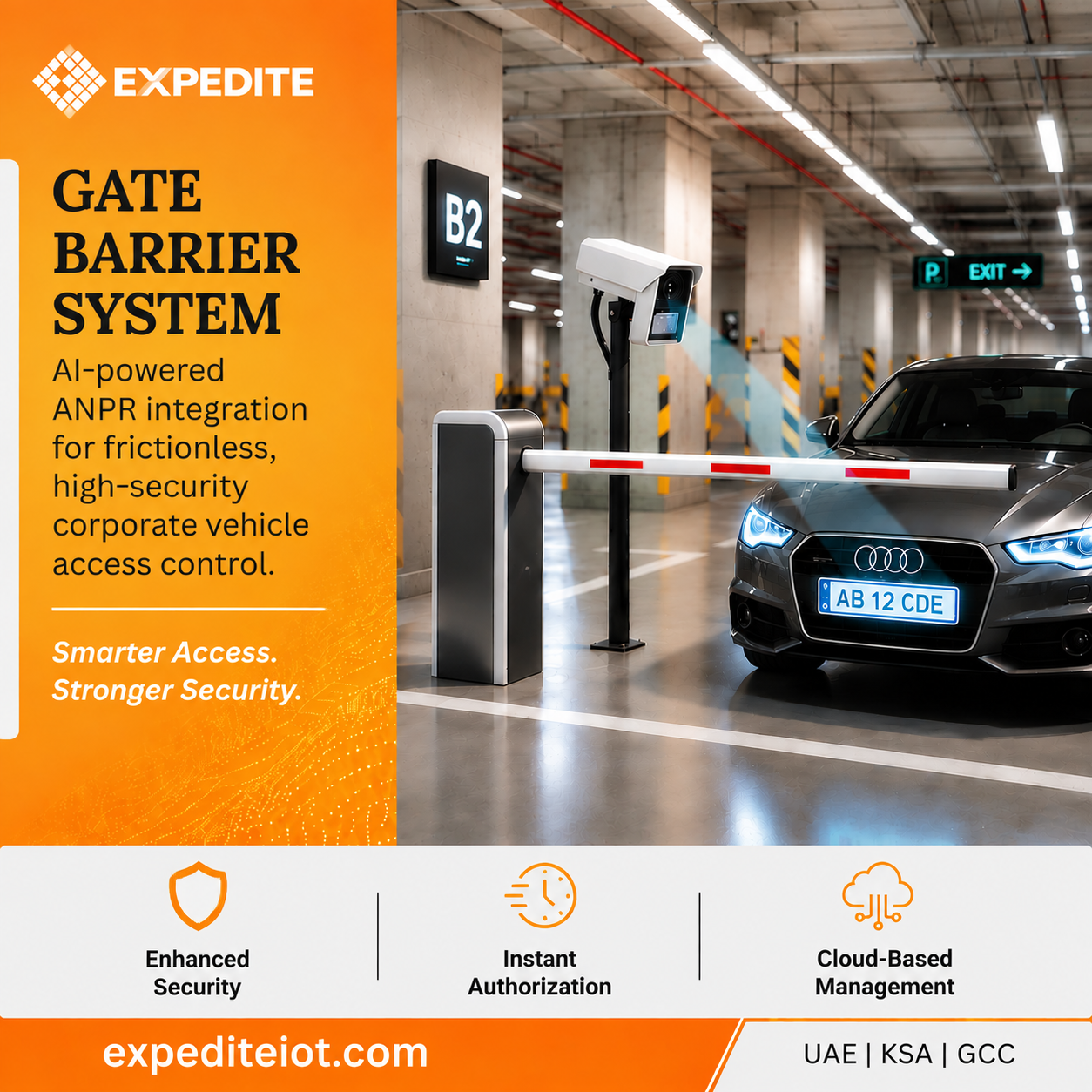
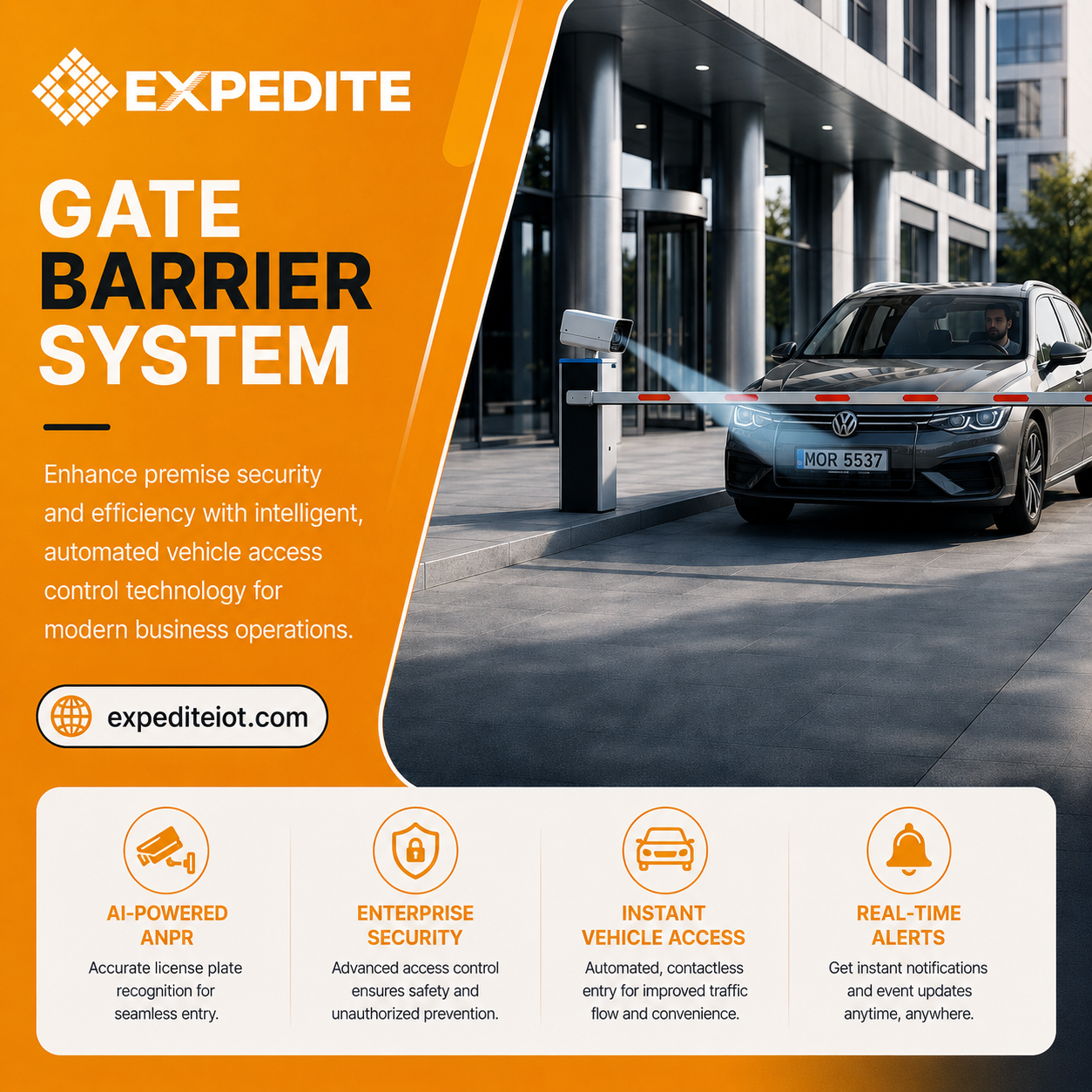
Round-the-Clock Protection — Premium Gate Barrier System for Kuwait
Kuwait’s commercial real estate sector, government infrastructure network, oil & gas industrial estates, and residential communities are…
Round-the-Clock Protection — Premium Gate Barrier System for Kuwait
Kuwait’s commercial real estate sector, government infrastructure network, oil & gas industrial estates, and residential communities are all confronting the same fundamental challenge: how to control, authenticate, and log vehicular access at every entry and exit point — continuously, at scale, and in full compliance with Kuwait’s evolving physical security and data governance regulations. The answer, across every high-performing deployment in the region, is an intelligent Gate Barrier System: an electronically controlled, credential-verified vehicular access platform that protects properties around the clock while generating the audit-grade entry and exit records that regulators, insurers, and enterprise governance frameworks demand.

At Expedite IoT, we engineer and deploy enterprise-grade gate barrier ecosystems across the GCC, with operational systems already serving Saudi Arabia, Qatar, and Oman. Our platform now extends to Kuwait’s most demanding vehicular access environments — from Kuwait Petroleum Corporation (KPC) industrial compounds and government ministry campuses to multi-storey parking facilities, smart residential developments, and toll-managed highway corridors. This guide provides a comprehensive technical and commercial overview of every gate barrier category relevant to Gate Barrier System Kuwait deployments, and explains how Expedite IoT delivers each as part of an integrated, cloud-managed access control ecosystem.
1. The Vehicular Access Control Challenge Facing Kuwait’s Properties
Kuwait’s property security environment is defined by several structurally demanding characteristics. A large contractor and logistics workforce rotate continuously across industrial zones, creating complex identity and vehicle management requirements at every site entry point. High-value residential compounds require perimeter security that is both impenetrable and architecturally unobtrusive. Government facilities must enforce multi-tier clearance rules across vehicle categories while maintaining the throughput necessary to serve thousands of daily visitors. And Kuwait’s expanding highway and toll infrastructure requires barrier systems capable of processing high-speed vehicle flows without creating queue congestion that undermines traffic management objectives.
Legacy vehicular access control — manned security barriers, unmonitored single-arm gates, and unintegrated proximity card readers — fails on every one of these dimensions. Credentials are shared and cloned. Vehicles tailgate through unmonitored barriers. Entry and exit logs are incomplete, unsearchable, and inadmissible for regulatory audit purposes. Kuwait’s Civil Defence facility security requirements, Ministry of Interior vehicle access mandates, and sector-specific HSE frameworks for oil & gas and petrochemical installations increasingly require that vehicular access be verifiably authenticated, timestamped, and centrally logged — a standard that demands intelligent, integrated gate barrier technology.
Why Unmanaged Vehicular Access Creates Compounding Risk
• Tailgating and piggyback entry allow unauthorised vehicles to pass unchallenged behind authorised ones
• Credential sharing between drivers allows non-authorised personnel to access restricted zones
• Manual logbooks produce incomplete, unsearchable records that fail regulatory audit standards
• No integration with ANPR, biometric, or CCTV systems means no identity confirmation at the barrier
• Single-point failure modes in unmaintained legacy barriers create extended security gaps
• No real-time alerting to security operations centres when access anomalies occur
2. Boom Barrier System: High-Speed Authorised Vehicle Access for Kuwait’s High-Throughput Entry Points
The **Boom Barrier System** — the horizontally pivoting arm barrier that controls lane-by-lane vehicular entry and exit — is the most widely deployed vehicular access control mechanism across Kuwait’s commercial, industrial, and residential property sectors. Its combination of rapid operation, low footprint, and compatibility with every major credential and vehicle detection technology makes it the default specification for facilities managing between 50 and several thousand vehicle movements per day.
Expedite IoT’s boom barrier range delivers opening and closing cycles of 1.5 to 3 seconds, accommodating both standard passenger vehicles and heavy-goods vehicles with boom arm lengths from 3 to 9 metres. The barrier controller integrates natively with ANPR (Automatic Number Plate Recognition) cameras, RFID long-range readers, UHF vehicle transponders, intercom systems, and biometric access terminals — enabling a fully automated, unmanned vehicle authorisation workflow that eliminates queue formation at entry points and removes the operational cost of manned boom operation entirely. For Kuwait’s oil & gas gate houses, where rapid contractor vehicle processing at shift-change is a safety-critical operational requirement, the boom barrier remains the indispensable infrastructure layer.
Boom Barrier System Specifications
• Opening cycle: 1.5–3 seconds — accommodates high-frequency vehicle entry without queue formation
• Boom arm length: 3m to 9m — single-lane and dual-carriageway configurations
• Obstacle detection via safety loop and infrared sensors — auto-reversal on obstruction
• Operating temperature: −20°C to +70°C — continuous performance through Kuwait’s peak summer conditions
• Integration: ANPR, RFID, UHF transponder, intercom, and biometric reader interfaces
• Fail-safe and fail-secure configurable modes — automatic barrier behaviour on power loss or emergency
3. Toll Gate Barriers: Revenue-Grade Vehicle Flow Management for Kuwait’s Highways and Managed Access Corridors
Toll Gate Barriers are a specialist category of vehicular access barrier engineered specifically for the high-cycle, revenue-critical demands of toll plazas, managed highway access points, congestion charge zones, and paid parking entry systems. Unlike standard boom barriers, toll gate barriers are designed for continuous 24/7 operation at transaction volumes that may exceed 10,000 vehicle passages per day per lane, with barrier controller software that integrates directly with toll management systems, payment terminals, and traffic management centre dashboards.
Kuwait’s expanding toll highway infrastructure and the growing adoption of paid access management in commercial real estate developments are generating increasing demand for toll-grade barrier solutions that combine rapid cycle times, multi-payment method support, and tamper-resistant transaction logging. Expedite IoT’s toll gate barrier platform integrates with Kuwait’s electronic toll collection (ETC) infrastructure, supporting both short-range RFID transponders and ANPR-based free-flow tolling configurations. Every transaction is logged with vehicle identity, timestamp, lane ID, and payment confirmation — providing the complete revenue audit trail that toll operators and concession contract auditors require.
Toll Gate Barrier Capabilities
• High-cycle engineering — rated for 10,000+ passages per day per lane without mechanical degradation
• Multi-payment integration: RFID transponder, contactless card, mobile NFC, and QR code payment
• ANPR free-flow configuration — vehicle identity captured at highway speed without stop requirement
• Tamper-resistant transaction logging — every passage event stored in encrypted, audit-grade format
• Lane controller API — real-time data streaming to traffic management centre and revenue audit platforms
• Reversible lane configuration — dynamic peak-hour lane direction management
4. Parking Gate Barrier: Intelligent Parking Access and Revenue Management for Kuwait’s Commercial Facilities
Kuwait’s rapidly expanding portfolio of multi-storey commercial parking structures, mall complexes, corporate campus parking, and hospital facility parking creates specific vehicular access management requirements that go beyond standard entry control. A **Parking Gate Barrier** system must not only control who enters and exits — it must also manage occupancy in real time, integrate with ticket dispensing and payment systems, enforce pre-booked space reservations, and generate the revenue reconciliation data that facility managers and parking concession operators require.
Expedite IoT’s parking gate barrier platform combines entry and exit barrier hardware with a cloud-managed parking management software layer that provides real-time occupancy dashboards, pre-booking integration, automated payment processing, ANPR-based permit holder recognition, and dynamic tariff management. For Kuwait’s shopping mall operators, hospital facility managers, and corporate campus administrators, this integrated platform eliminates the revenue leakage, queue formation, and operational overhead that characterises legacy ticket-in-ticket-out systems while delivering the parking usage data that informs future capacity investment decisions.
Parking Gate Barrier Platform Features
• Real-time occupancy monitoring with full / available / reserved zone status on digital signage
• ANPR-based permit holder automatic entry — no ticket or credential presentation required
• Multi-payment integration: contactless card, mobile app, QR code, and validation ticket
• Pre-booking platform integration — reserved space enforcement via ANPR or QR code at barrier
• Revenue reconciliation dashboard — transaction-level audit trail for parking concession reporting
• Cloud-managed multi-site administration — single platform for Kuwait’s multi-location parking portfolios
5. Vehicle Access Barriers: Integrated Perimeter Security for Kuwait’s Industrial and High-Security Facilities
Vehicle Access Barriers is the broader category encompassing the full range of electronically controlled vehicular barrier technologies — from standard boom arms to heavy-duty sliding gates, road blockers, and rising kerb systems — deployed to enforce perimeter security at Kuwait’s highest-risk facilities. In oil & gas installations, government secure facilities, military logistics zones, and critical infrastructure perimeters, vehicle access barriers must do more than manage authorised throughput: they must physically prevent vehicle-borne intrusion attempts, even under adversarial force conditions.
Expedite IoT’s vehicle access barrier portfolio for Kuwait’s high-security sector includes crash-rated rising kerb barriers certified to IWA 14–1 and PAS 68 impact test standards — capable of stopping a 7,500 kg vehicle travelling at 80 km/h — alongside heavy-duty sliding gates for wide industrial entrance configurations and hydraulic road blocker systems for maximum-security checkpoint scenarios. All high-security barrier systems integrate with Kuwait’s wider perimeter security infrastructure: CCTV analytics platforms, guard command and control systems, and incident response dispatch protocols.
Vehicle Access Barrier Specifications for High-Security Kuwait Deployments
• Crash-rated rising kerb barriers: IWA 14–1 and PAS 68 certified — stops 7,500 kg vehicle at 80 km/h
• Heavy-duty sliding gates: 6m to 18m clear opening width for wide industrial entrance configurations
• Hydraulic road blocker systems: sub-3-second deployment for maximum-security checkpoint scenarios
• Integration with CCTV analytics, ANPR, and perimeter intrusion detection systems
• Remote guard command centre control with override authority and incident logging
• HSE-compliant vehicle detection and anti-crush safety systems as standard
6. Bollards: Hostile Vehicle Mitigation for Kuwait’s Public Spaces and Prestige Properties
Bollards occupy a distinct position within Kuwait’s vehicular access and perimeter security landscape: they are the primary hostile vehicle mitigation (HVM) solution for open public spaces, pedestrian-priority zones, prestige commercial frontages, and government building approaches where conventional barrier systems cannot be deployed without compromising the architectural character or pedestrian flow of the environment. Fixed, removable, and retractable bollard installations create an invisible but physically impenetrable perimeter that prevents vehicle-borne security incidents without creating the visual impression of a fortified checkpoint.
Expedite IoT’s bollard portfolio for Kuwait spans the full range from surface-mounted decorative fixed bollards for retail and hospitality frontage protection through to electrically operated retractable bollards for managed vehicle access at government plazas, and crash-rated security bollards certified to PAS 68 and IWA 14 standards for critical national infrastructure and diplomatic facility protection. Retractable bollard systems integrate with Expedite IoT’s access control platform — lowering on presentation of an authorised credential and raising automatically once the authorised vehicle has cleared the sensor zone — providing controlled vehicle access within a fully hostile-vehicle-mitigated perimeter.
Bollard Range for Kuwait Deployments
• Fixed security bollards: PAS 68 / IWA 14-certified crash-rated protection for critical infrastructure and diplomatic facilities
• Retractable bollards: credential-activated lowering with automatic raise on vehicle clearance confirmation
• Decorative bollards: architectural finish options — stainless steel, powder-coated, and stone-clad for prestige retail and hospitality frontages
• Surface-mount and in-ground installation configurations — adaptable to Kuwait’s existing paving and landscaping
• Solar-powered standalone bollard options for remote perimeter locations without grid power access
• Integration with access control, ANPR, and guard command platforms for unified perimeter management
7. Gate Barrier System Kuwait: Sector Applications
Expedite IoT’s comprehensive Gate Barrier System Kuwait portfolio is deployed across six primary sectors, each with distinct vehicular access volumes, security threat profiles, and regulatory compliance obligations.
Oil, Gas, and Petrochemical Facilities
Kuwait Petroleum Corporation (KPC), Kuwait Oil Company (KOC), and Kuwait National Petroleum Company (KNPC) operate contractor and logistics vehicle flows at gate houses that process thousands of entries and exits per shift. Expedite IoT’s boom barrier and crash-rated vehicle access barrier systems integrate with HSE contractor management frameworks, ANPR vehicle identity confirmation, and biometric driver verification to produce the timestamped, authenticated vehicle access logs that Kuwait’s Civil Defence safety documentation and international HSE audit frameworks require. Discover how our gate barrier systems serve GCC energy sector facilities in Saudi Arabia, Qatar, and Oman.
Government Ministries and Public Sector Campuses
Kuwait’s government ministry compounds, civil service administration campuses, and public institutional facilities manage multi-category vehicle flows — staff, official visitors, service contractors, and delivery logistics — across multiple entry points with differentiated clearance rules. Expedite IoT’s boom barrier and vehicle access barrier systems integrate with Kuwait’s Civil ID authentication infrastructure and Ministry of Interior vehicle access mandates, enabling automated clearance verification against pre-approved vehicle registries and producing the structured audit exports required by e-government digital transformation frameworks.
Commercial Real Estate, Malls, and Retail Complexes
Kuwait’s major mall developments, retail parks, and mixed-use commercial complexes manage peak visitor vehicle volumes that can exceed 5,000 entries per hour at peak periods. Expedite IoT’s integrated parking gate barrier and boom barrier platform handles entry and exit throughput at this scale without queue formation, combining ANPR permit recognition, contactless payment processing, and real-time occupancy management within a single cloud-managed system. Our smart gate barrier solutions are already deployed across comparable GCC retail and commercial environments in Saudi Arabia and Qatar.
Residential Compounds and Gated Communities
Kuwait’s premium residential compounds, gated villa communities, and high-rise residential towers use Expedite IoT’s boom barrier and retractable bollard systems to manage resident, visitor, and delivery vehicle access with the combination of security rigour and residential experience quality that premium property owners demand. Long-range UHF RFID resident vehicle recognition provides seamless, non-stop entry for authorised residents while visitor intercom integration ensures controlled, host-approved access for guests — all logged centrally for community management and insurance documentation purposes.
Banking, Financial Services, and Data Centres
Kuwait Central Bank (CBK) physical security frameworks and international data centre operational standards mandate documented, authenticated vehicle access control for server facility loading bays, cash logistics vehicle access points, and executive vehicle drop-off zones. Expedite IoT’s vehicle access barrier and crash-rated bollard systems deliver the ISO/IEC 27001-aligned physical security layer that satisfies CBK audit requirements and international data centre certification frameworks, including TIA-942 and Uptime Institute standards.
Transit Infrastructure and Smart City Developments
Kuwait Vision 2035 smart city infrastructure programmes are creating demand for integrated, digitally managed vehicular access control across public transit hubs, smart logistics corridors, and mixed-use urban development access points. Expedite IoT’s toll gate barrier and boom barrier platforms — integrated with centralised traffic management systems via real-time API data streaming — provide the intelligent vehicle flow management layer that Kuwait’s smart city digital transformation objectives require.
8. Why Kuwait Organisations Choose Expedite IoT for Gate Barrier Systems
GCC-Engineered Hardware Built for Kuwait’s Climate
Every Expedite IoT gate barrier and bollard unit deployed in Kuwait is specified for GCC operating conditions as the engineering baseline: continuous operation at ambient temperatures up to +70°C, IP65-rated enclosures for dust-tight outdoor perimeter deployment, corrosion-resistant 316-grade stainless steel and powder-coated aluminium construction for Kuwait’s coastal and petrochemical atmospheric environments, and anti-glare optical treatments for Kuwait’s intense solar irradiance. These are standard specifications, not premium upgrades.
Proven Track Record Across Saudi Arabia, Qatar, and Oman
Expedite IoT’s gate barrier systems are operational in enterprise deployments across Saudi Arabia, Qatar, and Oman, serving oil & gas operators, government facilities, commercial real estate portfolios, and smart city infrastructure programmes with documented performance evidence in environments directly comparable to Kuwait’s.
Seamless Integration with Kuwait’s Existing Security Infrastructure
Standard Expedite IoT gate barrier deployments in Kuwait are commissioned within two to five weeks, integrating with existing CCTV and ANPR platforms, access control panels, HR information systems, and guard command infrastructure without requiring wholesale replacement of functional legacy components. Our Kuwait-based engineering and support team provides hardware health monitoring, firmware updates, and tiered managed service agreements ensuring enterprise-grade system availability across the operational lifetime of every deployed system.
GDPR-Aligned and Kuwait PDPL-Compliant Data Architecture
Vehicle identity data, driver biometric records, and access event logs are stored as encrypted data records within configurable data residency boundaries — supporting on-premise storage for organisations with Kuwait Personal Data Protection Law (PDPL) data sovereignty requirements and cloud-managed deployment for organisations prioritising centralised multi-site administration. All access event audit trails are structured to satisfy Kuwait’s Civil Defence documentation standards, ISO/IEC 27001 information security management requirements, and CBK physical security audit obligations.
Conclusion
Kuwait’s properties, industrial facilities, government campuses, and smart city infrastructure are at a pivotal moment in their physical security evolution. Unmanaged or legacy vehicular access control — manned barriers, unintegrated single-arm gates, and unsearchable paper logs — no longer meets the security, compliance, or operational standards that Kuwait’s regulatory environment and enterprise governance frameworks demand. An intelligent **Gate Barrier System** is the infrastructure layer that closes these gaps: controlling, authenticating, and logging every vehicle movement 24 hours a day, seven days a week, with the precision and auditability that Kuwait’s Civil Defence, Ministry of Interior, and sector-specific HSE frameworks require.
Expedite IoT’s integrated platform brings together high-speed Boom Barrier System solutions for general vehicle access, revenue-grade Toll Gate Barriers for Kuwait’s highway and managed access corridors, intelligent Parking Gate Barrier platforms for commercial and institutional facilities, crash-rated Vehicle Access Barriers for Kuwait’s highest-security perimeters, and hostile vehicle mitigation Bollards for public spaces and prestige properties — all delivered through hardware engineered for Kuwait’s extreme climate and software architected for Kuwait Vision 2035 smart city and e-government digital transformation objectives. For Kuwait organisations that require the highest levels of vehicular security, operational throughput, and compliance documentation, Expedite IoT is the trusted regional partner.
FAQs
Q1. What is a Gate Barrier System and how does it protect Kuwait properties 24/7?
A Gate Barrier System is an electronically controlled vehicular access platform that combines a physical barrier mechanism — boom arm, sliding gate, road blocker, or rising kerb — with credential verification technology and centralised access management software to enforce authorised-only vehicle entry and exit at a property or facility perimeter. It protects Kuwait properties 24/7 by operating continuously without staffing requirements, verifying every vehicle’s authorisation in real time against a central database, and generating a timestamped, encrypted access audit trail for every entry and exit event. Unlike manned checkpoints, a gate barrier system does not have shift changes, attention lapses, or manual log-keeping failures — it maintains consistent, documentable security performance at every hour of the day and night, providing Kuwait facility managers with both active protection and the compliance evidence that regulatory audits demand.
Q2. What is the difference between a Boom Barrier System and Toll Gate Barriers for Kuwait deployments?
A Boom Barrier System and Toll Gate Barriers serve overlapping but distinct vehicle management functions. A boom barrier system is the general-purpose vehicular access control solution for Kuwait’s commercial, industrial, and residential properties — engineered for reliable, credential-verified entry and exit management at facilities processing 50 to several thousand vehicle movements per day. Toll gate barriers are a specialist high-cycle variant engineered specifically for revenue-critical, high-transaction-volume applications: highway toll plazas, congestion charge zones, and paid parking entry systems processing 10,000 or more vehicle passages per day per lane. Toll gate barriers incorporate transaction logging, multi-payment method integration, and revenue audit trail generation that standard boom barriers do not include, making them the correct specification for Kuwait’s toll highway infrastructure and large commercial parking facilities with tariff management requirements.
Q3. How does a Parking Gate Barrier system integrate with Kuwait’s existing ANPR and payment infrastructure?
Expedite IoT’s Parking Gate Barrier platform integrates with Kuwait’s existing ANPR camera infrastructure via standard ONVIF and proprietary SDK interfaces, enabling permit holder vehicle number plates to be automatically recognised at the entry barrier without requiring the driver to present a ticket or credential. Payment infrastructure integration is achieved via REST API connections to contactless card payment terminals, mobile app payment platforms, and QR code validation systems. Pre-booking platforms integrate via standard parking management system APIs, enabling reserved space enforcement at the barrier for pre-paid or subscription permit holders. All integration is designed to overlay on and enhance existing infrastructure rather than requiring its wholesale replacement — standard Kuwait deployments are fully operational within two to five weeks of project commencement.
Q4. What makes Vehicle Access Barriers suitable for Kuwait’s oil and gas perimeter security requirements?
Expedite IoT’s Vehicle Access Barriers for Kuwait’s oil, gas, and petrochemical sector are specified to meet three overlapping requirements that distinguish energy sector deployments from standard commercial applications. First, crash-resistance: rising kerb and road blocker systems certified to IWA 14–1 and PAS 68 standards physically prevent vehicle-borne intrusion attempts even under adversarial force conditions — a requirement mandated by international HSE frameworks and Kuwait’s Civil Defence security guidelines for critical energy infrastructure. Second, environmental resilience: all barrier systems are IP65-rated, rated for continuous operation at +70°C, and constructed from materials resistant to Kuwait’s petrochemical atmospheric corrosion. Third, compliance documentation: every vehicle passage is logged with vehicle identity (via ANPR), driver credential, and timestamp in an encrypted, audit-grade format that satisfies KPC, KOC, KNPC, and international IOC contractor prequalification documentation requirements.
Q5. How do Bollards differ from other gate barrier types and when should Kuwait organisations specify them?
Bollards differ from all other gate barrier categories in that they provide hostile vehicle mitigation (HVM) rather than access lane management — their purpose is to physically prevent an adversarial vehicle from reaching a protected zone rather than to channel authorised vehicles through a defined entry point. Kuwait organisations should specify bollards in four primary contexts: first, at open public spaces such as government plazas, pedestrian precincts, and outdoor commercial areas where conventional barriers cannot be deployed without disrupting pedestrian flow; second, at prestige property frontages where architectural aesthetics preclude visible security barriers but vehicle intrusion risk must be mitigated; third, at critical national infrastructure and diplomatic facility approaches where PAS 68 / IWA 14-certified crash resistance is a security requirement; and fourth, in combination with boom or vehicle access barriers at controlled entry points where the access lane must also be flanked by HVM protection. Expedite IoT’s retractable bollard systems integrate with the access control credential platform, lowering automatically for authorised vehicles and providing an additional layer of vehicle identity confirmation at the perimeter.
메타데이터
- post_id
- 727e1d7407d2
- slug
- round-the-clock-protection-premium-gate-barrier-system-for-kuwait-727e1d7407d2
- url
- https://medium.com/@expzeba/round-the-clock-protection-premium-gate-barrier-system-for-kuwait-727e1d7407d2
- canonical_url
- https://medium.com/@expzeba/round-the-clock-protection-premium-gate-barrier-system-for-kuwait-727e1d7407d2
- author_url
- https://medium.com/@expzeba
- status
- ok
- fetched_at
- 2026-08-06 03:41:20