5 ESL Mistakes I Made as a New Teacher (So You Don’t Have To)
Confession time: my first online English lesson “disaster” wasn’t caused by a difficult student or a technical problem. It was something…
5 ESL Mistakes I Made as a New Teacher (So You Don’t Have To)
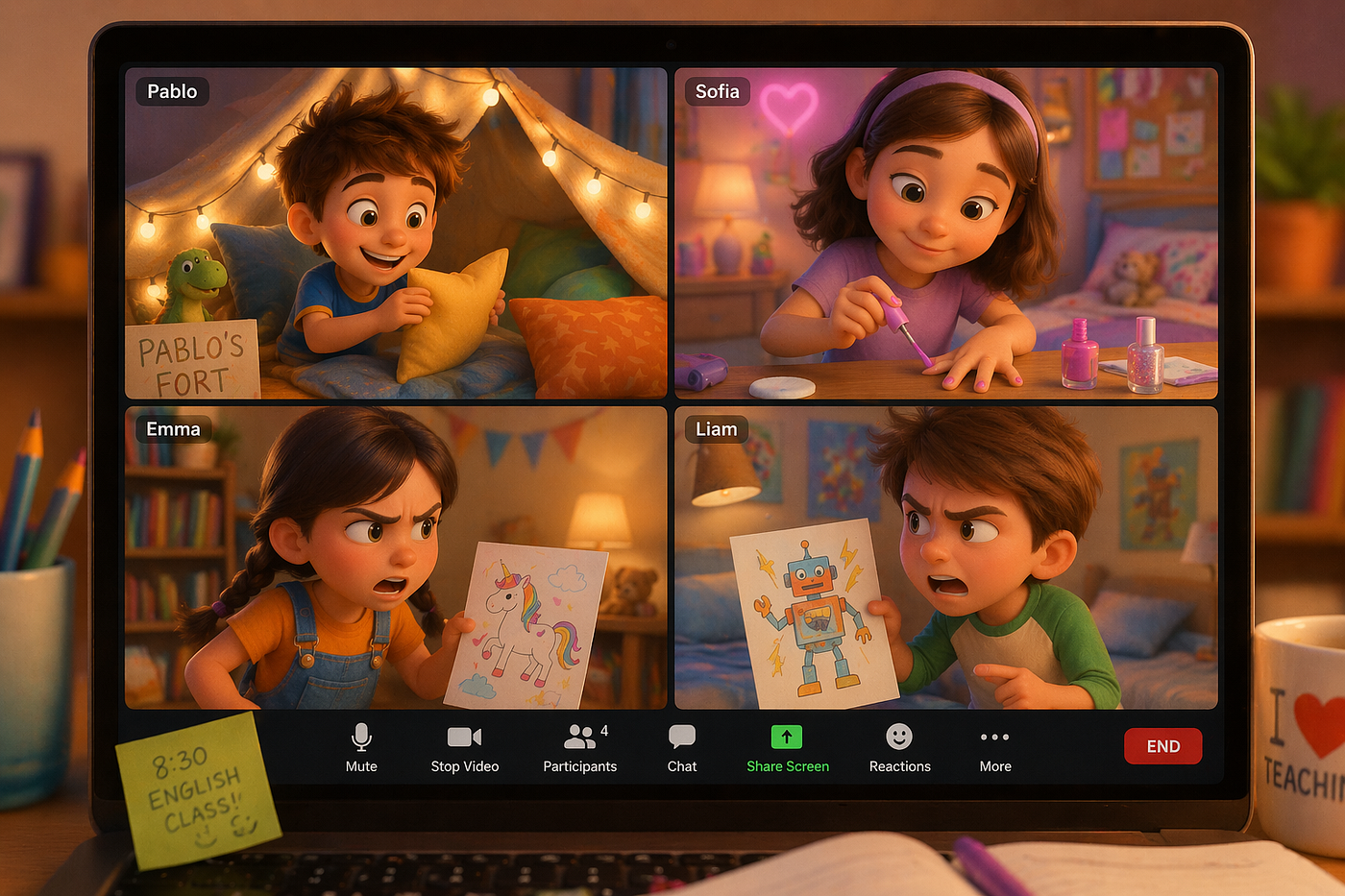
Confession time: my first online English lesson “disaster” wasn’t caused by a difficult student or a technical problem. It was something much simpler: me. Armed with enthusiasm, a stack of printed worksheets, and what I thought was the perfect 45-minute lesson on animals in English, I logged into Zoom to teach four 7-year-olds.
Five minutes in, Pablo was building a pillow fort, and Sofia had started painting her nails. The twins? Well, they were arguing over whose drawing was better. Meanwhile, I kept repeating “Eyes here!” with increasing urgency, as they snacked, talked to siblings, and so on. At the end, one parent summed it up perfectly: “Nice teacher, lesson’s too long and dull.”
That was my rookie year.
A few hundred lessons later, things look very different. Not because I suddenly became a perfect teacher, but because I made enough mistakes to understand what simply doesn’t work.
If you’re just starting out, here are the five lessons I faced the hard way.
Worksheet Hell: When Paper Killed the Fun
At the beginning, I believed in worksheets. Structure, clarity, repetition — what could go wrong? I would email exercises before class: “Cat → cats, bus → ___”. The kids would send them back filled with… drawings. Pablo once turned his into a full unicorn apocalypse. Creative? Absolutely. Useful for speaking practice? Not at all.
Then one day, Luca (8) said it out loud: “Paper no fun.” His mom canceled shortly after.
That’s when it clicked. Worksheets felt like school. What kids wanted was to play — and gamification is the name of the game!
Now, my lessons look more like controlled chaos. Plastic animals, props, or even simple objects on screen act as tools for language. “Mix the herd — make a sentence!” Suddenly, Sofia says, “My lion roars loud!” Grammar stops being a rule and starts being something they use.
I haven’t gone back to worksheets since.
The 45-Minute Torture Chamber
I used to pack everything into one lesson — vocabulary, grammar, reading, writing, and games. It felt efficient, but it was actually exhausting.
By the middle of the lesson, attention was gone. Kids drifted off, disappeared, or came back completely disengaged. Parents noticed too: “Too long — he zones out.”
The problem was simple. I had planned for myself, not for them. Online attention spans are much shorter than those offline.
So I changed the rhythm. Instead of one long stretch, I broke the English lessons into short bursts. Five minutes of one activity, then a reset. A quick game, a movement break, a new challenge.
“Freeze! Next mission!” became my favorite phrase.
The difference was immediate. Kids stayed engaged, and more importantly, they finished the lesson wanting more.
Empty Praise: Stars Without Substance
In the beginning, everything deserved a “Good job!” Every answer, every attempt, every scribble.
It felt supportive. In reality, it was meaningless.
Students such as Lila, who were shy to begin with, didn’t grow. They got praise regardless of effort, so there was no clear direction on how to improve. “Good job” became background noise.
Then I learned to be specific.
Instead of “Good job,” I started saying things like: “Your ‘jumping cats’ sentence is great — you used the plural correctly and added action. Can you tell me where they are jumping?”
That small shift changed everything. Lila started speaking more. Not because she was praised, but because she understood what she was doing right.
Grammar Lectures: Rules Nobody Heard
I used to explain grammar the way I had learned it: rules first, practice later. “Add -s for most plurals, -es for terms such as ‘bus’…” The kids nodded. In the next lesson, they overlooked everything.
One day, while I was describing a rule, Leo was busy building something with Lego. That’s when it hit me: they don’t need explanations first. They need discovery.
So I flipped the approach, and that’s how The 3-Minute Grammar Hack came to life.
Instead of teaching the rule, we started chopping sentences into pieces, labelling them, and then followed by a mix-and-fix.
Suddenly, they were engaged. They weren’t memorizing rules — they were fixing language. And once they discovered the pattern themselves, they actually remembered it.
Missing the Shy Voices
Not all problems are loud. Sofia was one of my best students on paper. She understood everything, completed tasks, and never caused trouble. Yet she hardly spoke. When I asked her to repeat her answers louder, she shut down even more. Eventually, she stopped showing up. Her mom later told me, “She’s afraid of making mistakes.”
That one stayed with me.
Now, I approach shy students differently. I lower the pressure. I start with one-on-one moments: “Just us — what’s your favorite animal?” No audience, no stress.
Once they feel safe, they speak. And when they speak, confidence follows.
From Wreckage to Something That Works
At first, my English lessons were full of distractions, silence, and frustration. Kids were physically present but mentally somewhere else. Now, classes feel alive. There’s noise, laughter, movement — but also real language happening.
Pablo still builds things, but now he describes them in English, Sofia speaks up, and Lila tells full stories.
One parent told me recently: “He went from hating English to telling stories in it.” That didn’t come from doing more. It came from doing things differently.
If you’re just starting out as an ESL teacher, keep it simple. Short activities, interactive play, and clear, specific feedback. Let students discover patterns. And don’t forget the quiet ones. You don’t need a perfect lesson plan. You need one that actually works for the kids in front of you.
The rest, you’ll learn the same way I did — by getting it wrong first. Sorry to be the one who tells you that!
Let me know how things are going for you in the comment section. Are you surviving or thriving in ESL teaching?
메타데이터
- post_id
- 72a05e041594
- slug
- 5-esl-mistakes-i-made-as-a-new-teacher-so-you-dont-have-to-72a05e041594
- url
- https://medium.com/@blanche_bianca/5-esl-mistakes-i-made-as-a-new-teacher-so-you-dont-have-to-72a05e041594
- canonical_url
- https://medium.com/@blanche_bianca/5-esl-mistakes-i-made-as-a-new-teacher-so-you-dont-have-to-72a05e041594
- author_url
- https://medium.com/@blanche_bianca
- status
- ok
- fetched_at
- 2026-07-10 21:23:43





