Before We Knew How to Stop the Pain
What three men and a single discovery reveal about the cost of needing to be remembered

Before We Knew How to Stop the Pain
What three men and a single discovery reveal about the cost of needing to be remembered
Before October 16, 1846, a surgeon’s most important skill had nothing to do with the knife.
It was speed.
The fastest surgeons of the early nineteenth century could amputate a leg in under two minutes. They trained for it the way athletes train — repetition, economy of motion, the ruthless elimination of hesitation. Speed was mercy. Every second the patient remained conscious on the table was a second of pain so complete, so annihilating, that many who survived surgery reported that the memory of it never fully left them. Some did not survive it at all, not from the procedure but from the shock of enduring it. Everyone in the room knew this — the surgeon, the assistants, the patient strapped to the table — and everyone proceeded anyway, because there was no other way through.
On October 16, 1846, that world ended. A dentist named William Morton administered ether vapor to a patient at Massachusetts General Hospital, a surgeon removed a tumor from the man’s jaw, and when it was finished, the surgeon turned to the audience and said, quietly, “Gentlemen, this is no humbug.” The patient had felt nothing.
Continue the conversation in **The Capacity Report**.
As a thank-you for joining, I’ll also send you a complimentary copy of Before Burnout: A Short Field Guide.
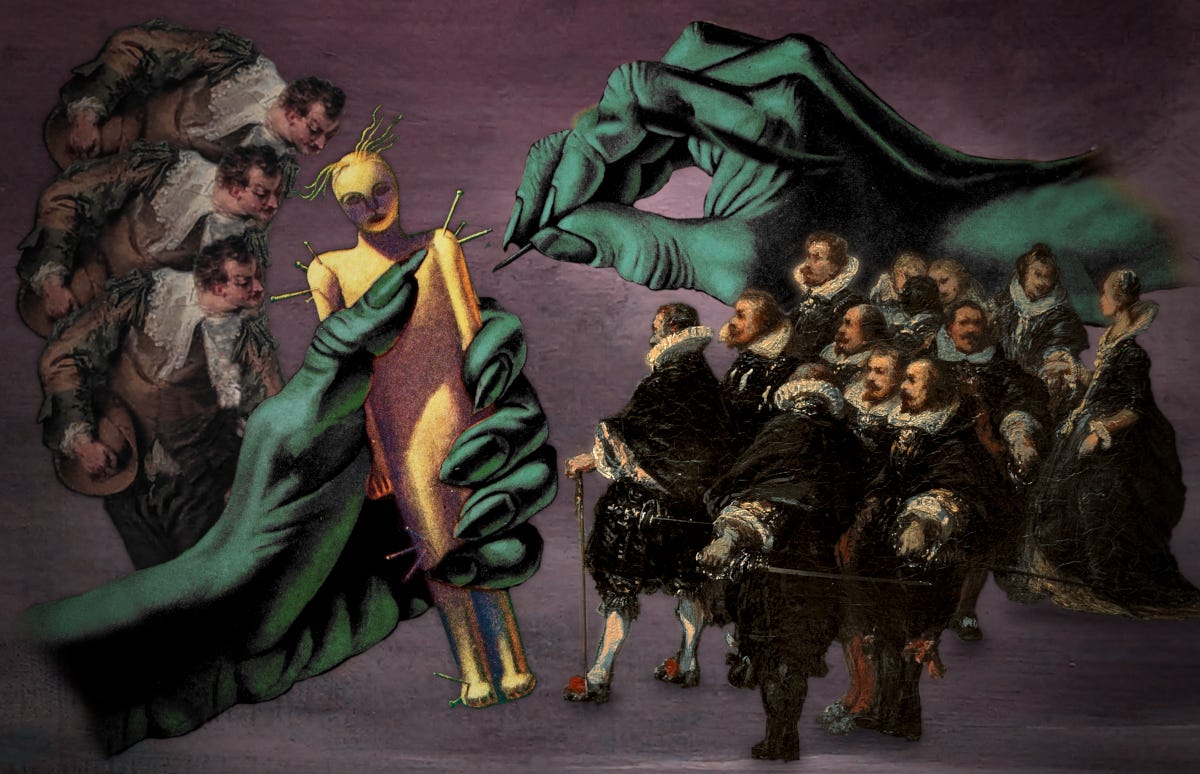
What followed should have been a triumph. Instead, the discovery consumed every man it touched. Morton had not worked alone — a dentist named Horace Wells had been experimenting with nitrous oxide two years earlier, and a chemist named Charles Jackson claimed he was the one who first suggested ether. The priority dispute that erupted among the three of them lasted for the rest of their lives, which, in each case, were not very long. Wells became addicted to chloroform, threw acid on two women while under its influence, and died in a jail cell at thirty-three. Jackson spent his last seven years in an asylum. Morton, who received the medals and the fame, died broke at forty-nine, still petitioning Congress for money he believed he was owed. Three men. One discovery. None of them survived it intact.
I have been practicing medicine for thirty-six years, and I have watched versions of this story play out in smaller rooms. Not asylums and jail cells, but something recognizable nonetheless — the colleague who cannot let go of a slight over authorship, the career quietly organized around an old grievance, the friendship that did not survive a question of credit. I do not think Wells, Jackson, or Morton were unusual men. I think they were human, which is a different thing.
The need to be seen as the one who did it is not vanity, exactly. It is something older — the desire to have mattered, to have left something behind that could not have existed without you. That desire is not wrong. It has driven most of the important work in the history of medicine. The question is what happens when it curdles, when the achievement stops being enough and only the recognition will do, when a person becomes so organized around what they believe they are owed that everything else — health, relationships, the quiet texture of an ordinary life — is subordinated to the pursuit of it. That is not ambition anymore. That is a different kind of suffering, and I have watched it hollow people out the same way illness does, gradually and then completely.
What the three men shared was not the discovery. It was the inability to let the story be as complicated as it actually was. Discovery rarely belongs to one person alone. It rises from a particular moment, a particular climate of knowledge, the right room on the right afternoon. Morton understood this well enough to stand at the table. He never understood it well enough to share.
The patient who woke up that October morning did not know any of this. He knew only that he had agreed to surgery, that he was afraid, and that when he opened his eyes, it was over and he had felt nothing. That fact outlasted everything — the patent disputes, the congressional petitions, the decades of acrimony. The discovery was real and permanent, and it did not require any of them to be remembered in order to keep working.
I used to think about that sometimes when I watched a patient go under anesthesia — the ordinary miracle of it, the way consciousness simply stops and then returns, the way the body is carried through something it does not have to experience. Somewhere behind that moment is a dentist who died in a jail cell, a chemist who died in an asylum, and a man with a complicated past who stood in a Boston operating theater and changed what surgery could be. None of them got what they wanted. All of them gave us something we use every day without a second thought.
The work survives the worker. The gift outlasts the giver. And the patient on the table, coming slowly back to the world, has no idea how much it took to get there.
If this way of thinking resonates with you, I’d love to continue the conversation in **The Capacity Report**.
As a thank-you for joining, I’ll also send you a complimentary copy of Before Burnout: A Short Field Guide.
메타데이터
- post_id
- 72a22011c3f1
- slug
- before-we-knew-how-to-stop-the-pain-72a22011c3f1
- url
- https://medium.com/dr-michael-hunters-wellness/before-we-knew-how-to-stop-the-pain-72a22011c3f1
- canonical_url
- https://medium.com/dr-michael-hunters-wellness/before-we-knew-how-to-stop-the-pain-72a22011c3f1
- author_url
- https://medium.com/@drmichaelhunter
- status
- ok
- fetched_at
- 2026-07-08 17:17:42