Decentralized insurance — deep dive into Nexus Mutual
After having covered a series of articles on the mechanics of various decentralized exchange protocols, I am now focusing on decentralized…
Definsurance #2 — Decentralized insurance — deep dive into Nexus Mutual
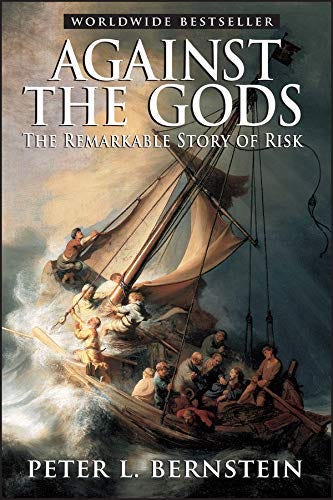
Is risk prediction a bet against gods ?
After having covered a series of articles on the mechanics of various decentralized exchange protocols, I am now focusing on decentralized insurance protocols.
The main reason is that DeFi is a very volatile industry. If DeFi is to be democratized in the future and open its doors to the next billion users, it must offer guarantees so that individuals and entities cannot lose all their funds overnight.
Insurance is an essential mechanism to reinforce the stability of the ecosystem. The goal is simple, it consists in gathering within the same pool individuals seeking to insure themselves against various risks. For a premium, these individuals are covered in case of irregular losses of their funds. Moreover, by diversifying the nature of the risks and by pooling them, it is possible to create interesting financial products, providing a stable return to the capital providers.

A lot of diversified risk
Insurance is not the only solution guaranteeing stability for the DeFi ecosystem. Hedging, for example, allows players to insure themselves against price fluctuations. They differ from insurance for several reasons: 1) no mutualization of risk, risk is exchanged on a peer-to-peer basis 2) hedging is largely based on asset prices and not on external events. 3) they are well suited to hedge against small prices variations but not peak or blackswan events. We do not cover these instruments in this article.
An efficient way to make people understand the stakes of decentralized insurance is to take a concrete example of a player in this market, and then extrapolate certain rules and uses by comparing it with these peers. This is what we are going to do here by taking Nexus Mutual as an example.

Nexus Mutual Logo
What is Nexus Mutual
Nexus Mutual is a protocol created by Hugh Karp in 2017. The entity has two major characteristics :
- Nexus Mutual is a DAO
Nexus Mutual works the following way. To enter the protocol as a risk provider or a protection seeker you have to become a member of Nexus Mutual. Moreover, different roles are created within the organisation to ensure all operations are conducted in the right way. We will see later that claim and risk assessors, or governance members exercise a specific role in order to strenghten the protocol.
- Nexus Mutual is a mutual insurance company registrated in the UK
The firm operates as a discretionary mutual in the UK and complies with the regulations in the countries from which it accepts members. They received the approval by the Financial Conduct Authority to use the protected word “mutual” in their company name.
Every member of Nexus Mutual are a part of the mutual in the same way. The implication as a capital provider in the mutual only depends on your token (NXM) participation that we will cover later.
Nexus Mutual credentials
Nexus covers risk since the beginning of 2019. The total cover amount varies between USD 500mn and 1bn since the beginning of 2021.

Total amount covered in USD- Nexustrack.io
Annualized premium amount fluctuates between USD 10 and 20M since 1 year, meaning that premium paid by 1 $ of cover amount is about 2% a year.

Annualized premium in force — Nexustrack.io
Nexus Mutual is the second biggest insurance decentralized protocol in terms of TVL according to DefiLlama behind Ease.org (Armor on the website). However, figures from Ease.org should be taken carefully and one might think that Nexus Mutual is the biggest insurer.

Defillama source
What services does Nexus Mutual offer ?
For insured
- Protocol cover : Protects against a hack on a specific protocol.

You can take a glance at **rekt**, Defi is plagued by hackers exploiting flaws in DeFi’s protocol smart contracts. By circumventing the intended operation of the code, these hackers seize liquidity in pools by stealing users who have placed their money in them.
- Custody cover : Protects against halted withdrawals and haircuts on your funds stored on centralised exchanges
It means that as the user you can claim insurance reimbursement if your custodian (for instance Coinbase, Binance, FTX) has lost more than 10% or your fund, or withdrawal on the exchange has been halted for more than three months.

- Yield token cover : Protects against yield-bearing token de-pegging

This coverage only offer the possibility to get reimbursed from de-pegging of yield-bearing token which are basically LP tokens from yield pools (3Crv or eCRV from Curve pools, yvDAI v2 or yvUSDC v2 from yearn, cvx3CRV from curve).
These coverage are available starting at a 2.6% premium a year but could go up to two digits depending on the pricing output.
For risk carrier
- Yield :
Premiums are gathered from coverage services at the stable rate on a constant basis. This yield is partially captured by the protocol itself or by some participants (risk assessors, claim assessors). However a big part of it is given back to investors.
We saw that annualized premiums was around 2% on the total cover amount, meaning that the collaterization ratio is slightly higher than 100% (as cover premiums paid by insured are 2.6% in minimum).

The locked collateral is also invested in DeFi pools or for staking in order to boost yield.
- Diversification :
One of the general principles of an insurance company is to ensure a sufficient level of diversification of its risk in order to have a satisfactory return while limiting maximum losses. Nexus Mutual is no exception to this rule, offering coverage on more than fifty policies. Some policies are more important than others (Enzyme, Anchor) but diversification effect is still present.

Capital management (and tokenomics)
The criterion for the soundness and functioning of an insurance pool lies in the way the assets are managed. Assets here means the risk coverages underwritten by policyholders.
An insurance company must have a mechanism in place to ensure that the policyholders’ need for reimbursement is always possible, even with a coverage pool that is smaller than the coverage amount.
The main role of capital management is then to ensure that capital requirement (CR) is designed to be enough to pay back insured even if the worst situation. The CR should always overtakes the MCR (minimum capital requirement) which is the lower acceptable capital limit to cover the risk.
Capital requirement
The methodology for calculating the capital requirement to ensure proper management of provisions follows the principles described by the European authorities.
The MCR can be broken down into two components: the intrinsic risk of the contract, which is the average modeled loss (BEL), and a surcharge that corresponds to the capital needed for the pool to survive extreme events. (Buffer).
MCR decomposition
The BEL is calculated in the Risk assessment section. The expected loss does not comes from model assumptions but from agents perceptions of the risk.
The Buffer principal component is the smart contract cover module. It is sums up in the following formula :
- Total Cover Amounts CA(i) for each individual protocol and custodian
- Correlations Corr(i,j) between each pair of contracts.
- Scaling Factor SC which is calibration factor
- The correlations between each pair of two contracts are established by parsing the respective verified smart contract code, removing comments and spacing, and establishing the proportion of identical text
Currency — Another factor is added to the buffer :
The currency module accounts for fluctuations in the value of alternative currencies (DAI etc.) relative to the value of the base currency (ETH).
A stress test is computed to understand the impact of 50% increase or decrease in price of other currencies in comparison with ETH, it adds on the buffer requirement of the pool.
Gearing factor
The Currency Module scenario with the lowest resulting MCR% coverage (across both the BEL and the Buffer) is chosen. This MCR% coverage is then applied to the Capital Pool in order to inform the choice of Gearing Factor.
The gearing factor corresponds to the factor by which is divided the active cover in order to find the needed capital for coverage :
f(Cover Amount) = Active Cover in ETH / Gearing Factor
The current gearing factor is 4.8.
MCR final
It is important to note that the MCR is not directly the result of the previous equation, but is the max between f(Cover Amount) and a minimum MCR imposed by governance of 162,000 ETH.
Given that Active Cover in ETH is 134,000 ETH and the gearing factor is 4.8, f(Cover Amount) is much lower than the MCR floor.
MCR = Max (MCR Floor, f(Cover Amount))
Bonding Curve — NXM
Second, to implement tokenomics you need a token and that is the role of NXM token. The token regulates all the capital management of the protocol, in addition to having a role of governance and economic incentive.
- NXM price is fixed according to the ratio between the liquidity amount/ covered amount ratio called CR and the MCR.
- MCR is the minimum capital requirement sufficient to ensure that the protocol will not lack money to cover potential reimbursement. MCR is at 95.5% now
- When the CR is largely higher than the MCR, it means that a large part of the capital is not at work. The price of NXM is then high in order to urge investors to sell the token which inflates the percentage of capital at work.
- When the CR is largely lower than the MCR, it means that the capital is too efficient and might be overflowed by reimbursement. The price of NXM is then low in order to urge investors to buy the token. It deflates the percentage of capital at work
- MCR % Related limits
Redemptions are restricted if MCR% is less than 100%
Purchases are restricted if MCR% is greater than 400%
- Transaction Limits Caps
Redemptions and purchases are limited per transaction to 5% of the MCR.
Asset (and liability) management
Nexus DAO needs to reinvest the reserves of the insured in order to maximise capital efficiency. There are several ways to invest these proceeds safely:
- locking up ETH to generate interest in the proposed Proof of Stake system,
- investing in financial instruments based on decentralised collateralised lending or decentralised exchange markets
- acting as a guarantor in state channel and payment channel networks;
- the DAI savings rate
Moreover, it is important to create an ALM strategy in order to maintain a continuity between assets and liabilities because of :
- the change in the value of the assets on some basis is consistent with the change in the liabilities on the same basis, within certain tolerance limits;
- sufficient liquidity is available as and when it is needed.
For Nexus Mutual, at least initially, ALM considerations are not a significant concern, owing to:
- The expected short-duration nature of Protocol Cover and Custody Cover
- The initial currency assets being held (ETH and DAI) intended to match denominations of the covers written.
Capital management — peers comparison

How peers are doing with capital management
- EIOPA based MCR calculation is a best practice.
- NXM token provides a wide-range of opportunities but does not offer mining incentives
- ALM strategy is thought consistently by avoiding dependant risks between assets and liabilities
Operations (and tokenomics)
Risk assessment
The Risk Cost of a policy plays a major factor in the pricing of cover policies. The amount of staked NXM determines the Risk Cost, which is then used to determine the Cover Price for each listed protocol, custodian, and cover product.
The greater the number of tokens staked against a coverage, the lower risk cost of the contract.
Final cover price
To come up with the final Cover Price, an allowance is made for the Cover Amount and Cover Period (selected by the user). A Surplus Margin is added to enable (1) meeting costs (such as Risk Assessor rewards and Claims Assessor rewards), and (2) creating a surplus within the mutual as a result of writing covers.
Two others factors are taken into account in the risk capacity mechanism:
- The Specific Risk Limit determines the open capacity on any one protocol, custodian, or cover product that is available for members to purchase. If no NXM is staked, then no cover can be sold. A limited amount of staked NXM translates to a limited amount of cover offered at a relatively high premium.
The Specific Risk Limit = capacity factor x net_staked_NXM
- The Global Capacity Factor sets the maximum amount of available cover that can be sold to members. While the Specific Risk Limit adjusts the price as NXM is staked, the Global Capacity Limit sets an upper bound on how much cover can be sold. This is an important limit, as it reduces the risk that any one exploit can have on the mutual’s capital pool. This ensures the mutual can maintain the capital and trust necessary to back cover policies.
Tokenomics - Risk Assessment incentives
- Deposit and stake NXM token
Community members can bet on the fact that a coverage will never fail (i.e. there is no claim from this contract). These members are called Risk assessors. They decide to lock their NXM token against a protocol or a custodian for a specific time-period.
- Earn a reward
When cover is purchased by a member, 50% of the Cover Price in newly minted NXM tokens is awarded to Risk Assessors on a proportional basis.
- Burnt stake
If there is a successfully paid claim, Risk Assessors on that risk have their stake burned on a proportional basis up to the claim amount (converted into NXM at the prevailing NXM price). If the stake is not enough to cover the claim amount in full then all stakes are burned, in this case the mutual, bears the remaining claim cost without any offset.
Claim assessment
Discretionary claim assessment and settlement + economic incentives to force users to do the “right things” or not committing fraud.
1) Claim submission
The first step in the claims process is for a member to submit a claim, to do this the member must stake a deposit in the form of NXM tokens which comes from the 10% of NXM tokens that were locked when purchasing cover. The required deposit is 5% of NXM tokens, which means a member can submit a claim for assessment twice.
It also means that an insured must buy NXM token in order to be covered.
2) Claim assessor voting
Claim assessors must stake token before they are allowed to assess claims. Assessing claims in line with the consensus earns a supplemental reward while voting against the consensus outcomes results in having its NXM token staked for a longer period.
3) Member voting
Sometimes the claim assessment is not only limited to the claim assessors but could be extended to all members of the DAO when the number of claims assessors vote is not sufficient. To do so they lock all their NXM for 2 days and in return earn a share of the Fee Pool
Tokenomics — Claim Assessment incentives
1) Reward
Voting with the consensus outcome entitles claims assessors to a share of the fee pool. Fees will be paid as additional member tokens and valued at a fixed percentage of the cost of cover
2) Deterrence
This can be achieved by requiring a stake be posted in the form of membership tokens. The stake is deposited for a specified period of time and provided claims are assessed honestly it is returned. If the Advisory Board deems a claims assessor to be acting dishonestly it has the power to burn the staked member tokens. However this deterrence is limited and depend on the moral hazard of potential frauders.
Operations — peers comparison

How peers are doing with operations ?
- Risk assessment and pricing are transparent but does not reflect the true risk
- Claims process is internal and manual (standard). Obviously they are incentive to limit fraud from claims assessors but the risk is not removed.
A few words
Nexus Mutual respects all the best practices of an average insurer unlike its peers (Pricing, Risk and capital management, claim management, ALM). However, the pricing method is not modeled in probability, mathematically we do not know if the insurer is viable in the long term.
The second flaw is that claimants can suffer from the moral hazard of claims assessors even with economic disincentives (NXM burnt).
메타데이터
- post_id
- 72b198eb2ce3
- slug
- decentralized-insurance-deep-dive-into-nexus-mutual-72b198eb2ce3
- url
- https://medium.com/@octavionotpunk/decentralized-insurance-deep-dive-into-nexus-mutual-72b198eb2ce3
- canonical_url
- https://medium.com/@octavionotpunk/decentralized-insurance-deep-dive-into-nexus-mutual-72b198eb2ce3
- author_url
- https://medium.com/@octavionotpunk
- status
- ok
- fetched_at
- 2026-07-17 06:00:43




