Decolonizing through Design with Aasawari Kulkarni + Katty Huertas
What’s in a pattern, a ritual, a line? Centuries of voices and lives intertwine. Rangoli whispers in vibrant hues, A map of the world, both…
Decolonizing through Design with Aasawari Kulkarni + Katty Huertas
What’s in a pattern, a ritual, a line? Centuries of voices and lives intertwine. Rangoli whispers in vibrant hues, A map of the world, both ancient and new. Ask where it began, and where it may lead, Question the roots, the soil, the seed. Through design, we untangle, relearn, redefine, Stories of culture, unbroken by time. Design decolonized, traditions unfold, Stories untold, in patterns bold. Rangoli speaks of roots and skies, A world revealed through questioning eyes.
Reflections on Aasawari Kulkarni and Katty Huertas’ Insights
In a thought-provoking lecture on “Decolonizing Through Design,” that challenged us to question the origins of everyday practices, objects, and beliefs. They emphasized how examining cultural perspectives and histories reveals the intricate layers behind what we often take for granted. Some key takeaways from their insights highlight the necessity of decolonizing design.
Cultural Practices as Narratives
One of the most compelling discussions revolved around traditional Indian practices like rangoli. This art form, typically created outside homes with colored powders or rice flour, is far more than a decorative element. It’s a silent communicator, revealing the state of a household. A beautifully maintained rangoli might signify prosperity and happiness, while a neglected one could indicate a family facing hardships. Such practices are imbued with cultural meaning and serve as living narratives of community, identity, and emotion.
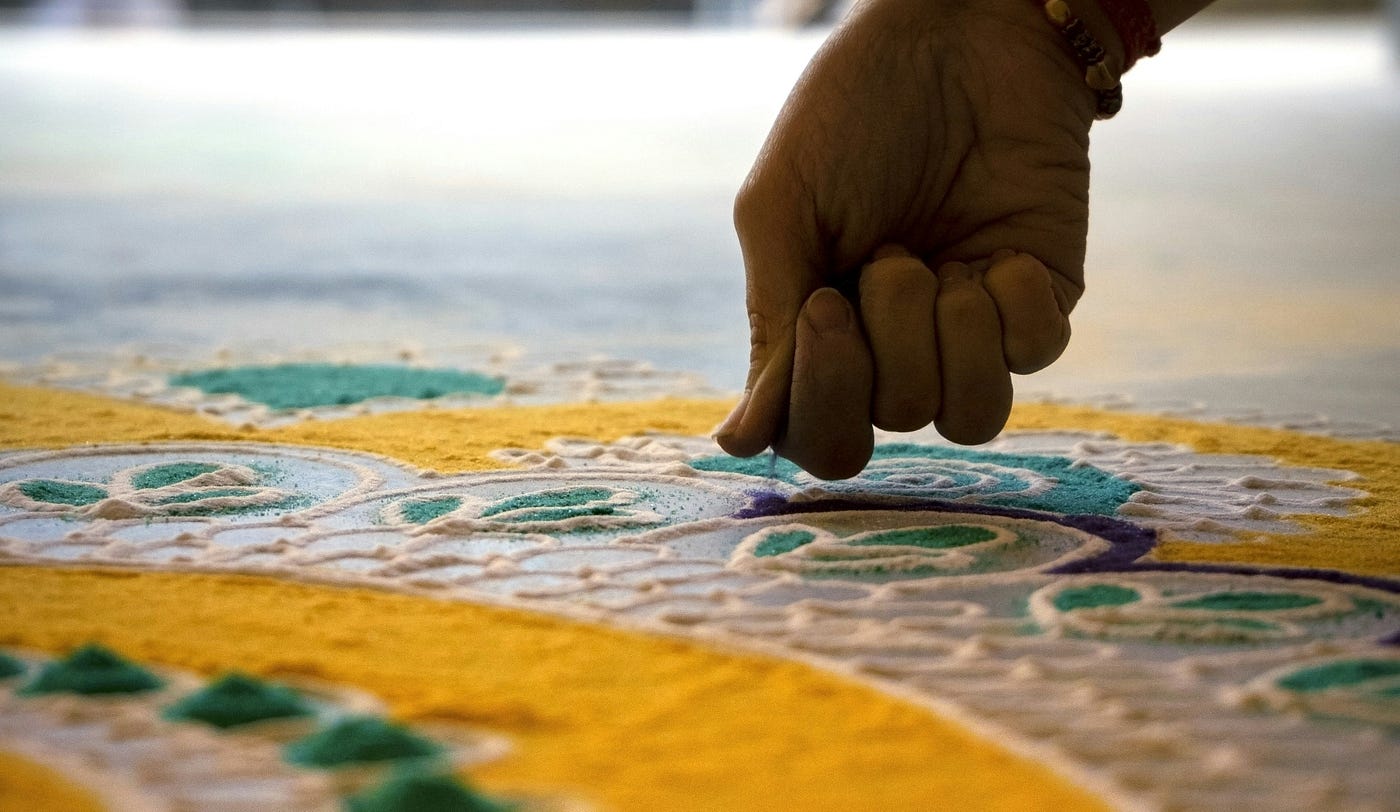
Rangoli exemplifies how design, in its most organic form, transcends aesthetics to embody storytelling. When we see these practices merely as decorative or ceremonial, we erase their historical and emotional significance. Decolonizing design invites us to preserve and honor these meanings.

Rethinking Design Standards
Aasawari Kulkarni’s font “Naari” is a powerful example of decolonized design in action. Inspired by women’s voices and stories, the typeface challenges conventional design standards that often overlook diverse cultural identities. “Naari” becomes more than a font; it’s a vehicle for storytelling and empowerment, proving that even typography can carry cultural significance.

Another intriguing example discussed was the depiction of the world map. Most of us are familiar with the Mercator projection — a map designed for navigation — but it skews the relative sizes of continents. Africa and South America appear smaller, while Europe and North America are disproportionately large. This distortion reinforces a Eurocentric worldview. In reality, a correctly proportioned globe would present a dramatically different picture. By confronting these conventions, we can reimagine how we represent the world in ways that reflect a more accurate and inclusive reality.

AuthaGraph World Map is so proportionally perfect
Design as a Decolonial Tool
This lecture illuminated how design can perpetuate or dismantle systemic inequalities. When we question design’s origins, we uncover overlooked stories and challenge dominant narratives that prioritizing Western perspectives. By weaving cultural histories into design, as Aasawari Kulkarni and Katty Huertas advocate, we ensure that diverse voices and identities are represented and celebrated.
Decolonizing design is an ongoing process. It’s about asking difficult questions, embracing diverse perspectives, and recognizing that design — whether a rangoli, a font, or a map — is a reflection of who we are and the stories we choose to tell. As we move forward, let us remember the power of these stories and their ability to reshape our understanding of the world.
메타데이터
- post_id
- 72b5efe030a3
- slug
- decolonizing-through-design-with-aasawari-kulkarni-katty-huertas-72b5efe030a3
- url
- https://medium.com/interaction-design-at-corcoran/decolonizing-through-design-with-aasawari-kulkarni-katty-huertas-72b5efe030a3
- canonical_url
- https://medium.com/interaction-design-at-corcoran/decolonizing-through-design-with-aasawari-kulkarni-katty-huertas-72b5efe030a3
- author_url
- https://medium.com/@vikas.choudhary0034
- status
- ok
- fetched_at
- 2026-06-24 23:31:39

