Why I Overthought Every Project Using Knit Fabrics
For a while, every sewing project started the same way.
Why I Overthought Every Project Using Knit Fabrics
For a while, every sewing project started the same way.
I would choose a pattern, get excited about the idea, and then stop the moment fabric became part of the decision.
Especially when it involved knit fabrics.
That’s where the overthinking started.
It Wasn’t the Sewing That Slowed Me Down
At first, I assumed the problem was technical.
I thought I needed more experience. Better skills. More confidence with stretch fabrics.
But the real issue started before I even touched the sewing machine.
I kept questioning every fabric decision.
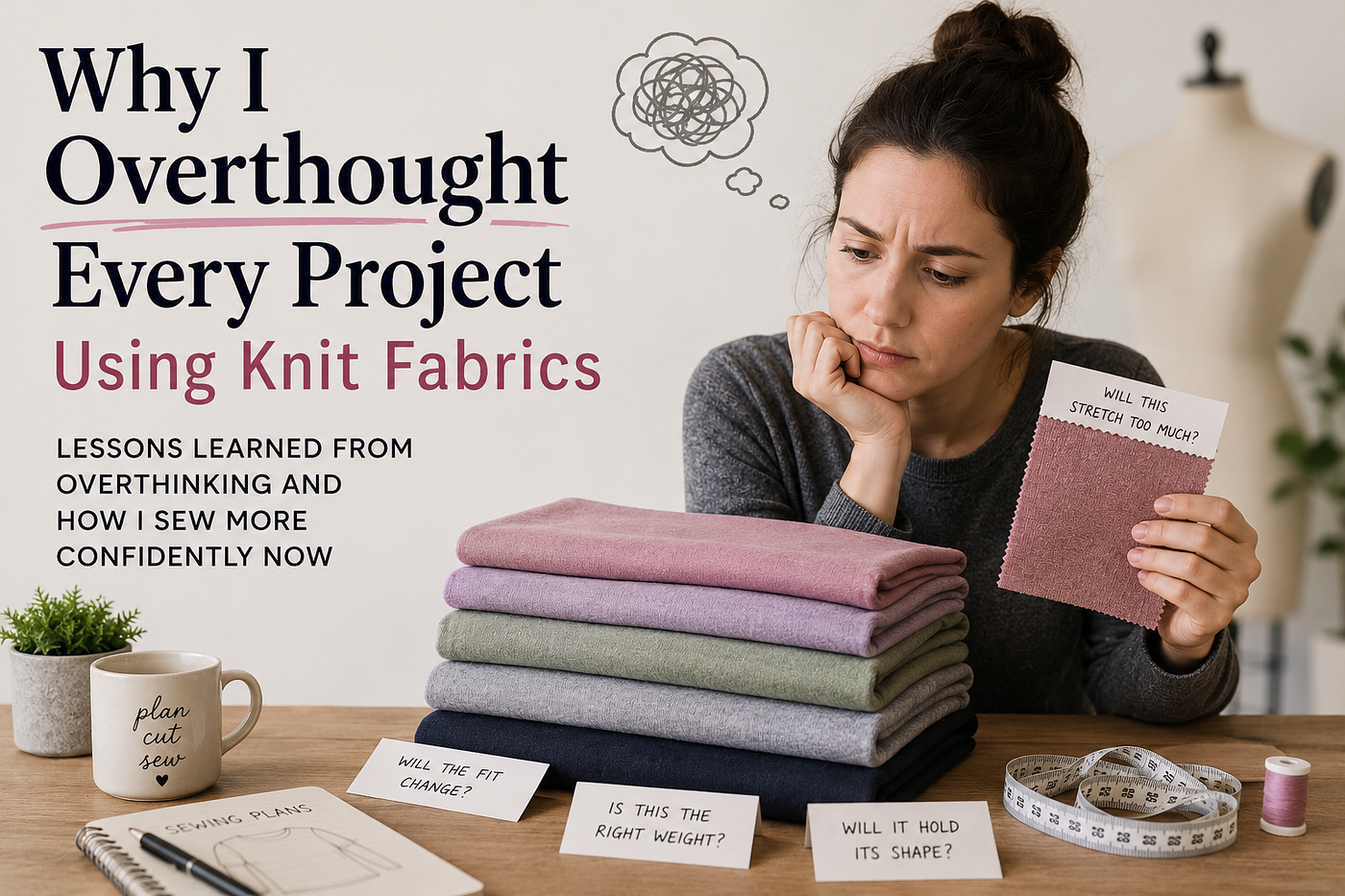
Would it stretch too much? Would the fit change? Would the garment lose shape after wearing it?
The more I thought about it, the harder it became to start.
Why Knit Fabrics Felt Harder to Predict
The thing that made knit fabrics difficult for me wasn’t complexity.
It was flexibility.
With woven fabrics, I usually knew what to expect. The fabric stayed stable. The shape remained more controlled.
Knit fabrics felt less fixed.
A **knit apparel fabric** could behave differently depending on stretch, weight, or even how the garment moved during wear.
That uncertainty made every decision feel more important than it probably was.
The Problem With Too Many Possibilities
What made the overthinking worse was the number of options.
Every knit fabric looked slightly different.
Some were softer. Some stretched more. Some looked structured until they were worn.
And because the differences felt subtle, I kept trying to make the “perfect” decision.
That mindset slowed everything down.
I Started Treating Every Choice Like a Risk
At some point, fabric selection stopped feeling creative.
It started feeling like pressure.
I thought one wrong choice would ruin the entire project, so I kept delaying decisions instead of making them.
I would compare fabrics for too long. Save projects for later. Revisit the same options repeatedly.
The sewing itself wasn’t the issue anymore.
The mental weight of choosing became the real problem.
What I Didn’t Understand at the Time
The mistake wasn’t using knit fabrics.
The mistake was expecting certainty.
I wanted complete control over the outcome before I started. But knit fabrics don’t work that way.
They respond to movement. They change slightly during wear. They behave differently depending on the garment.
That flexibility is part of what makes them useful.
But I kept seeing it as a problem instead of a characteristic.
What Changed My Thinking
The shift happened when I stopped trying to predict everything.
Instead of asking: “What if this fabric behaves differently?”
I started asking: “Does this fabric generally suit the garment I want to make?”
That changed the process completely.
I stopped chasing perfect certainty and focused on making reasonable decisions.
Why Simpler Decisions Helped
Once I reduced the number of things I was trying to control, sewing felt easier again.
I started focusing on:
- stretch level
- fabric weight
- intended garment use
If those aligned, I moved forward.
That removed most of the unnecessary hesitation.
Where I Usually Browse Knit Fabrics Now
Another thing that helped was being more intentional about where I looked.
Instead of endlessly comparing random fabrics, I focused on stores that made garment use easier to understand.
At **MaaiDesign**, I try to approach knit fabrics in a way that helps people understand how they’ll actually behave in real sewing projects rather than just how they appear online.
That clarity matters more than endless options.
What Happened After That
Once I stopped overthinking every fabric decision, I started finishing more projects.
Not because I became more skilled overnight.
But because I finally stopped turning every choice into a high-pressure decision.
The process became lighter.
And strangely enough, the results improved too.
Final Thoughts
Knit fabrics weren’t the real problem.
My need for certainty was.
I kept trying to remove every possible risk before starting, and that mindset made sewing feel heavier than it needed to be.
Once I accepted that some flexibility is part of the process, things changed.
Not everything became predictable.
But it became manageable.
And that was enough to move forward.
메타데이터
- post_id
- 72c4cee059ea
- slug
- why-i-overthought-every-project-using-knit-fabrics-72c4cee059ea
- url
- https://medium.com/@maaidesignmarketing/why-i-overthought-every-project-using-knit-fabrics-72c4cee059ea
- canonical_url
- https://medium.com/@maaidesignmarketing/why-i-overthought-every-project-using-knit-fabrics-72c4cee059ea
- author_url
- https://medium.com/@maaidesignmarketing
- status
- ok
- fetched_at
- 2026-06-14 11:28:49