The Most Disturbing Thing I’ve Heard a Preacher Say
What a single sentence reveals about the God many Christians worship
The Most Disturbing Thing I’ve Heard a Preacher Say
What a single sentence reveals about the God many Christians worship

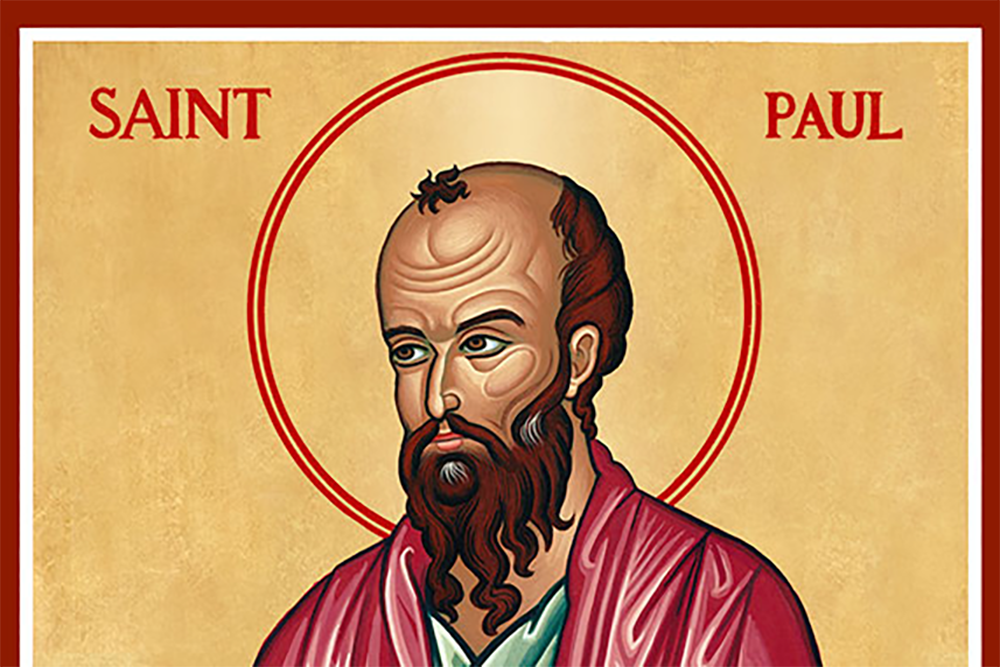
Image created by author on Canva Pro
Some Christian beliefs are really difficult to defend.
But few are as difficult to reconcile as the claim that God is both perfectly loving and profoundly violent. How do we reconcile a God of love with a God of violence?
It is one of the oldest questions in Christianity, and one that refuses to go away.
Christians believe that God is love. We sing about his mercy, celebrate his forgiveness, and tell stories about his compassion. We point to Jesus, who taught us to love our enemies, bless those who curse us, and forgive those who hurt us. We tell our children that God loves them unconditionally and that his mercy endures forever.
Yet many Christians also believe that this same God will one day destroy anyone who is not a Christian.
For centuries, theologians have attempted to reconcile these two images. Some have argued that divine love and divine violence are simply two sides of the same coin. Others have suggested that God’s justice requires punishment in the same way that his love requires mercy.
I have never found these explanations entirely satisfying.
In fact, the older I get, the more difficult I find it to hold these two images together.
A few days ago, I was reminded why.
While scrolling through social media, I came across a reel by theologian Dr. Steven Lawson. In it, he distilled the tension into a single sentence more starkly than I have ever heard before…
The Jesus Who Gets Us… Or Gets Us?
The reel began with a reference to the “He Gets Us” campaign.
If you’re unfamiliar with it, “He Gets Us” is a large Christian advertising campaign designed to present Jesus as relatable, compassionate, and deeply human. The campaign has attracted both praise and criticism. Some Christians appreciate its attempt to make Jesus accessible to people who have become disillusioned with religion. Others argue that it presents a watered-down version of Christianity that emphasises love and acceptance while neglecting sin, judgment, and repentance.
Lawson clearly falls into the second camp.
With a grin, he mocked the slogan.
“He’s gonna get us,” Lawson quipped.
Then, after a brief pause, he added, “He’s gonna shish kebab us.”
The audience laughed.
There was something jarring about hearing people chuckle at the idea of divine violence. The image of Jesus skewering his enemies was offered as a punchline, and the crowd seemed to find it amusing.
Then Lawson continued:
“Listen, either Jesus redeems us and reconciles us and forgives us and saves us, or he judges us and condemns us and damns us and torments us. There is no other option. If he does not save you, he will slaughter you.”

Source: Instagram
I have to admit, I sat there shaking my head.
Not because Lawson was saying something unusual. The truth is that millions of Christians believe some version of this. In fact, there was a time in my life when I probably would have nodded along myself.
What struck me was the starkness of it.
The complete absence of tension. Why is no one saying, “Wait… what?”
There is a complete lack of any attempt to reconcile what seems, at least to me, like a profound contradiction.
The Gospel I Inherited
To be fair to Lawson, the theology he is describing is not some fringe belief held by a handful of Christians. It is largely the version of the Gospel I inherited growing up in evangelical Christianity.
The story was relatively straightforward.
God loves every human being and desires a relationship with them. Humanity, however, has rebelled against God through sin. Because God is perfectly holy and perfectly just, sin cannot simply be ignored. It must be judged.
Out of love, God sent Jesus into the world to save us.
Through his life, death, and resurrection, Jesus made forgiveness available to anyone willing to place their faith in him. Those who accept this gift are reconciled to God and receive eternal life.
Those who reject it face judgment.
Depending on the church, the details varied. Some spoke of hell more than others. Some emphasised God’s love. Others emphasised God’s wrath. Some focused on grace. Others focused on holiness.
But the basic structure remained remarkably consistent.
God loves you.
God wants to save you.
God commands you to love your enemies.
God commands you to forgive those who hurt you.
God commands you to show mercy.
And if you refuse his offer of salvation, God will eventually destroy you.
For most of my life, I simply accepted these ideas as different pieces of the same puzzle. I never stopped to ask how a God who commands us to love our enemies relates to a God who destroys his own. And I never stopped to ask why the ethics Jesus teaches seem so radically different from the way many Christians imagine God behaves.
The assumptions were already in place long before the questions arrived.
But eventually, the questions did arrive.
The Question I Could No Longer Ignore
One question, in particular, kept returning: “If God is truly as good as Christians claim, why is violence his final answer?”
I realise many Christians will immediately object. God doesn’t want to punish people, they will say. God is holy. God is just. God cannot simply ignore sin. His righteousness demands judgment.
I understand the argument.
The problem is that it never quite resolved the tension for me. In fact, it seemed to deepen it. After all, Christians don’t merely claim that God is holy. We also claim that he is infinitely wise, infinitely loving, infinitely creative, and infinitely powerful. We claim that he spoke the universe into existence and sustains every atom within it. We claim that his wisdom is beyond human comprehension.
Yet when the conversation turns to judgment, many Christians suddenly begin speaking as though God has run out of options.
He must punish.
He must destroy.
He must kill.
He has no alternative.
That has always struck me as strange.
If God is truly all-powerful, why should violence be the only solution available to him? If God is truly all-wise, why should destruction represent the highest form of justice he can imagine? If God is truly love, why should death be his ultimate response to those who reject him? Surely God can do better than that?
These are not rhetorical questions.
I genuinely want to know.
I am not suggesting that evil should be ignored. Anyone who has experienced genuine injustice knows that wrongdoing must be confronted. A world without accountability would not be loving. It would be terrifying.
The question is whether confronting evil necessarily requires violence.
Or whether we have simply assumed that it does.
Because if there is another possibility, if there is a way for God to judge, confront, expose, and overcome evil without ultimately resorting to destruction, then the tension that has haunted so much Christian theology begins to look very different.
And perhaps that possibility is not nearly as foreign to the teachings of Jesus as we have often assumed.
A Different Way of Understanding the Cross
What eventually changed my thinking was discovering that the explanation of the cross I inherited was not the only explanation available. For most of my life, I assumed there was a single Christian answer to the question, “Why did Jesus die?”
The answer seemed obvious: Justice required punishment, so Jesus stepped into our place and absorbed that punishment on our behalf.
That was simply what the cross meant.
Or so I thought.
What surprised me was learning that Christians have never been entirely united on this question. Throughout church history, believers have offered a variety of explanations for the significance of Jesus’ death and resurrection. While these views differ in important ways, many of them share a common feature: they do not require God to be the source of the violence.
Instead, they see the violence of the cross as something humanity inflicts upon God.
That distinction may sound small, but it changes the story dramatically.
In one version of the story, God needs violence in order to forgive.
In the other, God is willing to endure violence in order to forgive.
Those are not the same thing.
One presents violence as a necessary part of divine justice. The other presents violence as the very thing God comes to overcome.
When I first encountered this alternative way of thinking, I found it very compelling, not because it solved every theological problem, but because it seemed to fit far more naturally with the person of Jesus that I encountered in the Gospels.
After all, when Jesus teaches his followers to love their enemies, forgive those who hurt them, and refuse retaliation, he is not merely giving moral instructions. He is revealing something about the character of God. And if Jesus truly reveals what God is like, then perhaps the cross is not showing us a God who requires violence before he can forgive.
Perhaps it is showing us a God who remains forgiving even when violence is directed toward him.
A Challenge for Christians
I am not asking you to agree with me. I am not asking you to abandon doctrines that may have been meaningful to you for decades. Nor am I pretending that Christians have resolved these questions after two thousand years of debate.
What I am asking is something much simpler.
Be honest about the tension.
Don’t explain it away with theological slogans. Don’t pretend it disappears simply because a favourite preacher, theologian, or denomination says it does.
Sit with it.
If God truly commands us to love our enemies, what does that tell us about God himself?
If Jesus is the fullest revelation of God’s character, what should we do when our theology seems to paint a picture of God that looks less forgiving, less merciful, and less compassionate than Jesus? And if we find ourselves defending forms of violence, retribution, or destruction that we would consider morally troubling in any other context, perhaps we should at least pause long enough to ask why.
For me, that process has not led to certainty.
It has led to questions, but they are different questions than the ones I started with. I no longer find myself asking how a loving God can justify violence. Instead, I find myself asking whether violence was ever the point. Whether the cross reveals a God who demands blood before offering forgiveness, or a God who enters into humanity’s violence and responds with forgiveness anyway. Whether judgment ultimately serves destruction, or whether it serves redemption. And whether the God revealed in Jesus is even better than many of us have dared to imagine.
I don’t claim to have all the answers.
But I know this much.
The more closely I look at Jesus, the harder I find it to believe that the final word spoken by God over his creation is violence, and the easier I find it to believe that the final word might just be love.
Dan Foster is the author of “The Bible is Your Story: What the characters of Scripture reveal about the patterns shaping your life.”
The Backyard Church is not just a blog. It’s a real online community for people who have faith but can’t, don’t, or won’t go to church. Join today.
If you’re a writer or blogger who wants to grow your voice and build momentum online, I also run Bloggers Academy — a smaller community where I teach what I’ve learned growing from zero to 100,000+ followers. Learn more here
For more articles on life, faith, and spirituality, Sign-up for my newsletter. Also, feel free to send questions and story ideas to thebackyardchurch@gmail.com
메타데이터
- post_id
- 7318be298b3f
- slug
- the-most-disturbing-thing-ive-heard-a-preacher-say-7318be298b3f
- url
- https://medium.com/backyard-theology/the-most-disturbing-thing-ive-heard-a-preacher-say-7318be298b3f
- canonical_url
- https://medium.com/backyard-theology/the-most-disturbing-thing-ive-heard-a-preacher-say-7318be298b3f
- author_url
- https://medium.com/@danfosterwriter
- status
- ok
- fetched_at
- 2026-07-11 21:25:18