Schooled in Lisbon
Schooled in Lisbon
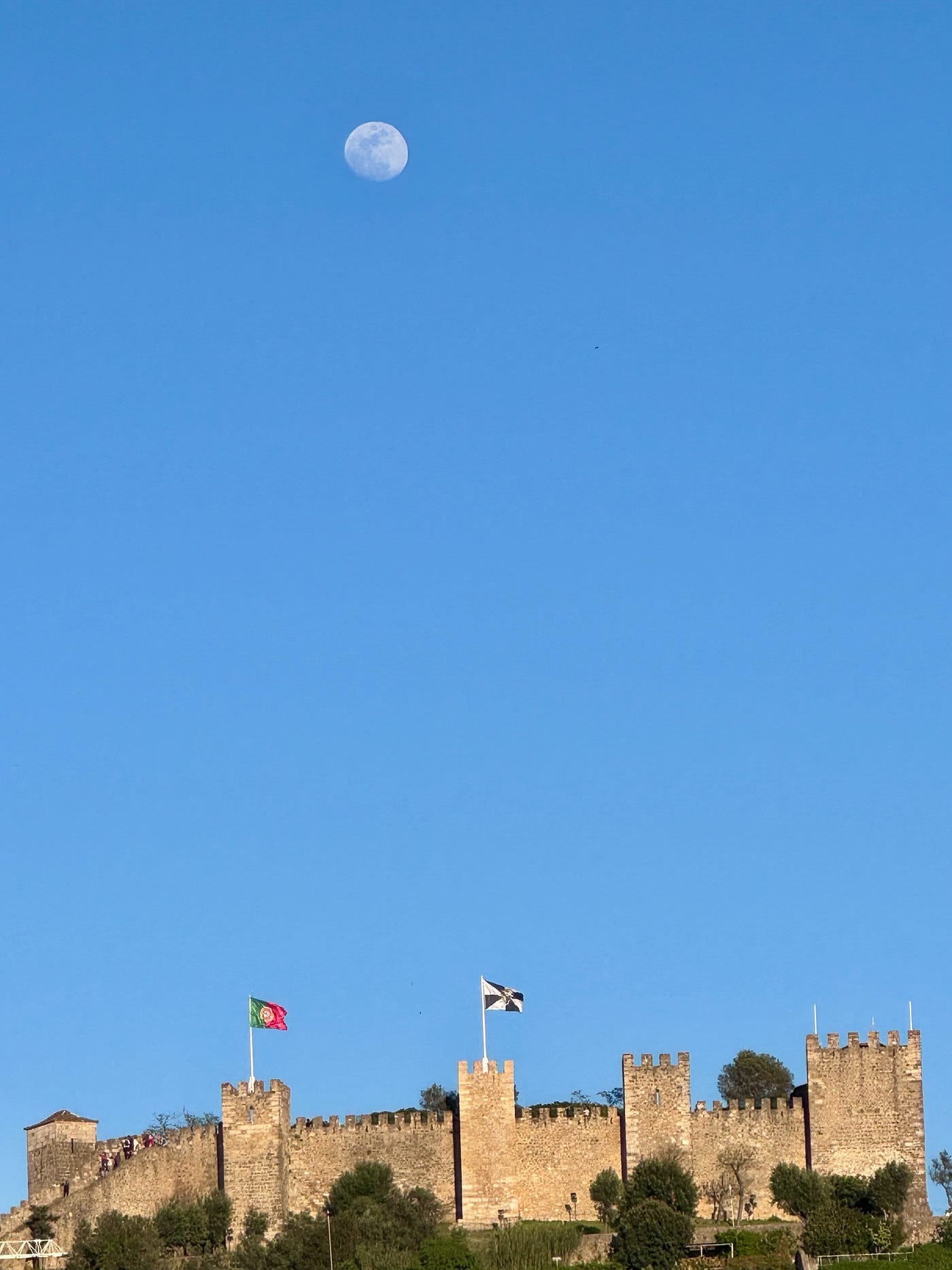
I came to Lisbon during Holy Week as a visitor, and found myself standing inside an inheritance.
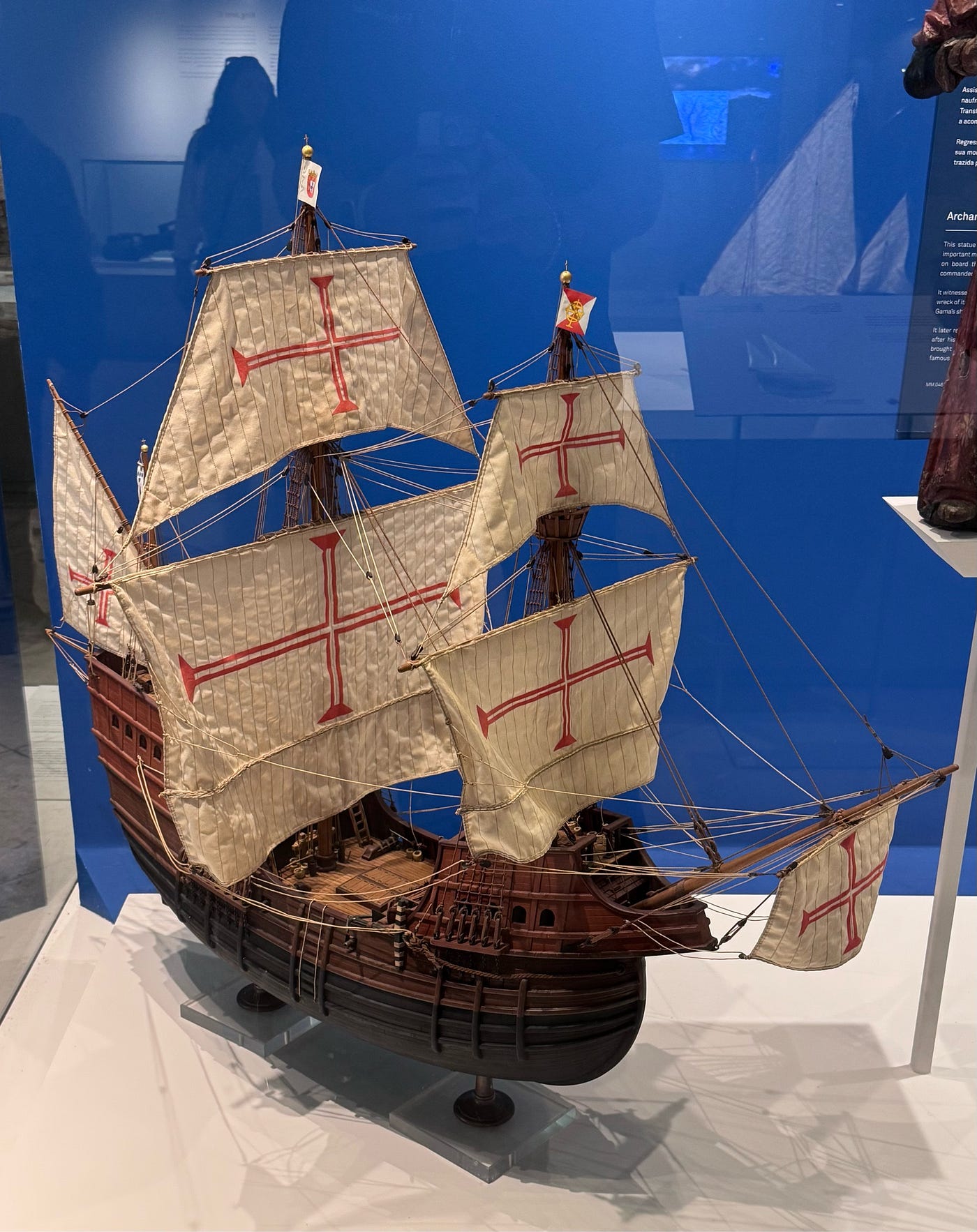
At the start of the week stood Vasco da Gama expressed in museums and monuments: a Portuguese sailor opening a sea route to India, and with it, far more than a route. Trade followed. Empire followed. The Church followed, tied to the same hull.
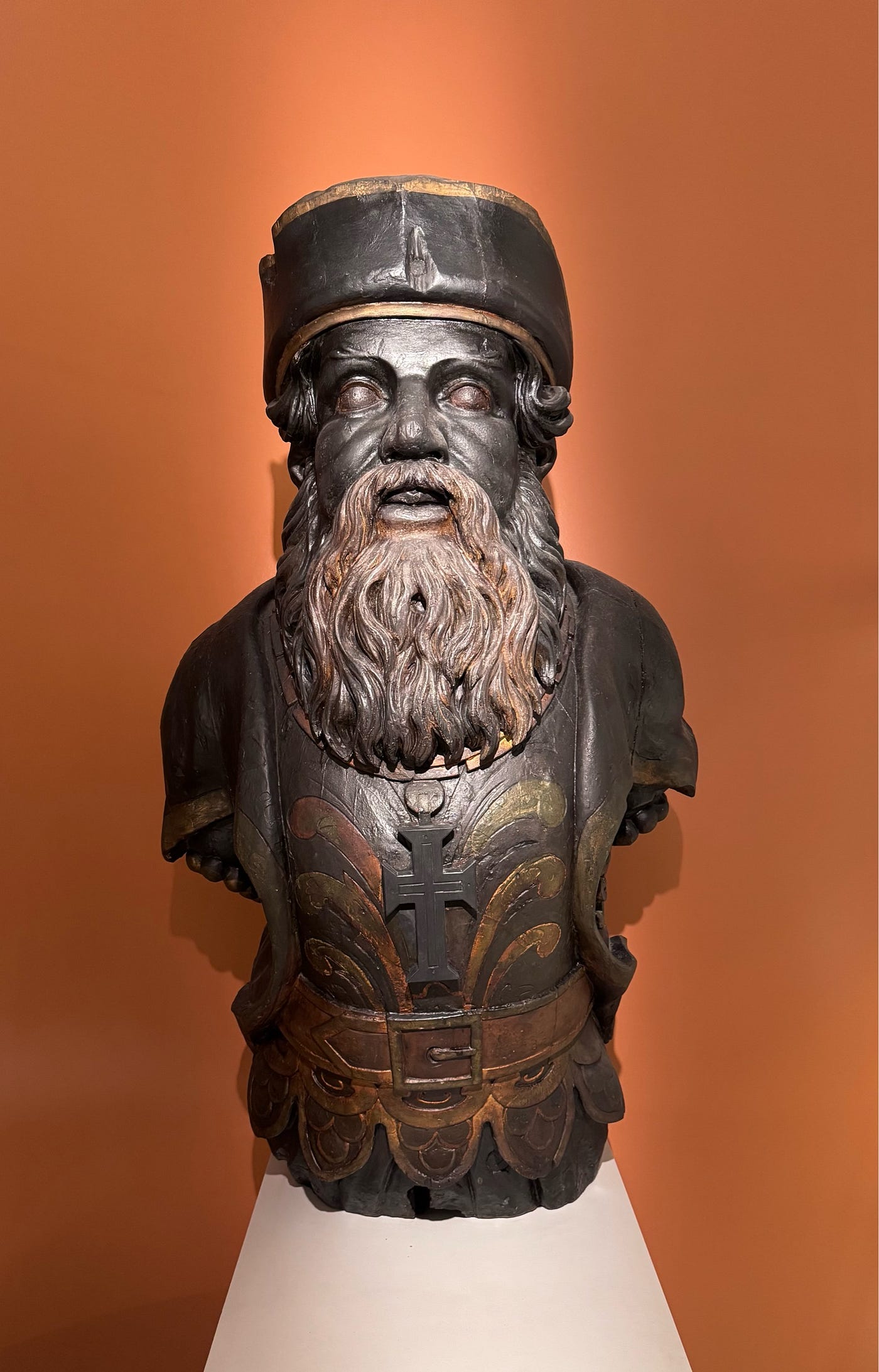
Vasco da Gama
It is easy to tell that story as though history were a polished corridor, one door leading neatly to the next. It was messier than that. Ambition and piety traveled together. So did commerce, vanity, violence, curiosity, and conviction.
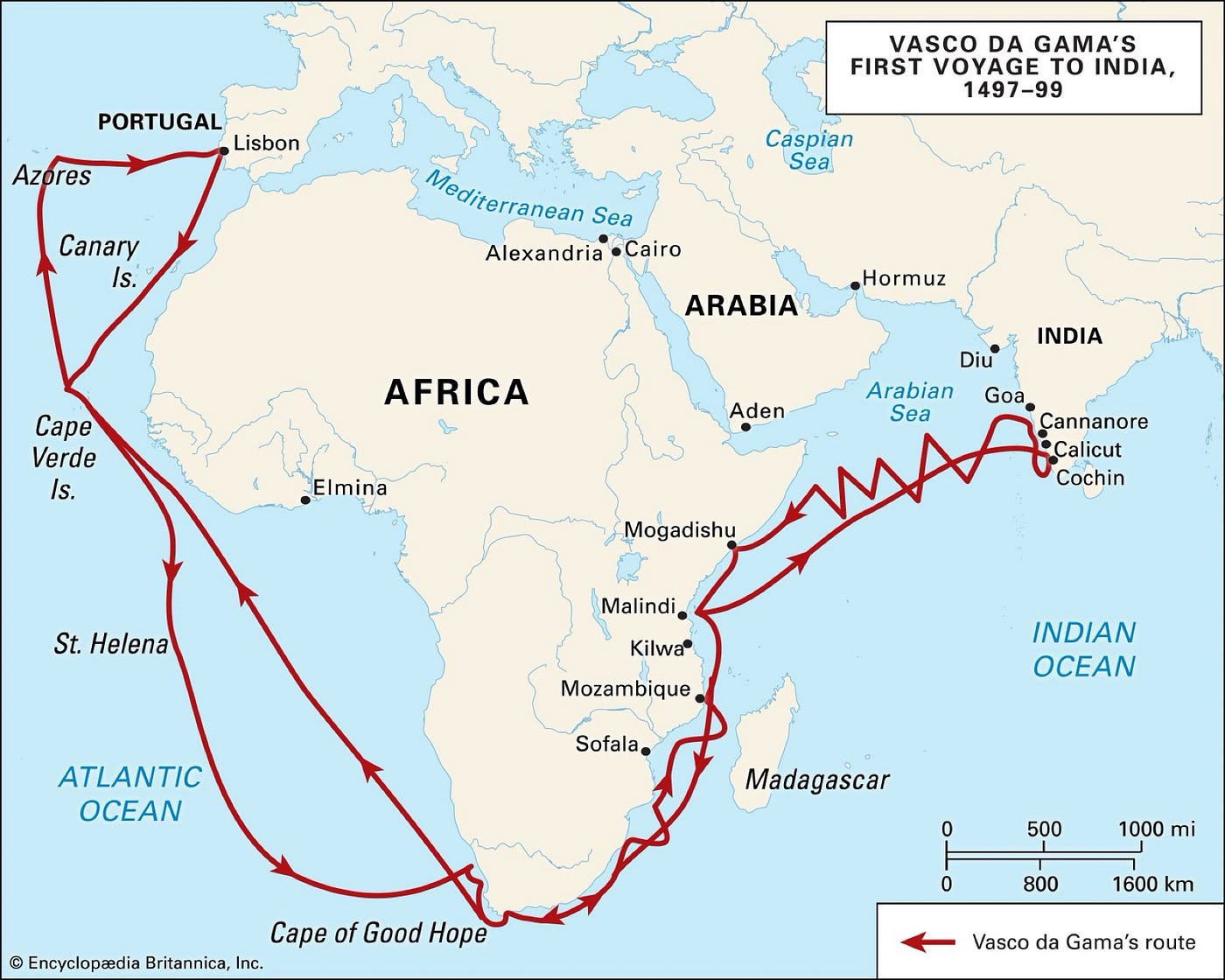
Da Gama carried stone pillars on his ships, markers meant to be planted on distant shores as signs of discovery and claim. The image of those stone pillars is almost embarrassingly imperial, the urge not merely to arrive but to fix and possess. Yet the most enduring mark that voyage left on my own life was not a pillar planted on a coast. It was quieter than that, slower, harder to see: a set of habits passed down through a school in Bombay.
The Jesuits came to India in the wake of that larger Portuguese movement. Over the centuries, they built schools. One of them was St. Mary’s, now more than 150 years old. I spent eleven formative years there, being shaped. I do not mean shaped into Catholic. I am a Hindu by birth and Vedantin by inquiry, and no one at school seemed especially interested in picking that fight. What I received from Jesuit education entered by another route.
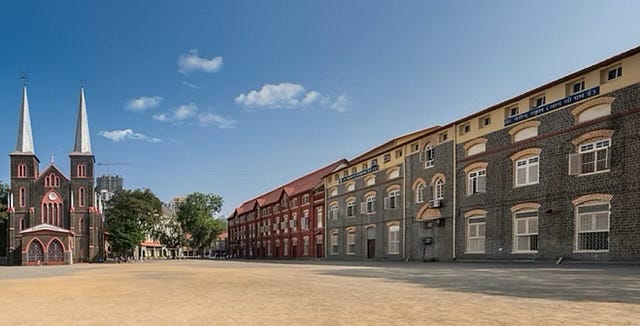
Fairness and frugality were the same instinct expressed twice. Some forty percent of us were on scholarship and we never knew who they were — poverty was not turned into a badge, privilege was not handed a stage. The uniform enforced this: white shirt and pants, blue tie, black shoes. No branded hierarchy strutting across adolescent bodies. And the atmosphere extended it further — polish without substance was faintly ridiculous: vanity registered as weakness. The school had no interest in breeding peacocks.
The egalitarianism ran deeper than economics. The school gathered India into one frame: Hindus of every caste, Muslims, Sikhs, Parsis, Catholics, the occasional Jewish kid. A whole country passed through those classrooms in miniature. And the school’s location reinforced what its composition suggested: not South Bombay’s insulated enclave but the rougher grain of Mazagaon, close to the docks, where commerce, labor, religion, class, and aspiration rubbed against one another in plain sight. A school’s location teaches its own view of who counts.
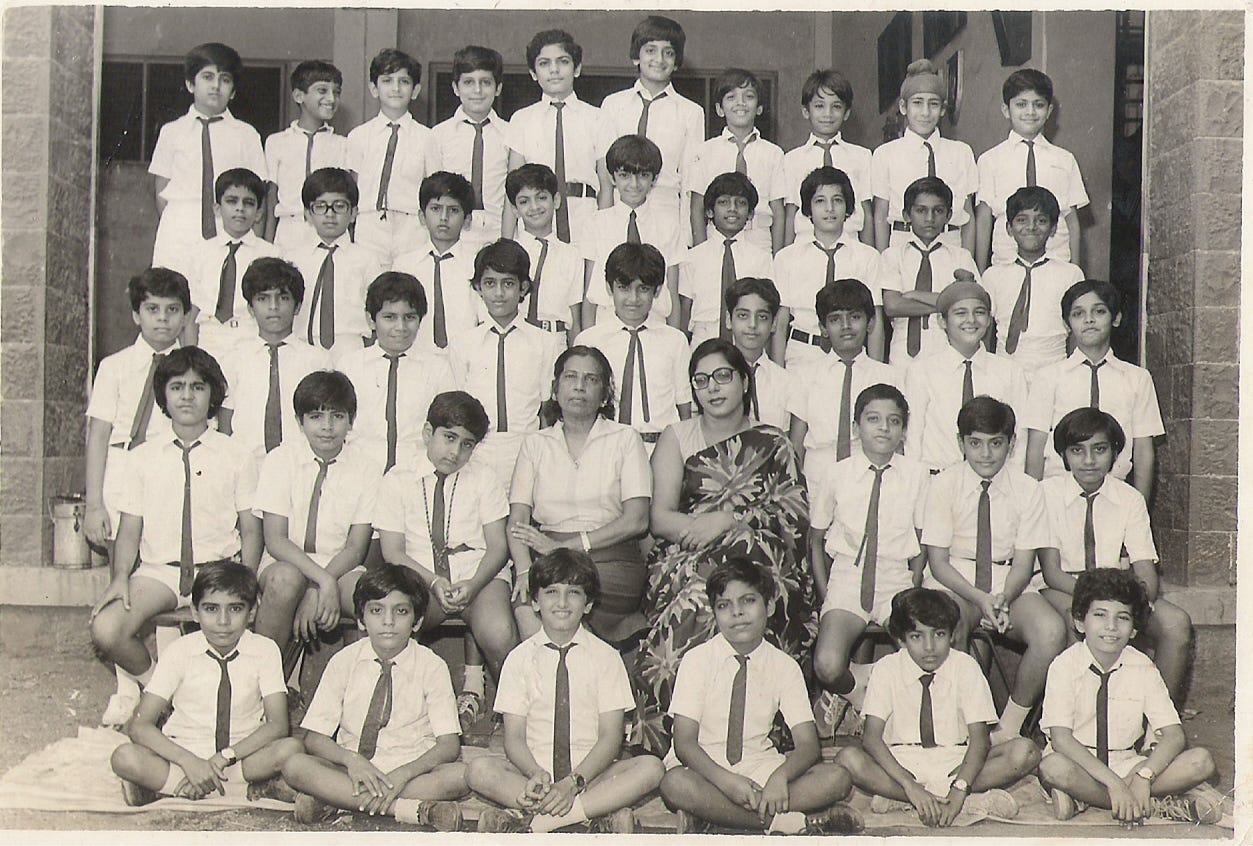
5th Grade at St. Mary’s (can you spot me?)
And we were taught, most of all, that the point was to become well-rounded men, not merely good students.
That distinction has sharpened with age. A school that tries to form a whole human being is attempting something risky. It is saying that intellect by itself is insufficient, that character, conduct, proportion, and inner ballast matter just as much.
I did not see all this clearly as a boy. Boys are too busy wanting to belong, trying to impress, ruffians playing marbles and cricket and football and kitty-kitty, trying not to be shamed, scamps yet tongue-tied around girls, learning the weather of power. But institutions work on us long before we have language for what they are doing. Somewhere in those eleven years, some part of me absorbed the idea that one should try to be fair-minded, unpretentious, disciplined, useful; that status should not be worshipped; that intellect without moral texture is just a sharper blade.
So this week in Lisbon carried more charge than I expected.
I came here as a visitor. I saw the river, the Atlantic, the cobblestones, the hills, the churches, the imperial residue still standing in the light. I thought about da Gama and the Portuguese reach eastward, how a voyage becomes a route, how a route becomes an empire, how an empire carries priests and teachers in its wake, and teachers shape children who then grow old in distant cities trying to understand what was done to them and for them in the same motion.

I don’t want to sand it down into something devotional and false. The same arc contains extraction, missionary ambition, and the machinery of empire. To receive a Jesuit education in India is to receive a gift that arrived through a system that also destroyed things.
Still, adulthood should allow us to hold a mixed inheritance without demanding purity before recognition. A tradition can be entangled with conquest and still transmit discipline, conscience, seriousness, care, through the people who embody it. A school can sit inside a history of domination and still give a child a durable moral grammar.
At the end of my Lisbon visit, I went to Holy Thursday Mass. The entire ninety minutes were in Portuguese, yet words were almost beside the point. Incense, candlelight, hymns, gesture, all of it gathered into form, and then the form grew transparent. What opened was something both Vedanta and the non-dual current in Catholic contemplation know well: the sacred not elsewhere, but shining through the particular without being confined to it. I was inside the ritual and aware of what it disclosed at the same time. For one evening in a Lisbon church, there was no argument between the traditions.

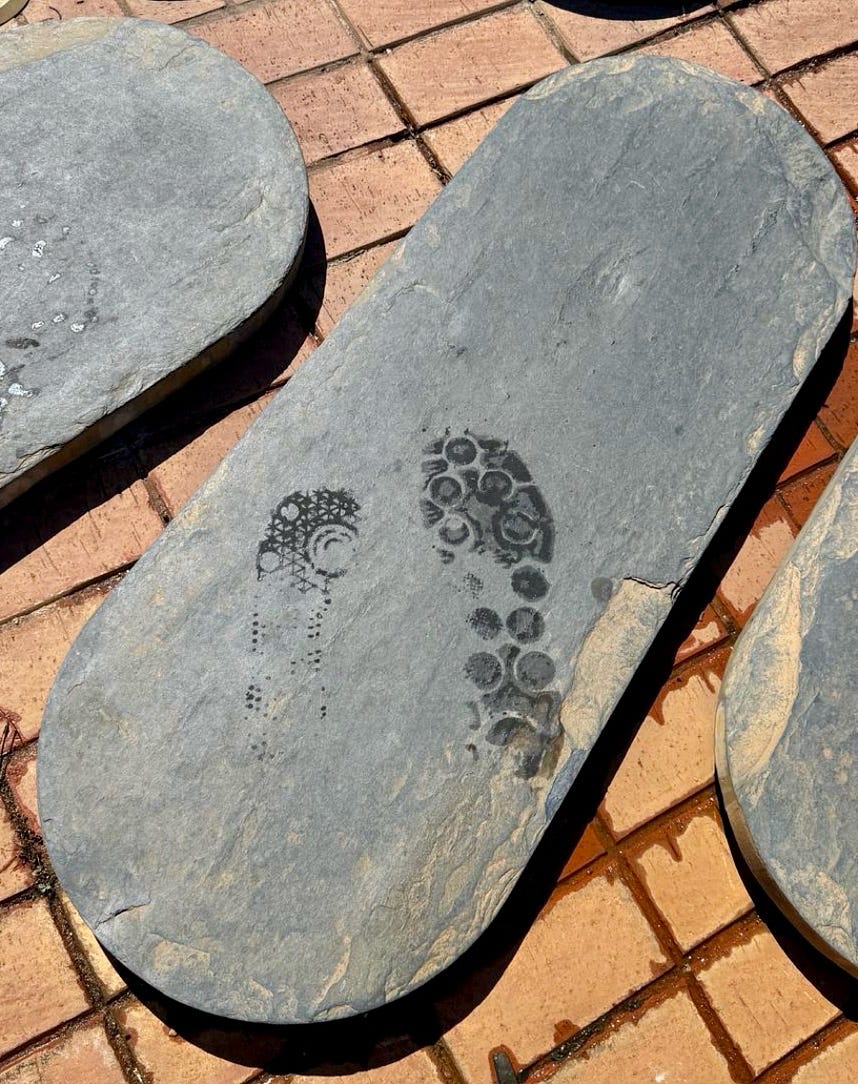
Then came the moment that caught me most cleanly: the senior priest washing the feet of the laity.
There it was, the Holy Thursday reversal: authority kneeling, rank lowered, service made visible. Whatever one makes of the theology, the gesture itself has force. It says something modern life forgets with depressing regularity: leadership, if it has any soul, must bend low enough to touch an ordinary human foot. Watching that, I felt the week gather itself.
The city was no longer just the place from which ships once sailed. It had become a source point in my own formation, though by a route no cartographer could have mapped. Lisbon to Calicut. Jesuits to schools. Schools to a boy. Boy to man. Man back in Lisbon, still unmistakably himself, still a Vedantin, yet able to recognize with gratitude what he once received from men whose creed he did not adopt.
Perhaps that is why Holy Thursday felt so fitting. What mattered most in my Jesuit education was never argument alone. It was example, tone, standard, atmosphere, expectation. A way of taking human beings seriously. A way of trying to form character without turning the effort into performance. A way of insisting, quietly and steadily, that the point was not merely to produce successful boys, but decent men.
I came to Lisbon with one story in mind, the old story of explorers and empire and routes to India. I leave with another nested inside it. Somewhere in the long wake of those ships came the men who helped form me. Not into a convert. Into a certain kind of man, or at least into someone who still knows that becoming such a man remains the work.
메타데이터
- post_id
- 734cfcd14aeb
- slug
- schooled-in-lisbon-734cfcd14aeb
- url
- https://medium.com/@shvetank_shah/schooled-in-lisbon-734cfcd14aeb
- canonical_url
- https://medium.com/@shvetank_shah/schooled-in-lisbon-734cfcd14aeb
- author_url
- https://medium.com/@shvetank_shah
- status
- ok
- fetched_at
- 2026-07-11 12:56:19




