How Elliot Anderson Embodies Tuchel’s Tactical Approach — And What This Means
For 25 glorious second-half minutes against Croatia in their World Cup opener, Thomas Tuchel’s England were close to perfection.
How Elliot Anderson Embodies Tuchel’s Tactical Approach — And What This Means

Harry Kane struck twice in England’s 4–2 win over Croatia
For 25 glorious second-half minutes against Croatia in their World Cup opener, Thomas Tuchel’s England were close to perfection.
The Three Lions simply overwhelmed their experienced but ageing opponents during this period, largely with their increased intensity and impressive speed of movement. They struck 10 shots on goal (including seven on target) immediately after the interval, while generating an xG of 1.19 and completing 17 final third passes.
Not only was this passage of play breathtaking, but it also demonstrated precisely how Tuchel wants the Three Lions to play in North America. And at the heart of it all was Nottingham Forest midfielder Elliot Anderson, who perfectly embodies England’s current drive, aggression and increasingly direct approach.
But how did the Manchester City target drive the team on after half-time, and how may his own limitations impact England against better opposition?
Analysing England’s Tactical Approach Against Croatia
As Tuchel’s assistant coach Anthony Barry opined at half-time in Dallas, England appeared tactically confused at times during the first 45 minutes against Croatia.
Not only did they struggle to construct attacks consistently, but the Three Lions were ponderous and uncertain when attempting to play out from the back. When looking to adopt a more direct approach, they struck a number of aimless, aerial high balls, rather than attempting more targeted forward passes through the midfield.
So, although all the elements of Tuchel’s gameplan were evident at times during the opening half, they weren’t demonstrated cohesively. This resulted in what Barry described as “fearful patterns of play”, presumably borne out of confused minds and the burdensome pressure of playing for your country at the World Cup.
However, England’s second-half salvo saw everything come together in a spectacular period of football. Within two minutes of the restart, England constructed a fluid, 23-pass move in their own half, which drew their opponents’ press and created significant space in behind.
It was then Anderson who received the ball on the half-turn and whipped a first-time ball into the space. This was attacked at pace by both Jude Bellingham and Noni Madueke, with the former eventually racing clear to slot into the far corner.
This was precisely what Tuchel wanted to see from his charges: to build-up decisively and create space in which England’s dynamic and pacey front six could explode.
There was significant structure to this approach too. One particular passage of play saw Declan Rice occupy a position on the left of the midfield, creating space for Harry Kane to drop into. The Bayern striker then looked to play a ball through the lines and into the final third, with Madueke racing onto this before flashing a cross narrowly across the face of goal.
The 25-minute period after half-time perfectly showcased Tuchel’s approach out of possession too. England counter-pressed in numbers and were happy to go man-for-man when Croatia looked to build-up in their defensive third, creating a series of physical duels that players like Anderson, Bellingham and Rice were able to win easily.
Anderson’s Role and and His Importance to Tuchel

Elliot Anderson embodies Tuchel’s tactical approach withEngland
It was Anderson who stood out both in and out of possession for England, with his performance passing both the eye test and any form of detailed statistical analysis.
The all-action midfielder had 70 touches in all and produced the assist for Bellingham’s goal. He also completed 22 carries and recovered the ball on eight occasions, while winning an impressive four ground duels and making the same number of interceptions.
Of course, such numbers should come as no surprise to anyone who has watched the 23-year-old consistently this season. He won the highest number of total duels in the 2025/26 Premier League (295), and led the way for ground duels won with 230.
Anderson also completed the most ball recoveries of any outfield player (306). He ranked fourth for total tackles made too (103), comfortably ahead of England teammate Declan Rice (70).
Incredibly, he also topped the charts for total touches (3,284), while recording a pass completion rate of 85.36% (similar to his accuracy against Croatia). It should be noted that he attempted an average of 21.9 forward balls per 90 minutes last in last season’s EPL, while only four players completed more than his 2,027 passes.
In short, Anderson provides a dynamic midfield presence that’s capable of both progressing the ball (both through forward passes and carries) and winning back possession high up the pitch. This makes him central to the successful implementation of Tuchel’s bold tactical approach, which requires incredible physicality and well-rounded player profiles.
Understanding Anderson’s (and England’s) Tactical Limitations
Of course, Tuchel’s tactical approach has potential limitations, which will be tested more seriously as England progress through the tournament. These are also embodied in part by Anderson, who lacks the technical refinement of the world’s leading midfield operators.
For example, no Premier League player ceded possession more than Anderson last season, who gave the ball away 656 times in total. Interestingly, Morgan Rogers placed third according to this metric, as he lost possession on 619 occasions and was successfully tackled 156 times.
Only two players (Igor Thiago and João Gomes) made more than Anderson’s 57 fouls in the 2025/26 EPL campaign too, creating the potential for England to ship dangerous set pieces during defensive transitions.
These statistics are partially the result of Anderson’s high-octane style and desire to progress the ball, but the inability to consistently retain possession will prove more problematic against superior opposition.
This is where the ultimate acid test of Tuchel, England and Anderson will lie. Elite opponents like Spain will have far more of the ball than Croatia did, with La Roja’s midfield pairing of Rodri and Pedri technically outstanding in possession and highly capable of sustaining attacks.
Spain averaged 70.4% possession per 90 during the most recent competitive cycle between 2025 and 2026, while the efficiency of their collective press lets them recover balls quickly and high up the pitch.
England’s high-intensity approach has the potential to disrupt Spain’s structured possession, of course, but the team will also be vulnerable in possession immediately after winning the ball.
Then there’s the conditions. Playing in sustained heat and humidity could take its toll on England as the tournament progresses, especially if they struggle to keep the ball or counter attack effectively. Higher quality sides will be primed to counter this flaw, with Germany, Portugal and France also boasting technically superior midfields.
The Bottom Line
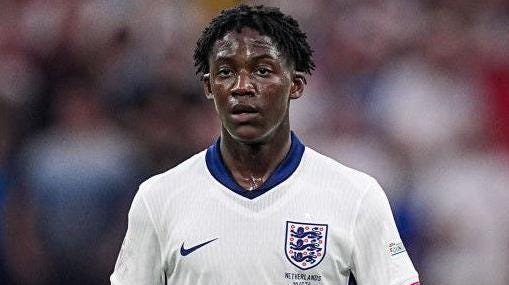
Kobbie Mainoo could start against Ghana as Tuchel rotates his midfield options
The challenge facing England is clear. They must maintain the tactics that help them to get the most from their dynamic and high-energy playing squad, while also keeping key players fresh and negating the technical excellence of other leading nations.
Rotation will be key during the remainder of the group stage. England don’t need to combine Anderson with Rice against Ghana and Panama, as the Three Lions are likely to dominate possession in these encounters. This creates the chance for Kobbie Mainoo to potentially start both matches while both starting central midfielders are rotated.
In terms of taking on superior and technically proficient nations, Tuchel may also need to strike upon subtle tactical adjustments. These could include encouraging concerted periods of safe and structured possession, alongside the introduction of more selective and clearly defined pressing triggers.
One thing’s for sure: England have the squad and manager to win the World Cup, while the team’s 25-minute blitz of Croatia revealed a clear and effective identity. If Tuchel can continue to strike a balance that recognises his side’s strengths and weaknesses, Elliot Anderson and his colleagues could end the summer with the biggest prize in world football.
메타데이터
- post_id
- 7351160bb024
- slug
- how-elliot-anderson-embodies-tuchels-tactical-approach-and-what-this-means-7351160bb024
- url
- https://medium.com/@footballintheuk/how-elliot-anderson-embodies-tuchels-tactical-approach-and-what-this-means-7351160bb024
- canonical_url
- https://medium.com/@footballintheuk/how-elliot-anderson-embodies-tuchels-tactical-approach-and-what-this-means-7351160bb024
- author_url
- https://medium.com/@footballintheuk
- status
- ok
- fetched_at
- 2026-08-12 00:59:26


