Dupuytren’s disease is another Neanderthal legacy
This disorder, also known as the “Viking disease,” affects many people around the world and appears to be a legacy of the sporadic…
FOSSILS ET AL.
Dupuytren’s disease is another Neanderthal legacy
This disorder, also known as the “Viking disease,” affects many people around the world and appears to be a legacy of the sporadic interbreeding events between Homo sapiens and Neanderthals.
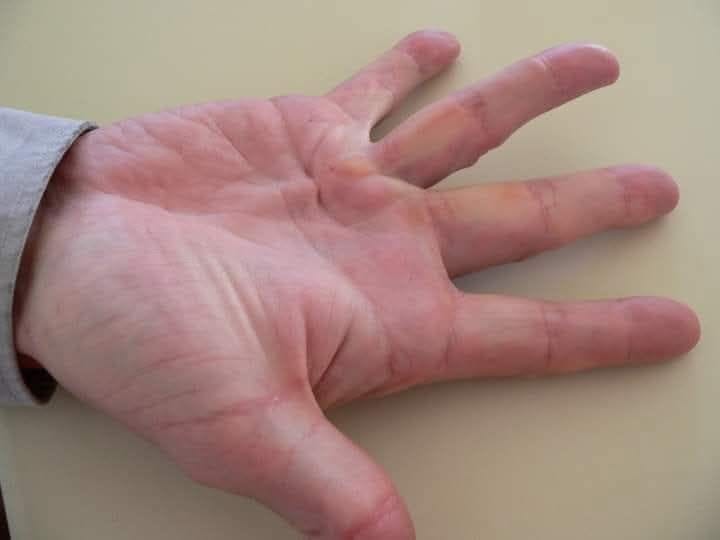
illustration of the hand of a person with Dupuytren’s diseas (Frank C. Müller, Wikimedia Commons, CC BY-SA 4.0)
As we know, those rare and chance encounters with Homo neanderthalensis allowed us, through a process known as introgression, to inherit Neanderthal genes. Before continuing, it is important to understand how these genes were incorporated. Genetic evidence indicates that Homo sapiens and H. neanderthalensis interbred only sporadically. This may have been due to reproductive barriers, including the genetic distance between the two populations, which limited successful mating. The few hybrids that were born, if fertile, reproduced with individuals from one of the parental populations (not with their parents, of course, but with non-hybrid individuals belonging to either the sapiens or Neanderthal lineage). As a result, the populations did not fully merge or become homogeneous; instead, when a hybrid bred with a parental population, genes from the other population could be effectively “introduced” into that lineage.
Thanks to this process, some Neanderthal genes were incorporated into modern human populations. Some of these genes played a remarkable role in our survival, helping us adapt to cold climates or resist certain viruses. Others, however, increase susceptibility to specific diseases — some inherited from Neanderthals — such as lupus, type 2 diabetes, and apparently Dupuytren’s disease.
This condition has been particularly common in populations of northern European origin. According to a 1999 study, about 30% of Norwegians over the age of 60 are affected by this pathology, which explains the nickname “Viking disease.”
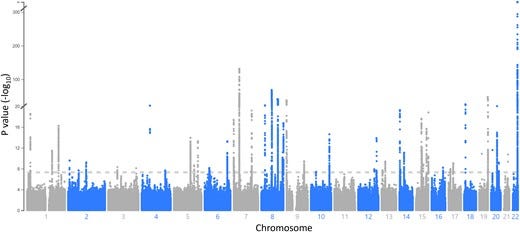
This figure shows a genome-wide scan comparing thousands of people with and without Dupuytren’s disease using data from UK Biobank, FinnGen, and Michigan Genomics Initiative, highlighting the genetic variants most strongly linked to the condition (Richard Ågren et al., 2023)
Dupuytren’s disease affects the hands. People who suffer from it develop a progressive thickening and contraction of the palmar aponeurosis, the connective tissue membrane beneath the skin that protects the palm of the hand. In practical terms, the condition is present when one or more fingers become permanently bent or flexed.
There appears to be a genetic predisposition linked to the small number of Neanderthal genes inherited through those rare interbreeding events. In a study examining 7,871 cases — along with hundreds of thousands of controls from the UK Biobank and other research centers — researchers identified 61 significant genome-wide variants associated with Dupuytren’s disease.
Three of these variants (or loci) contain alleles of Neanderthal origin, and the second most important genetic risk factor is located on chromosome 7. Based on mRNA data from muscle and other tissues, this risk factor is associated with a splicing variant of the EPDR1 gene. In simple terms, the observed influence of Neanderthal ancestry on Dupuytren’s disease is about twenty times greater than expected. Overall, the study suggests that admixture with Neanderthals has had a substantial impact on the prevalence of Dupuytren’s disease in Europe.
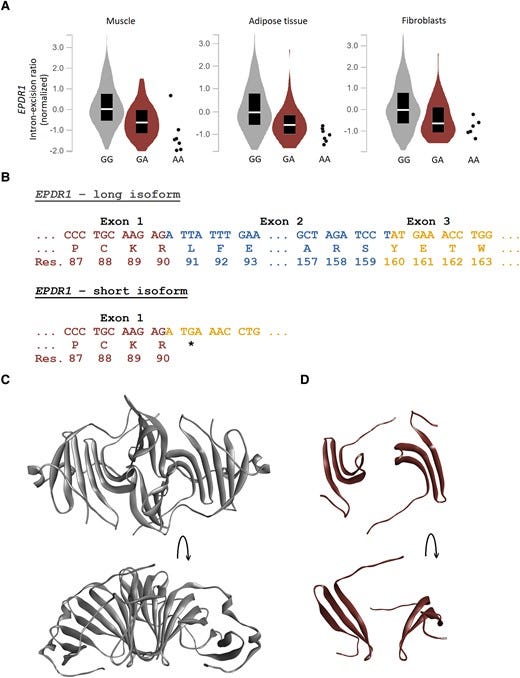
This figure shows that a Neanderthal-derived genetic variant alters how the EPDR1 gene is spliced in several tissues, producing a shortened protein and potentially affecting its normal structure and function (Richard Ågren et al., 2023)
In short, Neanderthal genes continue to surprise us, both positively and negatively. One additional point worth emphasizing is that this study shows the distribution of Neanderthal genes is not entirely random but reflects biological and evolutionary processes. Non-African populations — although many African populations possess at least about 0.3% Neanderthal DNA due to back-migration — typically carry between 1% and 3% Neanderthal ancestry, and almost no two individuals share exactly the same Neanderthal genes. This also applies to disease-related genes: not everyone carries them, and not everyone is at risk (the same is true for conditions such as lupus or type 2 diabetes).
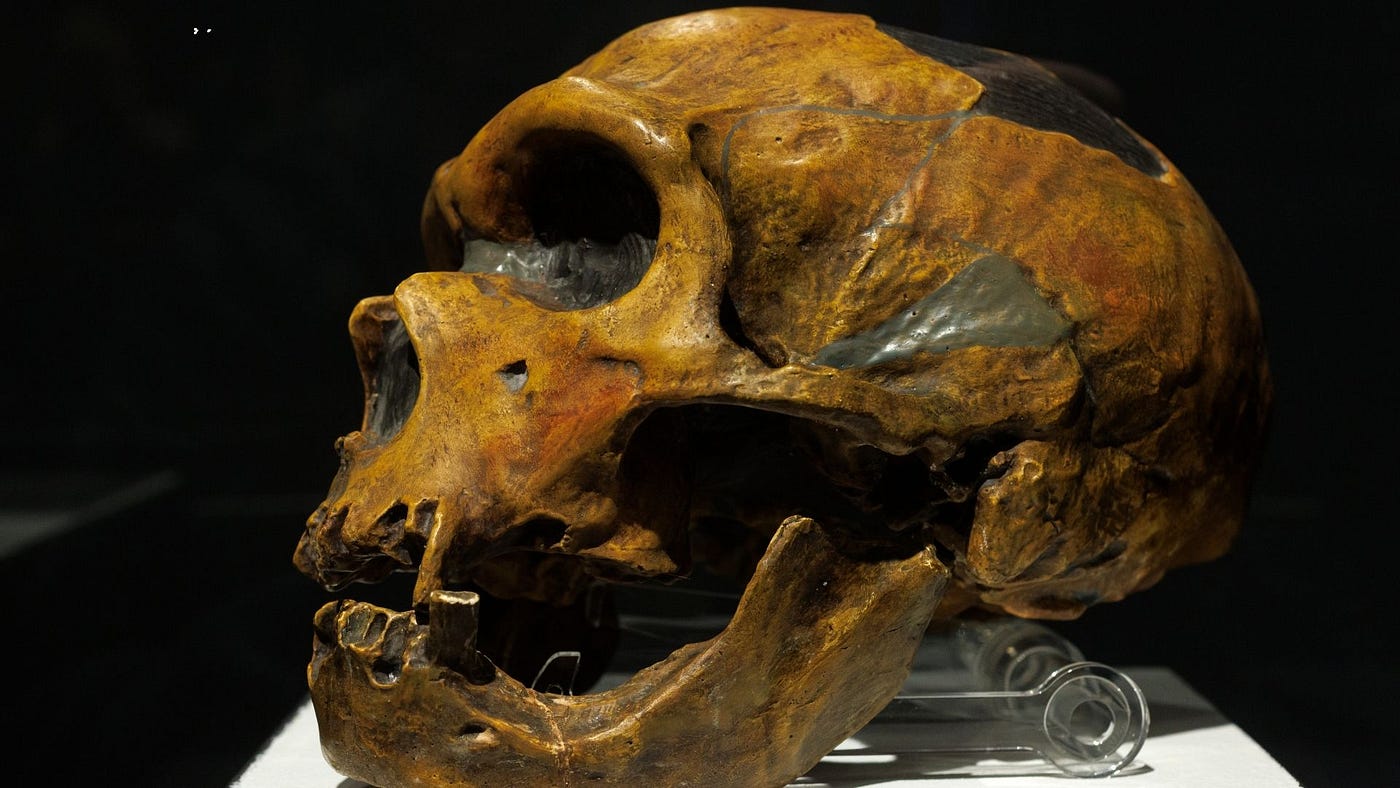
Illustration of Neanderthal’s skull. Photo by mostafa meraji on Unsplash
In northern Europe, Dupuytren’s disease is relatively widespread, suggesting that the genes associated with it may represent a kind of regional characteristic. The ancient sapiens populations that migrated into these regions may have experienced a degree of isolation that, in one way or another, allowed the frequency of these Neanderthal-derived genes — and the disease linked to them — to increase. This could help explain why such a high proportion of Norwegians over 60 are affected by this condition.
Source: Richard Ågren and others, Major Genetic Risk Factors for Dupuytren’s Disease Are Inherited From Neandertals, Molecular Biology and Evolution, Volume 40, Issue 6, June 2023, msad130
메타데이터
- post_id
- 7375bc34f9c4
- slug
- dupuytrens-disease-is-another-neanderthal-legacy-7375bc34f9c4
- url
- https://medium.com/fossils-et-al/dupuytrens-disease-is-another-neanderthal-legacy-7375bc34f9c4
- canonical_url
- https://medium.com/fossils-et-al/dupuytrens-disease-is-another-neanderthal-legacy-7375bc34f9c4
- author_url
- https://medium.com/@mattia.paparo1994
- status
- ok
- fetched_at
- 2026-06-09 15:37:30