Oppressive Violence vs. Resistant Violence: The Female Slave Experience
When is violence necessary to resist oppression? This young female slave answers the question.

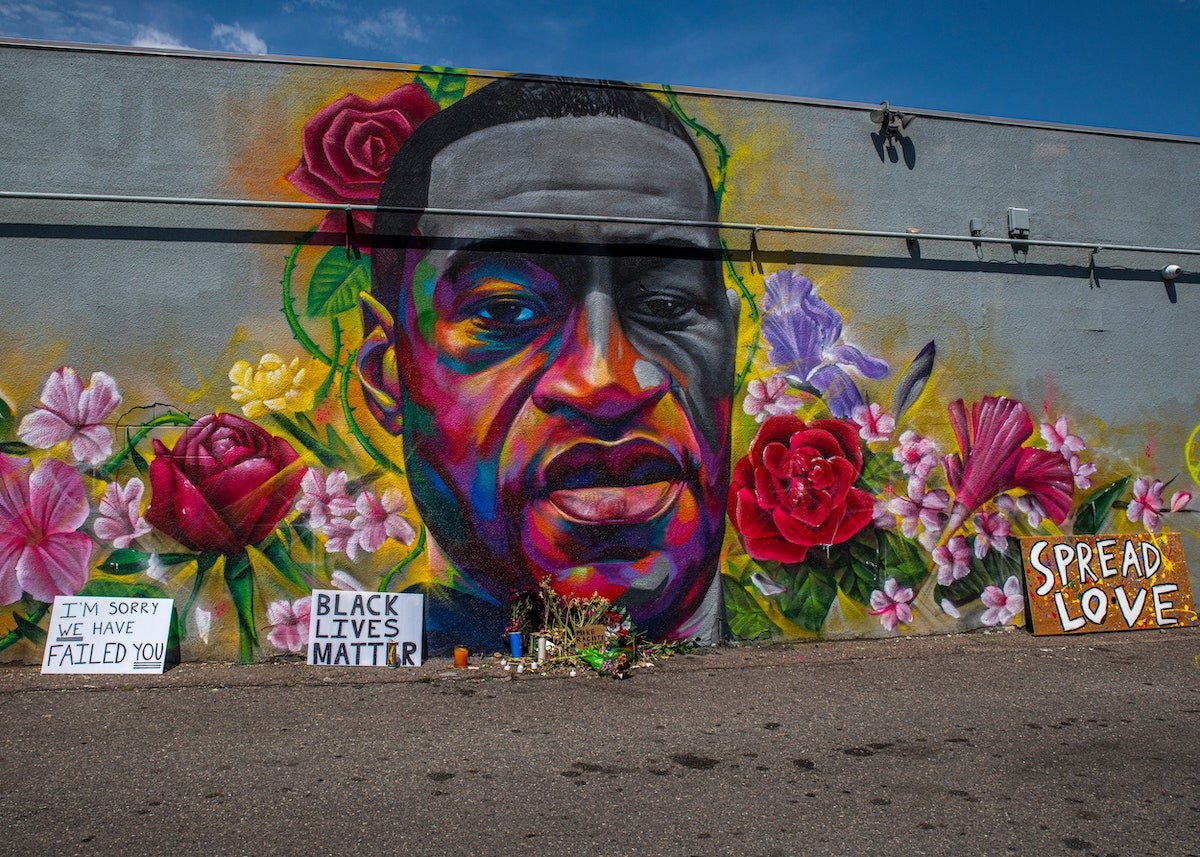
photograph of a mural painted in honor of Harriet Tubman
Oppressive Violence vs. Resistant Violence: The Female Slave Experience
Colson Whitehead’s novel The Underground Railroad follows the story of a female slave and fugitive named Cora, who acts as an example of sex-based abuse within slavery as well as its overall impact on violence. In the novel, Cora experiences a vastly different form of slavery than her male counterparts. Within slavery, women like Cora suffered from extreme sexual violence in addition to racial violence. First, female slaves were subject to sexual abuse in the form of rape both by their white slaveowners and their fellow male slaves. For example, Cora’s grandmother Ajarry is raped during her passage, and Cora is raped by other male slaves. Furthermore, slavery as an institution valued female slaves not only for their labor and production, but also for their reproductive use. In Whitehead’s novel, Ajarry is specifically bought and sold for her supposed value as a sexual object. For her part, Cora is forced to take a husband to provide children, and thus increase labor, for her slaveowner. In addition to breeding female slaves, slave owners and even male slaves expected women to bear and raise their children. Enslaved mothers like Cora’s mother and grandmother carried the products of rape and forced reproduction in their wombs, birthed their children without appropriate medical care, and raised those children. However, in addition to childbearing and rearing, mothers also suffered the death of their children from lack of medical care and abuse, as well as the loss of their children in the breaking up of families. Overall, this sexual violence against slave and fugitive women incites further violence on behalf of the women and their companions toward their oppressors. While attempting to escape her plantation, Cora finds herself in an altercation with a slave catcher, whom she murders in self-defense. Later in The Underground Railroad, a group of Black men murders one of her captors in order to free her. Moreover, Cora herself murders another slave catcher at the end of the book to escape once and for all. Therefore, racial violence against women during slavery includes many forms of severe sexual abuse, thus separating it from racial violence against men. The extreme abuse of slavery and sex-based violence causes women and their allies to resist their oppression through further violence. In conclusion, racially-charged violence against women differs from racial violence against men because it is sex-based, and that trauma incites women and their allies to resist oppression through violence, thus perpetuating a long cycle of social and generational abuse.
In his novel The Underground Railroad, Colson Whitehead determines that female slavery is different from male slavery because women suffer from extreme sex-based violence, including sexual abuse, forced breeding, and childbearing and rearing. In the very first chapter of the novel, Whitehead explores how Cora’s grandmother Ajarry enters captivity. Ajarry’s captors welcome her into slavery by forcing themselves upon her. Whitehead illustrates, “Because of her tender age, her captors did not immediately force their urges upon her, but eventually some of the more seasoned mates dragged her from the hold six weeks into the passage” (p. 6). As part of her initial captivity and introduction into slavery, Ajarry’s captors rape her. Years later, the treatment of female slaves remains equally as violent. Whitehead explains how Cora is sexually assaulted by one of her slaveholders, writing, “When Terrance got to Cora, he slipped his hand into her shift and cupped her breast. He squeezed. She did not move” (41). Not only does Terrance sexually assault Cora, but as a slave, Cora has no power to resist. This is not the first time in the novel that Cora experiences sexual abuse. Earlier in The Underground Railroad, four male slaves “dragged her behind the smokehouse,” and “The Hob women sewed her up” (Whitehead 20). The rapes from her fellow male slaves are so severe that she requires stitches for her wounds. In addition to suffering sexual abuse, female slaves like Cora and Ajarry suffered from forced reproduction and breeding. In fact, the very market value of female slaves is in their fertility and ability to reproduce. Stevenson seconds that “And a female’s fertility… always was essential in determining her market value…” (p. 2–3). Whitehead illustrates this fact through Ajarry, who was bought by a trader looking for slaves “of breeding age” (8). During slavery, Black female bodies were not mere sexual objects, but also reproductive objects. When white slaveowners did not personally take advantage of female slaves’ reproduction, they manipulated circumstances to produce offspring. In her essay, Hine quotes Deborah Gray White, who states, “’Once slaveholders realized that the reproductive function of the female slave could yield a profit, the manipulation of the procreative sexual relations became an integral part of sexual exploitation of female slaves’” (p. 17). Building from this fact, Whitehead’s Cora was “ordered… to take a husband,” likely to instigate her reproduction (23). Because the reproduction of slaves yielded more labor and equaled more profit, white slaveowners orchestrated marriages and other conditions to induce sexual relations and encourage conception. Once the baby was conceived, it was the responsibility of the mother. In Cora’s mother’s case, Mabel was forced to give birth to Cora without proper medical attention, leading to a near-fatal complication. Whitehead describes in the novel, “Her mother, Mabel, had complained enough about her hard delivery… How her mother bled for days and Connelly didn’t bother to call the doctor until she looked half a ghost” (12–13). Although slaveowners were eagerly engaged in female slaves’ reproduction, they offered no help during the pregnancy and birthing process. Additionally, slaveowners provided no medical care to the children and treated them with extreme violence. Almost all of Ajarry’s children died early in their lives. Whitehead demonstrates, “Two died miserably of fever. One boy cut his foot while playing on a rusted plow, which poisoned his blood. Her youngest never woke up after a boss hit him in the head with a wooden block. One after another” (9). Thus, Ajarry’s children died because she could not provide for them as a slave in her owner’s possession — She had nothing to protect them with. Several of Ajarry’s children died because they did not have access to proper medical care, while one died directly following abuse from a slave boss. Under slavery, black women endured extreme sex-based violence both at the hands of their slaveowners and other male slaves, including sexual abuse, forced reproduction, and familial abuse, all of which separate female slavery as unique from male slavery.
As in life, Colson Whitehead reveals through The Underground Railroad that sexual violence against women breeds violent resistance, which often takes the form of murder. Within slavery as without it, black women murdering their oppressors is common as a form of resistance to racial and sexual violence. Stevenson briefly addresses Wilma King’s analysis of the Celia and Nelly court cases, in which “both women were the forced sexual partners of their owners, and both produced children legally owned by their ‘fathers’” (p. 3). In resistance, “Both also committed murder…” (3). Thus, Cora herself is a realistic character who commits acts of violence to protect herself. At the beginning of the novel, Cora and two other slaves escape the plantation only to be caught in the woods by a group of slave catchers. Knowing that the alternative is death, Cora kills the slave catcher who attempts to restrain her and escapes instead. Later in the novel, Whitehead makes it clear that Cora did not want to kill the slave catcher but did so out of survival. As such, she does not blame herself but rather, “this enterprise that bound slave and master alike” (Whitehead 173). Therefore, Cora blames the violence she is escaping from rather than herself. When Cora is recaptured by Boseman and Ridgeway, a group of freedmen and fugitive slaves attack their wagon during their travels, and when they are attacked in return, they shoot and murder Boseman. Cora has no compassion for Boseman, but when asked if she wants Ridgeway killed as well, she refuses. While Cora resists her oppression with violence, she does not actively seek out violence or revenge. At the end of The Underground Railroad, Cora is captured again by Ridgeway and murders him so that she can escape using the railroad. Overall, every act of violence Cora commits in the novel, she performs out of necessity and survival. Therefore, the unique racial and sexual violence against enslaved women results in violent resistance.
The extreme sex-based violence of female slavery, including sexual abuse, forced reproduction, and familial abuse, differentiates it from male slavery and results in violent resistance, which may be justified but nevertheless perpetuates a generational cycle of violence. Henderson recounts in her essay Stewart’s claim that “… oppression is so egregious that resistance against it can take whatever form is necessary” (p. 58). For Cora in The Underground Railroad, violence is her only option for survival. Yes, Cora murders several oppressors to earn her freedom, but she does so in resistance to inhumane racial and sexual oppression. An act of violence committed in self-defense, especially in the face of violent oppression, should be immune to persecution. Like Henderson claims, “Killing to end slavery is defensible because it is a lesser evil than allowing slavery to continue” (27). The same can be said of violent oppression. However, no one who commits violence remains unharmed. While violence may sometimes be necessary, that does not mean it is easy or without consequence. Female slaves in particular experience a level of sexual and racial abuse that is inhumane and results in inhumane consequences, such as mental and physical health issues. Committing an act of violence like Cora does in The Underground Railroad results in similar consequences for mental health. Female slaves who survive slavery and racial and sexual oppression remain permanently scarred by the trauma of their experiences. This is especially important because black women, whether enslaved or fugitives or free, are staple leaders in their communities. In addition to holding power over their communities, black women hold power over their households. Black women are responsible for the maturation of their children, including their learning and their socialization. Thus, a black woman who still suffers from the trauma of oppression likely passes down that trauma to future generations. In essence, female slavery and sex-based racial oppression perpetuate violence that has a long-lasting impact on black women and their communities.
Works Cited
Henderson, Christina. “Sympathetic Violence: Maria Stewart’s Antebellum Vision of African American Resistance.” MELUS, vol. 38, no. 4, 2013, pp. 52–75. JSTOR, http://www.jstor.org/stable/24570017. Accessed 16 Aug. 2024.
Hine, Darlene Clark. “‘Ar’n’t I a Woman?: Female Slaves in the Plantation South’: Twenty Years After.” The Journal of African American History, vol. 92, no. 1, 2007, pp. 13–21. JSTOR, http://www.jstor.org/stable/20064151. Accessed 15 Aug. 2024.
Stevenson, Brenda E. “Introduction: Women, Slavery, and Historical Research.” The Journal of African American History, vol. 92, no. 1, 2007, pp. 1–4. JSTOR, http://www.jstor.org/stable/20064149. Accessed 16 Aug. 2024.
Whitehead, Colson. The Underground Railroad, Apple Books ed. New York, Doubleday, 2016.
메타데이터
- post_id
- 73968e116aab
- slug
- oppressive-violence-vs-resistant-violence-the-female-slave-experience-73968e116aab
- url
- https://medium.com/@kadetori/oppressive-violence-vs-resistant-violence-the-female-slave-experience-73968e116aab
- canonical_url
- https://medium.com/@kadetori/oppressive-violence-vs-resistant-violence-the-female-slave-experience-73968e116aab
- author_url
- https://medium.com/@kadetori
- status
- ok
- fetched_at
- 2026-06-25 07:00:49