Creating Great Anthropomorphic Characters: A Step-by-Step Design Guide
Learn how to design memorable anthropomorphic characters with believable anatomy, practical clothing, and a personality that shines through…
Creating Great Anthropomorphic Characters: A Step-by-Step Design Guide
Learn how to design memorable anthropomorphic characters with believable anatomy, practical clothing, and a personality that shines through every detail.
Designing an anthropomorphic (anthro) character involves much more than placing an animal’s head on a human body. The strongest designs balance recognizable animal traits with expressive human qualities, creating characters that feel believable in their own world.
Whether you’re illustrating, writing, creating game characters, or generating AI artwork, this guide provides a practical process you can follow from the first idea to a finished character reference sheet.
Step 1: Choose the Right Species
Every design starts with the animal.
A wolf, rabbit, raven, or bear each brings different proportions, movement, and personality cues before you’ve drawn a single piece of clothing.
Ask yourself:
- What animal best fits this character?
- Will the design be realistic, stylized, or cartoon-inspired?
- Which anatomical features absolutely need to remain recognizable?
Species often carry visual expectations.
- Wolves suggest confidence and loyalty.
- Foxes feel agile and clever.
- Bears communicate strength and stability.
- Rabbits often appear energetic or approachable.
Rather than making every character look like a human with different ears, preserve the characteristics that make each species immediately identifiable.
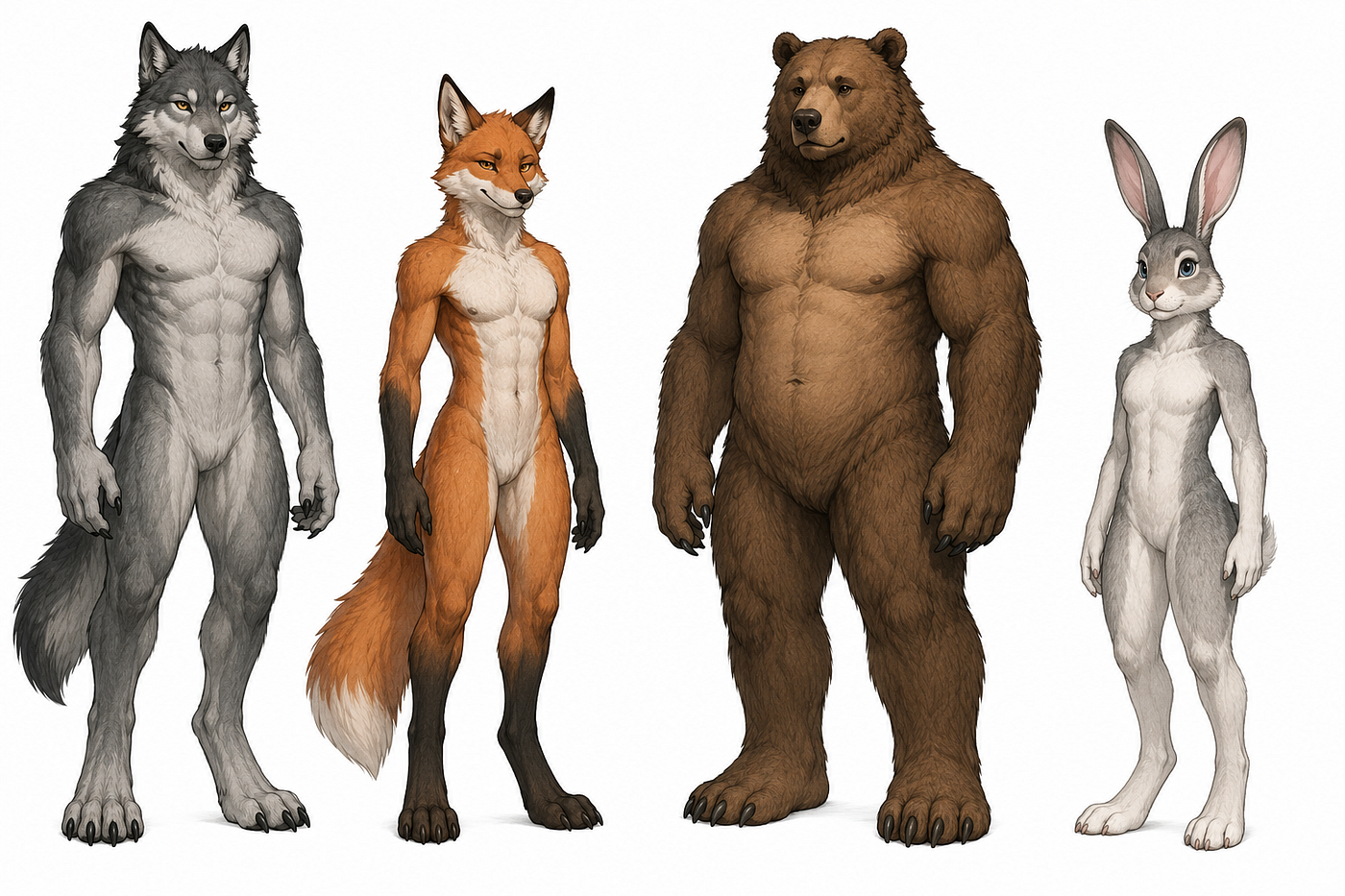
Different species communicate different personalities before clothing is added.
Step 2: Define the Character’s Role
Before designing clothing, decide who the character is.
Occupation, personality, and lifestyle influence every design choice.
Think about:
- Occupation
- Personality
- Age
- Setting
- Daily activities
A rabbit mechanic, rabbit librarian, and rabbit explorer should all feel like different individuals despite sharing the same species.
When the character’s purpose is clear, clothing decisions become much easier.
Step 3: Build a Believable Body
Body shape reinforces both species and personality.
Consider:
- Height
- Overall build
- Plantigrade or digitigrade legs
- Tail size
- Paw size
- Ear shape
- Neck length
Don’t make every anthro share identical proportions.
A fox should move differently than a badger. A stag should carry itself differently than a mouse.
Those differences create believable variety.
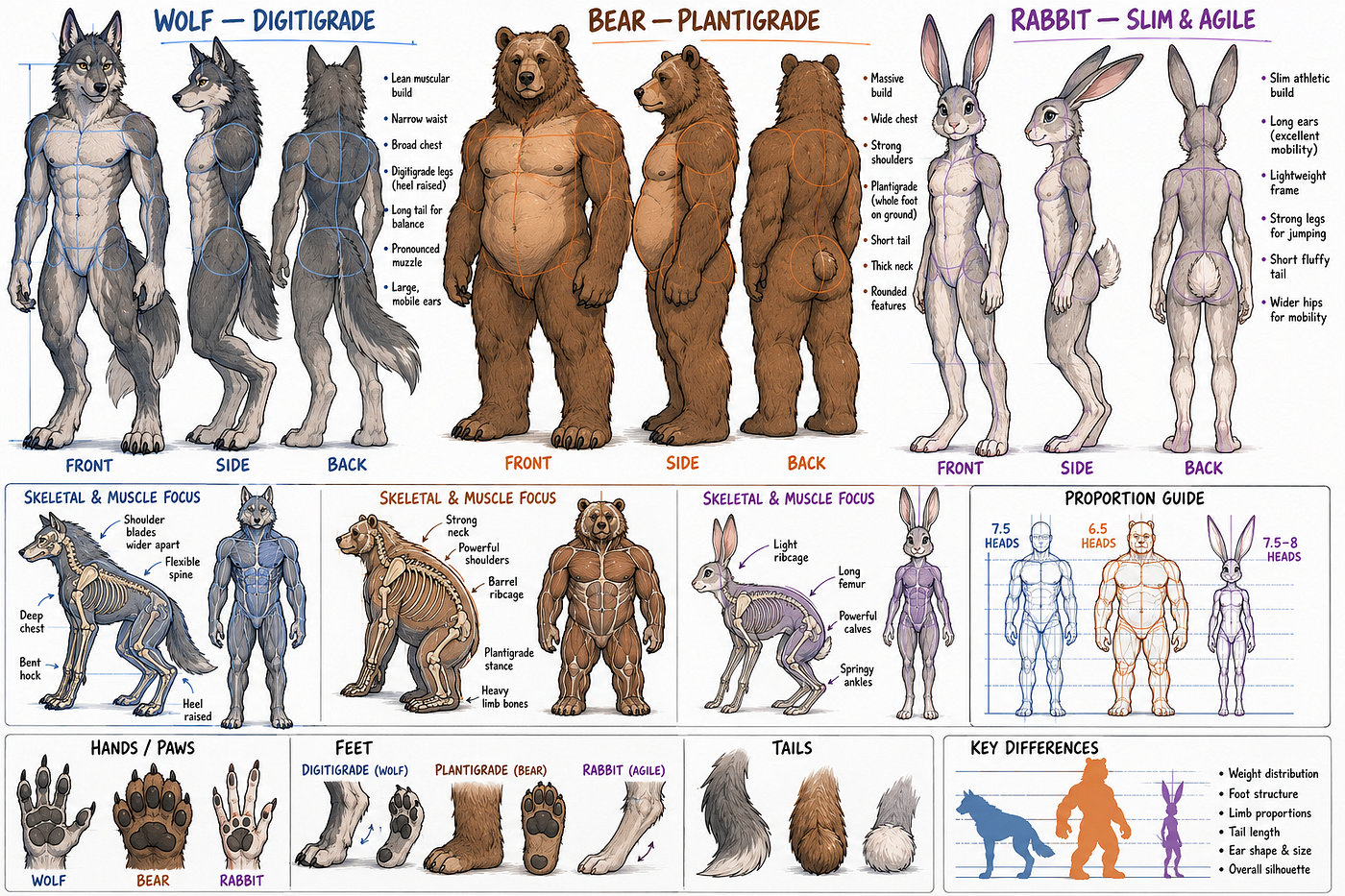
Body proportions are just as important as facial features.
Step 4: Create a Strong Silhouette
If your character became a solid black shape, would someone still recognize them?
Silhouette is one of the most powerful design tools.
Distinctive features might include:
- Long ears
- Curved horns
- Flowing tail
- Large backpack
- Wide coat
- Cape
- Wings
- Oversized scarf
Strong silhouettes make characters memorable before viewers notice color or small details.
Step 5: Choose a Simple Color Palette
Complex color schemes often weaken character designs.
Instead, begin with:
- One primary color
- One secondary color
- One accent color
- One neutral
Keep markings readable.
Good locations include:
- Face
- Chest
- Tail tip
- Hands
- Feet
- Ear interiors
Simple patterns are easier to recognize and reproduce.
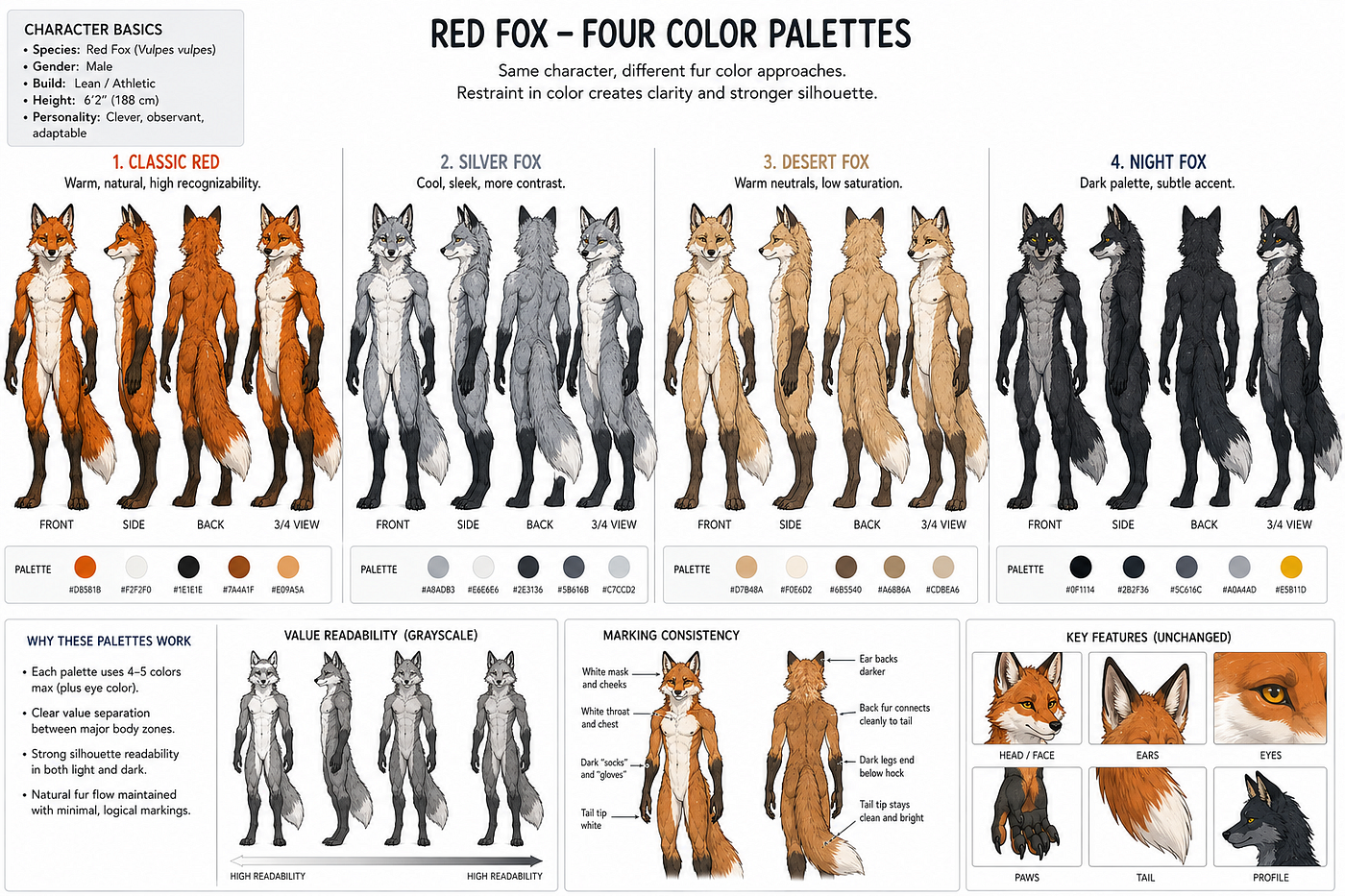
Limiting your palette usually produces a stronger design.
Step 6: Design Clothing That Fits the Anatomy
Great clothing works with the animal instead of fighting it.
Think about practical concerns:
- Tail openings
- Ear clearance for hats
- Horn accommodations
- Sleeve length
- Paw-friendly footwear
- Digitigrade leg construction
- Flexible fabrics around joints
Ask yourself one question:
Could this character comfortably wear this outfit all day?
If the answer is no, reconsider the design.
Step 7: Let Clothing Tell the Story
Outfits communicate personality long before dialogue.
For example:
- Explorers favor layered clothing and sturdy boots.
- Scientists wear clean, practical garments.
- Mechanics use durable fabrics and tool belts.
- Musicians often embrace expressive colors and accessories.
Every garment should support the character’s story.
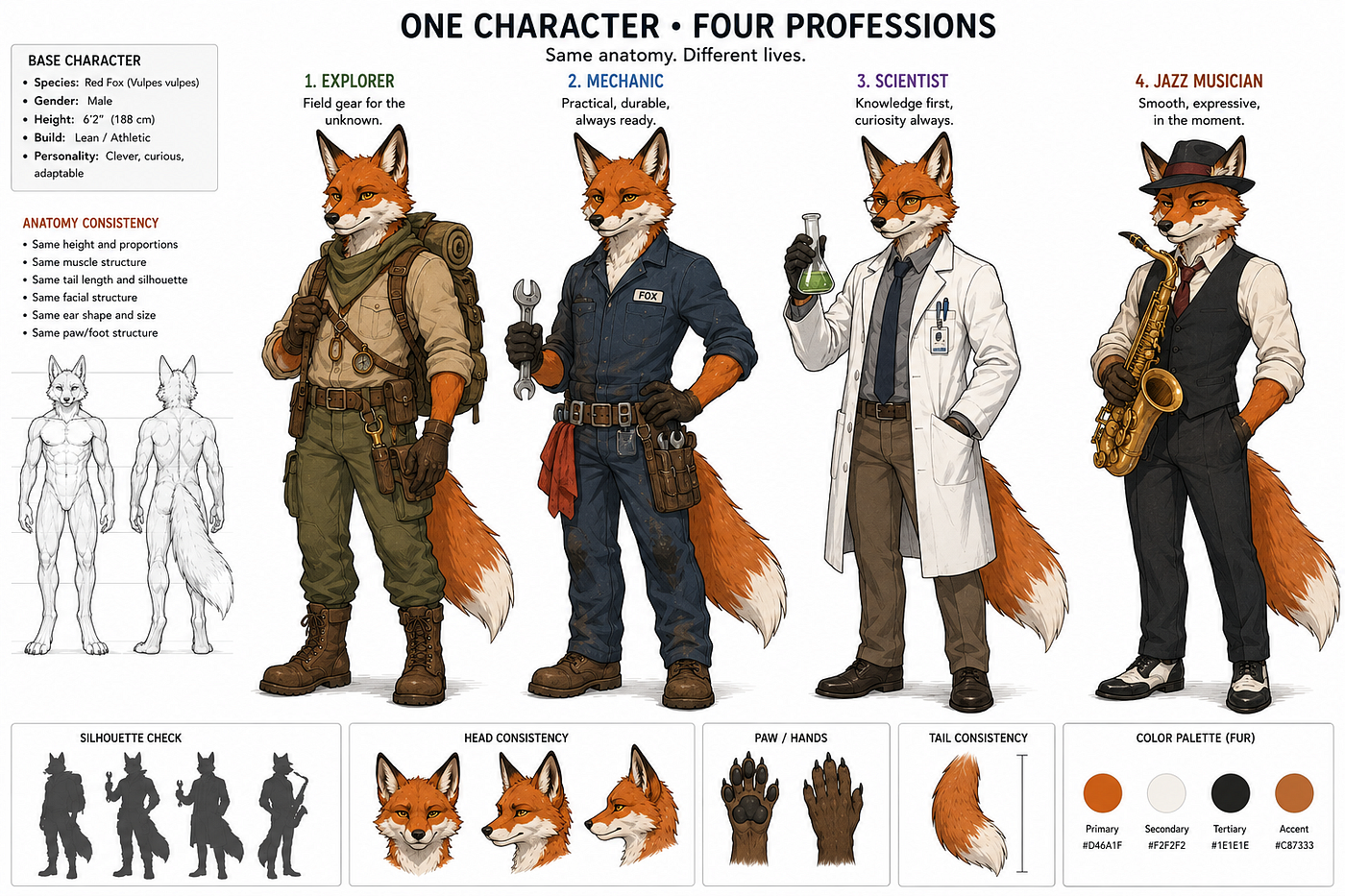
Clothing can completely change how the same character is perceived.
Step 8: Add Signature Details
Memorable characters usually have one or two distinctive features rather than dozens.
Ideas include:
- Signature scarf
- Round glasses
- Fingerless gloves
- Decorative belt
- Tail ribbon
- Facial scar
- Colored hair streak
- Unique jewelry
Choose details that reinforce the character instead of distracting from them.
Step 9: Test the Design
Before calling the character finished, ask:
- Is the species instantly recognizable?
- Does the silhouette stand out?
- Does the clothing fit naturally?
- Are the colors balanced?
- Could someone describe this character after seeing them once?
If you answer “yes” to most of these questions, the design is probably working.
Step 10: Build a Reference Sheet
A reference sheet keeps future artwork consistent.
Include:
- Front view
- Back view
- Left profile
- Right profile
- Three-quarter view
- Facial expressions
- Hands and feet
- Tail
- Color palette
- Clothing details
- Accessory notes
The more complete the reference sheet, the easier it becomes to draw the character consistently over time.
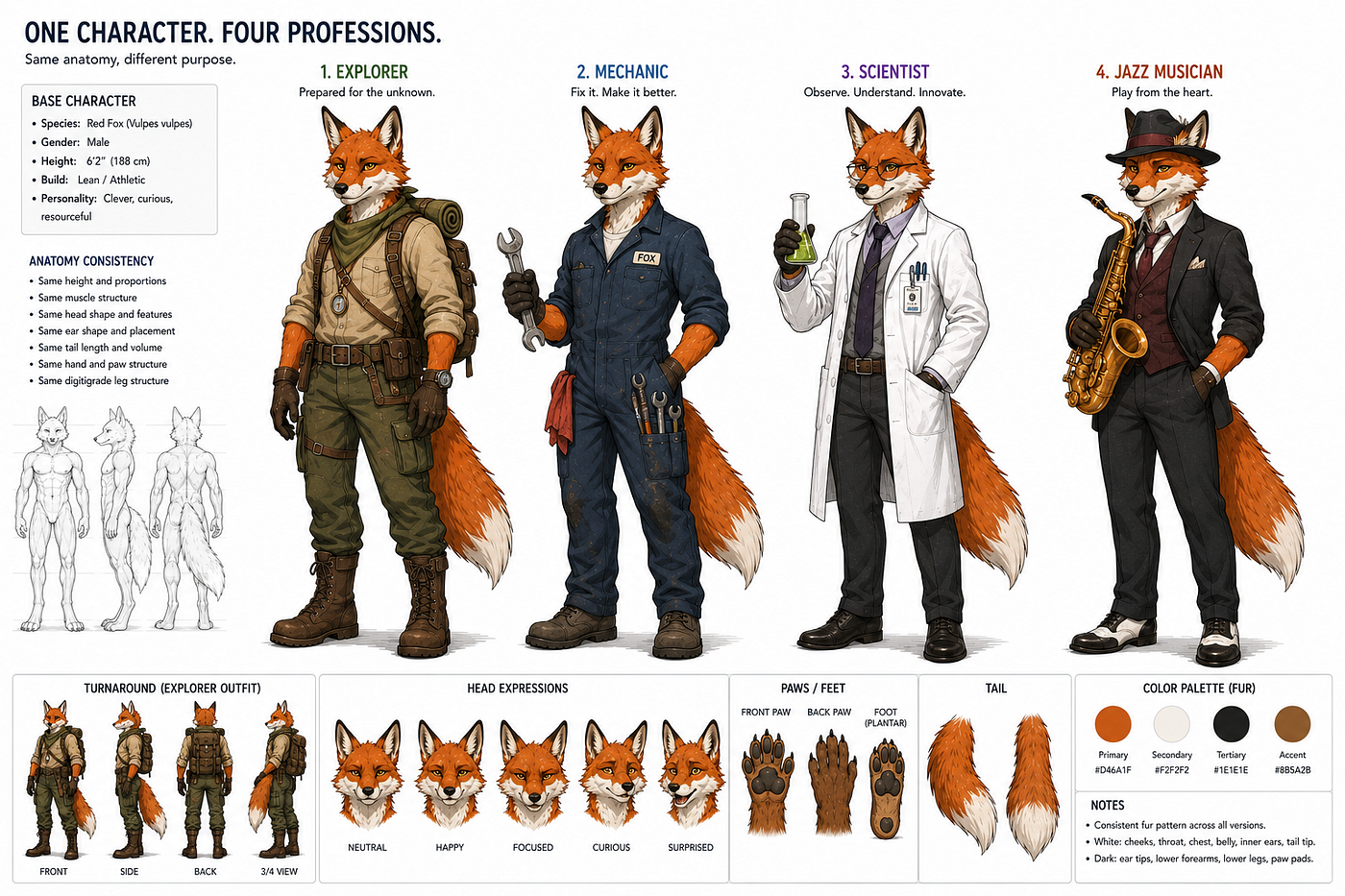
A complete reference sheet makes future illustrations faster and more consistent.
Final Thoughts
Strong anthropomorphic characters aren’t created by adding more details — they’re created by making deliberate choices.
Start with a species that supports your idea. Build a body that reflects its anatomy. Design clothing that works with that anatomy instead of hiding it. Finally, add a few memorable details that reinforce the character’s personality rather than compete for attention.
As you practice this process, you’ll find that memorable characters don’t depend on complexity. They depend on consistency. When anatomy, clothing, silhouette, and personality all work together, the result is a character that feels believable, distinctive, and immediately recognizable.
Images made using the Anthropomorphic Character Architect GPT.
메타데이터
- post_id
- 73a5e35a0466
- slug
- creating-great-anthropomorphic-characters-a-step-by-step-design-guide-73a5e35a0466
- url
- https://medium.com/creating-custom-gpts/creating-great-anthropomorphic-characters-a-step-by-step-design-guide-73a5e35a0466
- canonical_url
- https://medium.com/creating-custom-gpts/creating-great-anthropomorphic-characters-a-step-by-step-design-guide-73a5e35a0466
- author_url
- https://medium.com/@ttrimm
- status
- ok
- fetched_at
- 2026-07-09 16:18:44