The Supercomputer Sleeping in Your Drawer
There is a graveyard in almost every home. It is not in the backyard. It is not marked on any map.
The Supercomputer Sleeping in Your Drawer
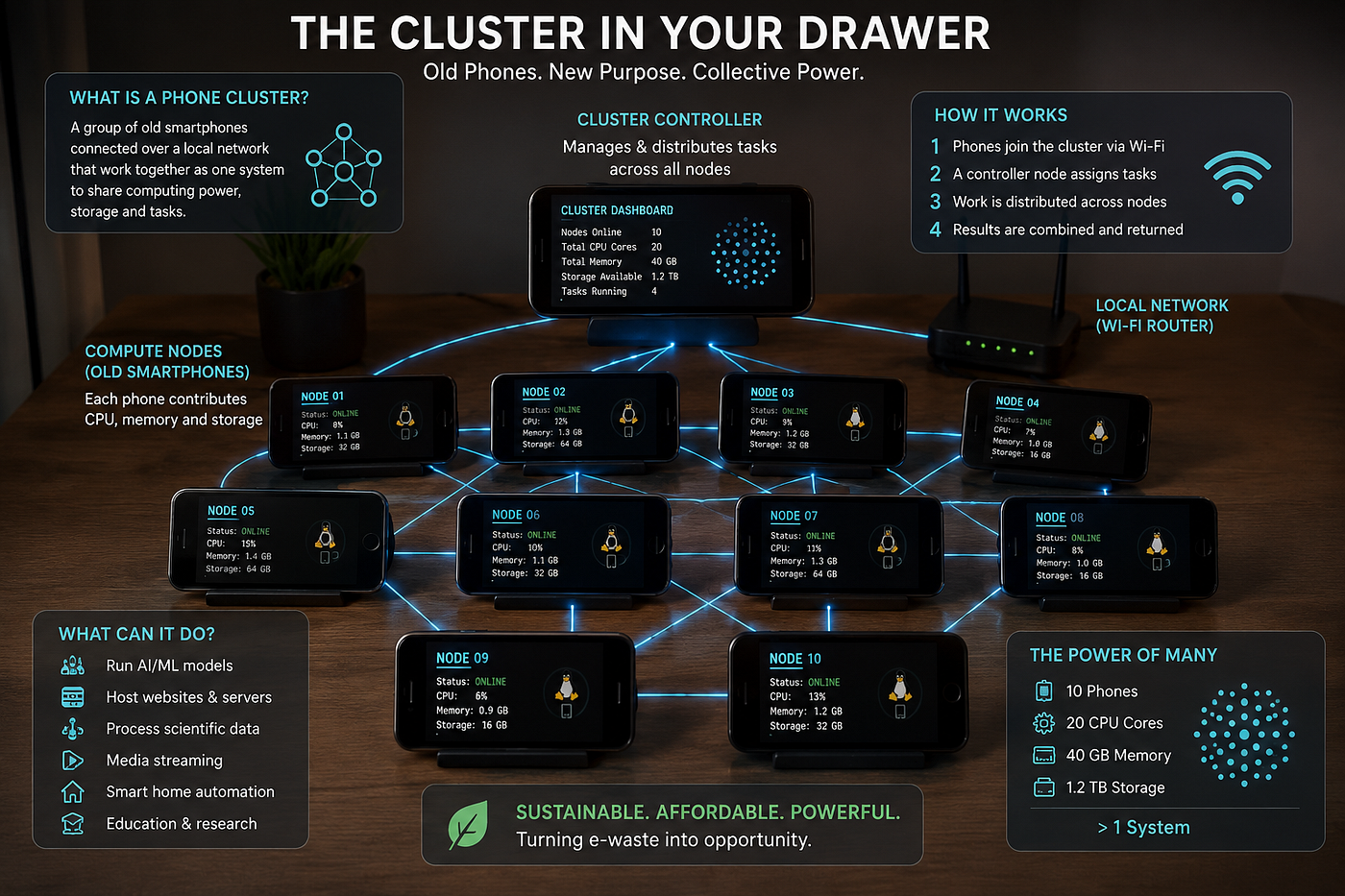
The Super Cluster Model Explained
There is a graveyard in almost every home. It is not in the backyard. It is not marked on any map.
It exists inside drawers, cupboards, and forgotten cardboard boxes.
It is where old smartphones go to die. Not because they have stopped working. But because something newer arrived.
A brighter screen. A faster processor. A better camera. The old phone is switched off, pushed aside, and eventually forgotten.
Yet each of these forgotten devices contains a remarkable amount of power. More power than the computers that guided astronauts to the Moon. More memory than the machines that once filled entire rooms.
And there are billions of them.
For years, technology companies have encouraged us to think about the next device. The next upgrade. The next purchase.
Google appears to be asking a different question.
What if the future is hidden inside the devices we already own?
Recent developments in Android suggest that old smartphones may be given a second life. By allowing them to run Linux-based environments, Google is quietly transforming them from outdated phones into miniature computers.
Imagine a shelf lined with old smartphones.
Five devices. Ten devices. Twenty devices. Each one sleeping quietly. Now imagine connecting them. Not physically. Digitally. Suddenly, they stop being old phones.
They become a cluster. A collective mind.
A network in which every discarded device contributes a small piece of processing power.
The concept is not new. The world’s largest supercomputers are built on a simple idea: many machines working together as one.
What is new is the scale.
Humanity has accumulated billions of unused smartphones. Together, they represent one of the largest untapped computing resources ever created.
The phones lying forgotten in our homes could analyze scientific data, train artificial intelligence models, host community networks, support education, or power local digital services.
Not individually. Collectively.
A smartphone that appears worthless on its own becomes valuable when joined to thousands of others.
Like a single ant in a colony. Like a single drop in a river. Like a single voice in a crowd.
Perhaps that is Google’s larger vision.
Not merely extending the life of a phone. But extending the life of an entire generation of technology.
The environmental implications are obvious. Fewer devices discarded. Fewer resources extracted. Less electronic waste.
The economic implications are equally profound. Communities with limited access to expensive infrastructure could build computing clusters from devices they already possess.
And somewhere inside this idea lies a quiet irony. For years we have been chasing bigger, faster, newer machines. Meanwhile, a vast supercomputer has been assembling itself in our homes.
Piece by piece. Drawer by drawer. Waiting patiently for someone to switch it back on.
메타데이터
- post_id
- 73aab640da4e
- slug
- the-supercomputer-sleeping-in-your-drawer-73aab640da4e
- url
- https://medium.com/slow-burn-stories/the-supercomputer-sleeping-in-your-drawer-73aab640da4e
- canonical_url
- https://medium.com/slow-burn-stories/the-supercomputer-sleeping-in-your-drawer-73aab640da4e
- author_url
- https://medium.com/@nisachark
- status
- ok
- fetched_at
- 2026-06-21 07:44:09