Reformation of Christianity: Relationship to Nature and Earthcare
Wrapping up a long series on the reformation of Christianity, we look at how Christians’ relationship with nature and with caring for the…
Reformation of Christianity: Relationship to Nature and Earthcare
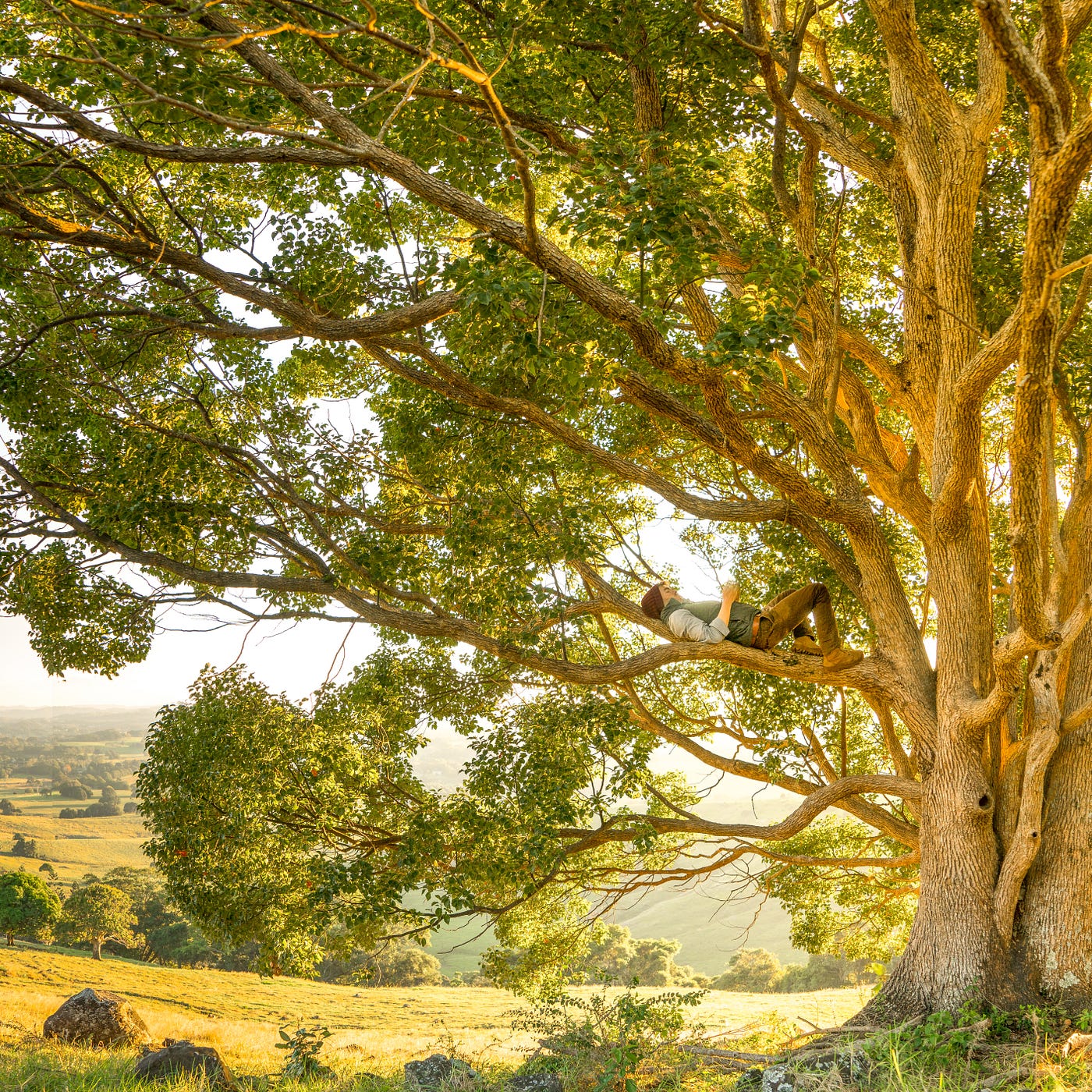
Photo by Rob Mulally on Unsplash
Wrapping up a long series on the reformation of Christianity, we look at how Christians’ relationship with nature and with caring for the earth is changing and needs to change.
One of the most profound changes that has occurred in my lifetime is the realization that we cannot continue on the path that we are on without spoiling our nest. The global population of 8 billion will grow to 10 billion in thirty years. We’re living longer, better, more comfortable lives in the developed world than ever before. But we are learning that the very great blessings of science and technology applied to making our lives more comfortable are ruining our planet.
Christianity’s role in the earthcare crisis
Christianity is seen by many as a key component of the climate problems, now referred to as a crisis. As Christianity has served as the primary underpinnings of the Western world since the end of the Roman Empire, and most of the developments in civilization that contribute to the climate crisis arose in this civilization, Christian belief itself is viewed by some as a major culprit. Genesis says that after God created humans he gave them the charge to subdue the earth and gave them dominion over the entire earth and all living things. Look what we have done with that charge.
The emergence of the environmental movement with its exposure of harm to the environment, ecosystems, species and now climate is the most important development in our culture. Instead of uniting nations, cultures, and factions around a common global threat, the movement has contributed to the deep divisions we are experiencing rather than diminishing them. This is a tragedy and could prove disastrous. Climate activism is both a victim and a cause of the deep polarization affecting our nation and others.
The issue of environmental action in general and climate change in particular is also showing deep divides within Christianity. Some see it as an effort by the far left to misuse climate science to support a radical anti-capitalist agenda aimed at upending the economic and political foundations on which we have built our lives. Others see “climate deniers” as selfish backwoods ignoramuses who are unwilling to relinquish their SUVs and African safaris despite the clear and compelling facts.
This is one area where the spirit of the age as in environmental and climate fears must and should deeply involve Christians and their faith. We see this happening already. As one example, BioLogos, the evangelical faith and science non-profit started by Francis Collins of the Human Genome Project fame, has been aggressively educating its conservative constituents about the role of earthcare in Christian theology.
Deeper engagement with nature
Part of the reformation of Christianity must be a serious engagement by Christians on this issue. That will require a rethinking about God, nature and the role of humans in creation. Part of the “spiritual but not religious” movement is a new attitude toward nature. Exposure to other belief systems such as indigenous religions, Confucianism, Daoism, Hinduism and Buddhism feature strongly in this development. (I’ll explore why Christians can and must engage more with these other belief systems in the next section.)
One of my favorite writers on religion, Karen Armstrong, highlighted this in her new book called Sacred Nature: Restoring Our Ancient Bond with the Natural World. Non-Christian belief systems such as those mentioned above often have a deeper understanding of the human-nature bond than traditional Christianity.
Rethinking Genesis
If Christians are to rethink their relationship to nature, we must understand how we have developed the deep separation that is characteristic of the faith today. The translation of a particular word in Genesis 1 may have something to do with it. Jeff Benner writing for the Ancient Hebrew Research Center notes that the Hebrew word kavash is translated “subdue” in most translations including the Revised Standard Version:
Genesis 1:28 (RSV) And God blessed them, and God said to them, “Be fruitful and multiply, and fill the earth and subdue it; and have dominion over the fish of the sea and over the birds of the air and over every living thing that moves upon the earth.”
This word, kavash, Benner says:
“… literally means to place your foot on the neck of your conquered enemy signifying a submission of the enemy to his defeater. Figuratively this verb means to bring a people or nation into submission.”
Interestingly, this ancient Hebrew word according to Benner is also the basis of a popular saying: “Put the kibosh” on something. It means to decisively end it. Too often it seems that this idea of subdue has driven our understanding of our relationship to nature and God’s creation.
Another related way we have understood God’s commands in Genesis is with the idea of “dominion.” Benner explains that the Hebrew word for dominion, radah, has some important implications:
“The Hebrew verb radah is related to other words which have the meanings of descend, go down, wander and spread. This verb literally means to rule by going down and walking among the subjects as an equal.
The use of the two Hebrew verbs radah and malak imply that that man is to rule over the animals as his subjects, not as a dictator, but a benevolent leader. Man is also to walk among and have a relationship with his subjects so that they can provide for man and that man can ‘learn’ from them.”
There are two versions of creation which include the initial instructions given by God to humans. Genesis 2:15 has a quite different meaning:
“The Lord God took the man and put him in the Garden of Eden to work it and take care of it.”
Taking care of a garden as a gardener suggests a different view than subdue. It is also consistent with the more contemporary understanding of what being created in the image of God means. Contemporary scholars of ancient Mid-Eastern culture and history have noted that ancient kings placed statues or images of themselves in the remote provinces of their kingdoms to signify their presence and rule over that land. This understanding of imago dei is consistent with the charge God gave to humans to rule over the land, not in the sense of exploit but as a garden that they were to care for. No king would want the managers, regents or caretakers assigned to care for the king’s property to despoil it.
What would a deeper Christian engagement with nature look like?
Within many ancient traditions that are brought to the foreground today by the “spiritual but not religious” advocates is the worship of nature as God. This is often pantheism in a stronger version than even Spinoza ultimately promoted.
A deeper Christian engagement with nature would not be pantheistic in equating God with nature as if they are one and the same substance. God, in the Biblical view, stands outside of creation. But, it would include a far deeper understanding of how God views his creation and the underlying unity of all creation through the Spirit.
God surveyed what he had made and declared it good, very good. There can be no question of God’s deep love, affection and concern for this cosmos. The greatest example of that in the Christian story is the incredibly high price paid to rescue it from the corruption that characterizes at least the earthly portion of it. It is not merely humans he wishes to restore, but as Paul wrote in Romans, all of creation is groaning as in the pains of childbirth. God’s sacrificial death was aimed at reuniting all of creation with the creator.
G. K. Chesterton noted God’s childlike pleasure he takes in creation. When a child is delighting in an activity such as being swung over her father’s head, the child says: Do it again! And again, and again. When God observes the beauty of a sunset, he says: Do it again! And again, and again.
When we enter deeply into nature and experience the wonder, majesty and awesomeness of it, we experience a unity with the Creator in a way not easily replicated by other human experience. Health studies are focusing on the importance of spending time in nature, going for walks in the woods and sitting quietly enjoying the wonder of it all. Is this in part because in this experience we come closer to the healing love that is responsible for all?
Unity
Nature is an essential way for us to connect with God and experience even in a small way the unity we were intended to have with our creator. We are also discovering through both science and rich spiritual experience that there is a deep and remarkable unity at the foundation of the created world. This seems to be the universal lesson of mystics from all types of faiths and throughout history. This unity now includes the mystery of entanglement, which many scientists and philosophers today believe is at the heart of what nature is all about. It is significant that this year’s Nobel prize for physics went to two physicists who are leaders in demonstrating entanglement as a fundamental property of creation.
Science is also showing other other forms of unity. For example, the role that fungi play in connecting vast networks of trees and plants. We now know that trees and plants communicate or “talk” to each other. This encourages many who believe and want to believe that the connectedness of all things means that we should be able to share in that connectedness if only we can learn better how to communicate.
There is much more within science that shows the mysteries within nature. The effort to reduce the marvelous diversity of life to purely naturalistic and random causes without intent, design or purpose seems to be losing steam. I recently wrote about biologists becoming a bit more honest about the phenomenon of agency in life. A very recent story about the miraculous or “spooky” nature of spider webs brings to mind, again, how impoverished is the idea that such abilities are merely emergences of the purposeless “design” of evolution. Evolutionary processes are a major part of nature and therefore the created world. But exclusive evolution (where evolution explains all of life including origin and history) is a faith-based belief system that is coming apart quickly as knowledge of life and its evolution increases. The deeper understanding of nature supports the intuition that most have, regardless of belief system, that there is something powerful, wonderful and magical going on in nature. And that somehow, some way, intention is at the bottom of everything.
A new focus on the Spirit
Christology is the theological term for the study of Christ and what that means for the faith. Pneumatology is the study of the Holy Spirit, pneuma being one translation of the word spirit. For the reformation of Christianity that I envision –– including a far deeper engagement with nature ––pneumatology must take a major step forward.
As theologians such as Wolfhart Pannenberg have pointed out, the Christian focus on the Holy Spirit as the “paraclete” — the Comforter sent by Jesus after his exit — has resulted in a loss of focus on the role of the Spirit in creation, in the operation of the cosmos and as the unifying force that is experienced when we open ourselves up more to nature and other belief systems. I have tried to address this a bit in a number of posts on Medium dealing with the Spirit.
One of the most fascinating to me is an idea that I believe holds great promise to bridge some major divides. That idea is dual aspect monism. The late physicist-priest, Sir John Polkinghorne, brought this idea to my attention and I dug more deeply into it through the writings of Harald Atmanspacher. Some of the best minds in physics, psychology and philosophy developed this idea which in essence says that at the very bottom of all there is a unity from which both mind and matter emerge. David Bohm was an advocate and explored his own version in-depth in what he called the implicate and explicate order. He and Polkinghorne both focused on something called “active information” which for Bohm and Hiley is one important way to understand entanglement.
This is one idea that brings the Biblical teaching of the Spirit that “hovered” over the chaos of creation into our understanding of the cosmos from science. Tertullian, called the father of Latin theology, in his teaching on the Trinity taught that the Spirit was the substance from which everything emerged. This is consistent with the idea of dual aspect monism. There are other intriguing and contemporary ideas that can also serve to bring the Spirit more directly into the picture including the fifth dimension as discussed by Tim Anderson and Lisa Randall. Bernardo Kastrup’s idealism of Mind being all, Jung’s notions of archetypes and synchronicities, Schopenhauer’s thoughts on Will could all find hold in a much broader view of the Spirit both within and outside the cosmos.
A deeper understanding of the Spirit may provide a much stronger basis in science and philosophy for the contemporary inclination to see the deep connection between our lives and consciousness with all of nature. The mystery of consciousness requires new thinking, new approaches and perhaps as some have said, new physics. It may also require new theology about the presence and role of an immanent Creator operating through the Holy Spirit. We may find that Spirit exists within every quark and banana as in panpsychism and the unity of consciousness as perceived by William James, Carl Jung and many others is but another way of identifying the Spirit of God as in all and through all. James’ “mother-sea” and ideas of universal consciousness may very well find Christian acceptance and expression within the work of the Spirit.
That leads us to finding and accepting the truth wherever we may find it.
메타데이터
- post_id
- 73b6c35c22c8
- slug
- reformation-of-christianity-relationship-to-nature-and-earthcare-73b6c35c22c8
- url
- https://medium.com/@gerald-baron/reformation-of-christianity-relationship-to-nature-and-earthcare-73b6c35c22c8
- canonical_url
- https://medium.com/@gerald-baron/reformation-of-christianity-relationship-to-nature-and-earthcare-73b6c35c22c8
- author_url
- https://medium.com/@gerald-baron
- status
- ok
- fetched_at
- 2026-07-24 11:50:03