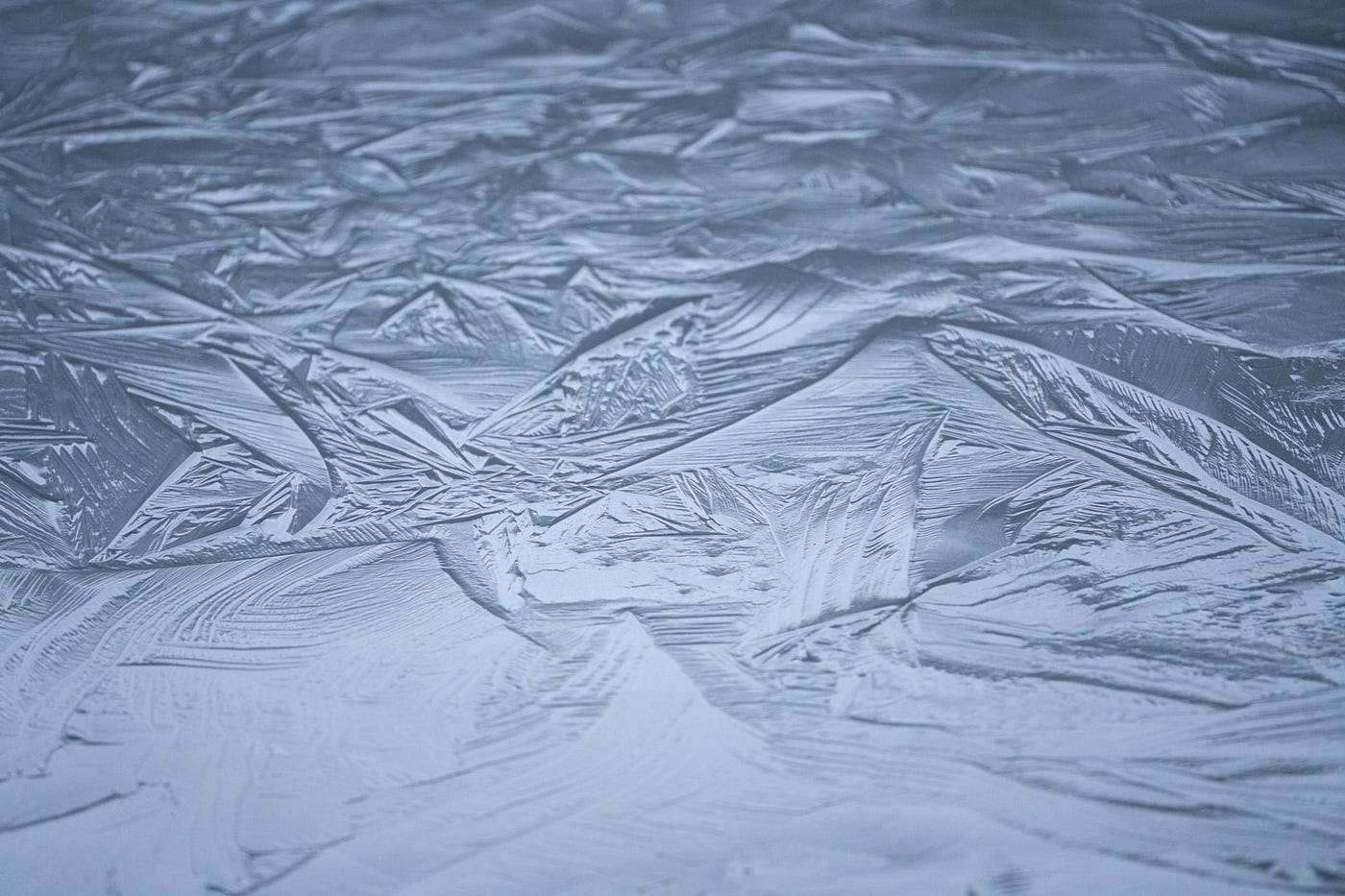
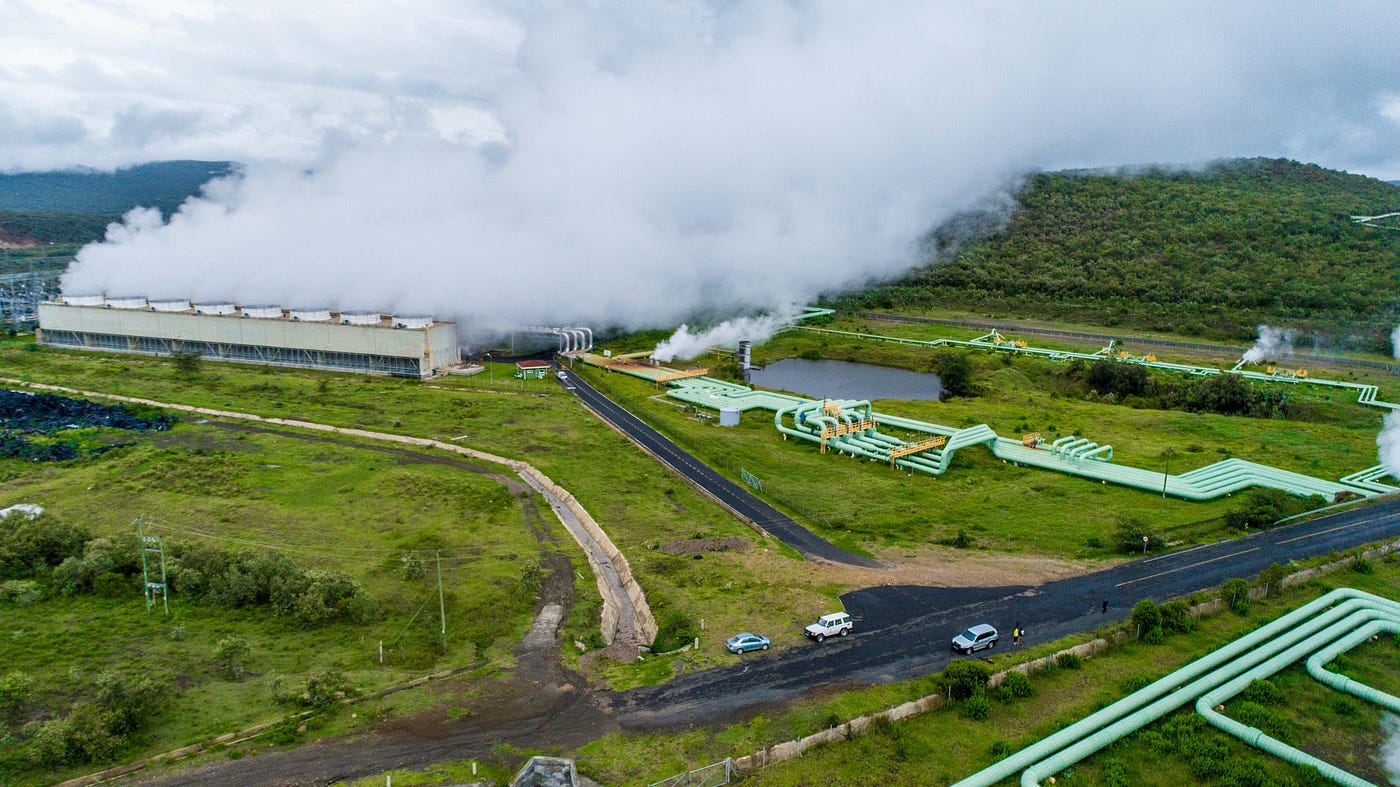
Antarctica Is Done Being the Coldest Argument
We kept it frozen in our heads so we could keep everything else exactly as it was
Antarctica Is Done Being the Coldest Argument
We kept it frozen in our heads so we could keep everything else exactly as it was

Antarctica Is Done Being the Coldest Argument (created by author)
It rained on a glacier in Antarctica this month, in the middle of winter, in the dark. And every part of that is wrong.
June is the dead of the austral winter, when the sun barely clears the horizon and the continent should be sealing itself shut under fresh snow. Glaciers should be feeding then, thickening. Instead, a Chilean glaciologist named Luis Muñoz climbed one on King George Island, near the tip of the peninsula, and got soaked. He watched the island around him turn from white to brown and grey and green as the snow ran off the rock. It was 4.6°C (40°F) up there, where twenty centimeters of snow should have been sitting.
A hundred and sixty kilometers north, at Argentina’s Esperanza base on the tip of the Trinity Peninsula, the thermometer read 15.4°C (60°F) when the average maximum is near -6°C. The base sits the same distance from the equator as central Sweden sits on the other side of the planet, except this is the latitude where winter is supposed to be virtually endless.
Farther up the peninsula, Marambio hit 11.8°C (53°F), against a normal June high near -11°C. San Martín reached 9.4°C (49°F). In forty-eight hours, three Argnetine bases smashed their winter records because a huge swath of Antarctica ran roughly 20°C above normal, in the one season when the planet’s largest ice store is supposed to be tightening, not sweating.
One warm winter in Antarctica will not raise sea levels on its own. Scientists are clear about that. But the freak warmth on the peninsula and the Pacific Ocean heating up are not separate headlines. They are the same extra heat showing up in two places, at the bottom of the world and near the equator.
And they are both speaking the same language.
A Bad Year That Becomes A Spiral
Forget the glaciers for a second. The ice that did the damage is the ice nobody photographs: sea ice, the frozen crust that spreads across the open ocean each winter like a lid on a pot.
This winter, a piece of that lid the size of France didn’t form. And it’s the third time in four years. The ice might not come back. Ever. The armor for everything behind it, gone.
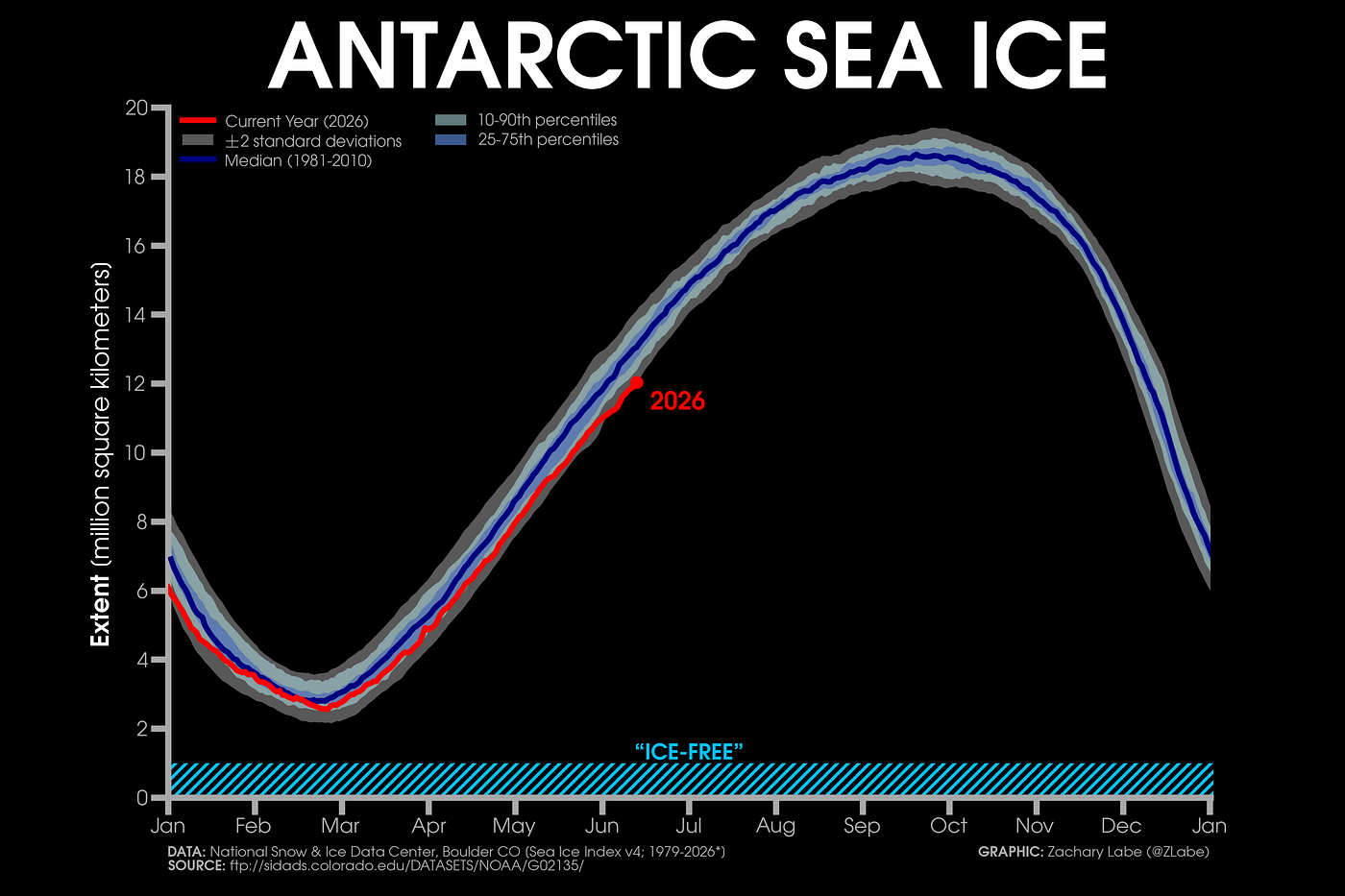
(Source: Zack Labe)
White ice bounces sunlight back to space; dark water drinks it. The ice keeps the sea beneath it cold and breaks the waves before they hammer the glaciers at the coast. Take the armor away and every punch aimed at the armor lands on the glacier instead.
It gets worse, because this is where a bad year becomes a spiral. With the lid gone, the warm ocean underneath breathes its stored heat straight up into the sky. In the worst spots, the heat pouring out of the open sea in midwinter roughly doubled. The warmer sky spins up more storms, the storms shatter more ice, round it goes. So when the warm wind came down the peninsula in June, it crossed a sea that had lost its white skin and couldn’t cool the air the way it used to.
Nobody’s run the exact math, but the missing ice almost certainly made the heatwave worse.
That’s the rain on the glacier, explanied. Warm air, naked water, melt where there should have been snow, the loop feeding itself.
Next to that missing ice sit two glaciers: Pine Island and Thwaites. Together, they throw off more than a third of all the ice Antarctica loses to the sea. Scientists nicknamed Thwaites “the plug,” because it physically holds back a basin of ice the size of a small country. Melt Thwaites alone and every ocean on Earth rises 60 centimeters (about two feet). That may not sound like the end of the world until you’re in a coastal city and realize the water doesn’t stop at the old line and climbs the rivers, comes up through the drains, salts the wells, and lifts the starting height of every storm so the next flood begins two feet above the last.
Thwaites Glacier, “the plug” (Source: ESA)
The experts don’t agree on how fast, and the cheap version of this story would hide that. The biggest research effort ever aimed at Thwaites stated that a full runaway collapse this century is less likely than the scariest early guesses, while warning the melt keeps speeding up for centuries regardless. Other teams, watching the floating front crack apart, think the countdown already started.
The fight isn’t whether Thwaites goes. It’s when. And these timelines keep getting rewritten the same direction: the ice moves faster than the models said.
The Old Man Who Keeps Being Early
There’s a scientist named James Hansen, and being right too soon has made him hard for his own field to love.
He told the US Senate in 1988 that the warming had already started. Lately, he’s pushing a claim many colleagues think goes too far: the planet runs hotter for every ton of carbon than the official numbers say. His prime suspect is the last thing you’d guess. Clean air.
[embed]
For a century, the soot and sulfur from ships and smokestacks did something nobody intended. It seeded bright hazy clouds over the oceans that reflected sunlight away and kept us cooler than our carbon should have allowed, a sunshade we never knew we were holding. Then, we cleaned up that pollution for good reasons (our lungs among them) and tightened the rules on dirty ship fuel. This lowered the sunshade. And the heat it had been hiding is now showing up faster than the cautious models expected.
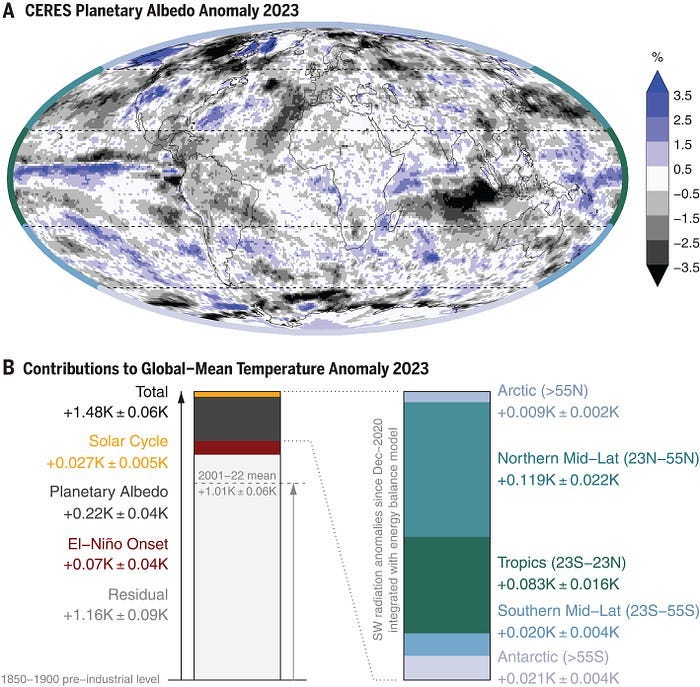
Synthesis of contributions to Earth’s surface temperature anomaly 2023 (Source: Recent global temperature surge intensified by record-low planetary albedo)
Hansen leans on maesurements, not vibes. Satellites watching Earth’s energy budget show the planet soaking up heat at twice the rate it did two decades ago. His bigger claim (that the climate swings harder than the textbooks say) got support from an unglamorous corner: scientists reading ancient groundwater and ocean mud found the last ice age ran colder than assumed, which means the same carbon moves temperature more than the official figure allows.
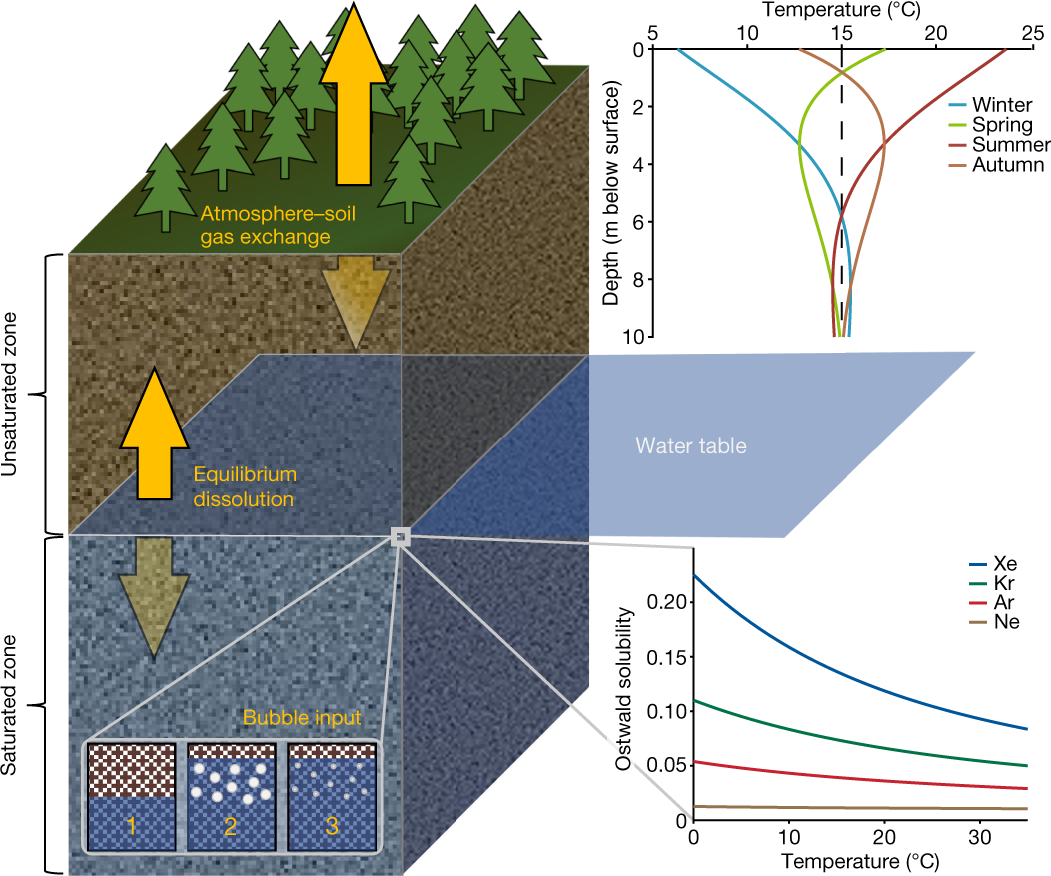
Overview of the noble gas palaeothermometer and its key components (Source: Widespread six degrees Celsius cooling on land during the Last Glacial Maximum)
Plenty of respected researchers still think he overcooks it, that ordinary carbon and methane plus a warm Pacific phase cover the recent spike without the aerosol drama. Hansen, never the diplomatic type, called the next couple of years an “acid test” between his read and theirs, and turned it into a horse race, casting the more cautious forecaster Zeke Hausfather as the fading old nag.
The early laps lean Hansen’s way. Two years from now will settle most of it after the Pacific casts its vote.
On June 11, NOAA made it official: El Niño has arrived, with a 63 percent chance it grows into a “very strong” one by September, and possibly ranking among the biggest ever measured. El Niño is the tropical Pacific breathing out a vast store of heat it had been holding underwater, and that massive heat release reshuffles weather across the planet for more than a year. And it’s landing on a year where more than 70 percent of the globe already ran hotter than normal through the first five months, against barely 1 percent running cool.
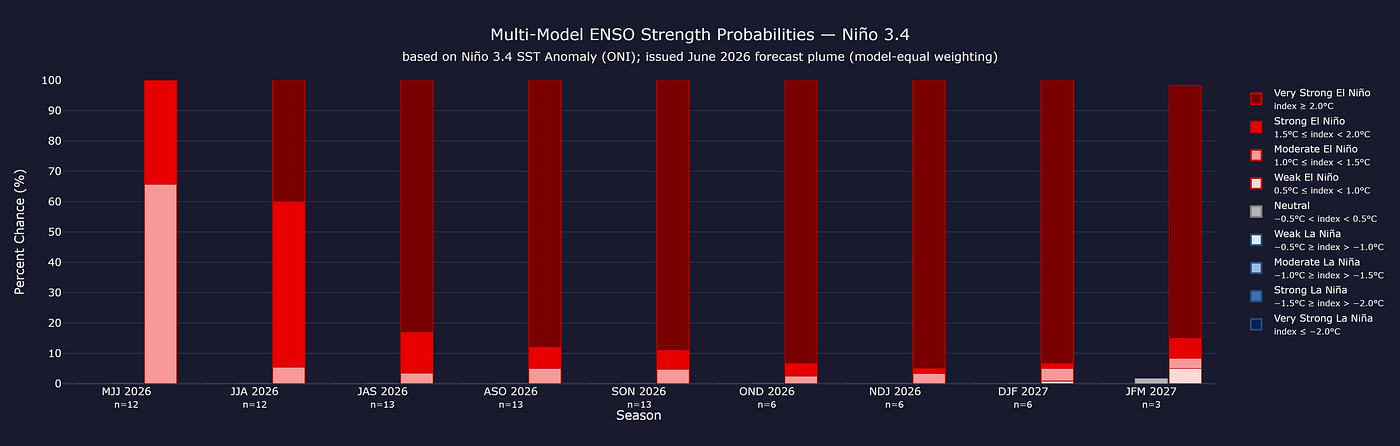
Source: Climate Brink
This makes 2027 (if not 2026) very likely to be the hottest year ever recorded.
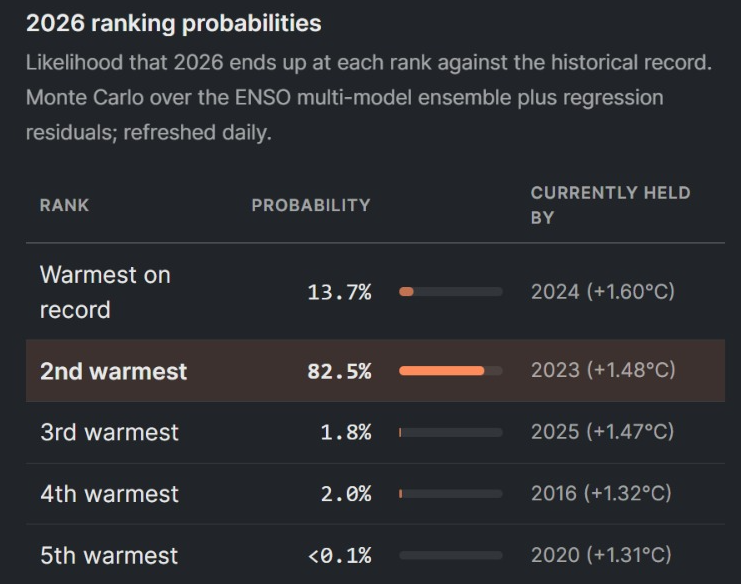
Source: Climate Brink
The Heat Was Always Somewhere Else
A glacier you’d never see, a sea you couldn’t find on a map, a year your grandkids would inherit. The gap between here and there, now and later, was wide enough to park a worldview in.
The continent of white infinity sweating in its own winter dark, on a sea that won’t freeze, while the Pacific stacks a fresh record on an already-way-too-hot year, closes that gap fast.
This is where I’m supposed to promise the technology saves us. Some of it helps, really. Solar’s cheaper than fossil power across most of the planet now, and sunlight has one quality no oil field ever had: nobody can own it. But listen to how it gets sold. The promise is ‘clean’ energy, and what it delivers is cleaner energy. Those missing letters are the whole game. The panel still comes from minerals ripped out of someone’s ground and hauled across a warming ocean on a diesel ship, to feed the same hunger that warmed the ocean.
Swap the fuel and keep the appetite, and you reach the same wall by a nicer road.
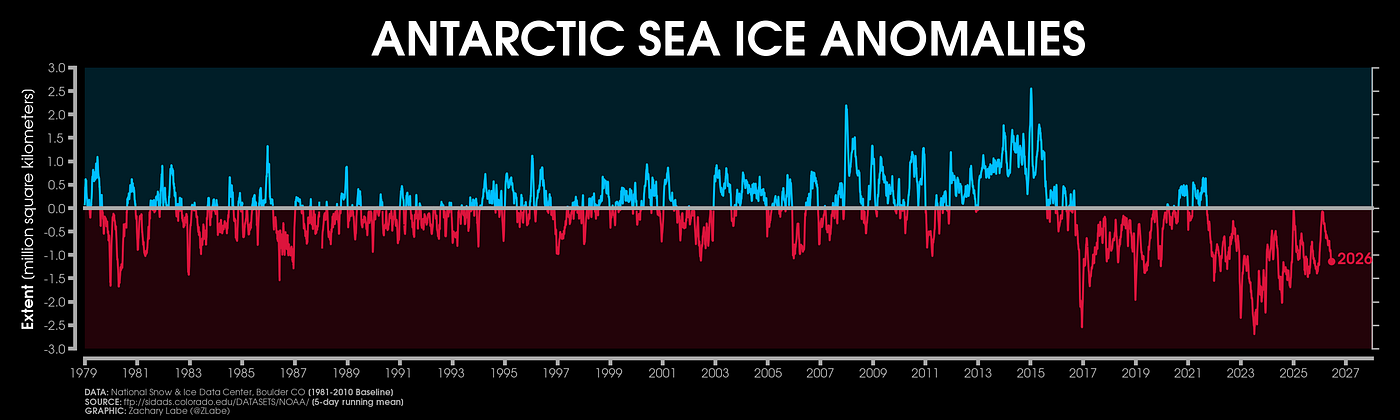
(Source: Zack Labe)
I grew up on the shore of a glacier-fed lake in Patagonia, drinking meltwater off the Andes, raised on the idea that the cold at the bottom of the world was the one thing too big and too frozen and too endless to ever be in a hurry.
Antarctica was our favorite excuse: if it stayed frozen, we could pretend everything else was fine. But the coldest place on Earth was never going to stay the coldest argument.
I help curious minds who need a relatable pen put their sharpest ideas into words: stories, perspectives, and insights that actually get read. If you have something to say, reach out!
If you want to support my work, here is the place to do so. If not, thanks for reading anyway!
메타데이터
- post_id
- 73fbacce9520
- slug
- antarctica-is-done-being-the-coldest-argument-73fbacce9520
- url
- https://medium.com/southern-winds/antarctica-is-done-being-the-coldest-argument-73fbacce9520
- canonical_url
- https://medium.com/southern-winds/antarctica-is-done-being-the-coldest-argument-73fbacce9520
- author_url
- https://medium.com/@rickylanusse
- status
- ok
- fetched_at
- 2026-06-20 20:29:01