A View With No Room
Coming out then coming back to a ‘non-home’
A View With No Room
Coming out then coming back to a ‘non-home’

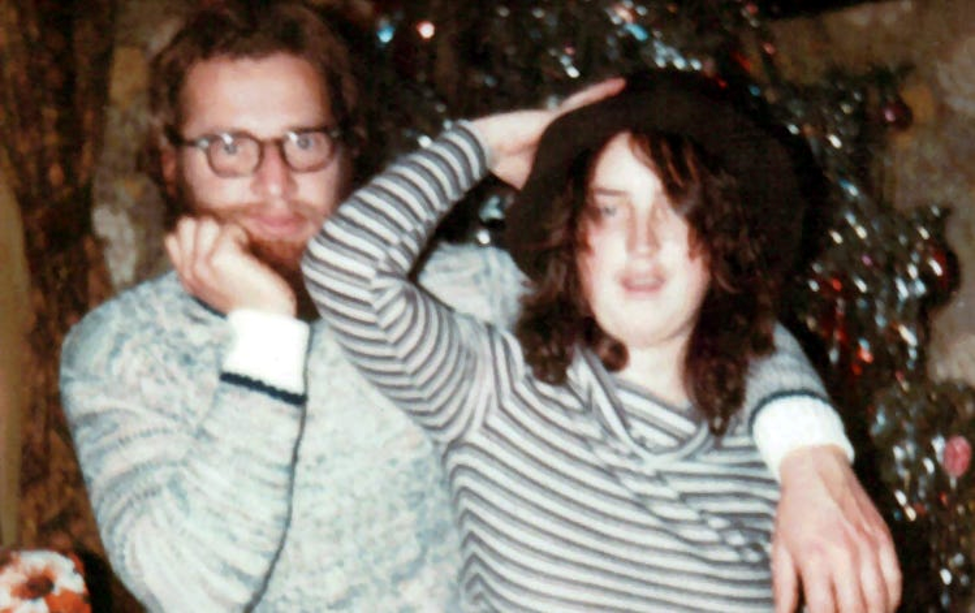
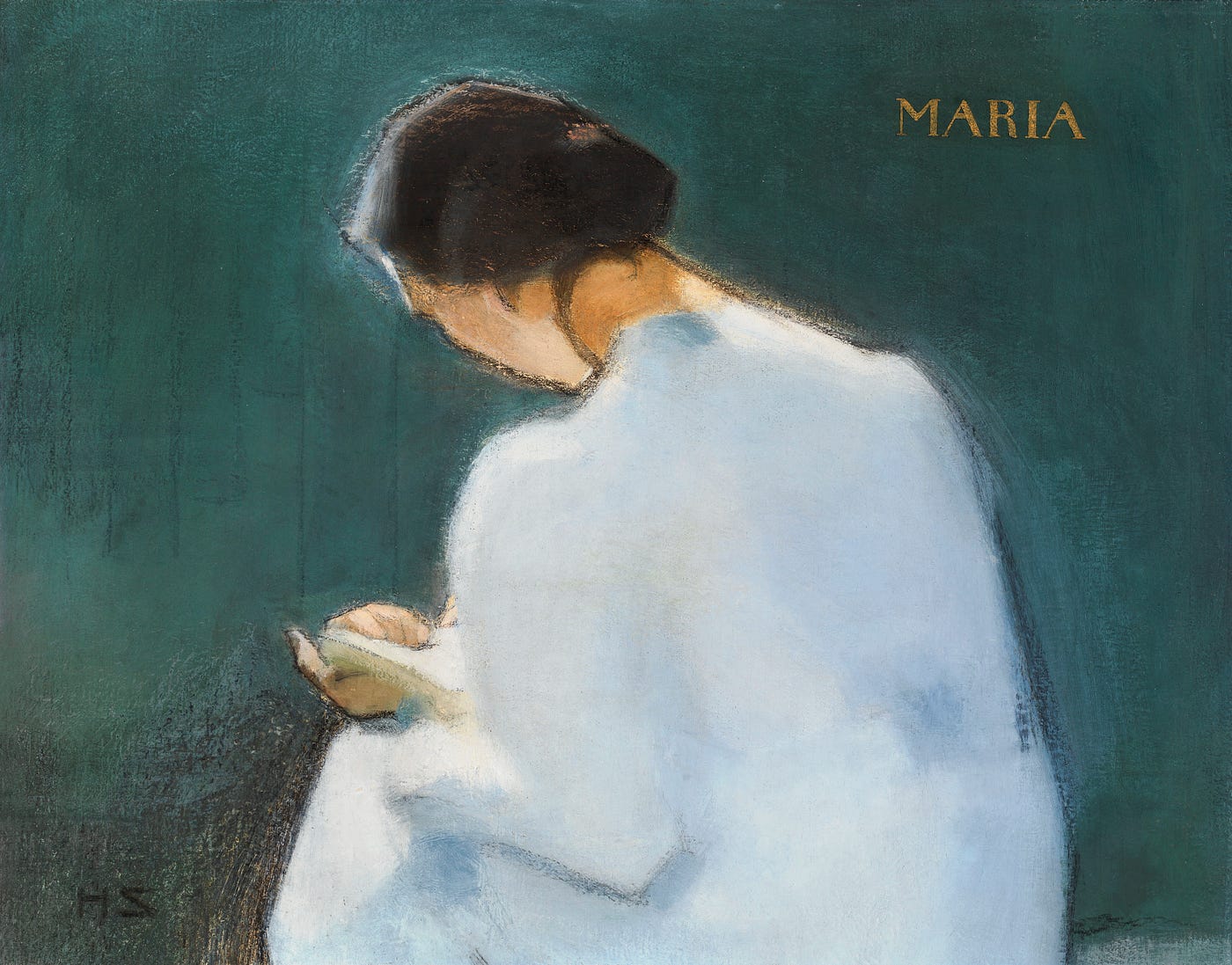
Photos by the author — created in Canva
They say, leave a party while you’re having fun. I had to agree.
I thought I wanted to stay in Florence for the summer, but that wasn’t going to happen. I was completely out of money and exhausted. I always suspected art students worked harder than those at liberal arts schools. Now I had proof, or evidence, to be fair. As the end of the semester approached, the city felt different: less surprise, less discovery, more crowds. And brutal heat. Those charming, narrow streets were becoming torture chambers.
Yes, I convinced myself I was ready to leave Florence.
They also say that it’s easier to leave someone you care about if you are mad at them. Think of all the arguments or fights that happen at moments of departure, at the end of things. It’s protective; being mad is easier than feeling loss.
The flight home was long, about ten hours. But at least it was non-stop. We arrived at San Francisco International Airport around 1:00 p.m. My plan was to spend the rest of the summer in Palo Alto, living with my parents in the new home they moved into while I was away. And then it was back to Brown for my senior year of college.
My mother was going to pick me up, but asked that I meet her curbside so she didn’t have to park her car. My mom was a practical, no-nonsense kind of person. She wasn’t nostalgic or sentimental. But she wasn’t cold, exactly. She was more like those sinks that have cold and warm water flowing separately instead of one unified flow. You have to move fast to capture the right temperature.
I was actually relieved she wasn’t there yet. I needed to get something out of one of my bags before she arrived. If you are thinking it was a gift from me to her, you guessed wrong. I needed to find my cap, which I packed by accident. Worse yet, I didn’t remember which of my five bags I packed it in. Maybe I should just buy a new cap at the gift shop, I thought. With what money? I responded. I literally spent my last dollar on a coffee in a London café shortly before the flight.
Why was I in such a panic to find a cap before my mother showed up? Let’s just say I wanted to delay the inevitable, if even for a few hours.
The week before I left Florence, my friends and I decided to dye our hair blond. It wasn’t a big deal, especially for art students; in fact, it is rather expected. The results were actually wonderful for everyone but me. I had very dark brown, almost black hair at the time and a lot of it. The kind of hair that doesn’t really ever go platinum blond. At least not without professional help and a big spend.
My hair-color experiment stalled at bright orange, nowhere near blond.
And so, without money or time in Florence, I opted for hiding it under a cap until I could figure out how to fix it. You have to understand something about my mother: She is my mother. And if you knew her personally, you wouldn’t be wondering why I was in such a state.
When I think about it now, it seems so silly that I was so frantic. Who cares? You see toddlers these days with piercings, and as far as fashion goes, nothing shocks anyone anymore. But 1987 was a different time, and Palo Alto was not Florence. It pretended to be a progressive place, and in many ways it was. This can be said about my family as well. As long as it was a certain kind of progressive: the heterosexual type.
Yes, I’m embarrassed to say this, but I was still closeted at home. In fact, my parents still thought I was straight, just struggling a little, like some kind of adjustment disorder. Straight men didn’t dye their hair back then unless they were punk, and then it was blue or purple. Definitely not bright orange. This could reopen a subject that I was trying to keep closed.
My six months in Florence were a beautiful experience, and a time-out. My parents recommended, no, insisted that I get into therapy my sophomore year when I revealed that I was having a breakdown that was the result of a breakup with a man I had fallen in love with. The therapy wasn’t helping; there’s no way it could because of the not-so-well-hidden agenda: helping me work through whatever it was that was preventing me from pursuing a heterosexual life.
Conversions don’t work, regardless of how well you dress them up. I knew this and just decided that I would somehow figure it out later.
I was allowed to study in Florence as long as I promised to continue the therapy as soon as I got back to school. My time away in Italy was an escape, if only temporary, from that impossible therapy and the expectations that came with it.
I had other fears. I thought the orange hair would signal to my mother that the study abroad had really just been frivolous, like Semester at Sea, that infamous study abroad program that took place on a cruise ship. I would do anything to avoid a repeat of the winter of my sophomore year, when, after receiving a C in one of my courses, my mother practically disowned me.
I needed to find that cap and get my bags and my butt out to the curb! There were no cell phones back then, so you made arrangements and then stuck to them. For all I knew, my mother was circling the airport waiting for me to appear, becoming increasingly annoyed by my absence.
Finally, my bags appeared. A mixture of various duffel bags and a huge suitcase, all typically beaten up, starving-student style. I was getting some funny looks from my fellow travelers. I guess the particular shade of orange was a bit shocking, especially given how dark my skin was. I found the cap, finally. I threw it on and dragged my bags outside. Most of my hair was hidden, good.
There in the distance was my mother’s white Volvo sedan. I waved her down, and she stopped right in the middle of traffic, of course. Right, I reminded myself, Mom doesn’t pull over, she just stops. I moved quickly, apologizing to the people behind her. My mother stayed put while I loaded the bags. I jumped into the front seat.
“Hi mom!” I said. I leaned toward her, expecting a hug.
“Michael, what did you do to your hair?” She sounded so distressed.
“Oh, yeah. About that…” I spoke, but really had nothing to say.
“How are you going to find a job this summer with that?”
I was speechless. She continued, “Can you grow it out?”
I thought about explaining that hair just works that way on its own, but decided against it.
I sat back and continued my silent revolt. She hasn’t seen me in six months, and all she saw was my hair color? I just spent a semester studying some of the most famous works of art in the world. Isn’t she curious in the least?
This was going to be a long summer.
We drove home in silence. I was waiting for something, maybe even the obligatory, “How was the flight?” but instead, she had that look, that worried face that seemed to be reserved specifically for me.
The drive home was familiar. I had been on this freeway so many times, but we weren’t headed back to the Eichler in south Palo Alto, where I grew up. Instead, we exited the freeway at University Avenue. I was curious and excited to see the new house my parents moved into while I was away.
I was proud of them, at first. They were finally enjoying the good life, I told myself. They worked very hard as psychoanalysts and pushed themselves toward achievement in nearly every way. Life in a rarified university town, Palo Alto, surrounded by people who demanded perfection, must have been exhausting for them.
Perhaps they weren’t so different from their children, who from time to time cracked under the pressure. This move to a new house in the nicest part of town might have been my parents’ way of saying, “We can all relax a little. We don’t have anything to prove anymore.”
That fantasy was supported by a series of phone calls my parents made to me while I was in Florence after selling the house we had all lived in for the previous twenty years. “What have we done? We’ve made a terrible mistake.”
They seemed like children, and my job was to cheer them up and get them through this temporary crisis. It seemed like they were asking for my permission. I could sense this during the phone calls, but I was quite mistaken about what exactly my parents were feeling so guilty about.
This part of town was called Crescent Park. It is among the oldest neighborhoods in Palo Alto and features large, older homes on large lots. Huge oak trees and beautifully manicured gardens. Make no mistake, this was uptown. The wealth was impossible to hide, although not the kind of flash or excess you see in Beverly Hills. If anything, the wealthy of Palo Alto and Northern California in general went out of their way to hide their status. At least in 1987.
This was increasingly hard to do here in the heart of Silicon Valley. This tension, between restraint and status, was what I thought my parents were struggling with. I certainly felt it, so I just assumed.
We pulled into a circular driveway, and my mother stopped the car in front of the large two-story house. It wasn’t a mansion, exactly, but it was certainly bigger than the house we grew up in. The lot seemed twice the size. It was some kind of pre-modern, post-deco structure, hard to classify.
“So this is the house. Very nice, Mom,” I mumbled.
“Thank you, I think we are getting used to it now,” she said while remaining seated in the car. “I have to get back to work, I have a patient.” She went on with a parental list of what to do and mostly what not to do in the house. I mostly ignored her, as always.
“Can I have a key, or is the front door unlocked?” I asked. My tone had become slightly hostile, if not flat-out sarcastic.
“Oh, your father can give you a key, once he has time to get to the hardware store.”
I took a moment and decided that it was an adjustment issue. Exits are difficult, and so are entries. She was shocked by the hair but would get used to it. Be mature and just forget about this silly misfire. Think positively, I told myself. She drove away, and I stood in front of the new house, wondering if the front door was actually unlocked or whether I would have to find a way in through the back.
I was relieved to find the large rust-colored door unlocked, and I eased my way in. I felt oddly nervous. Perhaps I had a feeling, based on the last couple of hours, that there was more at stake now. I left my bags in the front yard while I explored the house on my own.
The rooms were large and more traditional than our mid-century modern Eichler. This worked better with my parents’ decor and taste, which tended to favor antique furniture, oriental rugs, and lots of books. It was like a reunion. Oh, there’s the red velvet sofa that used to be in the family room. And, oh hello wingback chair that used to belong to my grandmother. How are you liking your new home?
I made my way up a large set of stairs where I assumed I would find my bedroom and belongings. Everything was so clean and well kept. It suddenly occurred to me that my mother had let me tour the new house by myself. She trusted I wouldn’t mess things up. Perhaps not all hope was lost. But where was my room? Or my brothers’ rooms. I counted four bedrooms upstairs. Where was my room? Where was my art?
I entered what I assumed was my mother’s new study. It was full of her books and her desk, with an ergonomic chair behind it. Then I noticed a small bed tucked into the corner.
It hit me. This is where I sleep?
This house looked like it belonged to a couple who had no children.
A disturbing series of images emerged, like a slideshow. An image of my parents packing up their children’s belongings, replaced quickly with a more realistic one: someone hired to pack up the bedrooms while they stood in the doorway giving instructions.
Then: I’m on the payphone in Florence, listening to my mother’s voice, “We’ve made a big mistake”… “No, Mom, you haven’t. You deserve to enjoy your new house.”
Next: A moving van parked in front of the new house.
My mother giving instructions again: “Everything with a red sticker goes in the garage. Nothing with a red sticker comes into the main house.”
Then I upped the stakes and went cinematic. My brain, when left alone, turns everything into a movie. Usually in the horror or science fiction genre, and usually laced with dark humor. I’m imagining a crew of men, dressed in full hazmat suits, carrying unmarked packages that have been sealed with some kind of sealant and labeled as toxic.
One of the movers leans over to his boss. “So what’s in all these BCCs?” (Bio Containment Containers. The best I can come up with under pressure.) “Are they safe to handle?” he asks.
His boss, somehow smoking the stub of a lit cigar through his hazmat suit, responds, “I think so, but be careful. The couple paid us triple our usual fee.”
“But what is it, boss?”
“Not an it… a them. Three young males, I’m told. Dangerous, so look sharp. They were very clear. They need complete erasure. Wipe everything.”
I felt betrayed. And humiliated. I wouldn’t have given my blessing had I known the truth.
I thought I needed to hide. I’d already been hidden.

메타데이터
- post_id
- 740321d29a64
- slug
- a-view-with-no-room-740321d29a64
- url
- https://medium.com/the-narrative-arc/a-view-with-no-room-740321d29a64
- canonical_url
- https://medium.com/the-narrative-arc/a-view-with-no-room-740321d29a64
- author_url
- https://medium.com/@malmond2008
- status
- ok
- fetched_at
- 2026-06-29 22:44:20