Even the Sun Can Have a Bad Year
We built fragility into everything, and El Niño will expose them all
Even the Sun Can Have a Bad Year
We built fragility into everything, and El Niño will expose them all
Even the Sun Can Have a Bad Year (designed by author)
A strong El Niño is forming in the Pacific, and it’s going to hit the two things we’re counting on to feed us and to power us: the harvest and the renewable grid. That’s the whole point of this piece, so I’ll put it up front.
For more than a hundred days, a gap of water between Iran and Oman choked the world. The price of fuel jumped on every continent while families in southern India cooked on wood because the gas ran out. Because a life that runs on fuel from a few specific places can be switched off by whoever controls those places. That’s the explicit lesson of the hundred days.
So, obviously, a lot of governments looked at the sun and the wind (the power that falls for free and can’t be blockaded by anyone, *surprise!*) and decided that was the way out. Europe and China started moving to build renewables faster.
I’m not trying to be a buzzkill — I’m all for switching to cleaner energy. But we can’t forget this: sun and wind power depend on the weather, too. And a strong El Niño is about to rearrange the weather across the whole planet for a year or longer.
[embed]
That can mean smaller harvests. It can also mean less reliable solar and wind power right when we’re leaning on them the most. We’re heading for the exit without stopping to ask: what happens when the “free” energy sources have an off year? Because they do.
It’s not that the sun suddenly “turns off” or the wind stops blowing. The real trouble begins somewhere you don’t see day to day: the ocean.
The Ocean Is Breaking
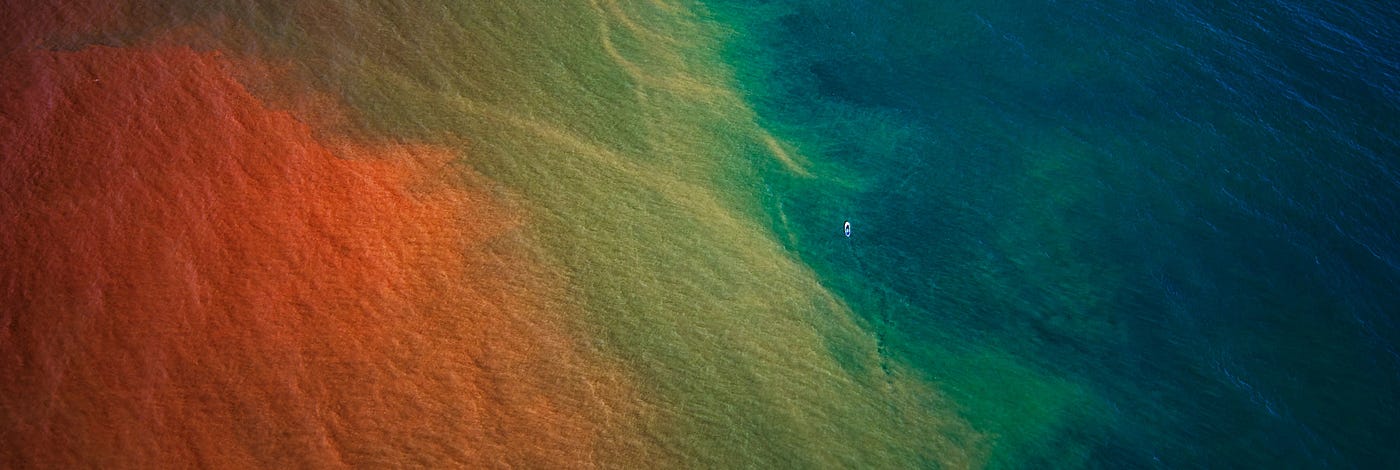
This past April, the Copernicus Marine Service recorded the warmest April ever measured across the equatorial Pacific, and nearly half the global ocean sat under a marine heatwave at some point in the month. The trend has only intensified since then. On land, hot days (mostly) cool off at night. The ocean doesn’t, because water holds heat far longer than air. Some of these hot patches have stayed warm since last December.
Source
A recent study looked at the record marine heatwave that cooked the seas around Ireland and Britain in 2023 and found that an event that extreme now has roughly a one-in-ten chance of striking in any given year, with the odds three to twelve times higher than they were thirty years ago.
Above-average sea surface temperatures across European seas at the end of June 2026 (Source: Copernicus)
The heat kills the coral first. When the water gets too warm, the coral spits out the tiny algae living in its tissue, the ones that feed it and give it color, and what’s left is a white skeleton that starves unless the heat backs off fast. In 2023 a marine heatwave in the Florida Keys pushed the water past 38°C, the temperature of a hot bath, and bleached reef on a scale the region had never recorded. A quarter of all the fish in the sea pass through reefs at some point, and a dead reef feeds nothing.
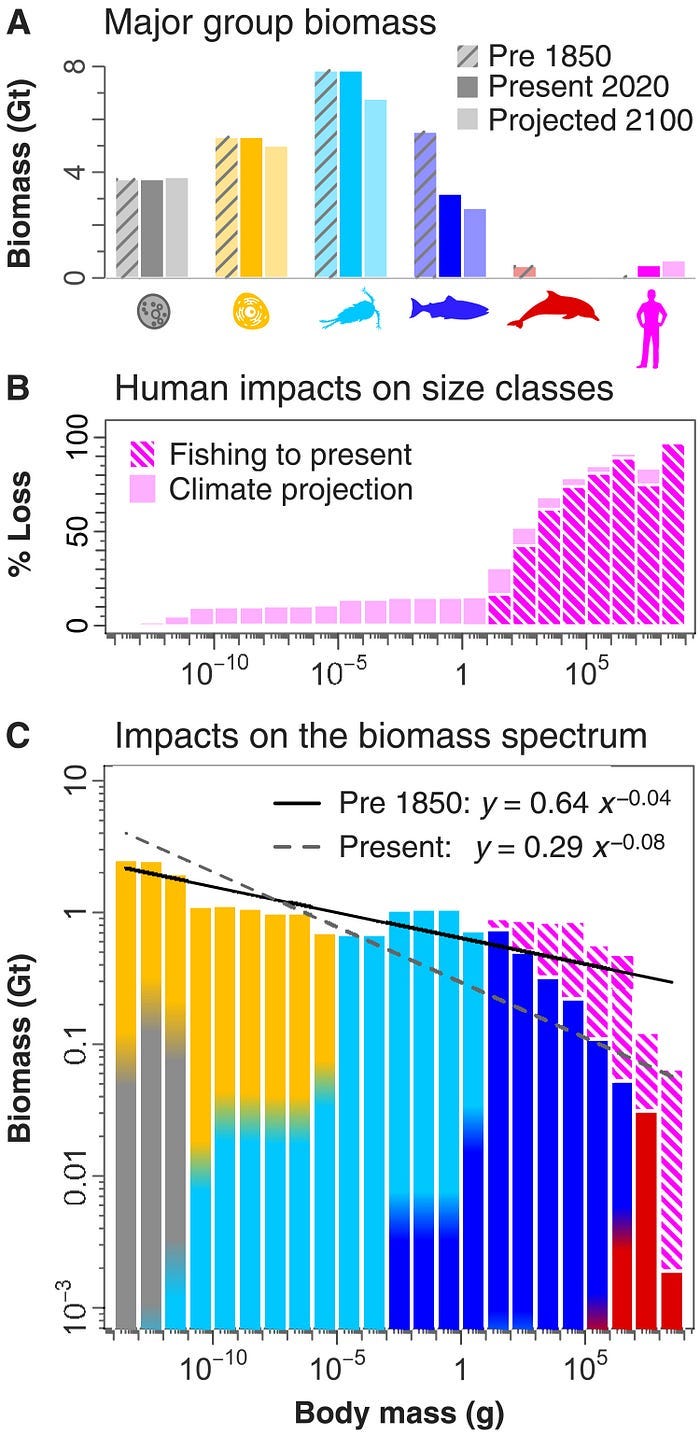
Direct human impacts on ocean biomass. These impacts have altered the shape of the biomass spectrum, with the current-day regression having a significantly steeper slope than the pre-1850 regression (Source: The global ocean size spectrum from bacteria to whales)
When the surface layer of the ocean overheats, it stops mixing with the cold, nutrient-rich water underneath. That cold water rising from below feeds the whole chain: the plankton that feed the small fish that feed the big fish that feed us. Warm the top and the mixing stalls, the nutrients stay down, and fisheries that hundreds of millions of people eat from start to thin out. In the worst cases, the warm water grows blooms of toxic algae instead, which poison what’s left and open dead zones where nothing can breathe. Any similarity with a reflecting pool in Washington, DC is no coincidence.
But heat doesn’t just stay in the water.
Warm water evaporates faster, and that wet, heavy air is what storms run on, which is why a hurricane crossing an overheated sea can intensify faster and more often, sometimes jumping two categories in a day before landfall, leaving people who went to bed braced for a manageable storm to wake under a monster.
[embed]
This season is projected to be a calmer one, but that doesn’t change the fact that, for every Celsius degree of warming, the atmosphere holds about 7% more water vapor, so every storm now arrives carrying a heavier load of rain to drop on ground that floods more easily because the sea sits higher against it than it used to. One 2025 analysis estimated that if warming continues at a moderate pace, the cost of hurricane damage in the US could end up more than six times higher by the end of this century — because of climate change and because more people keep building in places that flood.
If this is the forecast for the strongest, best-resourced places, imagine what it means for the ones that never get enough time, money, or stability to fully heal. Think of the islands and coastlines getting hit across the Gulf and the Caribbean, where forecasts arrive later, budgets run thinner, and life already feels like it’s lived from one storm season to the next. Researchers already expect the Caribbean to be one of the first places where the basic viability of living (whether a community can keep functioning at all) starts to wobble.
(Source: Climate change increased wind speeds for every 2024 Atlantic hurricane)
The seasons themselves are losing their rhythm. The Atlantic already has the biggest mood swings of any ocean on Earth: some years are relatively quiet, and some years are chaos. The best models say that by 2050, as the ocean keeps warming, those swings get about a third bigger: the calm years stay calm, but the busy years get even more extreme. Ocean warming alone has already doubled the odds of an extremely active season.
The ocean has absorbed most of the extra heat humanity has added to the planet, which is the only reason the land is still livable. The numbers are hard to picture: the ocean took in 23 zettajoules of extra heat in 2025 alone, around 200 times the electricity the whole human race generates in a year.
During a strong El Niño, the Pacific basically “breathes out” some of the heat it’s been storing, and that warmth spills into the air above it. That released heat is the fuel that powers the El Niño everyone’s watching for.
[embed]
The Food Gets Scarcer From Two Sides At Once
Pressure comes from two directions.
The first is drought.
The UN’s Food and Agriculture Organization has mapped exactly where a strong El Niño dries out the farmland, down to the square kilometer. The danger zones are the Sahel, southern Africa, south and southeast Asia, and the dry corridor of Central America, with some areas facing better than even odds of drought in the coming months. Many of these farmers already live on the edge, and a dry spell that hits during planting or flowering (the two stages a crop can’t recover from) can wipe out a season and jeopardize the upcoming ones.
The scale is known because it has happened. In the Philippines, the strong El Niño of the late 1990s cut the rice harvest by more than a quarter and corn nearly in half. The global version of that same event left over 60 million people needing food aid across two dozen countries. The one forming now is forecast to be among the strongest recorded, and it arrives on a much hotter planet.
The second source rarely gets connected to the weather: fertilizer. Most of the world’s crops grow with synthetic nitrogen fertilizer, which is made from natural gas, much of it shipped through the same Strait of Hormuz the war shut down. When the strait closed, the price of fertilizer’s key feedstock climbed sharply, right as northern-hemisphere farmers got ready to plant. A farmer who can’t afford fertilizer uses less of it, and the crop comes in thin. As Martina H puts it, war always meant hunger.
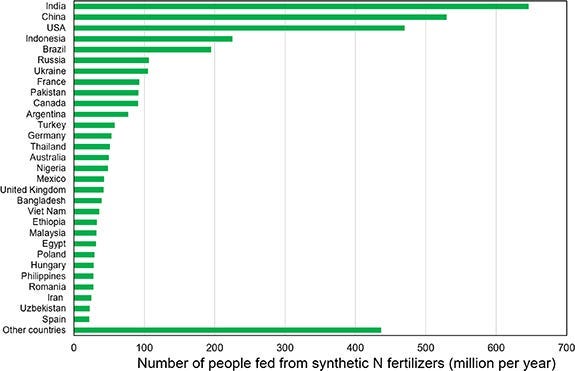
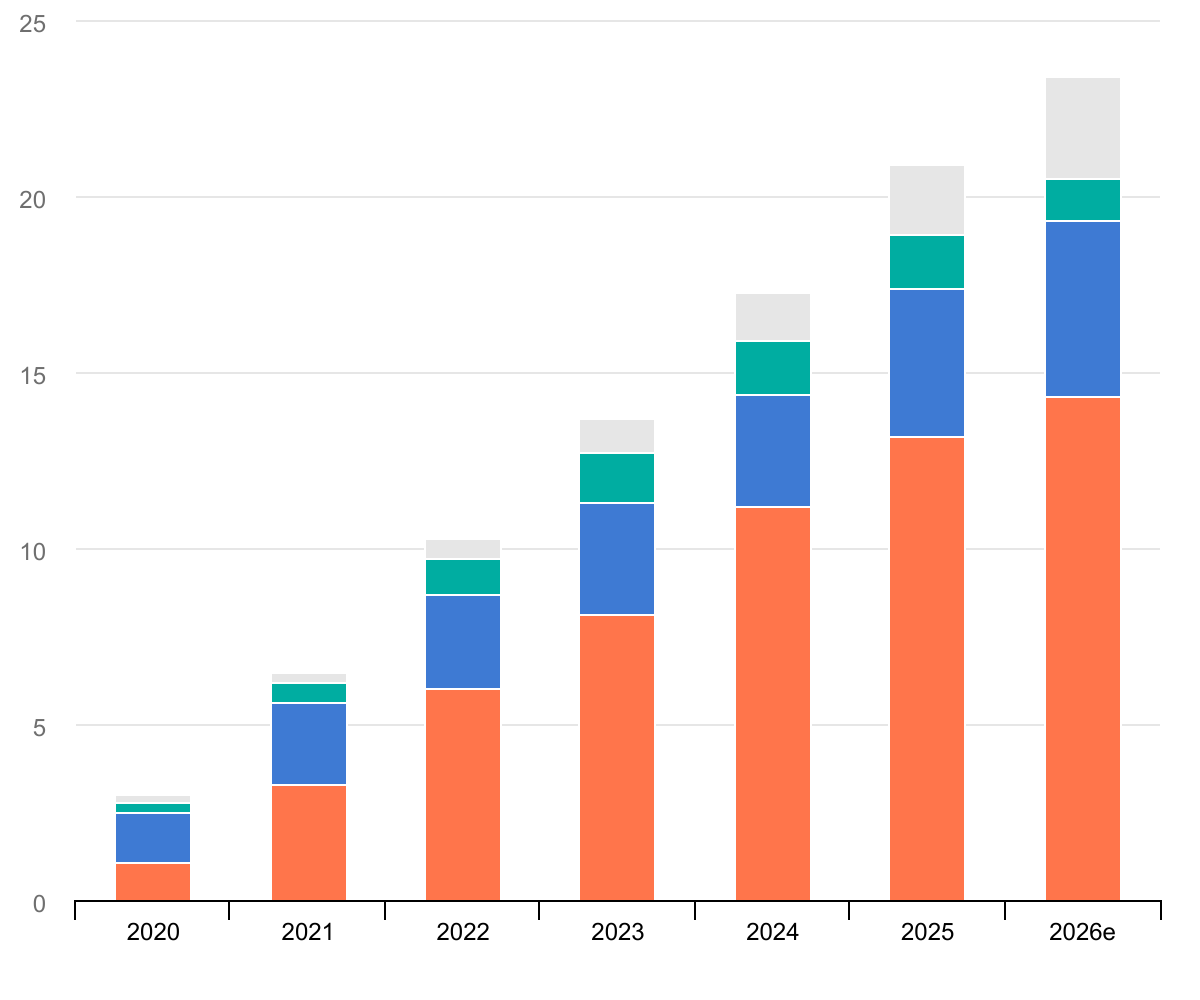
Number of people fed from synthetic nitrogen fertilizers (Source: Energy and food security implications of transitioning synthetic nitrogen fertilizers to net-zero emissions)
Both of these hit in the same season. The drought attacks the harvest from the sky while the fertilizer shortage starves it from the soil, and a field that might have survived a dry spell with proper feeding gets neither the rain nor the fertilizer.
The FAO and the World Food Programme have already launched a 202-million-dollar appeal to shield nearly nine million people across 22 high-risk countries. Because here’s what we keep refusing to face: we could make all of this easier by treating global warming itself — now — instead of slapping on band-aids that never hold and calling it a plan.
The Escape Route Can Have A Bad Year Too
After the war, renewables stopped being a moral choice and became a security one: the sun keeps arriving while tankers sit stranded. But a strong El Niño changes the sky, and solar and hydro and wind all depend on the sky behaving normally.
Solar needs sun, and El Niño drags extra cloud over some of the exact places that bet big on it. A recent study, the first to map the climate cycle’s effect on solar power worldwide, found that a strong El Niño could cut solar output by around 5% in California and as much as 10% in parts of southeastern China. Those numbers sound small until you remember they land in winter, when the grid is already stretched, and a place leaning hard on solar has to cover the gap somehow — and the usual way to cover it is to fire the gas plants back up.
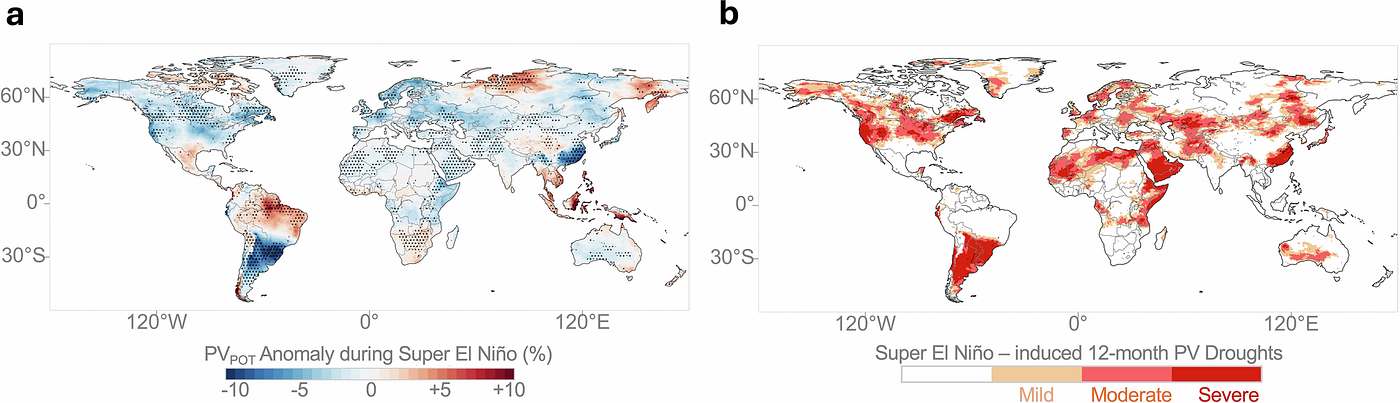
The next Super El Niño events can trigger severe solar energy droughts around the world (Source: Photovoltaic power response to El Niño–Southern Oscillation)
The renewable supply drops and the old fossil system steps in to fill it, which means a year of higher emissions, not lower.
Hydropower is worse because El Niño can drain it entirely. Hydropower is electricity from falling water, and a drought leaves the dams with nothing to drop. Colombia draws up to 70% of its electricity from hydro, and during the strong El Niño of 2015, reservoir levels fell by 60 to 70%. The same pattern hits hydro across South America, southern Africa, the US Pacific Northwest, and southeast Asia, and each time the water drops…gas comes back.
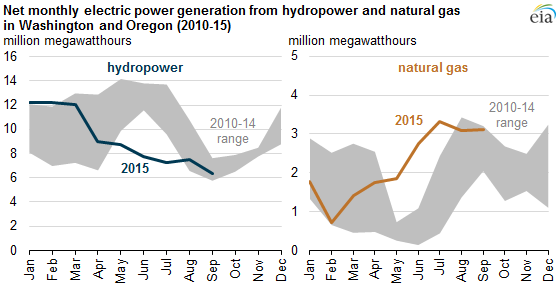
(Source: Pacific Northwest electricity mix influenced by weather conditions, El Niño)
Wind is the hardest of the three to predict, but it leans the wrong way in places. A study found that under El Niño conditions, wind and solar tend to drop together, which is the worst case for a grid: two sources failing at once instead of covering for each other.
This isn’t an argument against renewables. The sun and the wind can carry us, but a grid resting on a single source in a single region is as exposed as one resting on a single pipeline. The economics back the build: around 80% of the world’s people can already get reliable solar-plus-storage power for less than the cost of average fossil generation, and that share keeps growing as the hardware gets cheaper.
The fix is not easy: spread the supply across solar and wind in different locations so no single change in the sky can take out the grid. But we get that lesson now, which is the cheapest time to get it.
We Built Fragility Into Everything
Look at the three together and the same weakness runs through each one.
The farm assumes the rains come on the old schedule. The dam assumes the river keeps running. The solar grid assumes the usual number of sunny days. The fertilizer supply assumes the strait stays open. Every one of these was designed, financed, and built for a climate that held steady, with weather patterns reliable enough to plan a thirty-year loan around.
They all bet that the future will behave like the past.
So we didn’t build one weak system but a whole civilization of them, each one tuned for a stable climate, each one depending on the weather staying inside the range it has held for ten thousand years. A strong El Niño tests all of those assumptions at once, because it doesn’t hit one sector. It can pull the rain off the farm, the water from the dam, and the sun off the panel in the same season when there’s escalating tension all over the world. The systems we built are going to keep failing in these same places: the harvest, the grid, the supply line, and always hitting the poor who had nothing to do with it.
This El Niño is going to hit hardest where people already have the least room to absorb a shock. And like every El Niño, it will eventually move on.
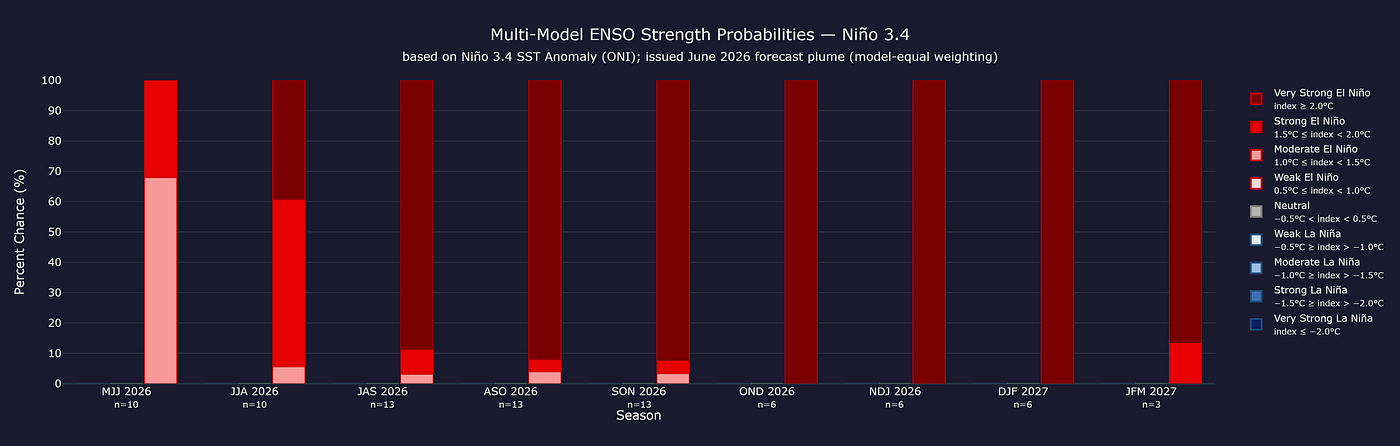
Source
But this won’t be just “one bad year.” It will be a stress test showing us, in real time, what parts of our food and energy systems are fragile while we still have a chance to reinforce them. We can either start building local supply chains and power grids that can handle this new reality without falling apart…
…or wait for the clouds to clear and go back to building for a climate that’s already gone.
I help curious minds who need a relatable pen put their sharpest ideas into words: stories, perspectives, and insights that actually get read. Reach out!
***If you want to support my work, here is the place to do so.* If not, thanks for reading anyway!
메타데이터
- post_id
- 741856a3ff11
- slug
- even-the-sun-can-have-a-bad-year-741856a3ff11
- url
- https://medium.com/the-new-climate/even-the-sun-can-have-a-bad-year-741856a3ff11
- canonical_url
- https://medium.com/the-new-climate/even-the-sun-can-have-a-bad-year-741856a3ff11
- author_url
- https://medium.com/@rickylanusse
- status
- ok
- fetched_at
- 2026-07-09 06:39:14