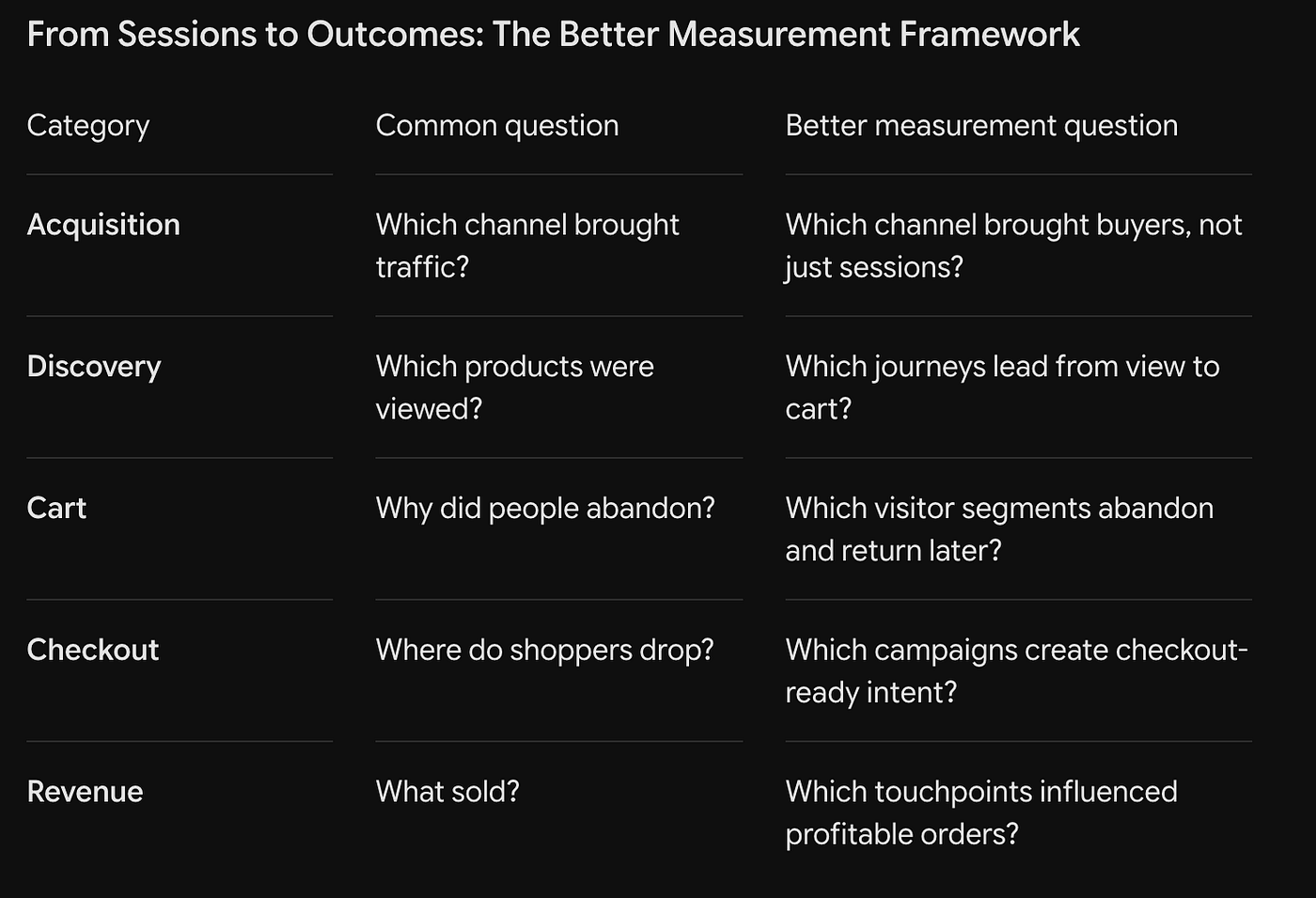
The Marketing Revenue Attribution Formula Founders Should Actually Use
The best attribution formula is not a spreadsheet trick. It is a decision system for knowing which marketing dollars deserve to scale.
The Marketing Revenue Attribution Formula Founders Should Actually Use
The best attribution formula is not a spreadsheet trick. It is a decision system for knowing which marketing dollars deserve to scale.
Every founder eventually asks a deceptively simple question: what marketing is actually driving revenue? The obvious answer is to calculate a marketing revenue attribution formula, but the real work begins when we decide what we mean by “revenue,” “marketing,” and “credit.” If those definitions are sloppy, the formula becomes a confidence machine for bad decisions.
The basic ROI formula is familiar: revenue minus marketing cost, divided by marketing cost. Oracle describes the same simple version as sales minus marketing cost, divided by marketing cost. It is useful, but incomplete. In modern customer journeys, one buyer may discover a brand through paid search, return through organic content, click an email, compare reviews, and convert after a retargeting visit. Adobe describes multi-touch attribution as a way to evaluate multiple marketing touchpoints and assign credit to those that matter in the buyer journey.
That means the formula should not begin with the final purchase. It should begin with a model of the journey.
Attributed marketing ROI = (Attributed revenue or gross profit — fully loaded marketing cost) / fully loaded marketing cost.
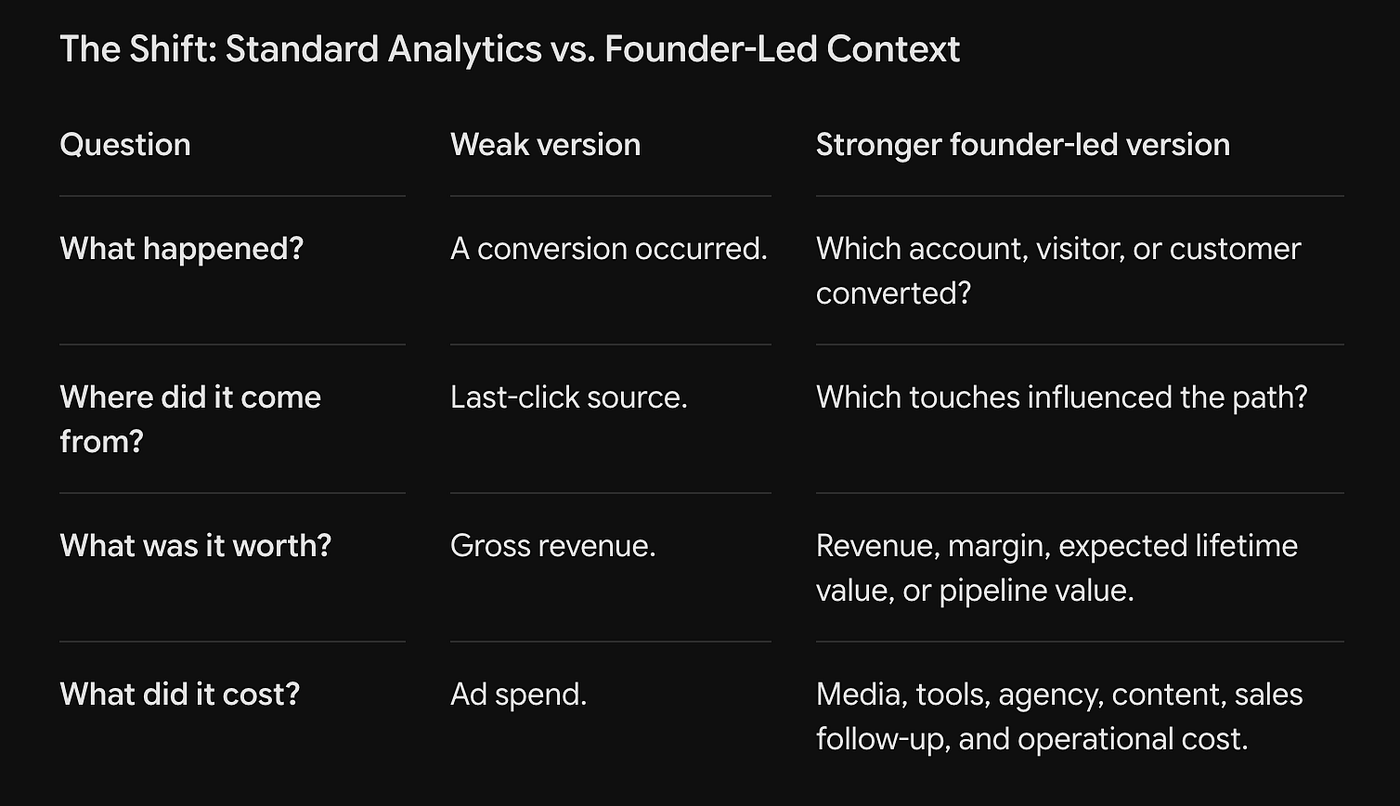
Question,Weak version,Stronger founder-led version What happened?,A conversion occurred.,"Which account, visitor, or customer converted?" Where did it come from?,Last-click source.,Which touches influenced the path? What was it worth?,Gross revenue.,"Revenue, margin, expected lifetime value, or pipeline value." What did it cost?,Ad spend.,"Media, tools, agency, content, sales follow-up, and operational cost practical attribution formula looks more like this:Attributed marketing ROI = (Attributed revenue or gross profit — fully loaded marketing cost) / fully loaded marketing cost.
The key word is attributed. Before calculating ROI, a team must decide how revenue is assigned. First-touch attribution helps founders understand demand creation. Last-touch attribution helps them understand conversion capture. Linear attribution gives every touch equal weight. Time-decay gives more credit to recent touches. U-shaped models usually value the first and last touch more heavily. These models are not perfect, but they are far better than pretending the last click did all the work.
At Convertmax, this is the philosophy behind first-party analytics and multi-touch attribution: the goal is not to win an argument about which model is universally correct. The goal is to give teams a reliable revenue intelligence layer so they can compare channels with the same rules, using data they collect directly from owned customer interactions.[4]
The mistake I see too often is that teams treat attribution as reporting. It is not. Attribution is an operating system for budget allocation. If a founder uses last-click data to cut content, they may destroy the very demand that paid search later harvests. If they use first-touch data only, they may overfund awareness and underfund conversion. The right formula gives leadership a way to compare these trade-offs clearly.
A good formula also makes uncertainty visible. No attribution model captures every human reason someone buys. A private Slack recommendation, a podcast mention, or a founder’s LinkedIn post may influence a deal without appearing cleanly in analytics. The answer is not to abandon measurement. The answer is to use attribution as a disciplined approximation, then combine it with judgment.
The founder’s job is not to ask, “Which campaign gets all the credit?” The better question is, “Which marketing system creates repeatable revenue at an acceptable cost?” Once that question becomes the standard, the formula stops being a vanity exercise and becomes a growth discipline.
메타데이터
- post_id
- 742ccf6e338e
- slug
- the-marketing-revenue-attribution-formula-founders-should-actually-use-742ccf6e338e
- url
- https://medium.com/@convertmax/the-marketing-revenue-attribution-formula-founders-should-actually-use-742ccf6e338e
- canonical_url
- https://medium.com/@convertmax/the-marketing-revenue-attribution-formula-founders-should-actually-use-742ccf6e338e
- author_url
- https://medium.com/@convertmax
- status
- ok
- fetched_at
- 2026-06-09 15:37:30