Why Support Ukraine?
Ukraine is a test of our principle of the rights of all people to self-determination, freedom, and national sovereignty. The Russian 2014…
Why We Should Support Ukraine
Ukraine is an opportunity to stand up for the rights of all people to self-determination and freedom. Ukraine is an opportunity to hold Russia accountable for 25 years of lawlessness and belligerence, and to deter future aggression. Finally, aid to Ukraine directly benefits the US.
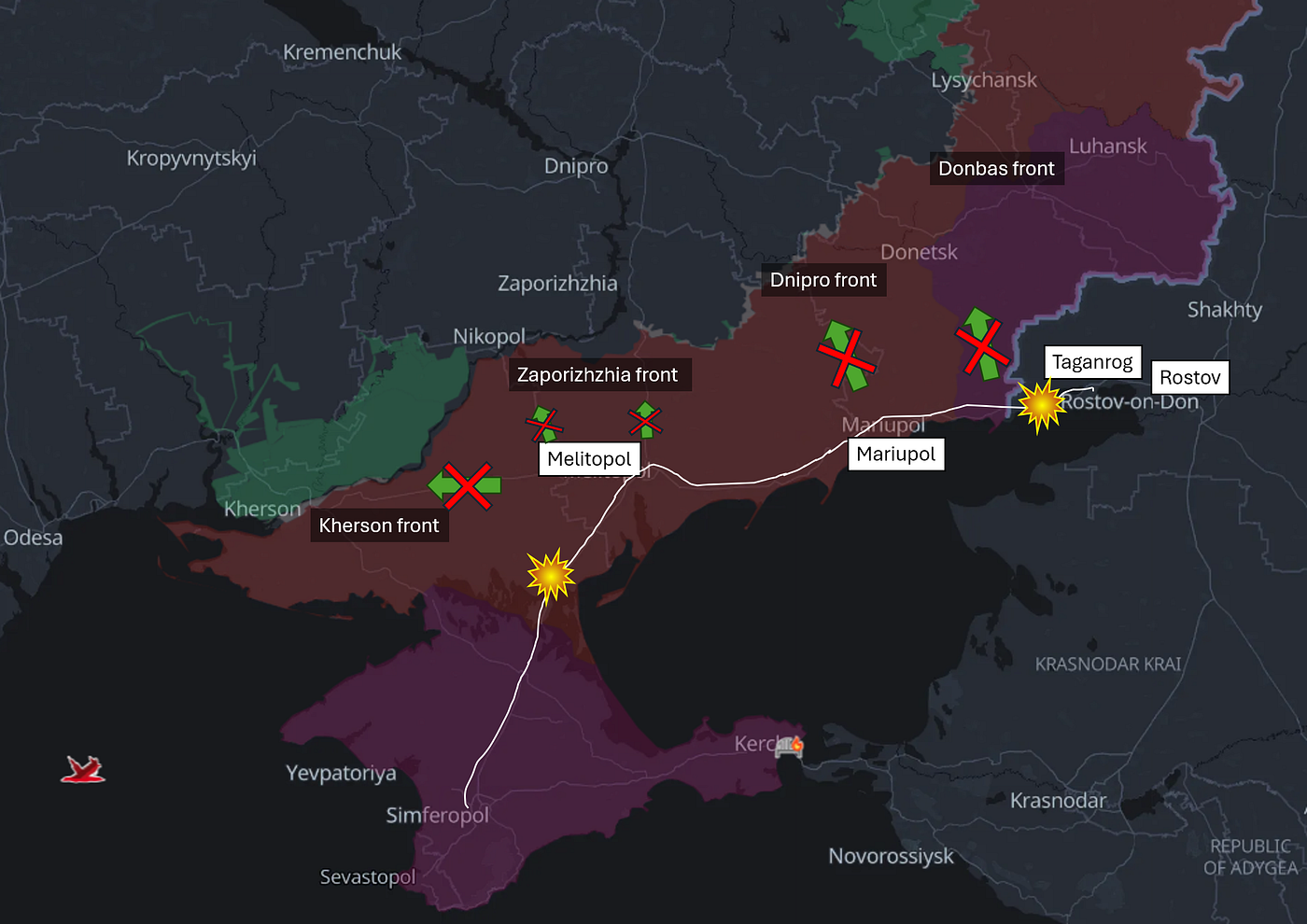
![Modern Ukraine and Russian-held territory in 2024. Attribution: [1]](https://miro.medium.com/v2/resize:fit:1024/1*cobsjrgMMOADpw31pSrzkQ.png)
Modern Ukraine and Russian-held territory in 2024. Attribution: [1]
- Russia’s historical treatment of Ukraine
There is no love lost between Ukraine and Russia. Ukraine and Russia share a Slavic and Varangian heritage but developed independently after the fall of the Kievan Rus’ empire in 1240 AD. Ukraine fell under Russian oppression, with few breaks, starting with occupation and annexation of central and eastern Ukraine under Catherine the Great in 1764, the forced annexation of Crimea in 1783, and the occupation of western Ukraine by Russia and the Hapsburgs in 1795. Ukraine developed a strong unique national identity in the 1800s, and after the Russian revolution was briefly independent again before falling under Soviet domination.
2. Ukraine under the USSR
Under the USSR, Ukrainian culture was at first allowed to flourish but starting in the late 1920s Ukraine was exploited and its culture suppressed. During the forced collectivization occurring 1929–1933 under Stalin, the quota for Ukrainian harvests was doubled and 3.5 to 5 million Ukraine's died of hunger in the Holodomor genocide. In addition, tens of thousands of Ukraine were accused of trumped-up crimes and executed, imprisoned or exiled, including 30,000 intellectuals.
After the 1950s, Ukraine also was used to base much of Russia’s strategic and tactical nuclear weapons. Soviet Premier Nikita Kruschev allowed some political and cultural freedom, creating somewhat of a revival, however this was limited as repression against intellectuals continued.
In 1986, the meltdown at the Chernobyl nuclear reactor complex occurred. Under testing by Russian engineers, Chernobyl was pushed beyond its limits. The disaster was of such scale that a permanent 20-mile-long exclusion zone was created, over 100,000 people were evacuated, and radioactivity was released across Russia and Europe. Total cleanup and remediation costs, including pension payments and opportunity loss, exceeded $250 Billion as of 2008. The initial costs virtually bankrupted the Soviet Union, which, combined with the inability to keep the disaster a secret, led to its fall. Even today Ukraine continues to spend about 6% of its national budget on cleanup and maintenance efforts. Cleanup will not be final until 2065.
In 1991, the Soviet Union was dissolved. Ukraine finally regained its independence and transitioned to a market economy but suffered a lengthy recession. After the recession, the economy revived and experienced steady growth until 2008.
3. The Budapest Memorandum and significance
After the dissolution of the USSR in 1991, Russia sought the return of nuclear weapons that had been based in the now ex-Soviet republics. In general, Russia had the firing controls and so the weapons were not usable by the newly Independant Republics. Uncertain as to the fate of the Republics, the US sought assurances that the weapons would not get into the hands of terrorists or unstable nation-states. Many of the weapons were aging and needed to be decommissioned or refreshed by experts to be operational. The Ex-soviet republics, in particular Ukraine, also needed refined uranium fuel for nuclear reactors, for which they were dependent upon Russia.
On December 5th 1994, the US, the UK, Russia, and three ex-Soviet republics — Ukraine, Kazakhstan, and Belarus — signed security agreements called the Budapest Memorandum on Security Assurances. In return for assurances that their national sovereignty and territorial borders would be respected, and that the signatories would never attack them (except in self-defense), Ukraine, Kazakhstan and Belarus signed on to the Nuclear Non-Proliferation treaty (NPT) and agreed to give up their nuclear arsenal. (China and France signed weaker versions of the assurances). Russia also agreed to provide nuclear fuel for Ukraine reactors.
The Memorandum was the realization of the earlier Lisbon protocol (signed by most of the same signatories in 1992) which committed the ex-Soviet republics to sign the NPT in the future and Ukraine-Russia bilateral agreements signed in 1993 in which Ukraine relinquished claims to its Soviet era nuclear stockpile and gave up its Black Sea Fleet in return for $2.5 billion in oil and gas credits from Russia. Ukraine had already given its stockpile of tactical nuclear weapons back to Russia in 1992.
In return, in 1994 the US provided $300 million in economic aid to Ukraine, and technical and financial assistance to oversee the decommissioning which took until 2008 to complete.
Separately the US saw an opportunity to simultaneously reduce Russia’s nuclear arsenal while providing it with hard cash which was in very short supply after the fall of the Berlin Wall. In early 1993 the US and Russia agreed to the ‘Megatons to Megawatts” program whereby the US purchased low grade enriched Uranium from Russia derived from decommissioned nuclear weapons. This program would continue for 20 years.
4. Russia violates the Memorandum the first time
In 2004, Ukraine held Democratic elections. One candidate, Viktor Yanukovych, leaned eastward, advocating closer ties to Russia. The second candidate, Viktor Yushchenko, was Western leaning and advocated closer ties with Europe. Yanukovych initially won by a narrow margin, but vote rigging and voter intimidation was claimed by the opposition. Widespread street protests began (Orange Revolution). The Ukrainian Supreme Court ruled the vote null & void and a second runoff was held. This time Yushchenko won and took office in 2005.
Russia began a decade-long effort to sow disinformation among the Ukrainian populace and undermine the central government in Kiev.
The next election, in 2010, saw pro-Russian Viktor Yanukovych win due to a three-way race that pulled votes from the Orange (pro-Western) side. Yanukovych was effectively a Russian puppet who strengthened ties to Russia, appointed Soviet cronies to government ministries and in 2013 refused to sign the Ukraine-EU Agreement, which had been overwhelmingly approved earlier by Parliament. This, along with his record of government corruption and human rights violations resulted in massive protests (the Euromaidan protests). Protestors battled police and over a hundred protestors were killed. President Yanukovych and the Parliament opposition signed an agreement to form an interim government. The police abandoned Kyiv and protestors took over the city. President Yanukovych fled the violence, heading to Russia. The Ukrainian parliament voted 328 to 0 to remove him from office since he had fled and installed a pro-western candidate (The Revolution of Dignity). From Russia, President Yanukovych said the vote was illegal and asked for Russian assistance.
In obvious violation of the 1994 Memorandum, Russia occupied and illegally annexed Crimea. In eastern Ukraine, pro-Russian separatists aided by Moscow seized government buildings, declared Donetsk and Luhansk independent states and initiated the Donbas war against the Ukrainian regular army. The US began helping Ukraine develop a modern military capability to resist the Russia-sponsored incursion.
The interim Ukrainian government signed the EU agreement. Petro Poroshenko won the 2014 election and began the process of removing civil servants associated with the Yanukovych regime, ended participation in statutory CIS official bodies, and restarting the process of de-Sovietization of the country and removal of corruption.
The Donbas war continued unabated. Russia provided weapons, training, and other assistance. In July 2014, Malaysian Airlines Flight 17 is shot down by a Russian anti-aircraft system over territory controlled by Russian-aided separatists. The wreckage lands in Donetsk Oblast 25 miles from the Ukraine border. The war continues at low intensity until 2022.
5. Russia violates the Memorandum again
In 2019, Volodymyr Zelenskyy is elected. In 2020 and 2021, Ukraine joined the Lublin Triangle and the Association trio, eastern blocs which would further Ukraine’s integration with other EU countries, membership in the EU, and potentially eventually NATO membership. The war in Donbas continued unabated, claiming over 10,000 lives. Ukraine continues to be the poorest country in Europe. Volodymyr works to clean up corruption and increase transparency.
In February 2022, Russia launched a full-scale invasion of Ukraine.
6. Significance of Ukraine to the US today.
There are practical aspects of supporting Ukraine. Russia under Putin has shown itself to be a security threat to peaceful peoples everywhere, a lawless pariah nation where journalists and political rivals are murdered at will [3], yet those responsible have not been held to account.
Under Putin, Russia forces savagely attacked and annexed its neighbors no less than 4 times in less than 25 years: in 1999, Russia blamed and attacked Chechnya after the Russian FSB engineered bombings of apartment complexes in three Russian cities, in 2008 Russia invaded Georgia in a conflict provoked by Russia and it’s proxies in South Ossetia, in 2014 Russia occupied and forcibly annexed Crimea, and in 2022 carried out a full-scale invasion of Ukraine.
In between, Russia has deployed regular troops and Wagner irregulars to prop-up murderous and genocidal dictators across the Middle East and Africa; committing atrocities, undermining Democracy, and sewing chaos in the process. Starting in 2015 Russian forces deployed troops in support of dictator Bashar Al-Assad in Syria who has declared war on his own country. Starting in 2018, Wagner shock troops attacked civilians in the Cental Africa Republic (CAR), Mali, Sudan, and Libya.
From the US State Department website [3]:
“The transnational criminal organization **Wagner Group’s exploitation of African resources, notably gold, diamonds, and timber, is only one node of its destabilizing influence across Africa. Wagner Group forces have [reportedly](https://web.archive.org/web/20231013141206/https://www.cbsnews.com/news/russia-wagner-group-central-african-republic-bambari-massacre-rape-mass-murder/)** razed entire villages and murdered civilians in the Central African Republic (CAR) to advance their economic interests in the mining sector, participated in the unlawful execution of people in Mali, raided artisanal gold mines in Sudan, and undermined democratic institutions in every country where they have worked. They have also been accused of paying their bills in counterfeit currency. This pattern of criminal behavior — and of preying on Africans — is not going to end with Yevgeny Prigozhin’s death.
Wherever Wagner deploys a stark rise in civilian deaths follows. According to the **Economist and recent [Armed Conflict Location and Event (ACLED](https://web.archive.org/web/20231013141715/https://acleddata.com/)) data, violence perpetrated against civilians by Wagner Group in Mali and the Central African Republic (CAR) is not only frequent, but far more [deadly](https://web.archive.org/web/20231013141442/https://www.economist.com/graphic-detail/2023/08/31/wagner-routinely-targets-civilians-in-africa) to non-combatants than state-led or rebel force attacks. According to The Economist, Wagner killed at least 1,800 African civilians as of August 2023. Wagner [justifies](https://web.archive.org/web/20231013143052/https://www.reuters.com/world/africa/after-wagner-chief-death-russia-vows-keep-helping-mali-2023-08-28/) its brutal presence in Africa as “supporting peace and stability.” However, in Mali alone, terrorist violence against civilians since 2021 has [surged by 278 percent.](https://web.archive.org/web/20231013143439/https://africacenter.org/spotlight/mali-catastrophe-accelerating-under-junta-rule/)”**
Then there is Russian interference in US elections and the undermining of confidence in governments and institutions across the West via the effective use of social media to spread disinformation.
Ukraine is an opportunity to hold Russia accountable for it’s aggression and forestall future attacks on NATO countries.
Without having to directly confront Russia and risk nuclear war, aiding Ukraine allows the US to erode Russia’s military machine, undermine Putin’s PR campaign of offering a peaceful, viable alternative to the West, and expose Putin for what he is — a murderous dictator who seeks to undermine NATO and the West and sew chaos across the globe which Russia can benefit from.
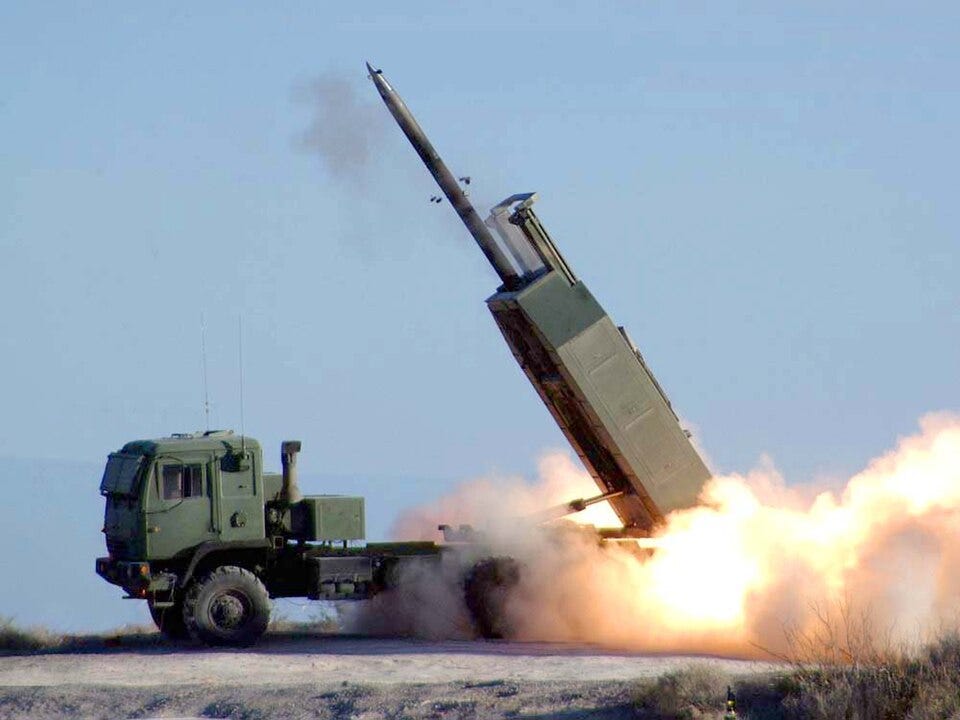
Russian casualties exceed a hundred and fifty thousand men, including senior officers. Russian military supplies — missiles, ships, tanks, and planes — have been steadily exhausted, while the denial of advanced US electronics makes replacement of advanced weapons exceedingly difficult.
Aid to Ukraine benefits US companies and the US economy.
90% of US aid to Ukraine goes to US companies who provide arms to Ukraine. [4]
Sources
[1] Viewsridge, CC BY-SA 4.0 <https://creativecommons.org/licenses/by-sa/4.0>, via Wikimedia Commons
[2] Full List of Putin Critics Who Have Died in Mysterious Circumstances (newsweek.com)
[3] The Wagner Group’s Atrocities in Africa: Lies and Truth — United States Department of State
메타데이터
- post_id
- 742d4f6cf5df
- slug
- why-we-should-support-ukraine-742d4f6cf5df
- url
- https://medium.com/@bgcress/why-we-should-support-ukraine-742d4f6cf5df
- canonical_url
- https://medium.com/@bgcress/why-we-should-support-ukraine-742d4f6cf5df
- author_url
- https://medium.com/@bgcress
- status
- ok
- fetched_at
- 2026-07-24 02:27:15