VR Technology in Remote Medical Training | VRKure
Virtual reality (VR) is transforming the way we approach medical training. Traditional methods, such as textbooks, live demonstrations, and…
VR Technology in Remote Medical Training | VRKure
Virtual reality (VR) is transforming the way we approach medical training. Traditional methods, such as textbooks, live demonstrations, and lectures, are now being enhanced or even replaced by immersive VR experiences. These technological advancements are making medical training more accessible, effective, and safer, especially when it comes to remote learning.
In this blog, we’ll take a closer look at how **VR in medical training** is changing the game and explore the best practices for making the most out of this innovative approach.

Why VR in Medical Training?
The healthcare industry demands a high level of skill and precision, which means that medical professionals need to practice and perfect their abilities regularly. Traditional methods, like practicing on real patients, often come with risks. Additionally, the availability of instructors and medical equipment can be limited. That’s where VR steps in.
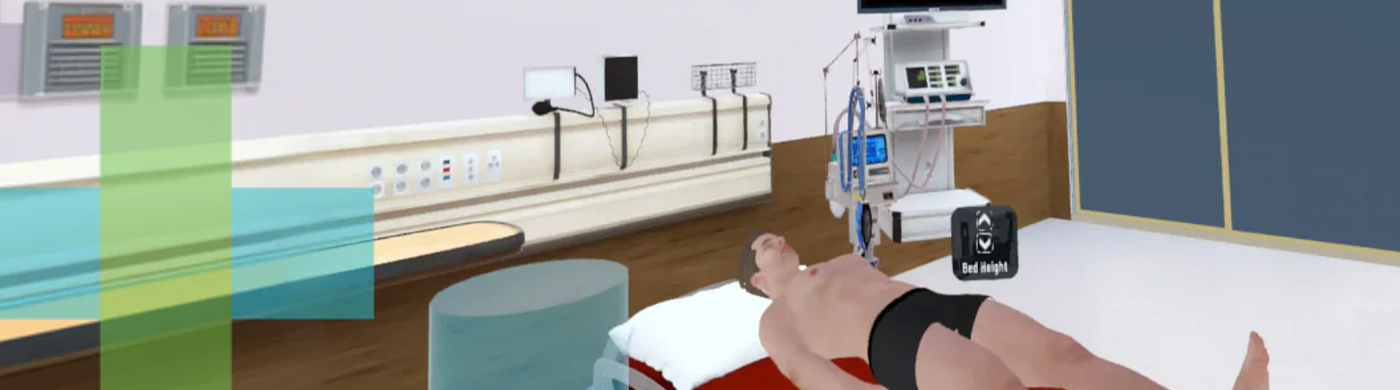
By using virtual reality in healthcare, medical professionals can train in fully immersive environments that simulate real-life scenarios. For example, VR modules like BLSXR™ by VRKure allow healthcare providers to practice Basic Life Support (BLS) procedures, such as CPR, in a controlled, virtual setting. This method removes the risks and limitations of traditional training, making it safer and more effective.
Best Practices for Using VR in Remote Medical Training
1. Make the Training as Realistic as Possible
The most crucial element of any VR in medical training program is realism. The more lifelike the training environment, the more effective it will be. VR systems must provide high-quality visuals, realistic sounds, and detailed anatomical models that mimic real medical scenarios.
A great example of this is BLSXR™ by VRKure, which creates immersive simulations of emergency medical procedures. Learners can practice life-saving techniques and get immediate feedback on their performance — all in a completely safe virtual environment.
2. Offer a Variety of Scenarios
Medical professionals face a wide range of situations, from routine checkups to life-threatening emergencies. A successful VR training program should reflect this variety by offering different scenarios that test various aspects of medical care.
With VR in medical training, learners can be exposed to diverse conditions and situations, things they may not encounter during traditional training. For instance, VRKure offers simulations of BLS in critical settings, such as responding to a cardiac arrest. The more diverse the scenarios, the better prepared medical professionals will be for real-life situations.
3. Provide Instant Feedback and Analytics
One of the advantages of VR technology is the ability to offer real-time analytics and feedback. This is essential for refining techniques and improving skills. When practicing in medical simulation training, the system should evaluate the learner’s performance and provide specific feedback on areas that need improvement.
For example, with BLSXR™ by VRKure, users receive real-time performance data, such as the depth and speed of chest compressions or the timing of rescue breaths. This allows trainees to perfect their skills and track their progress.
4. Enable Remote Access for Learners Everywhere
One of the biggest benefits of VR is that it allows for remote learning. In the past, medical professionals had to be physically present in training facilities to learn and practice life-saving skills. But with VR technology, healthcare providers can access top-quality training materials from anywhere in the world.
Whether it’s a nurse in a rural area or a paramedic stationed far from a major medical center, VR in medical training makes it possible for healthcare professionals to learn on their own time, without being constrained by geography.
5. Collaborate with Healthcare Institutions
For VR technology to truly make an impact in medical training, it needs to be integrated into healthcare institutions and educational programs. Collaboration between healthcare providers, educational institutions, and VR training companies is key to creating effective and relevant training modules.
VRKure, for example, works with hospitals and universities to offer realistic, high-quality training programs. This collaboration ensures that training modules are tailored to meet the needs of the medical community and stay aligned with industry standards.
Conclusion
The integration of VR technology in medical training is a game-changer in the healthcare industry. From improving skill acquisition to offering remote learning opportunities, VR is transforming how healthcare professionals are trained. By following best practices, like focusing on realism, providing diverse scenarios, and offering real-time feedback ,healthcare institutions can ensure that their staff are equipped to handle any situation, improving both patient outcomes and overall care quality.
As VR in medical training continues to evolve, the possibilities are endless. Tools like BLSXR™ by VRKure are just the beginning of a new era in medical education, one where training is safer, more accessible, and more effective than ever before.
메타데이터
- post_id
- 74381f95cd22
- slug
- vr-technology-in-remote-medical-training-vrkure-74381f95cd22
- url
- https://medium.com/@vrkure-blsxr/vr-technology-in-remote-medical-training-vrkure-74381f95cd22
- canonical_url
- https://medium.com/@vrkure-blsxr/vr-technology-in-remote-medical-training-vrkure-74381f95cd22
- author_url
- https://medium.com/@vrkure-blsxr
- status
- ok
- fetched_at
- 2026-07-18 02:11:01