Don’t Gamble With the Unknown: How Modern Genetic Testing Gave Us Clarity
A doctor’s personal journey through pregnancy and genetic testing — when one advanced scan revealed what others weren’t designed to find.
Don’t Gamble With the Unknown: How Modern Genetic Testing Changed Everything For Us
Disclaimer: This article is based on my personal experience as a medical doctor and is intended for informational purposes only. It is not a substitute for personalized medical advice. Each case is unique, and individuals should consult their healthcare providers for advice tailored to their specific circumstances.
In this article, I share a deeply personal journey through the world of prenatal genetic testing. I explain the science behind genetic diagnostics — from the basics of DNA and genetics to the differences between Chromosomal Microarray Analysis (CMA) and Exome Sequencing. While my personal experience profoundly influenced my perspective, I aim to present information in a balanced manner, combining an emotional narrative with clear, evidence-based details. I acknowledge the diversity of opinions on sensitive topics like pregnancy termination and respect that these decisions are deeply personal.
A Journey Defined by Informed Choices
This is not an easy story to tell. It’s one of those moments in life when you know things could have gone in a completely different direction, quietly, unknowingly, until one decision changed the course of everything. My wife and I recently made a hard choice for us, which we believe we were able to make because we had the right information. We chose to end a pregnancy after receiving unexpected and serious results from an advanced genetic test. Despite normal outcomes from previous routine tests and scans, this deeper genetic analysis revealed a significant issue that standard screenings were not designed to detect. I can only hope that no one will have to face the kind of decision we did. But if they do, I want them to be empowered with knowledge and clarity. A single, tiny genetic mutation was quietly shaping a reality we could not see. And that’s why I’m writing this.
The Journey of Pregnancy and the Basics of Genetics
Pregnancy is an exciting journey, yet it can feel overwhelming with the many tests and unfamiliar terms. It all begins when a sperm meets an egg, and their genetic material combines to form a zygote. This zygote then divides and develops into an embryo — a process as precise and dedicated as a state-of-the-art factory producing human life. Every cell of the embryo carries a copy of the DNA — the instruction manual that tells the body how to develop and function.
Imagine this manual as a book written in a continuous string of characters, intricately folded and grouped into chapters called chromosomes — humans have 23 pairs of these, totaling 46 chromosomes. Within these chapters, exons represent clearly written instructions, encoding genes that eventually translate into proteins and guide cellular functions. Introns, historically labeled as “junk DNA,” are now recognized for important regulatory roles in gene expression, although these functions are still not fully understood. Understanding this structure helps clarify how different genetic tests like CMA and exome sequencing examine our DNA in distinct but complementary ways, checking for missing chapters or minor typographical errors, respectively. For simplicity, we’ll focus mainly on the exons.
Lastly, let’s consider mutations — these are essentially typographical errors within our genetic text. While most mutations are harmless, some can significantly alter the instructions encoded in our DNA, potentially leading to serious health consequences. Advanced genetic testing, such as exome sequencing, is particularly crucial because it can detect even the most minor yet highly impactful mutations. Among these, de novo mutations, which occur spontaneously rather than being inherited from either parent, underscore the importance of comprehensive testing, as they are unpredictable and can profoundly influence developmental outcomes.
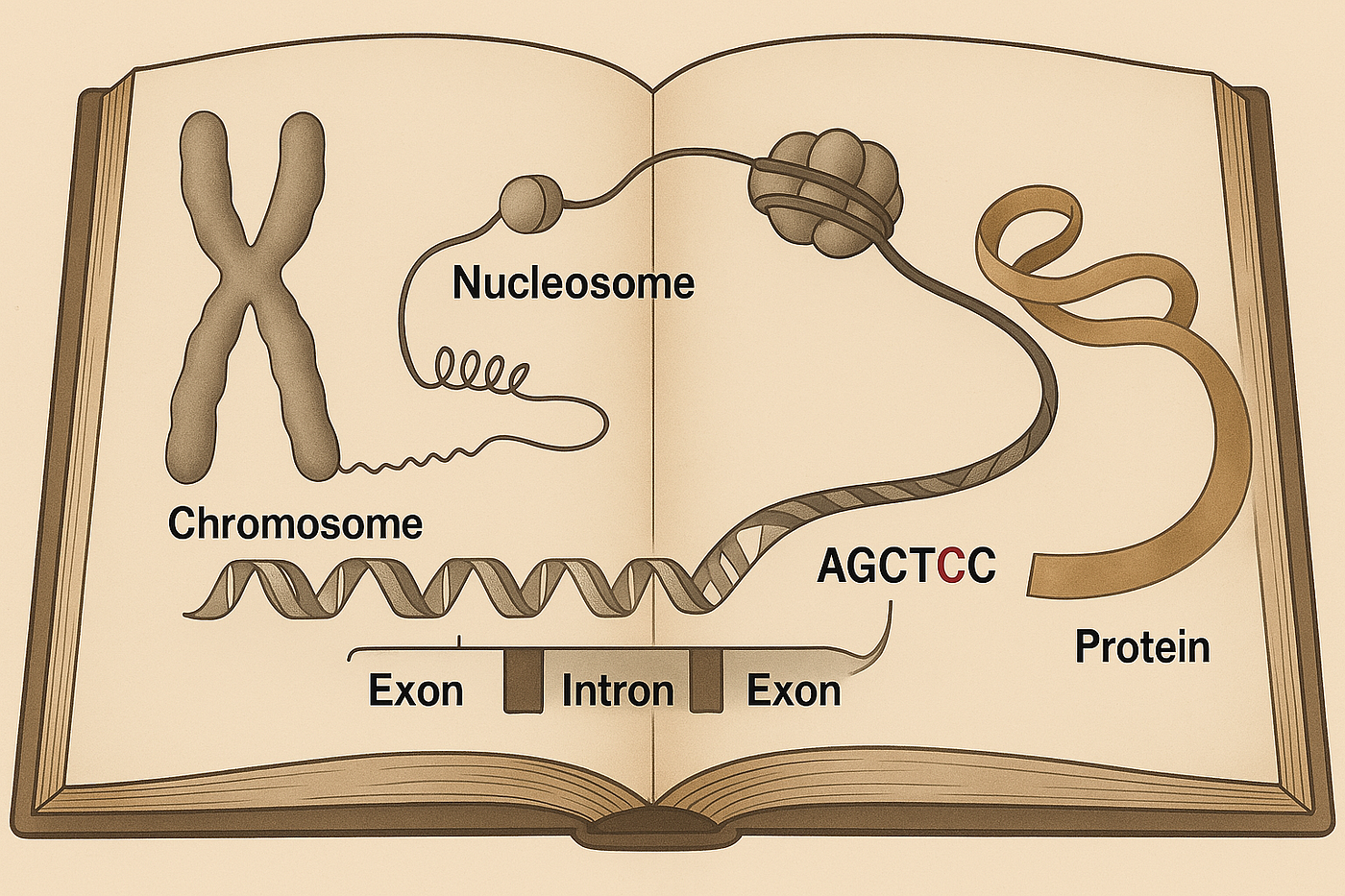
This foundational understanding sets the stage for appreciating how each prenatal test helps us read and interpret our genetic “book.”
Pregnancy Stages and Routine Tests in Israel
Israel offers one of the most comprehensive prenatal care systems in the world. Many tests are covered by national health insurance or supplemental plans, while others are optional and must be paid for privately. Some tests detect the overall structure of life, while others uncover its hidden vulnerabilities. Prenatal care in Israel follows a structured approach guided by trimesters, adhering to guidelines from the Israeli Ministry of Health. Major healthcare providers implement comprehensive tests throughout pregnancy, starting before conception, ensuring parents are informed and prepared at each stage. Here’s a simplified timeline of the key tests with brief explanations:
Before and Early Pregnancy
- Carrier Screening: Couples are often advised to undergo genetic carrier screening before or very early in pregnancy. This blood test checks whether either parent carries genes for certain hereditary diseases common in their ethnicity or family history. Public insurance typically covers basic panels, while more extensive tests are offered privately. (I won’t dive into why this is standard in Israel while other developed countries might differ.)
First Trimester (Weeks 1–12)
- Dating Ultrasound (6–8 Weeks): An early ultrasound confirms the pregnancy, checks for a heartbeat, and verifies the number and location of embryos. This test is covered by the basic health basket.
- Non-Invasive Prenatal Testing (NIPT) (From Weeks 8–10): NIPT is a simple blood test that analyzes tiny fragments of fetal DNA circulating in the mother’s blood. It is a relatively new and cutting-edge test that is highly sensitive in detecting major chromosomal conditions (e.g., Down syndrome, Edwards syndrome). However, it isn’t as comprehensive as diagnostic tests like amniocentesis. Although many HMOs offer partial reimbursement, this test is optional and not fully covered by the public system. Some doctors consider it redundant, arguing that the information will be available in subsequent tests, so it might be better to save money here.
- First Trimester Combined Screening (Around Weeks 10–12): This screening includes a nuchal translucency (NT) ultrasound and maternal blood tests (PAPP-A and β-hCG) to estimate the risk for chromosomal abnormalities such as Down syndrome. The basic health basket covers these tests.
Second Trimester (Weeks 13–27)
- Early Anatomy Scan (Weeks 14–16): Often called the early anatomical survey. This ultrasound scan evaluates the fetus’s basic organ structure, limbs, and head development. It helps detect major anomalies early in the second trimester and is a valuable complement to the more detailed anatomy scan later on. It is widely recommended and typically covered by supplementary insurance or done privately.
- Biochemical Screen — Triple/Quad Test (Around Weeks 15–20): This blood test measures specific markers to assess the risk of chromosomal conditions and neural tube defects. The standard triple test is covered by the public basket (with a minor co-pay), while the quad test, which provides slightly more detail, is usually not covered.
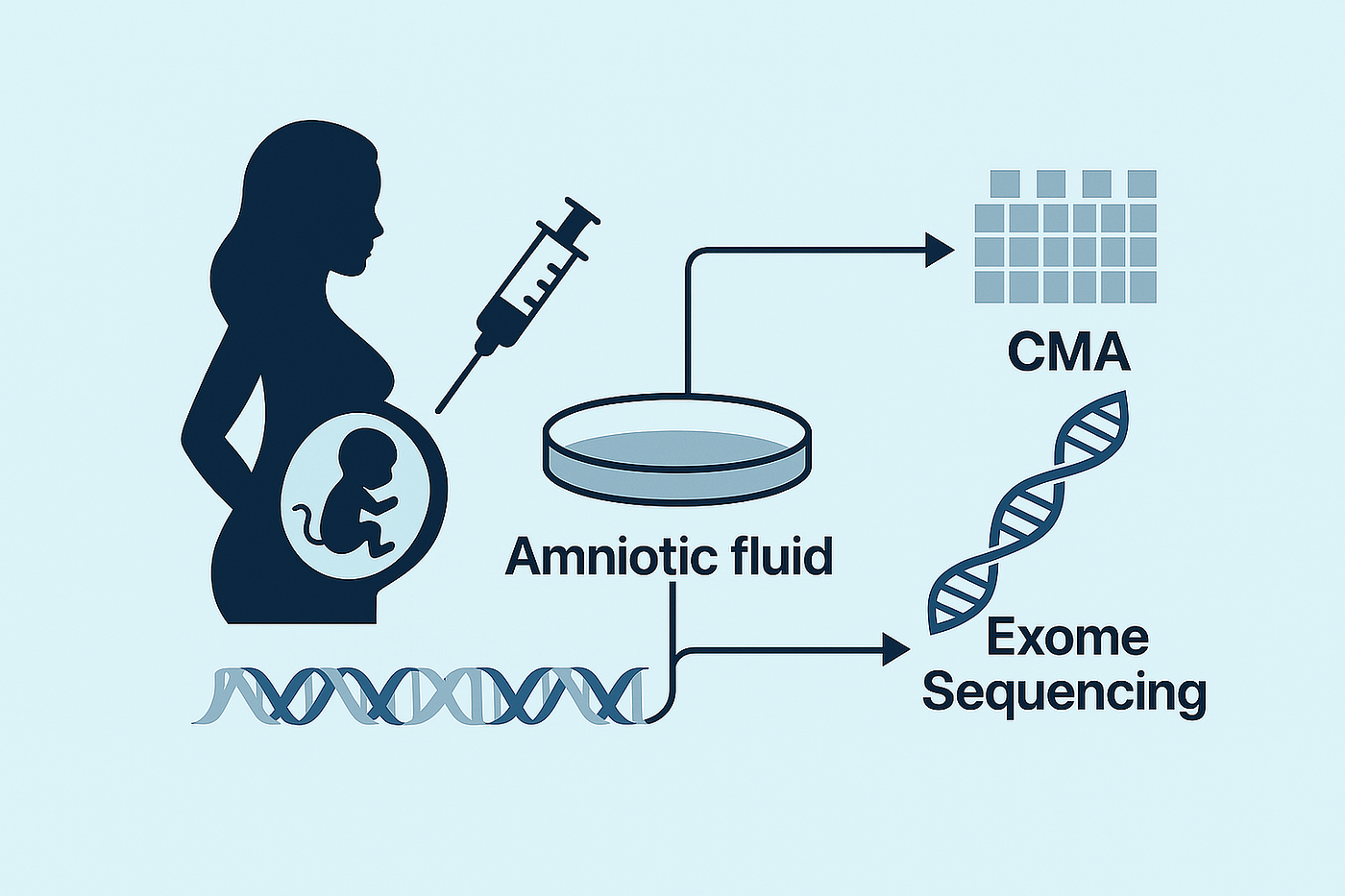
- Diagnostic Testing — Amniocentesis (Weeks 16–20): When there is an indication for closer examination (due to age, high-risk screening, or ultrasound findings), amniocentesis is performed. This invasive test extracts amniotic fluid to obtain fetal cells for further genetic testing. Often, once the sample is collected, a Chromosomal Microarray Analysis (CMA) is performed to detect even small chromosomal imbalances.
- Detailed Anatomy Scan (Around Weeks 19–23): A thorough ultrasound examines the fetus’s organs and overall development. While the basic version is covered, many parents opt for a more detailed scan privately.
Third Trimester (Weeks 28–40)
- Monitoring and Final Checks: As the pregnancy progresses, routine tests check for maternal conditions (like gestational diabetes) and monitor the baby’s growth and position through ultrasounds. These tests help ensure that both mother and baby remain healthy as they prepare for birth.
A Closer Look at Genetic Testing: CMA vs. Exome Sequencing
I would like to focus on the amniocentesis procedure and the genetic tests it enables — specifically, the difference between Chromosomal Microarray Analysis (CMA) and Exome Sequencing.
When we reached the stage of amniocentesis, it became crucial to understand the nuances of our genetic “instruction manual. ” Imagine again the fetus’s genome as a giant manual book with 46 chapters (chromosomes):
- CMA (Chromosomal Microarray Analysis) acts like a detailed check to ensure that all pages are present and in the correct order. It detects if any pages or sections (DNA segments) are missing or duplicated. However, it doesn’t read the actual words on the page.
- Exome Sequencing is like a spell-checker. It reads every word and letter in the most crucial parts of the book (the exons) to find even the most minor typos — those single-letter changes, known scientifically as point mutations, that can alter meaning entirely.
This analogy is central to understanding our experience. Despite normal results from previous standard tests and CMA, it was the exome sequencing — this meticulous proofreading process — that uncovered a critical de novo mutation associated with brain development. This single-letter error was precisely the kind of subtle yet significant issue standard screenings weren’t designed to detect.
Our Story — What the Exome Test Revealed
We had done everything. We went beyond the standard tests, took the NIPT, and underwent amniocentesis with CMA. Every scan and screen returned perfect results. The ultrasound was reassuring. The CMA came back clean.
We were told the exome results would take about two weeks. We waited. Days passed, and then more days passed. We both began to feel uneasy. There were no updates, not even partial results. Then, after the CMA results reassured us and we had shared the joyful news with our family (telling our son he would have a little sister), the call came.
It was the middle of a working day. My wife called me, crying. The lab’s genetic professor had contacted her directly, urging us to come in that very day — an urgency that rarely happens unless something is terribly wrong. We quickly arranged for someone to care for our son and headed to the clinic.
At the clinic, the professor greeted us with quiet seriousness. After asking about the pregnancy, our health, and the tests we had done, he delivered the result:
A single de novo mutation in a gene crucial for brain development. It was not inherited but occurred spontaneously — and it was critical.
He explained that this specific mutation is associated with a severe neurological condition. The chances of a healthy life were extremely low. There was no ambiguity in his recommendation: termination.
It was shocking. We were in complete disbelief. For a long while, we didn’t know what to do. We sat with the weight of the news, trying to absorb its implications. Eventually, as the fog of confusion cleared slightly, we began to act practically. We made arrangements quietly and efficiently, preparing ourselves for the inevitable.
What I Want You to Know
When you’re faced with the option of an additional test — especially one that costs money, isn’t mandatory, and involves a long wait — it’s easy to say, “Maybe we don’t need it.” We almost skipped the exome. But had we done so, we might have continued the pregnancy with happiness and confidence, only to confront a life filled with unanticipated complications later on. The exome test, painful as its results were, gave us clarity. And for that, I am grateful.
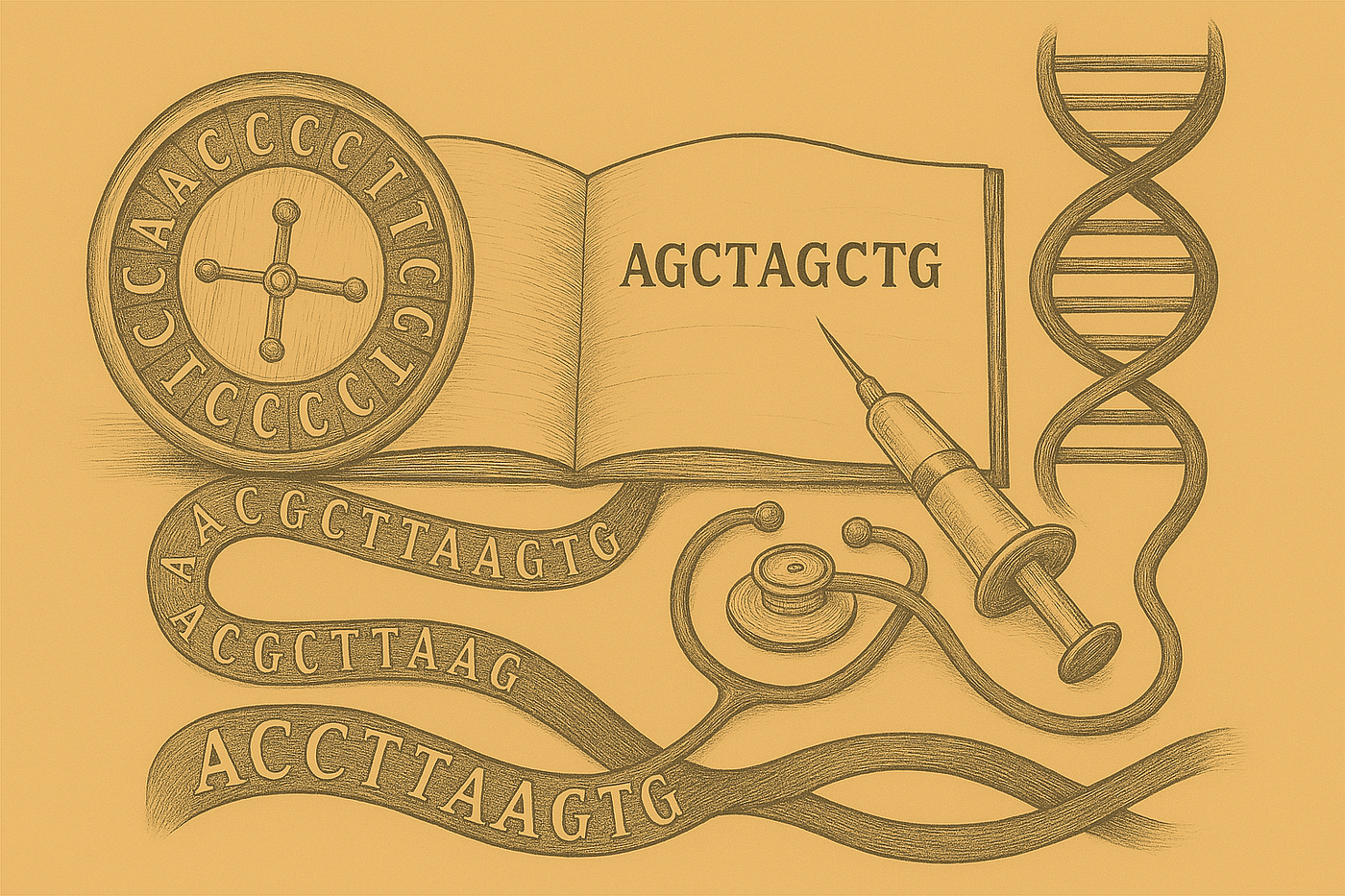
Why take a gamble when you can choose with information and knowledge? Imagine standing before a roulette wheel at a casino, and someone can tell you exactly which number will come up before you even place your bet. You’d never say, “No thanks, I’ll take my chances.” That’s just money. But when it comes to your child’s life and your family’s future, why take that chance?
Life doesn’t always go as planned. Many pregnancies come with complications. Many people face incredibly difficult paths — whether in pregnancy, at birth, or later in life. That is part of the human experience.
I don’t think our case is unique, and I don’t think we are special. I’m sure many couples encounter experiences just as complex and painful. But I wanted to share our story to raise awareness. If this post helps even one couple make a more informed decision, then it was worth writing.
I won’t tell anyone what the “right” decision is, but I want you to know what’s possible. I want you to have the information you need to choose for yourself.
메타데이터
- post_id
- 74593fc539a1
- slug
- dont-gamble-with-the-unknown-how-modern-genetic-testing-gave-us-clarity-74593fc539a1
- url
- https://medium.com/@yonatanmh/dont-gamble-with-the-unknown-how-modern-genetic-testing-gave-us-clarity-74593fc539a1
- canonical_url
- https://medium.com/@yonatanmh/dont-gamble-with-the-unknown-how-modern-genetic-testing-gave-us-clarity-74593fc539a1
- author_url
- https://medium.com/@yonatanmh
- status
- ok
- fetched_at
- 2026-06-09 15:37:30