Pokkuveyil
Pokkuveyil (Twilight), the 1982 Malayalam-language elegy directed by G. Aravindan, is not so much a film as it is a fugue — an…
Pokkuveyil
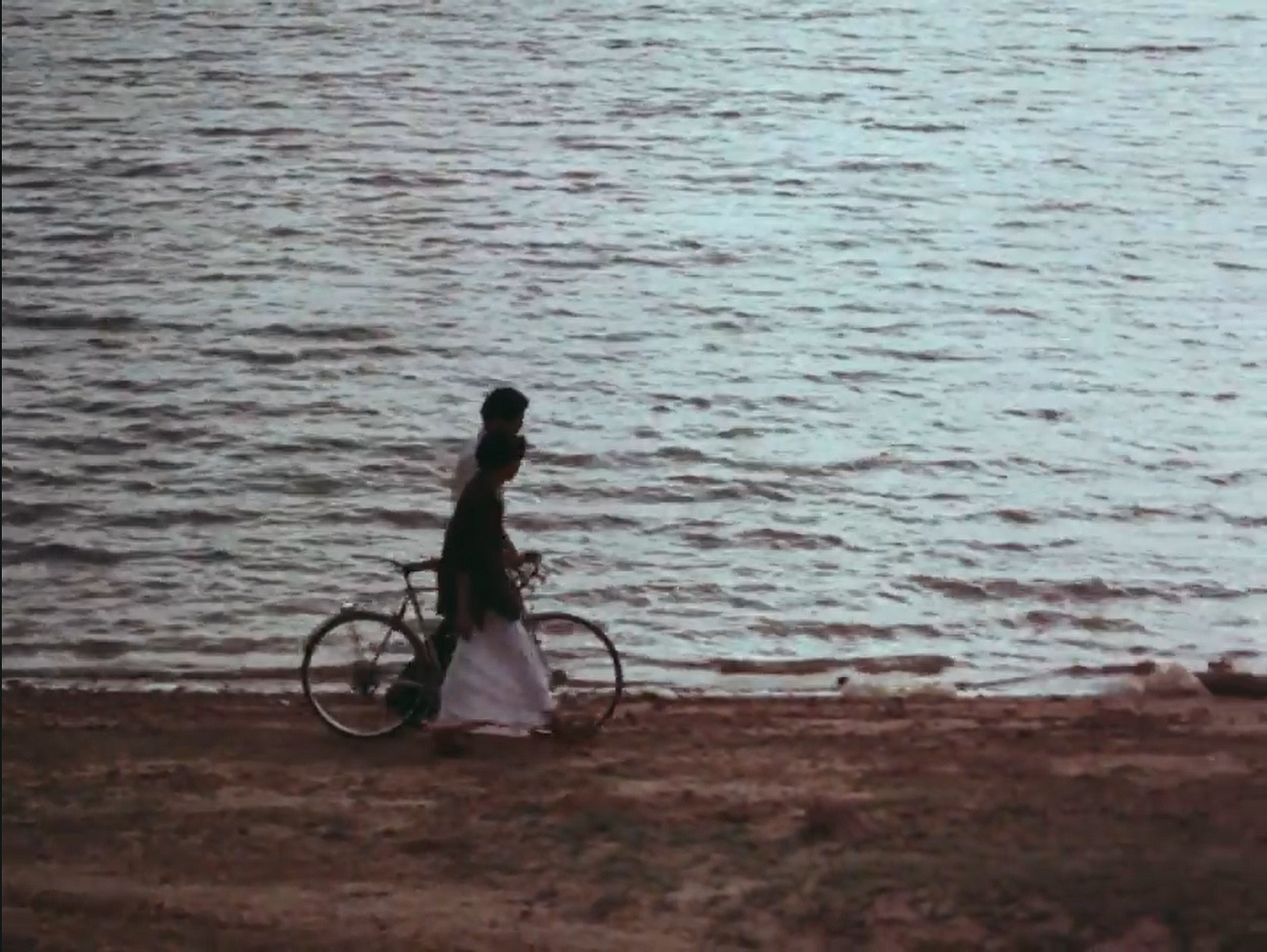
Pokkuveyil (Twilight), the 1982 Malayalam-language elegy directed by G. Aravindan, is not so much a film as it is a fugue — an orchestration of memory, melancholy, and metaphysical unease. Starring the poet Balachandran Chullikkad alongside Kalpana and Satish Kumar, the work occupies a rarefied space in Indian cinema, eschewing the certitudes of plot for the tremors of the psyche. Sparse in dialogue yet sonorous in spirit, it unfolds with an unusual rhythm that renders it defiantly distinct from the mainstream idiom of its time.
Honoured with the National Film Award for Second Best Feature Film and the Kerala State Film Award for Best Direction at the 29th National Film Awards, the film was rightly commended for its haunting visualisation of a mind poised precariously on the brink of unravelling. Indeed, Pokkuveyil is less concerned with storytelling than with soul-telling.
The narrative — or what passes for one — begins in a psychiatric institution, where Balu (played with aching inwardness by Chullikkad) sits institutionalised, withdrawn into a private abyss. What follows is not a chronological recounting but a lyrical excavation: a procession of flashbacks that piece together the slow erosion of a sensitive, introspective young poet.
Balu’s world is peopled by figures who function less as characters than as emotional lodestars. A robust sportsman friend, emblematic of youthful vigour, is suddenly felled by a disabling accident, shattering Balu’s faith in the invincibility of youth. A fervent leftist companion, animated by ideological conviction, disappears into political underground, leaving behind an echoing void. And then there is Nish (Kalpana), the music-loving young woman whose shared verses and silences offer Balu a fleeting sanctuary of tenderness. When her family relocates, even that fragile refuge dissolves.
Personal loss compounds existential disquiet. His father’s sudden death cleaves the last pillar of emotional stability, and Balu, increasingly estranged from both his surroundings and himself, drifts into psychological fragmentation — fear neurosis, hallucinations, emotional paralysis. The asylum, glimpsed at the film’s outset, becomes the inevitable harbour for a mind battered by successive tempests.
What elevates Pokkuveyil from narrative to near-mythic experience is its extraordinary construction. Aravindan recorded the Hindustani classical score — featuring the celestial flute of Hariprasad Chaurasia and the meditative sarod of Rajeev Taranath — prior to shooting. The film’s images were then composed almost as visual annotations to music, reversing the conventional hierarchy of sound and sight. Dialogue recedes; melody reigns. Silence, too, becomes articulate.
Cinematographer Shaji N. Karun frames the landscape — sea, twilight skies, windswept expanses — not merely as backdrop but as psychic cartography. Nature mirrors Balu’s inner turbulence: vast, impermanent, and ineffably lonely. The lingering camera, the natural light, the contemplative pacing — all conspire to create not cinema in the traditional sense, but visual poetry.
Chullikkad’s performance is a study in restraint, communicating anguish through the slightest tremor of expression. Kalpana’s Nish radiates a luminous gentleness, embodying the evanescent possibility of solace. The supporting characters — sportsman, activist, parents — anchor Balu’s descent in recognisably human relationships, rendering his disintegration all the more tragic.
Ultimately, Pokkuveyil is a meditation on alienation and the fragility of selfhood. It invites the viewer not to follow a story, but to inhabit a state of being — to feel the slow seepage of loss, the ache of memory, the terrifying elasticity of the mind. In doing so, it stands as a testament to Aravindan’s visionary artistry: a cinematic poem that lingers like twilight itself — beautiful, ambiguous, and tinged with irrevocable sorrow.
메타데이터
- post_id
- 7487234b7131
- slug
- pokkuveyil-7487234b7131
- url
- https://medium.com/@vram45/pokkuveyil-7487234b7131
- canonical_url
- https://medium.com/@vram45/pokkuveyil-7487234b7131
- author_url
- https://medium.com/@vram45
- status
- ok
- fetched_at
- 2026-07-15 19:38:20