Can Gaming Tournaments become Dignity and Livelihood Engine in Dharavi?
A Preliminary Case Study of an Ongoing Exercise by RankUpRising, Sapio Analytics and ARC: Evaluation of the significance of gaming in…
Can Gaming Tournaments become Dignity and Livelihood Engine in Dharavi?
A Preliminary Case Study of an Ongoing Exercise by RankUpRising, Sapio Analytics and ARC: Evaluation of the significance of gaming in social and economic upliftment in the largest slum of Asia, currently undergoing one of the biggest ever redevelopments in the history of the world
The Hyperlocal Experiment that Dharavi residents are talking about
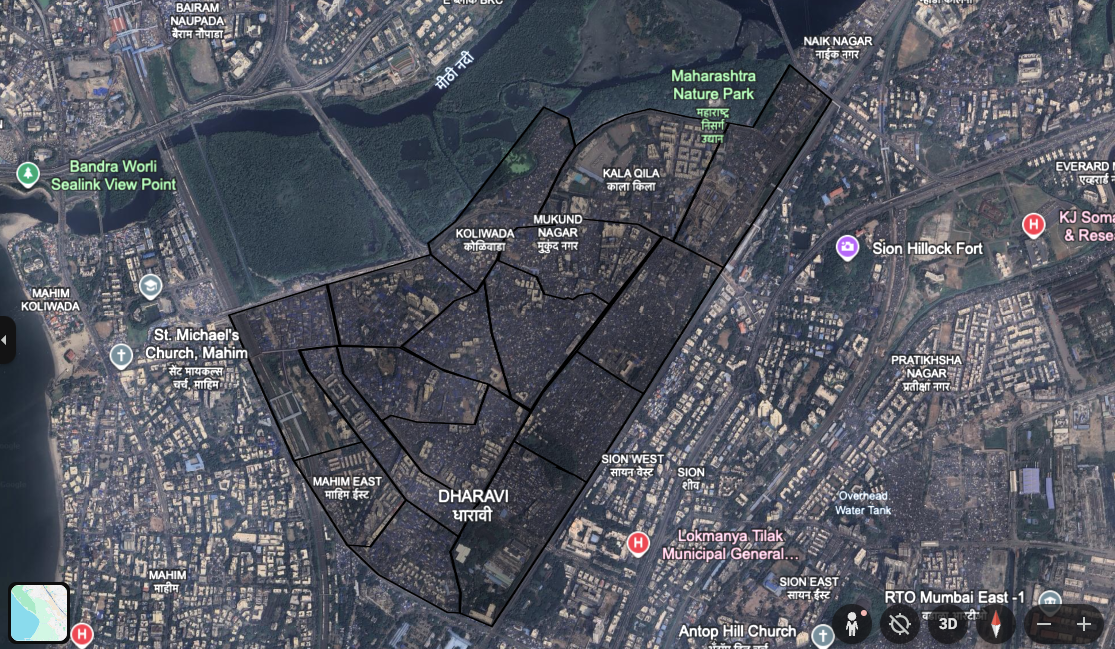
Dharavi divided into 16 micro-territories which is now the basis of hyperlocal intelligence generation for the region
This case study documents an innovative hyperlocal experiment in Dharavi that transforms BGMI (Battlegrounds Mobile India) esports tournaments into a credible mechanism for identifying, verifying, and placing youth talent. By combining gaming engagement with rigorous identity verification and employer-led skill profiling, the initiative demonstrates how play-based discovery can unlock economic opportunity in communities that remain underserved by traditional skilling pathways.
In its early phases, the tournament has already engaged 400+ youth, registered 200+ participants across six diverse communities, placed 4 candidates into jobs, and rewarded 38 individual winners with both monetary recognition and social dignity. More importantly, it has revealed that gaming acts as a powerful equalizer and that young people — when given genuine respect and opportunity — will self-select toward productive uses of their talents.
The Dharavi Landscape- A Quick Summary
Dharavi is one of Asia’s largest informal settlements, home to approximately 1 million people.
We have designed 16 micro-territories across the settlement, each developed with deep sensitivity to the unique social, cultural, and socio-economic context of its residents. Despite its density and diversity, the region remains largely disconnected from formal opportunity pipelines.
Youth face multiple barriers to entry into credible skill-assessment and employment pathways:
• Limited visibility into their actual capabilities beyond surface credentials
• Employer distrust and information asymmetry
• Absence of verified identity and geographic anchor points
- Cultural gatekeeping within traditional skilling models
Can a hyperlocal gaming tournament become a credible, transparent, and inclusive mechanism for identifying verified talent? Can it shift how communities perceive gaming — from a wasteful distraction into a gateway to dignity and livelihood?
The Intervention
Core Innovation: From Entertainment to Evidence
The Dharavi Gaming Tournament operates on a simple but powerful premise: gaming displays real skills — attention to detail, problem-solving, rapid decision-making, spatial reasoning, and teamwork. By placing tournaments within a rigorous verification framework, these displayed skills become credible signals of capability.
The Three-Layer Model
1. Hyperlocal Territorialization
We have divided Dharavi into 16 micro-territories, each designed with sensitivity to the unique social, cultural, and socio-economic context of its residents. This granular approach ensures that outreach is culturally attuned and that participation feels local rather than externally imposed.
2. Verified Identity & Geographic Anchoring
All participants undergo dual verification: (a) initial household survey with geographic mapping and geotagged location, and (b) identity confirmation at tournament entry. This verification layer addresses employer concern about authenticity and provides an auditable trail of skill discovery.
3. Skill Profile & Employer Linkage
Performance data from tournaments is mapped to explicit skill attributes (attention to detail, problem-solving, rapid cognition, teamwork). Selected employers review these profiles and conduct targeted interviews, creating a bridge from gaming evidence to formal hiring.
RankUpRising has created a 3-layered model based on the philosophies of ARC and Sapio Analytics, to generate a new environment of positive gaming.
Tournament Structure
The RankUpRising tournament is staged in phases: a pilot engagement and one qualifier have already been conducted. Multiple qualifiers will continue across territories before the final event in September 2026. Between phases, the team documents insights about community, engagement, and skill expression. By September 2026, final results will be announced and winners publicly celebrated.
Critically, the tournament is framed not as entertainment but as a skill-assessment mechanism. Participants are explicitly told that their performance is being observed, recorded, and used to create skill profiles for employers — transforming the act of playing into evidence-gathering.
Results & Early Evidence
Quantitative Outcomes

The current numbers of the program, as of 4th June (this is an ongoing exercise and this article is only a preliminary review and case analysis)
Qualitative Insights already gathered
There is a lot more intelligence that can be generated from this exercise, using artificial intelligence (powered by Sapio’s Livelihood Intelligence Models), and on-ground data collection, but the following insights already speak a lot:
Inclusion Across Communities
Participation spans multiple religious, ethnic, and economic communities within Dharavi. Remarkably, gaming dissolves traditional social boundaries: youth who might not interact across community lines collaborate seamlessly during tournaments. This suggests gaming as a powerful social leveler.
Youth Agency & Autonomy
Youth consistently express preference for autonomy, recognition, and dignity over restrictive, low-wage jobs. Traditional labor market offerings feel demeaning. When framed as talent recognition and paired with genuine opportunity, young people show eagerness to participate and excel.
Community Engagement as Entry Point
Communities perceived as “hard to reach” in conventional skilling programs engage readily with gaming. The Koli community, for example, shows minimal interest in formal skilling but strong enthusiasm for the tournament. Gaming overcomes cultural resistance where policy frameworks do not.
Women’s Gaming & Preferences
Women participate actively in the tournament. They exhibit distinct preferences: strategy-heavy games over action-heavy ones, low-bandwidth participation options, and a strong aversion to violence-centric game mechanics. The data is explicit: design for gender-inclusive participation requires deliberate game selection.
Identification of At-Risk Youth
A subset of players exhibit signs of gaming addiction, using tournaments as an outlet for emotional distress. The team has identified these individuals and is routing them toward counselling and mental-health support, demonstrating that the tournament infrastructure can also serve as an early-warning system for vulnerable youth.
How This Creates Real Change
For Youth: From Invisibility to Recognition

Leaders flew in from all parts of the world to celebrate the pilot tournament, thanking not only the participants but also their families and supporting ecosystem
For the 38 youth who won prizes and the 4 who received job offers, the tournament provided something absent from their prior experience: public recognition of their capabilities. They received money, but more importantly, they received dignity. Their skills — problem-solving, attention, speed of thought — were explicitly named, measured, and valued. This reframing has downstream effects: family pride, peer respect, and the internalization that their talents matter.
For the broader 200+ who participated, the experience offers a new mental model of what their capabilities might enable. They have been seen, verified, and given a shot to prove themselves in a fair, transparent arena. For many, this is the first time.
“When our parents feel proud of what we do, we achieve true success. Parents are now proud of us playing games in the right way.”
For Communities: Gaming as Cultural Sanction
Initial skepticism from parents has given way to enthusiasm. When parents see their children recognized, rewarded, and connected to genuine employment, the cultural narrative around gaming shifts. Gaming is no longer time-wasting; it is productive. This reframing takes hold within households and communities, changing what is considered a legitimate use of youth time and talent.
Communities that were historically “hard to reach” are now proactively participating. The success of early events creates word-of-mouth momentum that bypasses formal marketing. Youth recruit their peers. Families encourage participation. The tournament becomes embedded in the community consciousness as something locally valuable.
For Employers: Verified Signal in an Asymmetric Market
Employers facing information asymmetry about informal-sector talent can now access verified skill profiles with geographic and identity validation. The 4 hires represent a pilot validation: these candidates matched profile expectations during interviews. Feedback loops will allow continuous refinement of the skill-to-job mapping.
Over time, as the tournament scales to all 16 territories and more employers adopt the profiles, a new talent market infrastructure emerges — one that is transparent, hyperlocal, and built on demonstrated capability rather than credential filtering.
For Governance & Policy: A Replicable Model
The tournament demonstrates that play-based discovery can be operationalized in an accountable, data-driven manner. It aligns with India’s skilling ambitions while respecting the ground realities of informal communities. With validated outcomes, this model becomes transferable to other informal settlements and regions.
Underlying Dynamics: This is actually working!
Gaming as an Equalizer
Gaming strips away the social signaling that distorts traditional labor markets. Whether you come from a wealthy household or a poor one, whether you attended a fancy school or none, your in-game performance is the same. The playing field is genuinely level. This creates a rare moment of pure meritocracy that communities recognize and respect.
Transparency as Trust-Building
Youth see exactly how they are being evaluated (game performance maps to named skills), and employers see the same. There is no hidden gatekeeping, no opaque resume screening, no unexplained rejections. This transparency builds trust and legitimizes the process in the eyes of skeptical communities.
Dignity as Motivation
Youth do not merely want jobs; they want respect. The tournament delivers both by positioning young people as valued talent, not desperate labor. This motivation shift is critical: it changes not only who participates but how they present themselves and how employers perceive them.
Hyperlocal Design Respects Agency
By rooting the tournament in 16 micro-territories that we have designed and tailoring outreach to local context, the initiative respects community autonomy. It does not impose a top-down program; it creates a space and invites participation. This agency — the ability to opt in — is itself empowering.
Challenges & Frontier Questions
Scale & Resource Intensity
Running tournaments across 16 territories, maintaining quality of skill profiling, and managing employer partnerships requires sustained operational investment. As the model scales, unit costs must be monitored carefully to ensure sustainability.
Long-Term Retention & Mobility
The 4 job placements represent early traction, but retention, wage growth, and career mobility of placed candidates remain to be tracked. Does gaming-based placement lead to stable, fulfilling work? This will be a critical measure of true impact.
Skill Transferability
While gaming demonstrates skills like attention and problem-solving, translating these signals into specific job requirements across diverse sectors is non-trivial. More data on which in-game behaviors predict success in which roles will strengthen the model.
Addiction & Mental Health
The identification of at-risk youth is valuable, but the support infrastructure must be robust. Gaming-based opportunity must not inadvertently deepen addiction or mask deeper mental-health needs. Partnerships with counselling services are essential. Programs that support Dharavi youth are being partnered with.
Gender Equity in Practice
Early participation by women is encouraging, but ensuring women feel safe, included, and given equal recognition across all tournament phases requires deliberate design. Cultural norms around women’s public visibility and engagement must be navigated carefully.
Theoretical Contribution
This case study contributes to a growing body of evidence that informal settlements possess untapped productive capacity that remains invisible to formal labor markets. The mechanism of invisibility is not lack of capability but lack of credible, transparent signal of capability.
By combining three elements — play-based engagement, verified identity, and employer linkage — the tournament creates a new form of transparent market for informal talent. This model challenges both the supply-side narrative (“these communities lack skills”) and the demand-side narrative (“informal workers are inherently risky”). It demonstrates that both can be overcome through better information and institutional design.
Gaming, often dismissed as a social negative, emerges here as a legitimate and powerful tool for human-capability discovery and economic inclusion. This reframing has implications for policy, for employer practices, and for how communities themselves understand the potential of their youth.
Conclusion
The Dharavi Gaming Tournament is not merely an experiment; it is a demonstration that play, when structured with intention, can become a legitimate and powerful mechanism for human-capability discovery and economic inclusion. In its early phases, it has proven that:
• Gaming serves as an effective equalizer, transcending social boundaries and creating fair competition.
• Youth in informal settlements are eager to be recognized for their talents when given transparent, dignified pathways.
• Communities that resist traditional skilling readily embrace play-based discovery.
• Verified identity + skill profiling + employer linkage creates a credible new market for informal talent.
• The model is replicable, scalable, and aligned with India’s livelihood-intelligence ambitions.
As the tournament scales from one territory to 16, and from 38 winners to potentially hundreds of placed candidates, the narrative will crystallize: gaming became a dignity engine because we chose to see youth talent, verify it rigorously, and honor it with genuine opportunity.
Dharavi’s youth have always possessed capability. They needed visibility, legitimacy, and a door that opened based on merit. This case study documents that moment when the door opens.
메타데이터
- post_id
- 748bfc1e8cfd
- slug
- can-gaming-tournaments-become-dignity-and-livelihood-engine-in-dharavi-748bfc1e8cfd
- url
- https://medium.com/@theaigovernment/can-gaming-tournaments-become-dignity-and-livelihood-engine-in-dharavi-748bfc1e8cfd
- canonical_url
- https://medium.com/@theaigovernment/can-gaming-tournaments-become-dignity-and-livelihood-engine-in-dharavi-748bfc1e8cfd
- author_url
- https://medium.com/@theaigovernment
- status
- ok
- fetched_at
- 2026-07-10 06:10:56