When a Tree Becomes Dangerous: A Practical Emergency Plan
You do not need a storm worthy of the news to end up with a dangerous tree. A few days of wind and rain can be enough to loosen roots…
When a Tree Becomes Dangerous: A Practical Emergency Plan
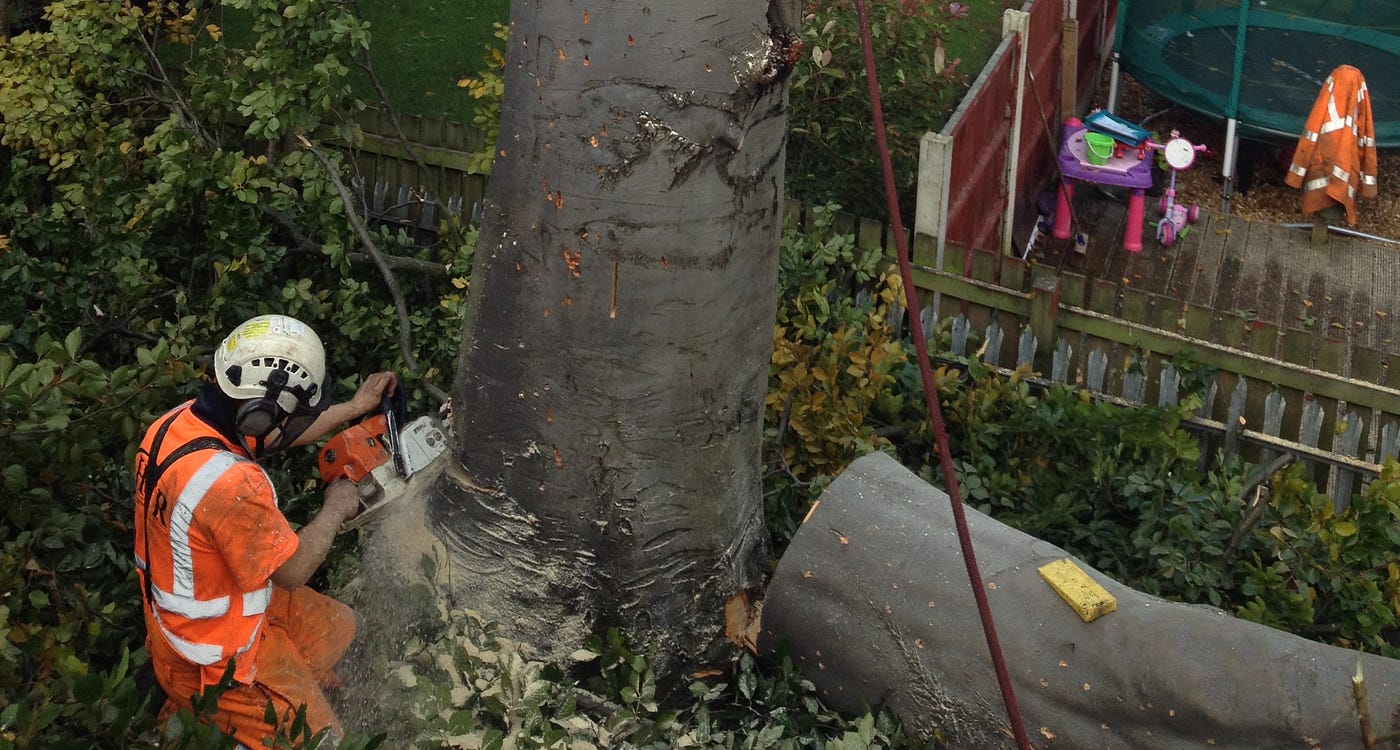
You do not need a storm worthy of the news to end up with a dangerous tree. A few days of wind and rain can be enough to loosen roots, split a stem, or bring down a heavy limb. And when it happens, it rarely feels neat. It feels urgent, messy, and a little bit unsettling.
This plan is designed for that moment. Not theory, not jargon. Just the practical steps that help you keep people safe, protect property, and get the right work done quickly.
Is it an emergency, or just inconvenient?
If you are debating whether something is “bad enough” to count as urgent, treat that uncertainty as a warning sign. Trees can shift again after the first failure. What looks stable at 9am can move by lunchtime if the wind picks up or the ground softens.
Here are the red flags that usually mean you should act fast:
- The tree has started leaning suddenly, especially if it was upright before
- You can see cracking in the trunk or a major split where two stems join
- The ground has lifted around the base, or roots are visibly heaving
- A large branch is hanging down, snagged, or resting on another limb
- The tree is touching a building, fence, wall, or vehicle
- It is blocking access routes, entrances, or work areas
- It overhangs a public footpath or road, even if nothing has fallen yet
- You can hear new creaking or see movement in the canopy during gusts
If one or two of these apply, you are not looking at a “weekend job”. You are looking at a risk that can escalate.
The first 15 minutes: make it safer without touching the tree
The quickest way to make a dangerous tree worse is to rush in and start pulling, cutting, or climbing. The goal at this stage is not to fix it. It is to control the hazard until a qualified team can assess it properly.
Do:
- Keep people away from the area, including pets
- Move vehicles out of the drop zone if it is safe to do so
- Mark a clear no-go zone with cones, tape, bins, or anything visible
- Keep doors and paths closed that lead under the canopy
- Take a few photos from a safe distance for later
Avoid:
- Ladders, ropes, or “just a quick trim” attempts
- Cutting branches under tension (they can spring violently)
- Pulling on hung-up limbs or pushing a leaning tree
- Standing under the canopy to “look up” for too long
- Using a chainsaw if you are not trained and equipped
A common misconception is that once a limb has fallen, the danger has passed. In reality, partial failures often mean there is more load still waiting to shift.
Triage details that speed up the right response
When you call for help, the fastest route to a safe solution is clear information. You do not need to diagnose the tree. You just need to explain what has changed and what is at risk.
Have these points ready:
- What happened: high winds, a strike from a vehicle, ground movement, visible decay, or “it suddenly leaned”
- What failed: uprooted base, split trunk, large limb down, hanging branch, or canopy movement
- What it could hit next: house, outbuilding, parked cars, boundary wall, footpath, neighbouring property
- Access: driveway width, gates, soft ground, steps, restricted hours, security on site
- Utilities: overhead lines nearby, street lighting, or anything that suggests electrical risk
If overhead power lines are involved, keep well back and treat the area as high risk. Even if the tree is not touching a line, it may be close enough to become a serious hazard once it moves.
Why “make-safe” comes first in emergency tree work
In a true emergency, the priority is rarely “finish the whole job today”. The priority is to remove the immediate danger in the right order. That is why professional **emergency tree work** often begins with a make-safe visit that stabilises the situation before any bigger decisions are made.
Making safe can involve:
- Removing hanging limbs (often called “hangers”) that could drop without warning
- Reducing weight in a stressed canopy to limit further tearing
- Dismantling damaged sections to prevent a full failure
- Creating a controlled drop zone and clearing access routes
This is the point where experience matters. Damaged timber behaves differently. Loads shift. Hidden fractures show up. Branches that look supported can be sitting under tension. That is why a calm, methodical approach is safer than improvising.
At Treetops, we focus on controlled, risk-managed work across the North West, West Yorkshire and North Wales. The job is not just to remove wood. It is to make the area safe and leave you with a clear next step.
When removal is the safest option
Sometimes, the safest outcome is straightforward: the tree needs to come out. That is more likely when you have major structural failure, significant uprooting, repeated limb loss, or severe decay revealed by a storm.
Safe removal is not “take it down quickly”. It is controlled work that matches the constraints of the site. Most emergency removals fall into one of two approaches:
Controlled felling (when space allows)
If there is enough clear space and the tree can be safely directed, felling can be the most efficient option. Even then, it requires proper planning, a clear drop zone, and the right equipment.
Sectional dismantling (when space is tight)
In built-up areas, on commercial sites, or near roads and structures, the tree is often taken down in sections. This is slower, but it is controlled. Each piece is removed in a planned sequence so it does not damage what is below.
This is where **tree cutting, felling and removal** becomes more than a label. It is a structured method that protects buildings, boundaries, and the people nearby, especially when the tree is already unstable.
What a good emergency response looks like on arrival
When you are stressed and trying to get normal access back, it helps to know what should happen when the team arrives.
A competent emergency response typically starts like this:
- Site safety first: clear exclusion zones, signage, and safe working boundaries
- A quick but proper assessment: what is damaged, what might move next, what is the safest sequence
- A clear plan: what will be removed now, what can wait, and how the site will be left
- Controlled execution: cutting and lowering methods that prevent secondary failures
- A tidy handover: debris managed, access restored where possible, and hazards removed
For commercial sites and public spaces, those first steps are even more important. A blocked access road, a compromised boundary, or a tree overhanging a walkway is not just inconvenient. It is a liability.
Qualifications, insurance, and compliance: quick checks that matter
When you need help quickly, it is tempting to accept the first person who says they can “do it today”. The problem is that emergency work is where the risks are highest. This is not the time for shortcuts.
Here are practical checks you can make without slowing things down:
- Competence and training: ask if the team is trained for chainsaw and aerial work where needed
- Insurance: confirm they carry appropriate cover, not just a vague “fully insured” claim
- Method and safety controls: they should talk about cordons, drop zones, and safe access
- Equipment: the right kit for the situation, not a one-saw-fits-all approach
- Communication: they explain what they are doing and why, in plain terms
- Care around utilities and public areas: especially near roads, footpaths, and live sites
Treetops is a family-run team, and we take this side seriously. Qualifications, insurance, and a practical method are not “nice to have”. They are the basics that keep people safe and protect your property.
TPOs and conservation areas: the rules still matter
A common worry is whether you are allowed to do anything if the tree is protected. The short version is this: emergencies still need a defensible approach.
If a tree is under a Tree Preservation Order or within a conservation area, there are rules around works. However, genuinely dangerous trees are not expected to be left to fail. The sensible approach is to document what you can and involve the right professionals early.
If you can do so safely:
- Take photos showing damage, lean, cracking, or failure points
- Note the date and what caused the change (wind, impact, ground movement)
- Keep any communication records if a public route is affected
A reputable contractor will talk you through the practical next steps and help keep everything compliant while prioritising safety.
After the immediate danger: recovery and prevention
Once the hazard has been removed or stabilised, you can shift from emergency response to recovery. That might mean clearing debris fully, restoring access, or making decisions about what happens next on the site.
In many cases, this is also the moment to think about prevention. Storms and ground conditions do not create every problem from scratch. They often reveal weaknesses that were already there, such as decay pockets, poor structure, or root issues.
If a tree has failed once, it is worth asking:
- Are there neighbouring trees with similar exposure or structure?
- Is there evidence of decay, fungi, or deadwood higher up?
- Has recent ground work affected root zones or stability?
When removal is the right outcome, the aim is always the same: **removing trees safely and efficiently**, without turning an urgent situation into a bigger one.
Questions people ask in the moment
“A branch has fallen. Is it always an emergency?”
Not always, but it is a signal. A single fallen limb in calm weather can mean internal decay, previous storm damage, or structural weakness. If there are hanging branches, new cracks, or signs the canopy is still unstable, treat it as urgent.
“Can I cut it up myself if it’s already on the ground?”
Only if it is truly free of tension, away from other limbs, and you are trained and equipped. Timber that is pinned, twisted, or caught under load can move suddenly. Many injuries happen during “cleanup”, not during the original storm.
“What if it’s leaning towards a neighbour’s property?”
Focus first on safety. Mark a no-go zone and avoid making the situation worse. If there is a risk of imminent failure, professional make-safe work is usually the fastest way to reduce the danger while you handle any neighbour discussions calmly.
“What happens on commercial sites or development land?”
The principles are the same, but access, public interface, and documentation matter more. A controlled response that restores safe operations is often the priority, especially where vehicles, contractors, or the public are nearby.
“How do I choose help quickly without taking a risk?”
Look for calm, practical competence. Ask about insurance, training, and how they will control the site. If you are searching for **tree cutting services close to you**, prioritise teams who talk about safety and method, not just speed.
What to do next
If a tree has become dangerous, the best move is usually simple: control the area, avoid DIY fixes, and get a qualified team to assess it properly. The right response can prevent property damage, protect the public, and keep disruption to a minimum.
Treetops provides emergency response and structured tree work across the North West, West Yorkshire and North Wales. If you can share what you are seeing, and photos from a safe distance, we can advise on the safest next step and the most practical way to get your site back under control.
메타데이터
- post_id
- 748eec70326c
- slug
- when-a-tree-becomes-dangerous-a-practical-emergency-plan-748eec70326c
- url
- https://medium.com/@treetopsltd/when-a-tree-becomes-dangerous-a-practical-emergency-plan-748eec70326c
- canonical_url
- https://medium.com/@treetopsltd/when-a-tree-becomes-dangerous-a-practical-emergency-plan-748eec70326c
- author_url
- https://medium.com/@treetopsltd
- status
- ok
- fetched_at
- 2026-07-17 23:16:01





