The Cognitive Revolt. The Pacifist Movement as a Response to Mass Sleepwalking
Article by Federico Berti
The Cognitive Revolt. The Pacifist Movement as a Response to Mass Sleepwalking
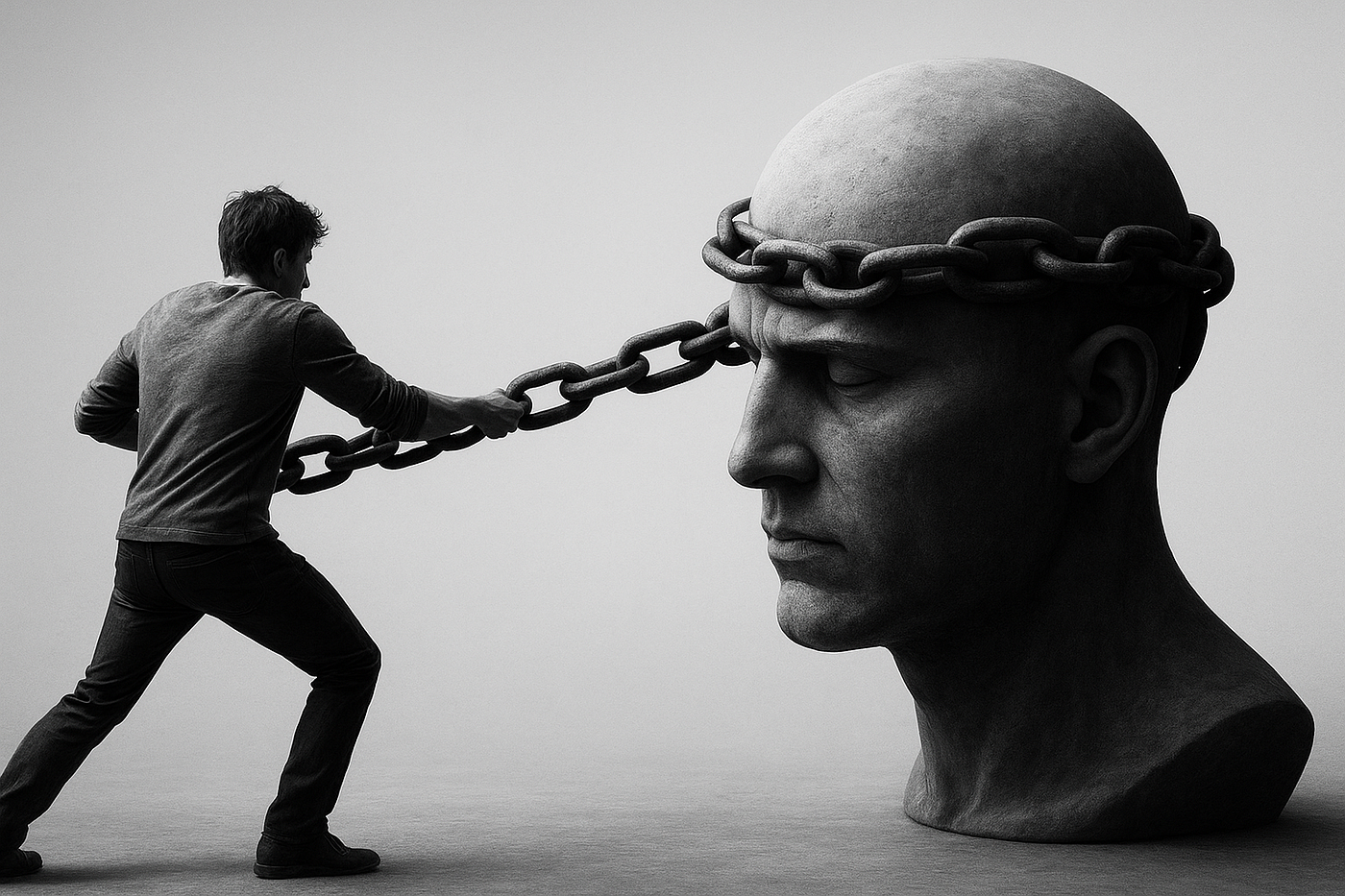
Illustration Artwork by Federico Berti. Created with Gimp/GPT
Article by Federico Berti
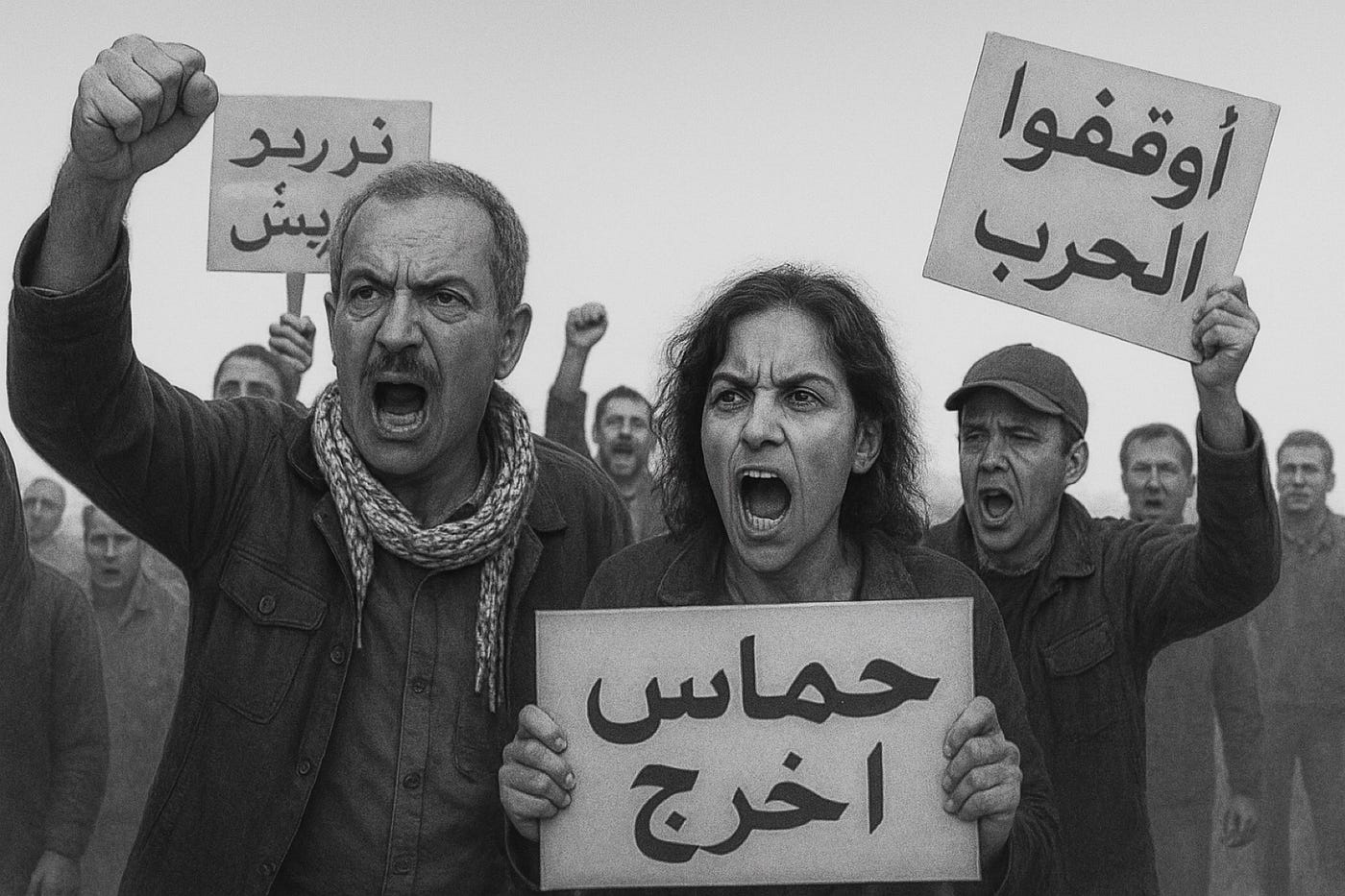
One of the most frequent objections to internationalist pacifism is that it is a utopian movement, unrealistic and therefore unrealisable, since the choice of the individual carries no real weight on the choices of the masses. More importantly, there is an incontrovertible fact: since the days of Julius Caesar, who in De Bello Gallico[1] justified imperialist war against the northern ‘barbarians’ by claiming it was essential for the security of Rome’s borders, no aggressor has ever presented itself as such to the senate of any republic. Every wolf needs a pretext to devour the lamb, and so wars have always been justified in the same way by those who declare them: serf or bourgeois, whoever fights, finances, fuels, or propagandises the necessity of war is convinced they are doing so for the salvation of their people and their children[2].
The pacifist movement shattered this conviction at a precise historical moment and in a precise setting: Russia in 1917. When Vladimir Lenin came to power with the promise of unconditional surrender to end a war that no longer made sense to fight, based on the principle that imperialist war (fought between nations to defend the privileges of the powerful) must be transformed into class war (fought across nations to defend the rights of subaltern classes)[3]. It was at that moment that a pacifist movement was born, one that has since worked to weave the thread of an ideological community above political borders, a movement working to make citizens of all states in the world understand that no war is ethically justifiable except that which is fought to liberate slaves from the oppression of their masters[4].
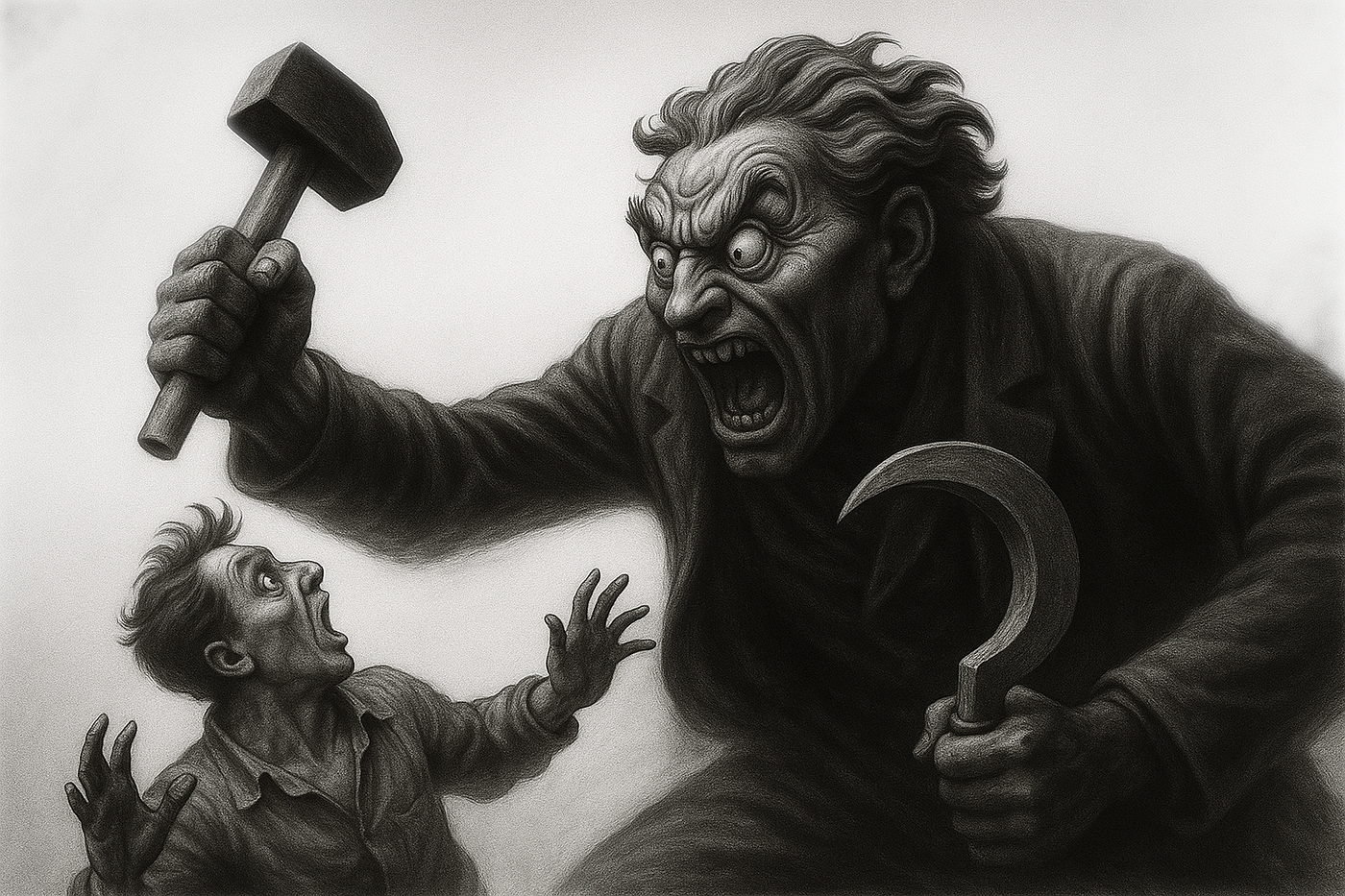
Here lies the problem: in the definition of slave and master. Just as no aggressor proclaims itself an aggressor, the servant in contemporary post-capitalism similarly fails to recognise their servitude, because they are granted illusory privileges to cling to in order to preserve their condition[5] — a lifestyle no one would wish to relinquish. This is the central point that leads interventionist factions to decree the carnage we are still witnessing today: control of the instruments through which to instil in the masses terror, concern for their own safety and that of their children, through constant, totalising, pervasive narrative bombardment[6]. The problem does not lie in the Manichaean thesis of good nations versus bad nations, but in the cognitive violence through which this thesis is inculcated, conditioning the very canons of thought, the structures of the imaginary, revising a people’s values from their foundations.
The manipulation of communication, of words, of imagination, the distortion of public debate — these lead power to always proclaim what those subjected to it want to hear, without words corresponding to facts. This is the essence of fascism: an appearance of truth, a mimesis of reality[7]. A glaring and very recent example is how Donald Trump managed to convince many American Democrats to disengage from their party by abstaining from voting, because the moderate left — so Republican propaganda repeated for months — had no intention of ending the war in Ukraine, something the tycoon would do within twenty-four hours[8]. If we evaluate Donald Trump’s work in the first year of his current term with the benefit of hindsight, we observe that not only has he failed to silence drones and cannons on Europe’s eastern border, but he is opening new horizons of conflict, both armed and financial[9]. An unbalanced and paranoid warmonger who nevertheless takes it upon himself to demand the Nobel Peace Prize, boasting of negotiations that never took place, conflicts never resolved: all this unfolds exclusively in the alternative reality he himself created, in the minds of his (numerous) followers, through unprecedented cognitive violence. A reality that does not exist in reality, but which influences reality[10].
The problem with these persuasive instruments, made even more efficient by digital progress and the level of global interconnection, is that they are destined by their very nature to make rivers of blood flow in the streets, because phenomenal reality sooner or later demands its due: one cannot lie indefinitely. When truth comes to impose its insurmountable barriers, millions of schizophrenics conditioned by propaganda will end up slaughtering one another — only thus was the hell of Auschwitz possible, only thus is the Palestinian genocide still possible today[11]. All things considered, then, the most powerful weapon in the hands of interventionists is not the rifle, nor even money — that excrement of a multipolar capital which at this stage of human history can fluctuate in value according to the whim of a tweet — but rather the word. The abusive relationships that power establishes with those subject to it, the manipulation of reality, disinformation — what the military high commands of the world’s major powers are themselves openly calling cognitive warfare[12]. The strongest weapon is the influence these powerful conditioning means manage to have on the choices of the masses, analysing their behaviour in blocks, percentages, highly detailed opinion polls, interventions targeted at an openly Pavlovian communication model: to a given stimulus follows (statistically) a given response; the choice of the individual is irrelevant to those on the server side[13].
Cognitive warfare must be answered with a cognitive revolution. A raising of the average level of competence, of critical analysis capacity, an all-out war against rampant functional illiteracy, a collective effort to raise the cultural level of active and passive citizenship, a mutual stimulus towards intellectual emancipation, towards the search for truth. The next revolution will take place within us, not outside us[14]. The case of the Sumud Flotilla has demonstrated that a well-organised pacifist movement can achieve objectives, but we have not yet reached the point of creating a barrier of immunisation against the rampant infodemic: the schizophrenia of the masses is still too widespread for there to be deep changes. We must work now on new generations and leave to posterity the tools to unearth those imaginary axes that will allow them to break the chains of cognitive sleepwalking: peace, in the post-truth era, can only be achieved by emancipating the collective mind from abusive conditioning. Non-violence is not the opposite of violence — it simply employs different weapons, weapons that do not kill but resurrect the dead.
Notes
- Gaius Julius Caesar, Commentarii de Bello Gallico. Translated by Emilio Piccolo, Naples, Senecio, 2009.
- On this point, see the six fundamental principles of so-called ‘ethical warfare’, Seth Lazar, ‘War’, The Stanford Encyclopedia of Philosophy, 2020, Edward Zalta, “Traditional just war theory construes jus ad bellum and jus in bello as sets of principles, satisfying which is necessary and sufficient for a war’s being permissible”.
- Vladimir Ilyich Lenin. Imperialism, the Highest Stage of Capitalism, in: Works, Rome, Editori Riuniti, 1966.
- Hannah Arendt, On Violence, New York, Harcourt, Brace & World, 1970, “Under the pressure of power, prejudices — as distinguished from both interests and ideologies — can yield, as we have seen happen with the highly successful civil rights movement, which was conspicuously nonviolent”.
- Herbert Marcuse, One-Dimensional Man, 1964, cited in: Federico Berti, Rivoluzione interiore. Mondi possibili e guerra cognitiva, Bologna, Streetlib, 2023, explicitly discusses imagination in power as a process of intellectual emancipation of the masses.
- Noam Chomsky, Manufacturing Consent: The Political Economy of the Mass Media, Milan, Il Saggiatore, 2014. The instruments of propaganda exploit the repetitiveness and pervasiveness characteristic of distorted communication to construct an alternative reality in the public consciousness, without people realizing they are being manipulated. We all think it is others who are manipulated; we fail to recognize our own susceptibility to cognitive abuse.
- From Plato’s allegory of the cave to Guy Debord’s The Society of the Spectacle, Paris, Buchet-Chastel, 1967, the prophecy of post-truth has asserted itself with overwhelming dominance over the masses’ perception of reality.
- P. Violi’s analysis of the first presidential term’s election campaign is interesting in this respect, Why Trump Won the Elections, in: Dialogue in Institutional Settings, 9/1, 28–41, 2019.
- A self-fulfilling prophecy, on this point see Timothy Snyder, The Road to Unfreedom: Russia, Europe, America, New York, Tim Duggan Books, 2018.
- Byung Chul Han, Psychopolitics: Neoliberalism and New Technologies of Power, London, Verso, 2017.
- Zigmunt Bauman, Modernity and the Holocaust, Ithaca, Cornell University Press, 1989, examines the same kind of progression, from the distortion of reality and values to humanitarian catastrophe during the First Iraq War.
- See Federico Berti, Guerra cognitiva e conflitto ucraino, in: Lo spettro di Mariupol, Bologna, Streetlib, 2024.
- Michel Foucault, Discipline and Punish, Turin, Einaudi, 2014. Another self-fulfilling prophecy. Power employs surveillance to preempt dissent and suppress internal subversion before it can even emerge.
- Paulo Freire, Pedagogy of the Oppressed, cited in Federico Berti, Rivoluzione interiore, Bologna, Streetlib, 2023.
Bibliography
Arendt, Hannah. On Violence. New York, Harcourt, Brace & World, 1969.
- Bauman, Zygmunt. Modernity and the Holocaust. Ithaca, Cornell University Press, 1989.
- Berti, Federico. Guerra cognitiva e conflitto ucraino. In Lo spettro di Mariupol. Bologna, Streetlib, 2024.
- Berti, Federico. Rivoluzione interiore. Bologna, Streetlib, 2023.
- Caesar, Julius. Commentarii de Bello Gallico. Translated by Emilio Piccolo. Naples, Senecio, 2009.
- Chomsky, Noam. Manufacturing Consent. The Political Economy of the Mass Media. Milan, Il Saggiatore, 2014.
- Debord, Guy. The Society of the Spectacle. Paris, Buchet-Chastel, 1967.
- Foucault, Michel. Discipline and Punish. Turin, Einaudi, 2014.
- Han, Byung-Chul. *Psychopolitics, Neoliberalism and New Technologies of Power**. London, Verso, 2017.
- Lazar, Seth. War. In The Stanford Encyclopedia of Philosophy, edited by Edward N. Zalta, 2020.
- Lenin, Vladimir Ilyich. Imperialism, the Highest Stage of Capitalism. In Opere. Rome, Editori Riuniti, 1966.
- Snyder, Timothy. The Road to Unfreedom, Russia, Europe, America. New York, Tim Duggan Books, 2018.
메타데이터
- post_id
- 74eb6ebf428a
- slug
- the-cognitive-revolt-the-pacifist-movement-as-a-response-to-mass-sleepwalking-74eb6ebf428a
- url
- https://medium.com/politics-activism/the-cognitive-revolt-the-pacifist-movement-as-a-response-to-mass-sleepwalking-74eb6ebf428a
- canonical_url
- https://medium.com/politics-activism/the-cognitive-revolt-the-pacifist-movement-as-a-response-to-mass-sleepwalking-74eb6ebf428a
- author_url
- https://medium.com/@bertitacabanda
- status
- ok
- fetched_at
- 2026-06-14 11:28:49