Natural vs Chemical Henna: What Every Buyer Needs to Know Before Sourcing
One of the biggest ongoing debates in the henna industry is the difference between natural and chemical henna. For a business that wants to…
Natural vs Chemical Henna: What Every Buyer Needs to Know Before Sourcing
One of the biggest ongoing debates in the henna industry is the difference between natural and chemical henna. For a business that wants to build a trustworthy brand, getting clarity on this is not optional — it is essential. Getting it wrong can result in product recalls, legal liability, and serious damage to your customer base.
What Is Natural Henna?
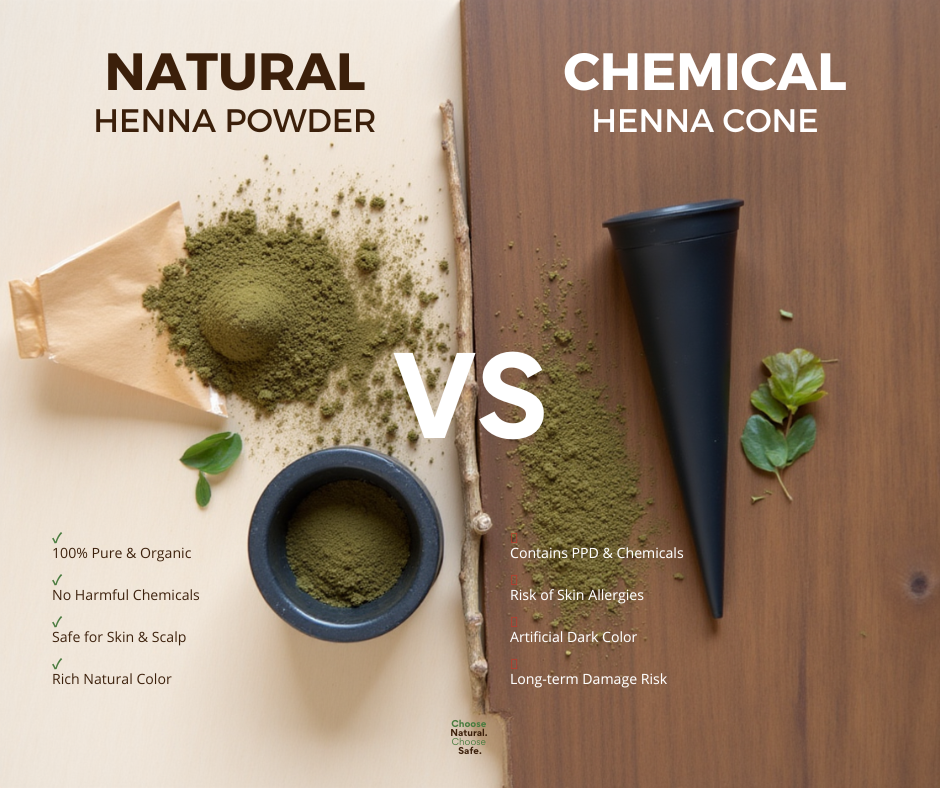
**Natural henna **comes from the dried and powdered leaves of the Lawsonia inermis plant. When mixed with an acidic liquid like lemon juice, it produces a reddish-brown stain on skin or hair. This stain comes from lawsone, the active dye molecule in the plant. Pure natural henna does not stain black — it stains in shades of orange, red, terracotta, and brown, depending on skin type, body temperature, and how long the paste is left on.
Natural henna is generally considered safe for most people. Allergic reactions to pure henna are rare, though not unheard of. The product has been used in South Asia, North Africa, and the Middle East for thousands of years.
What Is Chemical or Black Henna?
Black henna is a commercial term for henna products that have been mixed with para-phenylenediamine (PPD), a synthetic chemical commonly used in hair dyes. PPD allows henna to stain black and produces results much faster than natural henna. It is widely used in temporary tattoo services at tourist markets, beach resorts, and festivals.
The problem is that PPD is a known allergen and sensitiser. Repeated or prolonged exposure can cause severe allergic reactions — including chemical burns, blistering, and permanent scarring. The EU has banned PPD-containing products for skin application, and many other markets have similar restrictions.
Why This Matters for Buyers
If you are sourcing henna for body art, skin staining, or cosmetic applications, you must ensure your product contains no PPD or other synthetic colour additives. This applies whether you are importing for a retail brand, a salon chain, or a festival supply company.
Many Indian manufacturers produce both natural and chemical variants. Make sure your purchase orders clearly specify ‘natural henna only’ and request test reports that confirm the absence of PPD and other synthetic dyes.
How to Detect Adulteration
PPD is not always labelled honestly. Some suppliers mix it into henna cones or paste without disclosure. Signs of adulteration include: paste that stains very quickly (under 30 minutes), a jet-black stain on first application, and a chemical or ammonia-like smell. Natural henna paste has a green-brown colour and an earthy, herbal scent.
Third-party lab testing is the only reliable way to confirm purity. Reputable testing labs can check for PPD and a range of other synthetic dyes using HPLC analysis.
Hair Henna vs Body Art Henna — Different Standards
It is worth knowing that hair henna and body art henna are produced differently and tested against different standards. Hair colour henna is applied to the scalp, which is relatively thick skin. Body art henna is applied to thinner skin on the hands, arms, and feet. BAQ (Body Art Quality) henna undergoes stricter quality control — finer sifting, tighter microbial limits, and more rigorous testing for skin-irritating compounds.
If your business intends to sell henna for body art, source specifically from manufacturers who produce and certify BAQ grades. Do not assume that any henna product is suitable for skin application without confirmation.
Organic Henna — Is It Worth the Premium?
Organic-certified henna commands a significant price premium, and for good reason. Certified organic production prohibits synthetic pesticides and fertilisers during cultivation. For brands selling into natural beauty, organic cosmetics, or wellness markets, organic certification adds credibility and allows products to meet retailer requirements that standard henna cannot.
For general hair colour use in mass-market segments, standard natural henna (without pesticide residues beyond permitted limits) may be commercially sufficient. The decision depends on your target customer and the claims you want to make on your product label.
Regulatory Considerations for Importers
In the European Union, henna products must comply with EU Cosmetics Regulation 1223/2009. In the US, they fall under FDA oversight. In the UK, OPSS (Office for Product Safety and Standards) governs cosmetic imports. Understanding which regulations apply to your market helps you select a manufacturer who already produces compliant products and can provide the necessary documentation.
Conclusion
Natural henna and chemical henna are fundamentally different products with very different risk profiles. As a buyer, it is your responsibility to know exactly what you are sourcing, test it rigorously, and ensure it meets the safety standards of your target market. Working with transparent, certified manufacturers in India makes this process significantly easier.
메타데이터
- post_id
- 74ef7ac86903
- slug
- natural-vs-chemical-henna-what-every-buyer-needs-to-know-before-sourcing-74ef7ac86903
- url
- https://medium.com/@kirpalexport/natural-vs-chemical-henna-what-every-buyer-needs-to-know-before-sourcing-74ef7ac86903
- canonical_url
- https://medium.com/@kirpalexport/natural-vs-chemical-henna-what-every-buyer-needs-to-know-before-sourcing-74ef7ac86903
- author_url
- https://medium.com/@kirpalexport
- status
- ok
- fetched_at
- 2026-06-24 04:09:36