End-to-End Encryption: A Beginner’s Playbook for Zero-Trust Messaging
On May 8, 2026, Meta officially pulled the plug on opt-in End-to-End Encryption (E2EE) for Instagram Direct Messages. Overnight, millions…
End-to-End Encryption: A Beginner’s Playbook for Zero-Trust Messaging
On May 8, 2026, Meta officially pulled the plug on opt-in End-to-End Encryption (E2EE) for Instagram Direct Messages. Overnight, millions of users who assumed their chats were shielded had their conversation histories migrated back to server-accessible plaintext.
When you hit “Send” on any consumer messaging platform be it WhatsApp, X, Telegram, or Discord, your data enters a pipeline governed by one of two cryptographic trust models.
Here is the breakdown of how consumer messaging cryptography actually operates, where the math comes out on top, and where product architecture breaks it.
— -
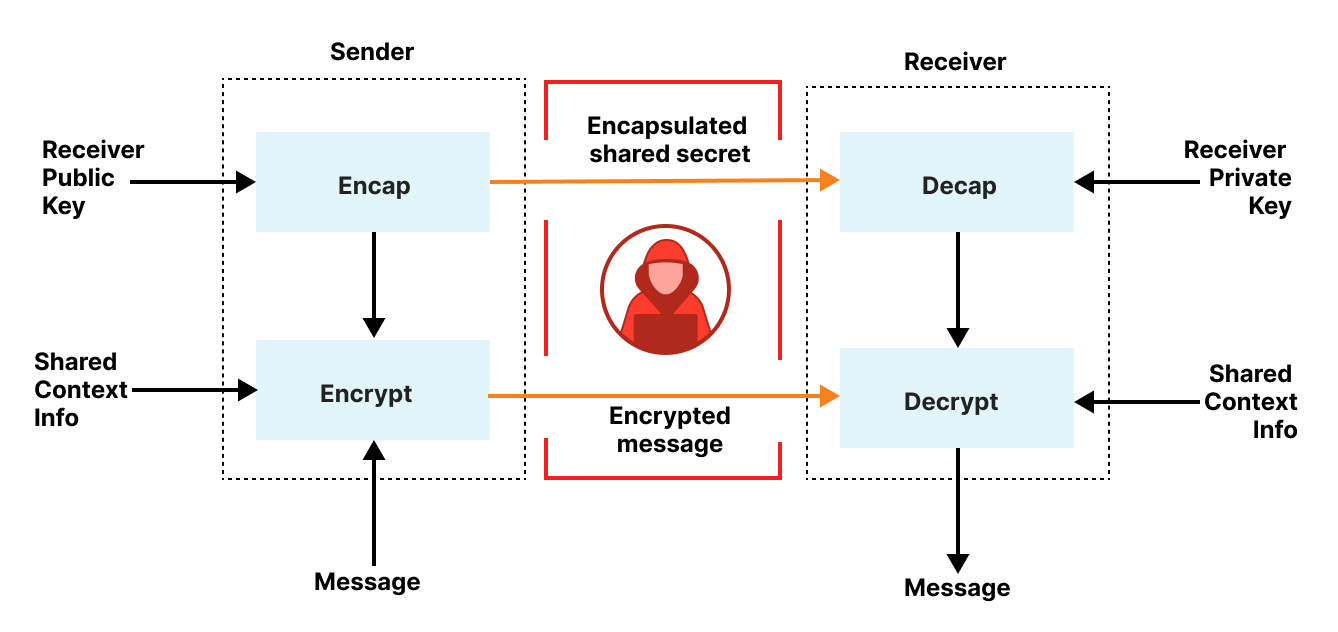
Diagramatic representation of in-transit data with e2ee
1. The Two Dominant Trust Models
In mainstream software engineering, moving data splits into two architectures.
Standard Messaging (Transport Layer Security) Standard messaging relies on TLS; the same protocol securing HTTPS website checkouts.
The Mechanics: Your phone builds an encrypted tunnel to the platform’s central API gateway. You drop a message into the tunnel. When the packet hits the corporate server, the encryption terminates. The server decrypts your payload into plaintext inside its RAM, processes it (for moderation, search indexing, or ad targeting), stores it in a database, re-encrypts it, and pushes it down a second tunnel to the recipient. You place 100% of your operational trust in the host corporation’s internal security infrastructure, employee integrity, and refusal to comply with government subpoenas. Real-World Examples include: Instagram DMs, Discord, Slack, standard Telegram chats.
End-to-End Encryption (Client-to-Client Cryptography)
E2EE assumes the network, the Wi-Fi router, and the central application server are all actively hostile adversaries.
The Mechanics: Your local device scrambles the message using a cryptographic key held exclusively by the recipient’s hardware. The payload is sealed before it enters the TLS transport tunnel. When the ciphertext passes through the central server, the server acts as a blind courier, it reads the destination IP on the packet’s outer header, but cannot parse the payload inside. Centralized infrastructure is removed from the trust equation. You rely strictly on the mathematical hardness of the underlying protocol. Real-World Examples include Signal, WhatsApp, Apple iMessage.

— -
2. The Mechanics of Zero Trust
To understand how two phones encrypt data without texting each other the password, you have to look at the Diffie-Hellman Key Exchange. It is a one way mathematical function(easy to compute forward, practically impossible to reverse).
How Keys Are Exchanged Without Exchanging Keys
Imagine User A and User B initiate a fresh chat session.
- The Shared Base: The application layer establishes a public mathematical parameter (Public_Base) shared across the entire network. Hackers see this; it is not a secret.
- The Private Seeds: Each device generates a massive, cryptographically secure random number inside its hardware memory.
— Device A generates:
Private_Seed_A— Device B generates:Private_Seed_BThese seeds never leave the local memory. - The Public Mixes: Each phone combines the
Public_Basewith its local private seed to output an intermediate public number. — Device A transmitsPublic_Mix_Aacross the network to B. — Device B transmitsPublic_Mix_Bacross the network to A. - The Symmetric Derivation: Both devices execute one final local calculation:
- Device A combines
Public_Mix_Bwith its hiddenPrivate_Seed_A. - Device B combines
Public_Mix_Awith its hiddenPrivate_Seed_B.
Because of modular exponentiation properties, both calculations land on the exact same 256-bit number. This is the Symmetric Encryption Key.
Crucial Engineering Note: Modern systems enforce Forward Secrecy. These derived keys are ephemeral; they rotate continuously (often after every single message via systems like Signal’s Double Ratchet). If a state-sponsored hacker steals your physical phone tomorrow and extracts today’s session key, the math prevents them from working backward to decrypt the messages you sent yesterday.
Solving the Group Chat Bottleneck: MLS
Naive Diffie-Hellman breaks down in large group chats. If you send a 5MB video to a 100-person group, a standard pairwise E2EE scheme forces your phone to encrypt that video 99 separate times and upload 495MB of ciphertext (O(N) linear complexity).
Modern enterprise-grade E2EE implements Messaging Layer Security (MLS / RFC 9420). MLS replaces pairwise tunnels with Continuous Group Key Agreement. Members are arranged as leaf nodes on a left-balanced binary tree (a Ratchet Tree). When a user joins or leaves the chat, updating the shared group encryption key requires traversing the tree mathematically, dropping computational overhead from O(N) down to O(log N).
— -
3. The Real-World Attack Surface
The cryptography securing modern messaging is robust. The surrounding software ecosystem is not. When security researchers audit E2EE applications, we ignore the modular arithmetic and attack the implementation vectors.
Metadata Leakage:
Confidentiality is not anonymity. While an E2EE server cannot read your text, it logs your social graph metadata: sender ID, recipient ID, device IP addresses, exact timestamps, and payload byte sizes. If a persistent netflow monitor logs your IP address sending a 45KB payload to an oncology clinic at 2:00 AM, the ciphertext is irrelevant; the metadata reveals your reality. Obfuscating routing metadata requires onion-routing networks (Tor/Nym), which introduce latency profiles mainstream consumers reject.
Key Directory Man-in-the-Middle (MitM):
Because messaging apps use centralized key directories, your phone asks a corporate server for your friend’s public key. If that server is compromised, it can serve your phone an attacker’s public key. You encrypt the payload for the hacker; the hacker decrypts it, reads it, re-encrypts it with your friend’s actual key, and passes it along.
Mitigation:Out-of-band verification. Comparing physical QR codes or numeric “Safety Numbers” in person bypasses the untrusted server to mathematically prove identity integrity.
The Cloud Backup Trap
This is the single largest operational loophole in consumer privacy. When WhatsApp or Apple backs up your chat history to Google Drive or iCloud to save your memory from accidental deletion, those cloud backups are frequently stored using platform-managed escrow keys. If law enforcement serves a subpoena to the cloud provider, the vendor hands over the decryption key, bypassing the E2EE transit pipeline entirely.
Desktop Client Expansion
Expanding your mobile chat account to a Windows or macOS desktop client drastically widens your attack surface. Mobile operating systems enforce strict application sandboxing. Desktop operating systems allow background processes broader system access. A basic user-land infostealer malware infection on a laptop can scrape unencrypted chat buffers directly out of desktop RAM.
Client-Side Scanning (CSS)
Governments increasingly push legislation mandating automated content scanning (e.g., EU Chat Control) without breaking wire encryption. CSS forces the client application to run a local hashing algorithm against your raw keystrokes before the E2EE engine seals the payload. Cryptographically, the transit remains intact. Functionally, it converts the user’s personal silicon into a state wiretap.
The Backdoor Fallacy
Legislators routinely demand “exceptional access” backdoors; escrow keys accessible strictly by judicial warrant. Mathematics cannot distinguish between a police officer and an Advanced Persistent Threat (APT). Introducing a systemic escrow key creates a high-value single point of failure. Once discovered by hostile actors, the security guarantees of the entire network collapse instantly.
— -
4. The Beginner’s OpSec Playbook
- Verify Default States: Assume zero privacy on any app where old chat histories load instantly on a new browser without mobile bridge approval.
- Sever Cloud Backups: Navigate to app settings and either completely disable cloud chat backups or manually enforce 64-digit hex encryption keys stored offline in a physical notebook.
- Authenticate Out-of-Band: Physically scan Safety Number QR codes with sensitive contacts before transmitting high-risk documents.
- Isolate Desktop Environments: Never link high-security E2EE accounts to general-use desktop workstations running unvetted third-party software.

Thank you for being a part of the community
Before you go:
- Be sure to clap and follow the writer ️👏️️
- Follow us: LinkedIn | Medium | GitHub 🐙
- Join our Developers Global Community on Discord 🧑🏻💻
메타데이터
- post_id
- 751c9a1479ca
- slug
- end-to-end-encryption-a-beginners-playbook-for-zero-trust-messaging-751c9a1479ca
- url
- https://medium.com/developersglobal/end-to-end-encryption-a-beginners-playbook-for-zero-trust-messaging-751c9a1479ca
- canonical_url
- https://medium.com/developersglobal/end-to-end-encryption-a-beginners-playbook-for-zero-trust-messaging-751c9a1479ca
- author_url
- https://medium.com/@totdking
- status
- ok
- fetched_at
- 2026-07-09 09:01:30