The Dyslexic Brain Isn’t Broken.
[The Problem]
The Dyslexic Brain Isn’t Broken. Why Is EdTech Treating It Like It Is?
Subtitle: The education system only tests for weaknesses. It’s time we built technology to track their strengths.
[The Problem]
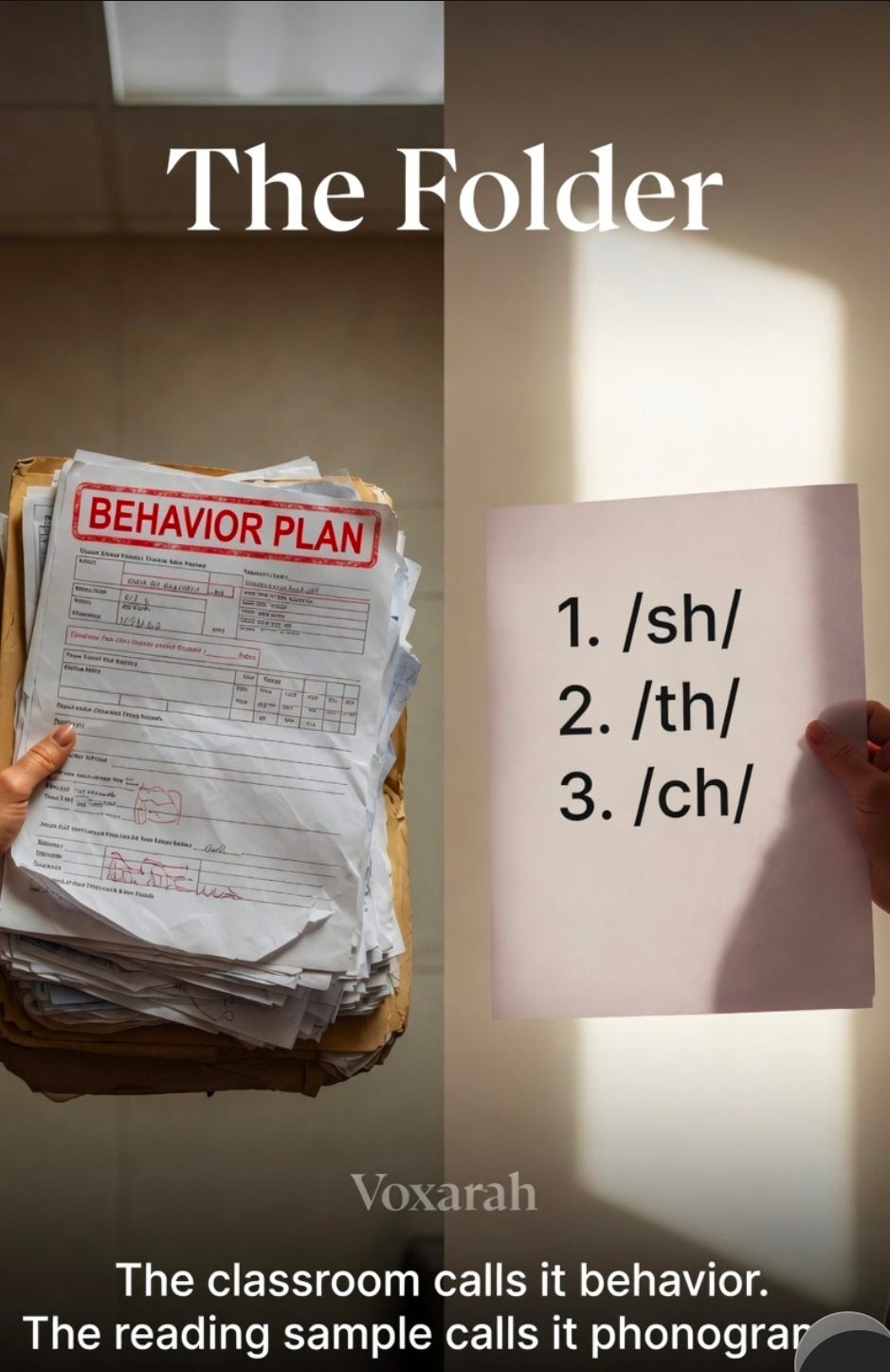
Every Friday, millions of parents of dyslexic children open a school folder and brace for the red marks.
The public school system is not designed to measure how well a child can visualize a three-dimensional object, or how deeply they empathize with a character. It is designed to measure how quickly they can decode text on a page. When a child fails that specific, narrow metric, the system labels them. The interventions begin. The focus narrows entirely onto what they cannot do. Within a few years, brilliant kids, kids with the exact cognitive wiring found in world-class engineers, founders, and artists, start sitting at the kitchen table saying, "I’m just dumb at reading." The traditional EdTech space hasn’t helped. It offers text-to-speech tools that bypass reading entirely, or gamified phonics apps that lack true clinical structure. None of them change the fundamental dynamic: the child feels broken.

[The Science]
Reading is not a natural human instinct; it is a mechanical process that must be explicitly taught. For the dyslexic brain, this requires structured, explicit, and systematic instruction (like the Orton-Gillingham methodology). There are no shortcuts around this hard work.
However, neuroscience shows us that the dyslexic brain is simply specialized. The same neural pathways that create friction in decoding text often facilitate massive advantages in narrative reasoning, spatial awareness, and dynamic problem-solving. If we only drill the phonics and ignore the cognitive advantages, we destroy the child’s self-image before they ever have a chance to leverage their real intelligence.
[The Protocol]
We have to stop grading dyslexia and start coaching it.
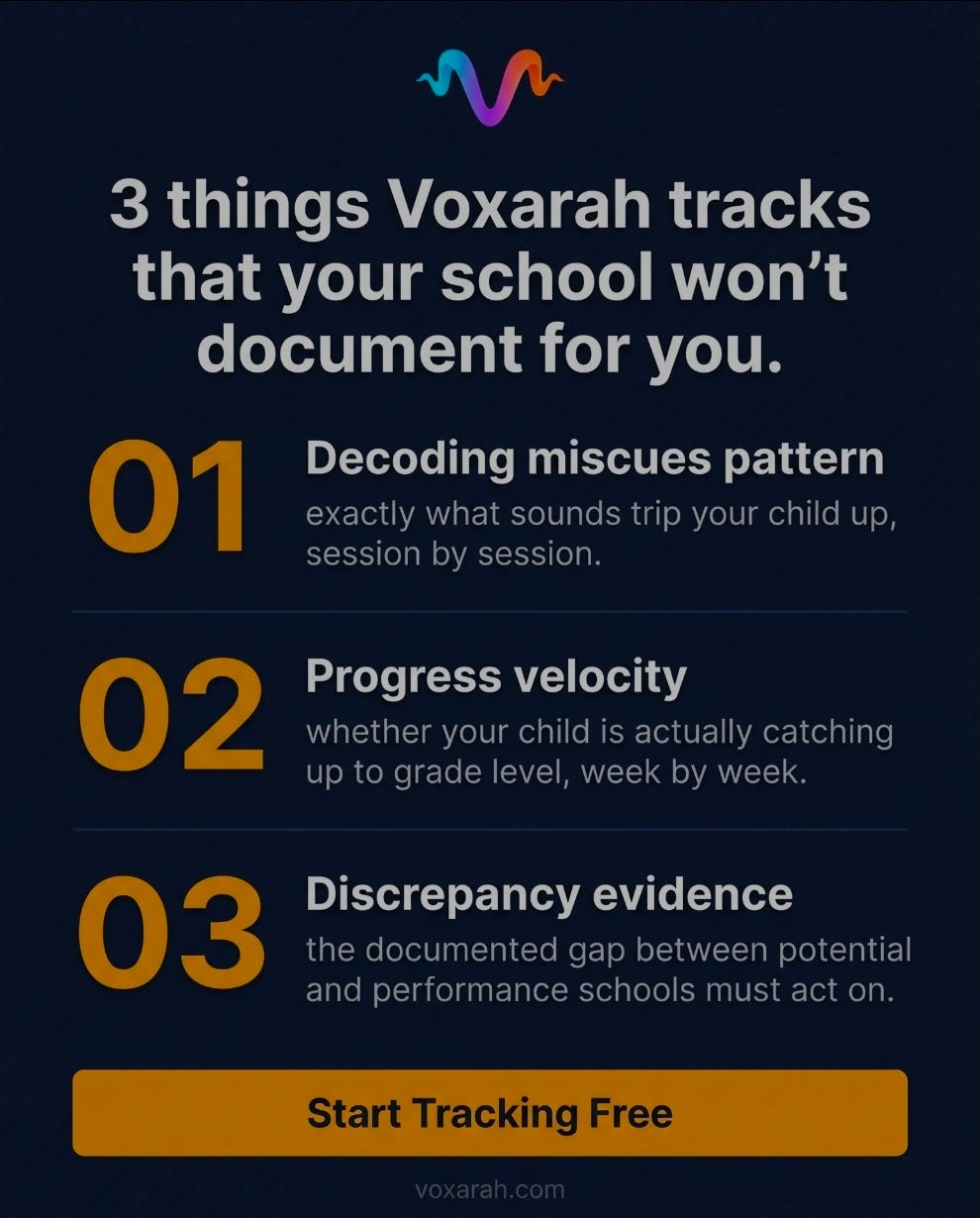
That is why we built Voxarah. It is not just another reading app. It is a voice-first intelligence tutor designed to do two things simultaneously during a ten-minute read-aloud session: Clinical Decoding: It listens, scores miscues, and provides frustration-free correction using proven structured literacy frameworks. It logs this data to give parents the institutional leverage they need for IEP meetings. Cognitive Recognition: It analyzes the session to identify the unique dyslexic strengths the child used, whether that is empathic reasoning or inventive thinking, and outputs a simple report for the parent. The goal isn’t just to teach a child to read text. The goal is to ensure that tonight, at the dinner table, a parent can look at their child and say, "You missed a few words today. But the way your brain visualized that story? That is a superpower." We are changing the dynamic. It’s time to build the foundation while protecting the mind.
메타데이터
- post_id
- 752436ee4cb2
- slug
- the-dyslexic-brain-isnt-broken-752436ee4cb2
- url
- https://medium.com/@Voxarah/the-dyslexic-brain-isnt-broken-752436ee4cb2
- canonical_url
- https://medium.com/@Voxarah/the-dyslexic-brain-isnt-broken-752436ee4cb2
- author_url
- https://medium.com/@Voxarah
- status
- ok
- fetched_at
- 2026-06-16 19:09:56