4 Gym Habits That Secretly Sabotage Your Progress
The science behind technique mistakes that reduce performance
4 Gym Habits That Secretly Sabotage Your Progress
The science behind technique mistakes that reduce performance
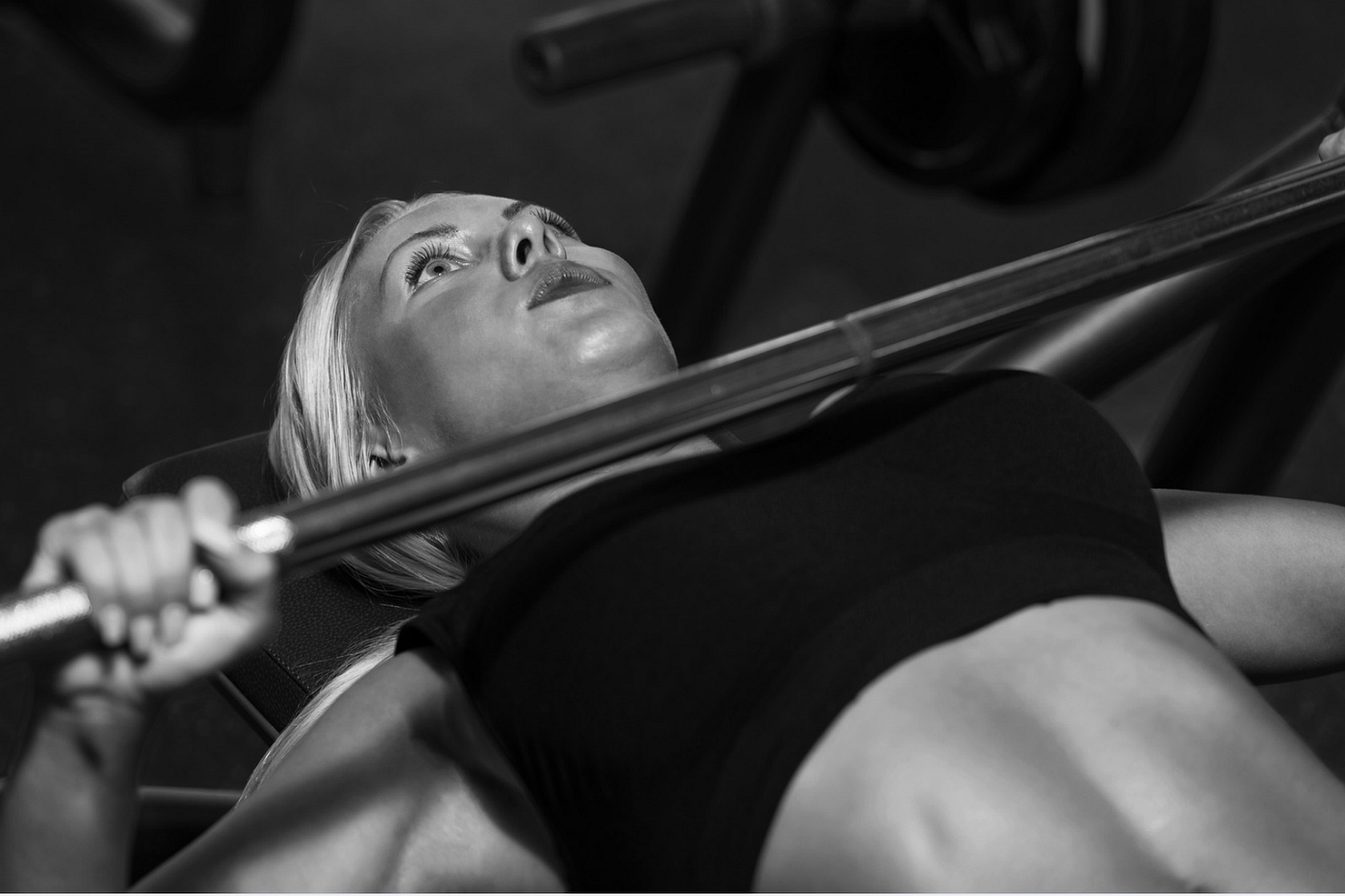
Image from Canva
“Can you give me a spot?” asked my friend Bruce. He stood next to a bench loaded with 315 lbs. I was barely 120 lbs at the time, and knew I couldn’t do much if he got stuck.
“Are you serious?” I asked, “I can’t spot you on this.”
“Nah, I can lift it,” he said. “I just may need a tiny bit of help.” You probably already know where I’m going with this.
Bruce lifted the bar off the rack and Bam! it landed squarely on his chest, my hands trapped between the bar and him. Not even a single rep.
Before I could react, he gasped, “Get help!”
“I need a hand!” I yelled, as about six people (who were likely watching this debacle unfold) flew over and lifted the bar off his chest.
Thankfully, no one was hurt. But I was shaken. “I told you I couldn’t lift this!” I told Bruce.
He smirked. “Tell people that was my third rep — not my first.” “Not a chance,” I said.
Oh, ego.
Throughout my years as a trainer and gym rat, I’ve seen just about every technique mistake imaginable — including people who believe they can lift a lot more than they’re able.
The thing is, even when people paid me to help them with their workout form, they’d still sometimes argue with me. The fact that I held four national certifications, including a CSCS, didn’t matter. If they’d read on social media that doing an exercise a certain way was the way to go, they knew more than me.
During my own workouts, I learned to ignore bad form at the gym, even with people I know, because no one welcomes unsolicited advice.
So here are corrections I’ve learned to keep to myself — along with the science behind them and what these mistakes can cost over time.
The bench press habit to ditch
This one is rampant. All day long I see people benching with heavy weight and their feet off the floor — sometimes crisscrossed at their ankles. It makes me nervous because of the obvious instability.
The National Strength and Conditioning Association (NSCA) clearly states the bench press position should involve five points of contact: the back of the head, the upper back and the rear shoulders, the lower back and the butt, the right foot, and the left foot.
When I asked someone I knew why he didn’t keep his feet on the floor, he responded, “So I can better isolate my chest.”
That doesn’t track.
In reality, it’s like trying to shoot a cannon from a canoe.
Here’s why: When feet leave the floor, the kinetic chain is broken. A smaller base of support makes the lift inherently less stable by denying the lower body the ability to help stabilize the movement.
But yes, keeping your feet off the floor activates more muscles — just not only the ones you’re targeting. More electrical activity in an unstable position usually means your body is compensating. And, in practice, most people can’t handle nearly as much weight feet-up as they claim. So the real-world load on your chest is usually lower, not higher.
A 2019 study found significantly greater activation of the forearm muscles, abdominal muscles, and rectus femoris along with the pectoralis major compared to feet on the floor.
This doesn’t result in “better chest isolation.” With only the back and head supported, the stabilizer muscles have to work harder just to keep the body from sliding around. So while there’s more activation, stability suffers. Your chest doesn’t benefit.
One exception is lifters who intentionally keep their feet up to reduce back discomfort, where keeping the pelvis tilted reduces symptoms. But for those without back pain, you might be giving up stability for a benefit that isn’t really there.
This is particularly dangerous for lifters over 50, who often have slower reaction times.
The shrug that goes nowhere
People who shrug using a shoulder roll instead of straight up-and-down movement claim shoulder rolls hit the middle and lower traps and rhomboids, not just the upper traps. The idea being that vertical-only shrugs are a one-dimensional path that neglects the rest of the trapezius, while the circular motion “completes the range.”
This concept doesn’t hold up biomechanically, however.
Resistance from a barbell or dumbbell is purely vertical — gravity only pulls straight down. The instant you roll the shoulders forward or back, you’re moving through an arc where the weight provides essentially no resistance. So while the roll does engage the mid/lower traps and rhomboids to some degree, there is not enough load on that part of the movement to drive meaningful adaptation (i.e., real strength or size gains).
At the same time, the weight you’re holding gets carried through an unsupported, unstable rotational path, which puts stress on the rotator cuff.
A better approach is to incorporate exercises that specifically target mid- to lower traps.
These include:
Rows: barbell, cable, seated… with a focus on pulling the shoulder blades together rather than making your biceps do most of the work
Face pulls: using a cable or band pulling towards the face with elbows high.
Prone Y, T, and W raises: lying face-down on an incline bench or the floor, raising arms in a Y, T, or W shape.
Max weight, few reps
Every gym has “that one guy” who collects every 45-lb plate in the gym and stacks them on the leg press — loading every available peg on the machine.
I saw one guy have his girlfriend sit on top of the stack for entertainment value. He would then proceed to do about a quarter rep range of motion — barely moving the stack — before re-racking the whole thing. That was his set.
Here’s the problem: partial reps aren’t inherently useless. But the research favors partials at the bottom of the movement (long muscle length, deep knee flexion), not partials at the top (near lockout), which is where ego-driven pressers stay.
A related study found that bottom-range partials actually outperformed both full ROM and top-range partials for hypertrophy (muscle growth).
It’s not that partials don’t create results, but doing partials in the wrong place for the sake of moving more plates isn’t the answer.
Swinging biceps curls
Using momentum with your biceps curls so you can lift more poundage doesn’t benefit you as much as you may think. However, this one is a half-truth.
In a 2025 study comparing strict curls with “cheat” curls over eight weeks, researchers found no significant difference in hypertrophy. So while using momentum isn’t helping you, it’s likely also not hurting you.
You can make bicep “cheats” work for you, however, if you use momentum on the concentric (lifting) but use control when lowering the weight. This may help you push past a plateau. The only danger lies in using momentum to replace control entirely, flinging the weight up and dropping it, which is where the injury risk lies.
Better strong than sorry
Although my buddy Bruce let his ego get the best of him, he was lucky we were surrounded by people who were able to help. Otherwise, that story could’ve had a much different ending.
While it can be tempting to take shortcuts and modify form to lift more weight or engage more muscles, an injury from using a risky approach can take you out of the gym altogether. It’s smarter to keep your ego in check so you can keep making progress without injury for many more years.
메타데이터
- post_id
- 752452324d5c
- slug
- 4-gym-habits-that-secretly-sabotage-your-progress-752452324d5c
- url
- https://medium.com/in-fitness-and-in-health/4-gym-habits-that-secretly-sabotage-your-progress-752452324d5c
- canonical_url
- https://medium.com/in-fitness-and-in-health/4-gym-habits-that-secretly-sabotage-your-progress-752452324d5c
- author_url
- https://medium.com/@linda_86854
- status
- ok
- fetched_at
- 2026-07-13 06:23:13