Multimodal Data in AI — Transforming the Future of Business
The popularity of multimodal AI is transforming the technological landscape by enabling AI systems to interact from diverse data forms…
Multimodal Data in AI — Transforming the Future of Business
Multimodal Data in AI
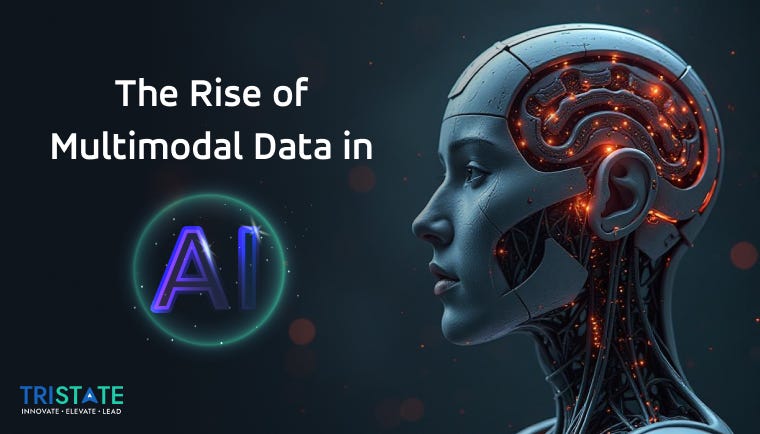
The popularity of multimodal AI is transforming the technological landscape by enabling AI systems to interact from diverse data forms. Traditional AI focuses on evaluating a single data type, whereas multimodal Data integration in AI integrates various inputs to generate accurate & sensitive outputs.
The industry is now widely approaching **AI-driven innovations,** and through multimodal AI approaches, they can unlock uncountable opportunities for complex problem-solving & decision-making.
The market of multimodal AI is estimated to receive a CAGR of 35.8% up to 2030. Whether you are a data analyst or a data scientist, understanding multimodal AI is necessary to stay ahead in the IT landscape.
The key business stakeholders must have an idea about the benefits, strategies, and future outcomes. AI is continuing to advance as a new concept is emerging. If you want to know a brief about this trend &Impact of multimodal AI, read the following blog.
Take a Brief on Multimodal Data in AI & Technologies Behind This
Multimodal AI concludes with an AI system that has the potential to measure and craft data from various data inputs. It not only processes a single input type but a combination of various formats to deliver results that are interactive. It integrates inputs like images, video, and audio and then converts them into outputs that can either be text-based, images, audio & video.
Through the process, the model identifies patterns & establishes links between the text descriptions & corresponding videos & audio. Instead of text, it generates infographics with a brief explanation. It classified complex information into engaging & easy formats. So, overall, it works as a translator that can comprehend & communicate the various languages.
Here are the technologies behind the multimodal AI-
1. Natural Language Processing
NLP is the necessary component of the AI model, allowing machines to understand, interpret & generate human language. NLP assists with translating language, evaluating sentiments & summarizing texts.
By integrating **Natural language Processing Services** with visual data, businesses can get deeper contexts. In the virtual assistant app, NLP assists the system in comprehending voice commands when correlating them with visual cues.
2. Computer Vision
The AI systems, which are equipped with computer vision, measure and understand the visual data from videos & images. The capability is necessary for multiple applications like recognizing & distinguishing human faces, identifying & locating objects through images, and classification of the images into meaningful segments.
The multi-modal AI system, computer vision, works alongside other modalities to offer a better understanding of the environment. **Computer vision solutions** help to recognize road signs & obstacles when modalities like GPS data & LIDAR are used for decision-making & navigation.
3. Speech Recognition
The main aim of speech recognition is voice-to-text conversion, allowing a spoken language interface. The key application includes AI-powered assistants & voice-operated software.
The multimodal AI frameworks integrate speech recognition into NLP and computer vision. It helps to create a seamless & intuitive user experience. The best example is smart home systems that are used for interpreting gestures.
As the potential of AI is frequently expanding, so are the benefits it offers to your business. Businesses can achieve a significant edge in the data-driven, fast-paced world by understanding the potential of multimodal AI. See how multimodal data enhances AI models.
How Multimodal Data Enhances AI Capabilities?
In the past few years, AI has been significantly evolving, and the integration of multimodal data is becoming one of the eminent phases. It effectively influences AI models with multiple inputs, and as an organization, you can unveil more human-like intelligence through this. Here, we have highlighted some points that prove the productivity of multimodal data in traditional AI.

How Multimodal Data Enhances AI Capabilities?
1. It Serves Improved Accuracy
Multimodal AI fuses data from different sources, and this enables the AI models to cross-check the information. This allows you to get error-free and reliable results. With the help of **Machine Learning orchestration tools**, you can ensure the data streams are effectively handled and precisely synchronized to prevent any kind of defects.
2. Precise Contextual Understanding
Multimodal AI systems can amalgamate visuals, language, sound, and text to interpret complicated scenarios just like human beings. This valuable element allows us to get an in-depth analysis and influences us to make better decisions.
3. Encourages Better Decision-Making
AI integrated with multimodal data can assess issues from multiple angles. It can verify the depth through texts, images, visuals, and audio. This leads you to be more informed and make better decisions for your respective industry. Many sectors, like finance, healthcare, logistics, etc., have garnered good results through this approach.
4. Uplifts User Experience
With the usage of Multimodal inputs, AI can interact in a more intuitive and natural tone. For example, you can take Natural Language Processing services that can easily recognize your commands along with your emotions. This personalization touch makes the customer interaction more seamless and broadens the user experience.
5. Enhance Robustness
If you consider unimodal systems, they generally deliver incomplete and noisy data. But with Multimodal AI, you can get the corrupted or missing inputs by relying upon multiple modalities.
6. Cross-Domain Acceptance
Multimodal systems are more adaptable across various industries. For example, you can consider a retail business that combines product metadata, video surveillance, and customer reviews. This enables them to optimize their inventory precisely, along with strengthening their security.
7. Influences Comprehensive Training and Learning
With the inclusion of Multimodal data, AI models can easily learn and quickly grasp the gist through diverse associations and patterns. This approach is extremely enhanced by the tools to automate AI workflows in 2025. This effective step streamlines data ingestion along with model training.
8. Real-Time Processing
Starting from diversifying factories to autonomous vehicles, Multimodal AI can process real-time data for you. However, you have to be keen on the details of the software development projects. You need to prefer the **suitable tech for incredible software development projects**.
9. Seamless Integration with Futuristic AI Systems
Multimodal AI has the power to blend perfectly with modern infrastructure. However, you have to combine it with the right pipeline tools and computer vision solutions. It can help your business to generate scalable and automated systems that are effectively viable for upcoming challenges.
Also Read: How to Hire the Best AI Developer for Your Custom Project? Steps, Costs, and More
How Multimodal Data Influences Multiple Business Sectors?

How Multimodal Data Influences Multiple Business Sectors?
Today’s world considers data to be its most valuable asset. Starting from texts to satellite images, you need to diversify your vision. In this scenario, relying upon a single data source is not enough. To unwind the impossibilities, many businesses are getting assistance from **Generative AI development services **that can make them aware of multimodal data.
This approach makes their AI system strive for smarter and better decisions. Let us dive into the benefits of Multimodal data in influencing multiple sectors.
1. Encourage Personalized Shopping in the Retail Industry
Nowadays, retailers are easily gaining knowledge about their customers’ buying behaviours through customer reviews, website clicks, and facial recognition. This is an incredible multimodal aspect that enables your brands to tailor personalized approaches for the targeted audiences. You can easily optimize your inventory and elevate the in-store experience. This way, you can also encourage loyal customers.
2. The Healthcare Industry Is Valuing Clarity in Diagnosis
In the healthcare industry, you can encounter Multimodal AI development services combining medical history, lab reports, voice recording, and doctor-patient talk. This can help you in acquiring accurate diagnoses, customized treatment plans, and predictive insights.
3. Risk Analysis in the Finance Sector
Financial institutions and banks are abiding by multimodal data. Starting from transactional records to call logs, ID verifications, and much more, it can handle everything.
Apart from this, multimodal data can verify the system’s creditworthiness and customer service and detect fraudulent activities. This way, you can encourage better decision-making and safeguard your system from financial losses.
4. Interactive Learning in the Education Industry
If we talk about EdTech, Multimodal AI includes video, text, and voice, along with better student interactions. Through this, the learning platform can be highly adaptive. Nowadays, institutions have leveraged the usage in a better way, like tracing eye movement, analysing speech patterns, and written answers.
Multimodal systems are also capable of customized content structure. This gives a personalized experience to the students and makes them more competitive in their careers.
5. Smarter Work Within Manufacturing Industries
There are multiple use cases of Multimodal AI in the manufacturing industry. In the recent era, smart factories have become specifically dependent on multimodal inputs such as video surveillance, sensor data, machine logs, maintenance reports, and much more.
These valuable inputs can easily detect equipment failure and can optimize the production rate. Along with this, it can encourage worker safety.
6. Viable Engagement in the Entertainment Industry
Nowadays, most streaming platforms understand viewers not just by their search history. Some of the efficient inclusions for them are voice searches, social interactions, and facial reactions.
This way, the entertainment industry is capable of leveraging real-time recommendations, targeted content, and an extensive user experience.
7. Transportation
Multimodal data is making the transportation industry more sophisticated with a range of futuristic elements. Some of the most beneficial elements include LiDAR, cameras, GPS, voice commands, and much more. You can use these features to properly navigate, adapt, and make viable decisions in real-time.
Conclusion
Multimodal AI will develop in tandem with technology. It has enormous potential to change a variety of sectors and provide real commercial value. Even more advanced multimodal AI systems that can interpret and integrate a wider range of data kinds should be on the horizon. These systems will become more precise and efficient when AI trends frequently emerge.
Every industry will be impacted by multimodal AI as it continues to transform corporate procedures, consumer experiences, and frameworks for making decisions, including healthcare, retail, e-commerce, finance, and manufacturing.
For better awareness about the trend, always look for the recent upgrades in AI. Build a data-driven culture & adapt AI strategies to exploit the evolving capabilities of multimodal AI. In conclusion, multimodal AI is a remarkable innovation in AI that has the potential to take the business to the utmost level. Businesses can drive and harness the power of AI when they have brief knowledge about the benefits.
메타데이터
- post_id
- 7533bb673e9d
- slug
- multimodal-data-in-ai-transforming-the-future-of-business-7533bb673e9d
- url
- https://medium.com/@tristate/multimodal-data-in-ai-transforming-the-future-of-business-7533bb673e9d
- canonical_url
- https://medium.com/@tristate/multimodal-data-in-ai-transforming-the-future-of-business-7533bb673e9d
- author_url
- https://medium.com/@tristate
- status
- ok
- fetched_at
- 2026-07-19 12:47:53