William O. Douglas and the Lost Art of Judicial Individualism
Before Slack, There Was a Supreme Court Justice Writing Dissents From a Cabin
William O. Douglas and the Lost Art of Judicial Individualism
Before Slack, There Was a Supreme Court Justice Writing Dissents From a Cabin

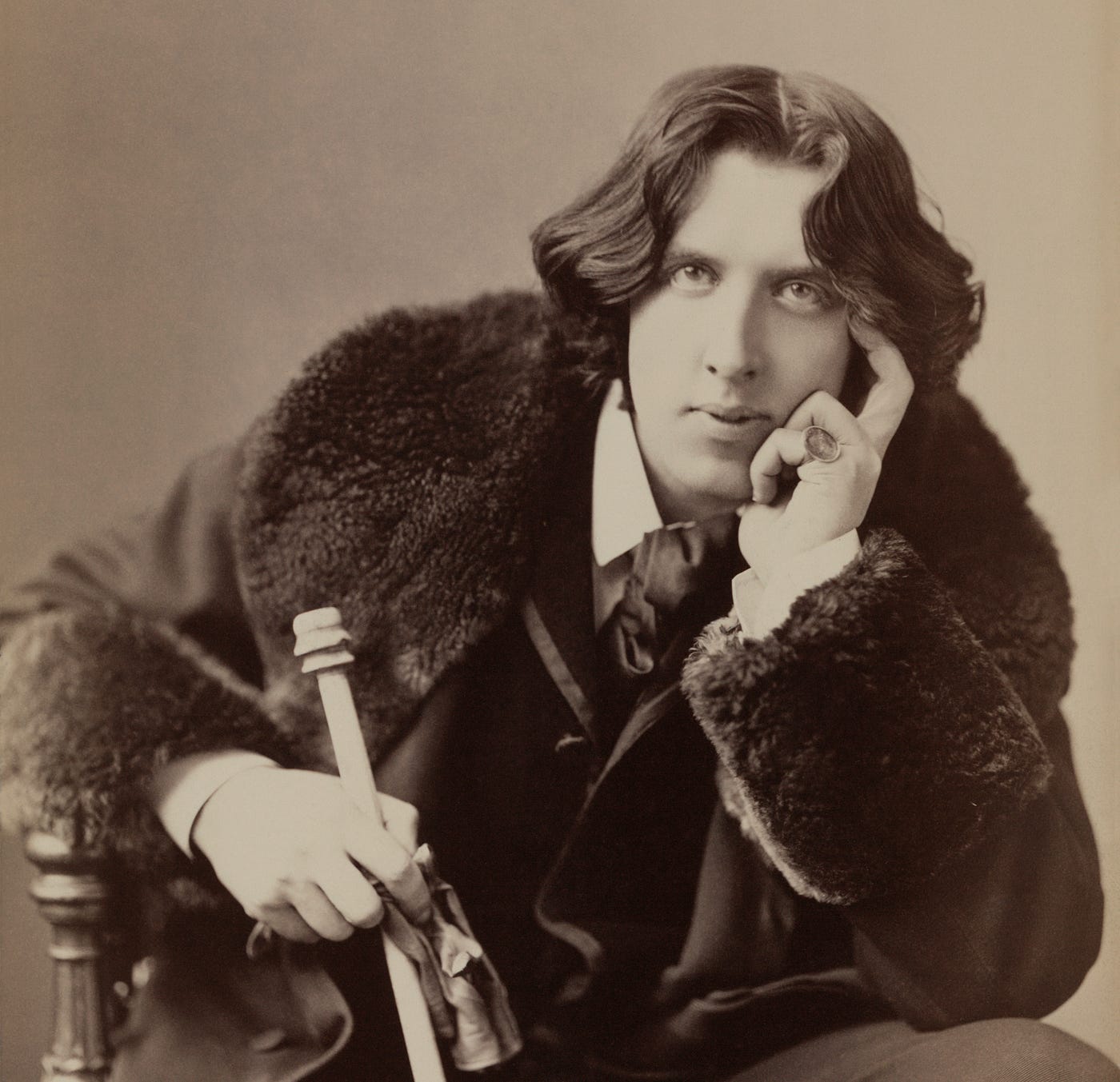
Portrait of Supreme Court Justice William O. Douglas. Public domain via the Supreme Court Historical Society / Wikimedia Commons.
Before remote work became a corporate buzzword, before Slack notifications and Zoom fatigue, one Supreme Court justice disappeared into the mountains and wrote constitutional philosophy from a cabin in the woods.
Today, the image sounds almost mythological.
The modern Supreme Court feels increasingly institutional, increasingly choreographed, increasingly consumed by historical tests, ideological camps, media scrutiny, and the endless gravitational pull of political warfare. Every opinion is immediately transformed into cable-news combat footage. Every justice is dissected through a partisan lens before the ink is dry.
And then there was William O. Douglas.
A man who hiked wilderness trails, distrusted concentrated power, wrote from a remote cabin in Washington state, and treated constitutional law less like bureaucratic procedure and more like a living argument about liberty itself.
Douglas served on the Court from 1939 to 1975 — longer than any justice in American history. Yet despite his enormous influence, he feels strangely absent from modern cultural memory. That may be because Douglas doesn’t fit neatly into the categories we now prefer. He was not simply “liberal” in the modern cable-news sense. He was something more unruly.
He believed fiercely in privacy rights, freedom of speech, environmental preservation, and individual autonomy. He distrusted surveillance and centralized authority. He championed wilderness conservation decades before environmentalism became mainstream political branding. He also possessed a libertarian streak that could make him difficult to classify cleanly in today’s political ecosystem.
In other words, Douglas belonged to an era when Supreme Court justices could still feel like eccentric public intellectuals rather than carefully managed institutional avatars.
And perhaps that is precisely why he feels so fascinating now.
One of the most revealing things about Douglas is not merely what he believed, but how he worked.
The Supreme Court has always involved a tremendous amount of solitary labor. Reading. Writing. Revising. Reflecting. Long before remote work entered the American corporate bloodstream, the justices were already operating through a kind of asynchronous intellectual culture. They exchanged drafts, circulated memos, and developed constitutional arguments through writing rather than endless meetings.
Douglas simply took that autonomy further than most.
His cabin retreat in Goose Prairie, Washington became both workspace and sanctuary. There, away from Washington’s rituals and noise, Douglas wrote opinions, books, essays, and reflections surrounded by wilderness rather than marble columns. It was not an aesthetic gimmick. It was an extension of his philosophy.
Douglas once wrote that “the trail is the thing.” That idea shaped both his environmentalism and his jurisprudence. His constitutional vision often emphasized movement, growth, freedom, and evolving liberty rather than rigid historical confinement.
That sharply contrasts with much of today’s Supreme Court philosophy.
The Court’s modern conservative majority frequently emphasizes originalism and historical tradition — the idea that constitutional meaning should remain rooted in the nation’s founding understandings. Douglas, by comparison, often approached the Constitution as something morally expansive. Not infinitely malleable, but alive enough to recognize liberties not explicitly spelled out in eighteenth-century text.
That philosophy became central to decisions like Griswold v. Connecticut, where Douglas authored the majority opinion striking down bans on contraception for married couples. His reasoning about implied constitutional privacy rights later helped form the legal foundation for Roe v. Wade.
Given that history, it is difficult to imagine Douglas viewing Dobbs v. Jackson Women’s Health Organization with anything other than alarm.
But reducing Douglas solely to abortion jurisprudence would miss the broader point.
What makes him compelling in 2026 is not merely where he would hypothetically land on current issues. It is that he represents a version of judicial individuality that feels increasingly rare in modern American life altogether.
We live in an era obsessed with optimization, branding, institutional messaging, and professional containment. Public figures are media-trained. Corporations flatten personality into “team culture.” Political figures increasingly behave like algorithmic products calibrated for audience retention.
Douglas often seemed constitutionally incapable of that kind of conformity.
He was controversial. Sometimes reckless. Frequently accused of judicial activism. He wrote enormous numbers of opinions and dissents. He frustrated colleagues. He generated criticism. But he also embodied something that feels almost endangered now: the idea that intellectual life could still be deeply personal.
Not performative. Personal.
The current Court, regardless of ideology, often projects institutional self-consciousness. The justices understand they exist inside a perpetual legitimacy crisis. Every public appearance becomes headline material. Every relationship becomes ethics discourse. Every ruling becomes an existential referendum on democracy itself.
Douglas emerged from a different world. A world where a justice could still appear less like a living press release and more like a stubborn constitutional philosopher wandering through the wilderness with a notebook.
That image resonates because modern life increasingly feels hostile to solitude and independent thought.
The internet rewards immediacy over reflection. Work culture often rewards visibility over depth. Social media trains people to perform certainty rather than wrestle openly with ideas. Even intellectual spaces increasingly feel flattened into camps, tribes, and engagement metrics.
Douglas reminds us that there was once room in American public life for figures who were harder to categorize.
Not necessarily better. Not always wiser. But freer.
And perhaps that is the strange irony surrounding William O. Douglas today.
In an age where remote work is associated with Slack channels, productivity software, and corporate wellness seminars, one of the most influential remote workers in American history may have been a Supreme Court justice writing dissents from a cabin in the woods — not to escape responsibility, but to think more clearly about it.
메타데이터
- post_id
- 75526e1463eb
- slug
- william-o-douglas-and-the-lost-art-of-judicial-individualism-75526e1463eb
- url
- https://medium.com/the-signal-the-flame/william-o-douglas-and-the-lost-art-of-judicial-individualism-75526e1463eb
- canonical_url
- https://medium.com/the-signal-the-flame/william-o-douglas-and-the-lost-art-of-judicial-individualism-75526e1463eb
- author_url
- https://medium.com/@annalkuyperbellettiere
- status
- ok
- fetched_at
- 2026-06-21 15:33:18