Day 44/100: What Happens After God Dies?
"God is dead."
Day 44/100: What Happens After God Dies?
"God is dead."
— Friedrich Nietzsche
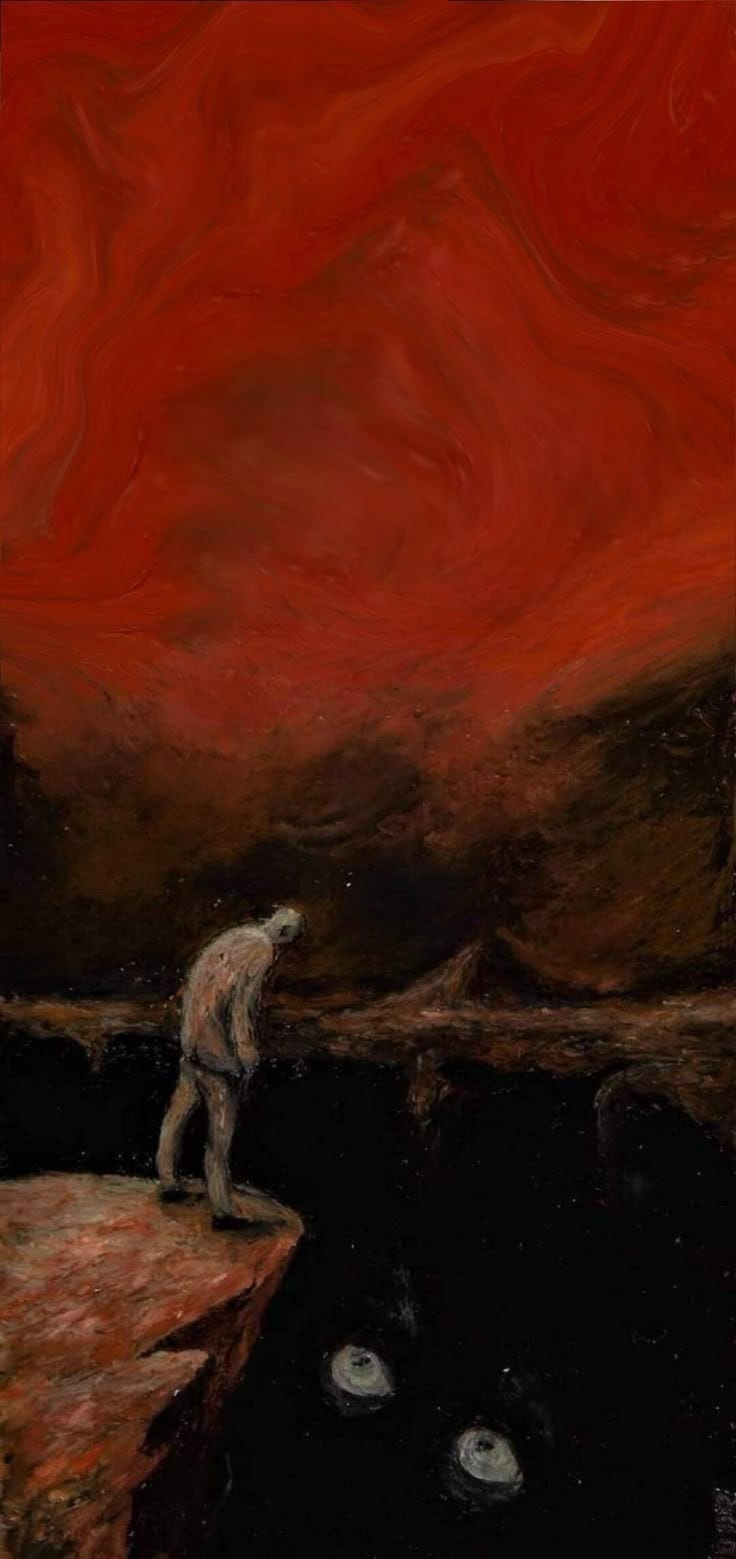
Few philosophical statements are more famous, or more misunderstood, than Friedrich Nietzsche's declaration that "God is dead." Taken literally, the phrase appears strange. God, if God exists, cannot simply die in the ordinary sense. Yet Nietzsche was not announcing a biological event, nor was he merely expressing disbelief in religion. He was diagnosing a historical transformation. His concern was not whether people believed in God, but what would happen to human civilization once the foundations upon which it had built meaning, morality, and purpose began to collapse.
For centuries, much of Western society understood itself through a religious framework. Moral values were grounded in divine authority. Human life was believed to possess a cosmic purpose. Suffering could be interpreted within a larger narrative. Questions about right and wrong, good and evil, meaning and destiny all seemed to have answers rooted in something beyond humanity itself. Nietzsche believed that modern science, secularism, and critical inquiry had gradually undermined confidence in this framework. The result was not simply a loss of religious belief. It was the disappearance of an entire structure of meaning. The real question, therefore, was not whether God existed. The real question was whether humanity could survive the consequences of no longer believing that God existed.
The Syllogism
Premise 1 (P1): Societies require shared sources of meaning and value in order to orient human life.
Premise 2 (P2): Traditional religious belief had historically provided many of those sources of meaning and value.
Conclusion: If religious belief loses its authority, humanity must either create new foundations for meaning or face a crisis of purpose.
At first glance, modern societies seem capable of functioning without religion. People continue to work, form families, pursue careers, and participate in political life. Yet Nietzsche believed the deeper effects of this transformation would unfold slowly. A society can continue using moral concepts long after forgetting where those concepts originated. Ideas such as human dignity, equality, justice, and universal rights often survive even when the religious worldviews that helped sustain them have weakened. The danger arises when people continue affirming these values without being able to explain why they should matter.
This creates a peculiar situation. Imagine inheriting a building that has stood for centuries. The structure appears stable, so people gradually remove the foundation beneath it. For a time, nothing seems wrong. The walls remain standing. Daily life continues as usual. Yet eventually the absence of the foundation becomes impossible to ignore. Nietzsche feared that modern humanity was living through precisely such a moment. The old foundations had been abandoned, but no universally accepted replacement had emerged.
The Madman's Warning
Nietzsche illustrates this problem through one of philosophy's most famous thought experiments. In The Gay Science, a madman runs into a marketplace announcing that God is dead and that humanity has killed Him. The crowd laughs because many of them already consider themselves unbelievers. Yet the madman is not speaking to religious believers. He is speaking to skeptics who have failed to grasp the implications of their own skepticism.
His question is simple but unsettling. If humanity has abandoned the highest source of meaning it once possessed, what now determines right and wrong? What gives life purpose? What justifies sacrifice, duty, or truth itself? The crowd assumes that rejecting religion is merely one belief among others. The madman recognizes that it may transform every aspect of human existence.
The disturbing aspect of Nietzsche's argument is that he does not celebrate this development uncritically. Many readers assume he viewed the death of God as a straightforward victory for reason. In reality, he saw it as both liberation and danger. Liberation because inherited authorities no longer possess unquestioned power. Danger because the collapse of old certainties can produce nihilism, the belief that life ultimately lacks meaning, value, or purpose.
The Abyss of Nihilism
Consider a paradox. Human beings seem to require meaning in order to live well. Yet meaning often depends upon beliefs that cannot be proven with complete certainty. If traditional sources of meaning disappear, people may discover greater freedom. But they may also discover greater emptiness.
This is the crisis Nietzsche believed modernity would eventually face. The challenge is not merely intellectual. It is existential. Once old answers lose credibility, individuals must confront questions that previous generations often inherited ready-made. Why live? What should I value? What makes a life meaningful? What should I dedicate myself to?
Nihilism emerges when people conclude that there are no convincing answers. Without higher purposes, all goals begin to appear arbitrary. Success, morality, achievement, and even truth itself can seem groundless. Nietzsche regarded this possibility as one of the greatest threats facing modern civilization.
Yet he did not believe nihilism was the final destination. He viewed it as a transitional stage. The collapse of inherited meanings creates a void, but a void is not merely an absence. It is also a space in which something new can be created.
Creating Meaning After the Collapse
Nietzsche's ultimate concern was whether humanity could become mature enough to create values rather than merely inherit them. If meaning is no longer guaranteed by divine authority, then individuals bear greater responsibility for shaping their own lives. This task is far more difficult than simply obeying established rules. It requires creativity, courage, and self-examination.
The death of God therefore represents more than the end of religious certainty. It marks the beginning of a new challenge. Humanity must learn how to live without relying on external guarantees of meaning. The question is no longer, "What meaning has been given to us?" The question becomes, "What meaning can we create?"
This is why Nietzsche's statement remains so provocative. It is not fundamentally a claim about theology. It is a challenge directed at civilization itself. If the old foundations have disappeared, what will replace them? If inherited meanings can no longer command belief, where will new meanings come from? If humanity has abandoned its traditional sources of purpose, can it avoid falling into despair?
The enduring power of Nietzsche's declaration lies in the fact that these questions remain unresolved. "God is dead" is not a triumphant conclusion. It is the beginning of a problem. Nietzsche forces us to confront a possibility that many would prefer to avoid: perhaps the most difficult task is not losing old beliefs, but discovering how to live after they are gone. The future of humanity may depend not on whether God is dead, but on whether human beings can create meaning in the silence that follows.
메타데이터
- post_id
- 755dcfc718a3
- slug
- day-44-100-what-happens-after-god-dies-755dcfc718a3
- url
- https://medium.com/@jalpatidar91g/day-44-100-what-happens-after-god-dies-755dcfc718a3
- canonical_url
- https://medium.com/@jalpatidar91g/day-44-100-what-happens-after-god-dies-755dcfc718a3
- author_url
- https://medium.com/@jalpatidar91g
- status
- ok
- fetched_at
- 2026-07-25 07:20:16