When Robots Build Homes, Georgia Should Think Beyond the House
A robotically built house sounds like a futuristic image.
When Robots Build Homes, Georgia Should Think Beyond the House
A robotically built house sounds like a futuristic image.
But the bigger question is not whether a robot can build a wall.
The bigger question is whether new construction technologies can help countries build better places to live.
For Georgia, this matters. Housing is becoming expensive in Tbilisi. Regions are losing population. Many small towns need renewal. Tourism is growing, but often without enough well-planned infrastructure. Construction costs are rising. Skilled labor is not always easy to find. And as a seismic country, Georgia must take building safety seriously.
Robotic construction will not solve all of these problems.
But it may become one useful tool.
What robotic construction really means
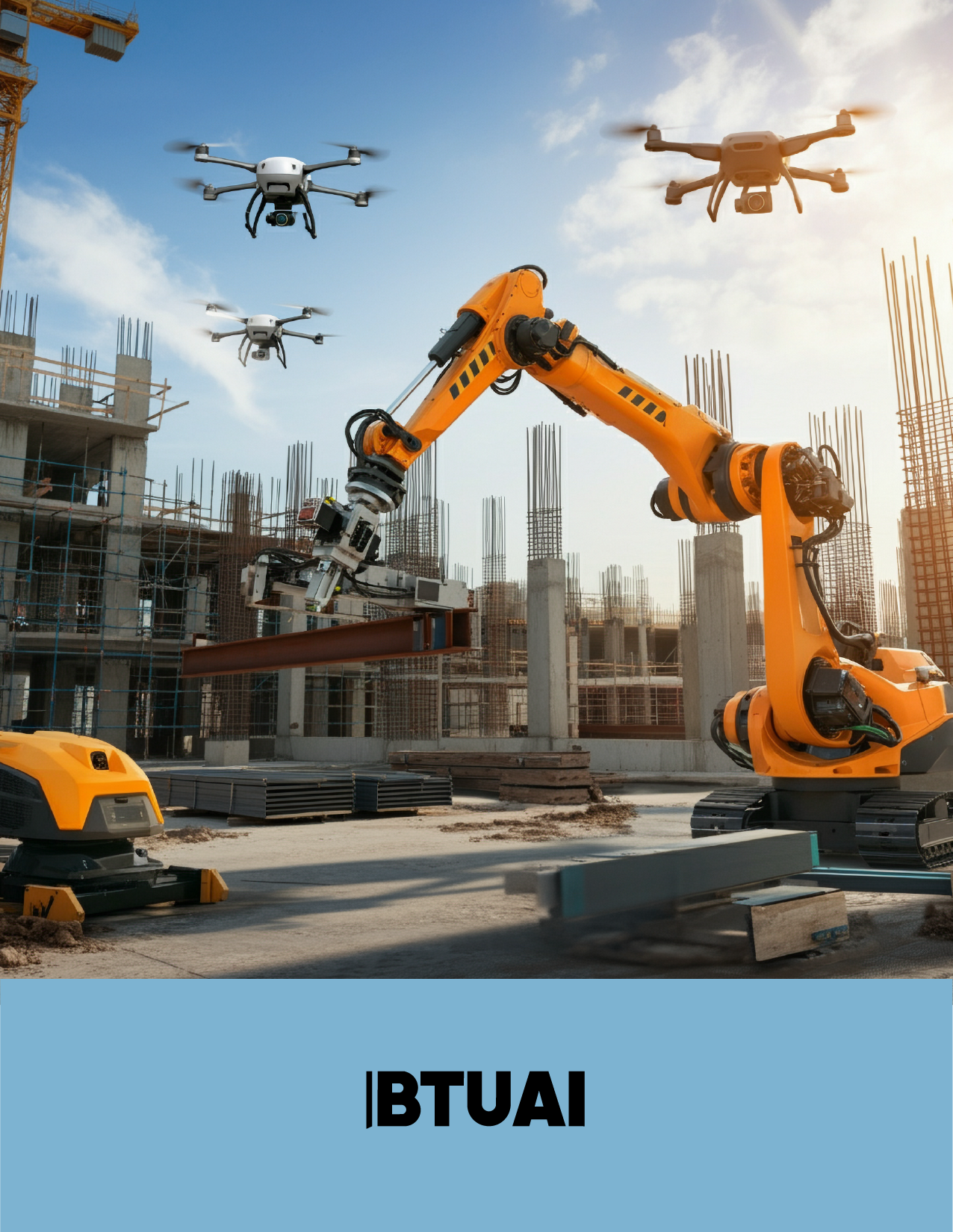
Robotic construction is not only about humanoid robots replacing workers.
It is a broader set of technologies.
It can include 3D-printed walls, prefabricated modular homes, robotic machines for repetitive tasks, drones for inspection, sensors for monitoring, and AI-based tools that help plan buildings and settlements before construction begins.
In other words, construction becomes more digital, more automated and more data-driven.
That is the real change.
Why the world is paying attention
Construction has changed more slowly than many other sectors.
Finance, retail, media and education have been transformed by software and data. But building a house is still often slow, expensive and dependent on manual work.
Robotic construction is gaining attention because it promises several advantages:
faster building;
less waste;
more precise construction;
better use of materials;
potentially lower costs at scale;
new options for difficult locations;
more predictable project timelines.
It also responds to a real problem: many countries face housing shortages and construction labor shortages at the same time.
Why Georgia should care
Georgia’s housing challenges are not the same everywhere.
Tbilisi faces high demand, rising prices, pressure on land and overloaded urban infrastructure.
Regions face a different challenge: depopulation, empty houses, weak local economies and limited new housing options for young families.
This is why the Georgian discussion should not be only about “cheaper construction.”
It should be about whether new construction technologies can help create new types of settlements.
That means places where housing, energy, internet, transport, workspaces, education and local economy are planned together.
The opportunity is regional
The most interesting use of robotic construction in Georgia may not be in the center of Tbilisi.
It may be in the regions.
Imagine a pilot energy-efficient village designed for young families, remote workers and agritourism.
Or small modular tourism cottages in mountain areas.
Or student housing near universities.
Or high-quality social housing built faster and monitored more carefully.
Or earthquake-resilient housing models designed and tested before being scaled.
This is where the technology becomes more than a construction method. It becomes a regional development tool.
Robots can build walls. They cannot create community.
This is the most important point.
A settlement is not just a group of houses.
It needs roads, water, internet, energy, schools, healthcare access, public spaces, transport, jobs and social life.
If robotic construction builds houses in a poorly planned location, the result will still be weak.
Technology cannot replace urban planning.
It can only strengthen good planning.
Safety must come first
Georgia is in a seismically active region.
That means any new construction method must pass strict testing. A robotically built home cannot be judged only by speed or price. It must be judged by structural safety, seismic resilience, material quality, energy efficiency and long-term durability.
This is especially important if the technology is used for social housing, student housing or regional settlements.
Innovation without safety would be dangerous.
What changes for the construction workforce
Robotic construction does not mean that people disappear from construction.
It means the work changes.
Some heavy and repetitive tasks may be automated. But new jobs appear in machine operation, digital modeling, construction data monitoring, robotics maintenance, materials testing, seismic evaluation, drone inspection and AI-assisted design.
This means Georgia needs new educational programs.
The construction worker of the future may need to understand both materials and software.
The architect of the future may need to design not only a building, but a data-based construction process.
The engineer of the future may need to work with robots, sensors and automated quality-control systems.
What businesses should learn
For Georgian construction companies, the future competition will not be only about building more square meters.
It will be about building faster, safer, cleaner and more intelligently.
Developers should begin studying modular construction, 3D printing, digital design, energy-efficient materials, robotic inspection and AI-based planning.
They should also understand that the customer is no longer buying only an apartment.
The customer is buying a living environment.
That includes transport, green space, air quality, energy cost, safety, internet and services.
What the state should do
Georgia does not need a large, expensive national program immediately.
It needs practical pilot projects.
The state can support a legal framework for testing new construction methods, create safety and seismic evaluation standards, encourage energy-efficient design, work with municipalities and connect robotic construction with regional development.
The state should also make sure that social housing does not become a low-quality experiment.
If new technology is used for vulnerable groups, the standard should be higher, not lower.
What universities should do
Universities have a major role.
Robotic construction connects architecture, engineering, computer science, robotics, data analysis, business and public policy.
Georgia needs courses and research projects on construction automation, 3D printing, digital architecture, seismic resilience, energy-efficient settlements, AI in construction and data-driven urban planning.
For BTU, this is a natural interdisciplinary topic. It links business, technology, AI, regional development and human-centered design.
The biggest risk
The biggest risk is treating robotic construction as a fashionable technology rather than a real solution.
A robot-built house can still be badly designed.
A 3D-printed village can still be isolated.
A modular settlement can still lack jobs, transport and community.
Technology should not become decoration.
It must solve a real problem.
BTUAI assessment
BTUAI assesses that robotic construction can become an important future tool for Georgia, especially in housing, regional development and energy-efficient settlements.
But its value is not in the robot itself.
Its value is in making construction more precise, faster, less wasteful and better connected to planning.
For Georgia, the real opportunity is to use this technology to imagine new kinds of settlements: smaller, smarter, more energy-efficient, more regionally balanced and more connected to work and education.
The main conclusion is simple:
Robots may build the walls.
Georgia must decide what kind of life will happen inside them.
Key takeaways
Robotic construction includes 3D printing, modular housing, automated machinery, drones, sensors and AI-based planning.
For Georgia, the strongest opportunity is regional development, not only cheaper construction.
The technology may be useful for student housing, tourism cottages, social housing and pilot energy-efficient villages.
Safety and seismic standards must come first.
The construction workforce will not disappear, but it will need new skills.
Technology cannot replace planning, infrastructure or community.
Georgia should begin with pilot projects, testing, education and local adaptation.
About this material
This material is based on the full analytical version prepared by BTUAI Research at Business and Technology University.
Full analytical version available on BTUAI.ge: https://btuai.ge/en/when-robots-build-homes-what-robotic-construction-could-mean-for-georgias-construction-sector-and-regional-development/
Citation
BTUAI Research Team. “When Robots Build Homes: What Robotic Construction Could Mean for Georgia’s Construction Sector and Regional Development.” Business and Technology University, BTUAI.ge, 2026.
Prepared by the academic team of Business and Technology University and the BTUAI Research Team. Tbilisi, Georgia.
메타데이터
- post_id
- 757e78c86dae
- slug
- when-robots-build-homes-georgia-should-think-beyond-the-house-757e78c86dae
- url
- https://medium.com/@mariam.kobiashvili/when-robots-build-homes-georgia-should-think-beyond-the-house-757e78c86dae
- canonical_url
- https://medium.com/@mariam.kobiashvili/when-robots-build-homes-georgia-should-think-beyond-the-house-757e78c86dae
- author_url
- https://medium.com/@mariam.kobiashvili
- status
- ok
- fetched_at
- 2026-07-11 15:31:54